The results are shown in the frequency table below. Write your answers as a simplified fraction.
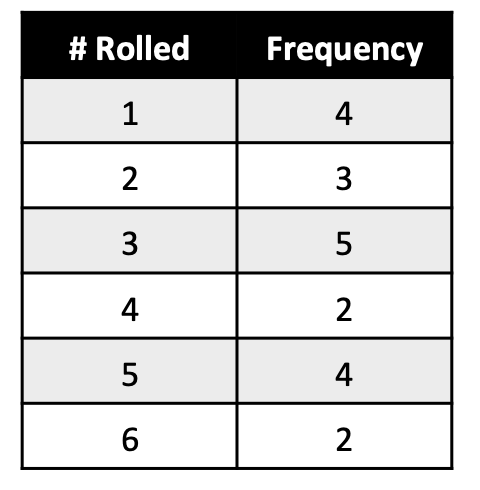
Find the theoretical probability of landing on 3.
Find the experimental probability of landing on 3.
The results are shown in the frequency table below. Write your answers as a simplified fraction.
Find the theoretical probability of landing on 3.
Find the experimental probability of landing on 3.
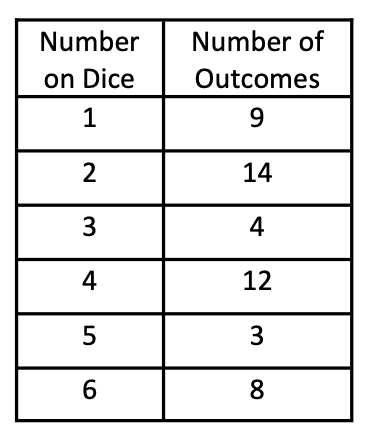
A fair dice was rolled 50 times and the results are shown on the table below. For
which number on the dice was the experimental probability closest to the theoretical
probability?
A fair spinner was spun 150 times and the results are shown below. Each section was equally likely to be landed on. For which color on the spinner was the experimental probability furthest from the theoretical probability?
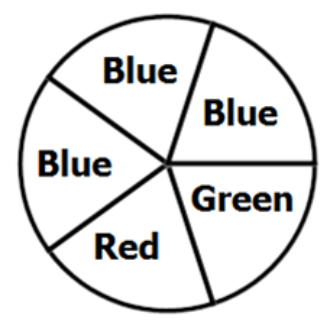
Blue: 78
Green: 72
Red: 40
Between 6:00 PM and 7:00 PM, 5 mystery novels, 3 non-fiction books, 7 picture books, and 2 science fiction novels were returned to the library. What is the experimental probability that the next book returned to the library is a picture book? Write your answer as a simplified fraction.
Anna spins the spinner below 30 times, and it lands on C 8 times. Use this information to answer the question below. Write your answer as a simplified fraction.
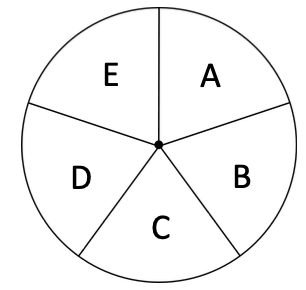
What is the theoretical probability of landing on C?
What is the experimental probability of landing on C?
The spinner shown below is divided into 6 equal sections.
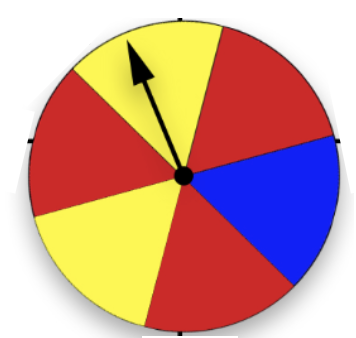
Write your answers as a percent.
What is the theoretical probability of getting yellow?
What is the theoretical probability of getting blue?
What is the theoretical probability of getting red?
A 6-sided number cube is rolled one time. What is the theoretical probability of getting a 4? Write your answer as a simplified fraction.
Sally rolled a 6-sided number cube 40 times and it landed on 4 eight times. What is the experimental probability of Sally getting a 4? Write your answer as a simplified fraction.
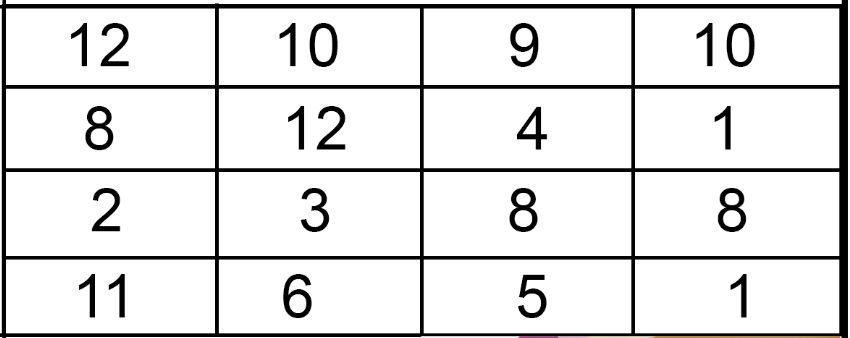
Kim drew a card from the set 16 times. The results are shown in the table below. What is the experimental probability of Kim drawing an even card? Write your answer as a simplified fraction.
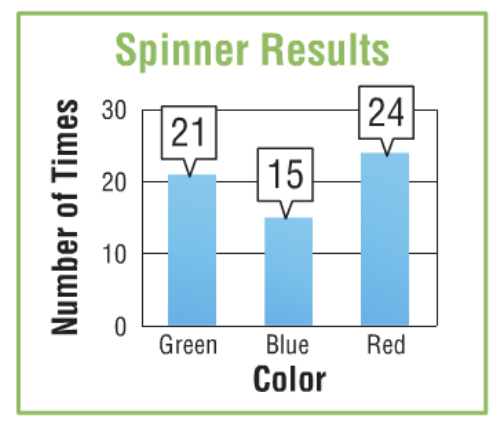
The graph shows the results of an experiment in which a spinner with 3 equal sections is spun sixty times. What is the experimental probability of spinning green. Write your answer as a simplified fraction.
The spinner shown below is divided into 6 equal sections. Jose spun the spinner 80 times and got yellow 20 times. What is the experimental probability of getting yellow? Write your answer as a percent.
The results are shown in the frequency table below. Write your answers as a simplified fraction.
Find the theoretical probability of landing on either 5 or 6.
Find the experimental probability of landing on either 5 or 6.
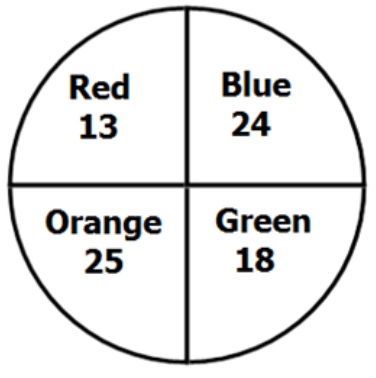
A fair spinner was spun 80 times and the results are shown in the spinner below. Each
color was equally likely to be landed on. For which color on the spinner was the experimental probability closest to the theoretical probability?
Anna spins the spinner below 30 times, and it lands on C 8 times. Use this information to answer the question below.
If you were to spin the spinner 1,000 times, about how many times would you expect it land on C?
Millie spun the spinner 90 times and got blue 20 times. What is the experimental probability of getting blue? Write your answer as a percent.