Digital Inquiry - Mixtures

Last updated 7 months ago
16 questions

TEXT: Separating Mixtures


It’s time for science lab. Your teacher gives each group in your class a different mixture. The instruction is to decide how to separate the mixture into individual components. What are the different ways to separate mixtures? Is the mixture wet?

One way to separate a wet mixture is to use a paper filter to allow the water to drain out while the solid items stay. This would work for sand and water. Another way to separate wet mixtures is evaporation, which would work for the group with salt water. If the group boils the water, the salt will be left behind in the pan, while using a condenser to cool the steam into liquid.

For sand and small rocks, a tool called a sieve has holes which allow one part of the mixture to fall through while the larger parts stay inside. One group has straight pins and toothpicks. They use a magnet that will pick up the metal pins while leaving behind the wooden toothpicks.


The next mixture is tricky – oil and sand. For this, you need water in a beaker for sink or float. Oil floats and sand sinks to the bottom of the water. As a reward, the teacher congratulates all the groups and passes out small bags of candy and pretzel mixture while the groups clean up the lab so they can use their clean hands to separate out the treats for a fun snack.
1

How do sieves work to separate mixtures?
1

What method can be used to separate a mixture of sand and water?

1

How can you separate a mixture of salt and water?

1

Which tool is useful in separating a mixture of sand and small rocks?

1

How would you separate a mixture of oil and sand?

Video: Desalination


Click on the link to watch the video and learn how salt is separated from saltwater to support freshwater supply and demand.

How do we provide the world's growing population with enough water to drink? Scientists are using new technology to answer this question.
1

Why does salt need to be removed from saltwater for us to drink it?

1

How is salt removed from saltwater?

Text: Aquifers


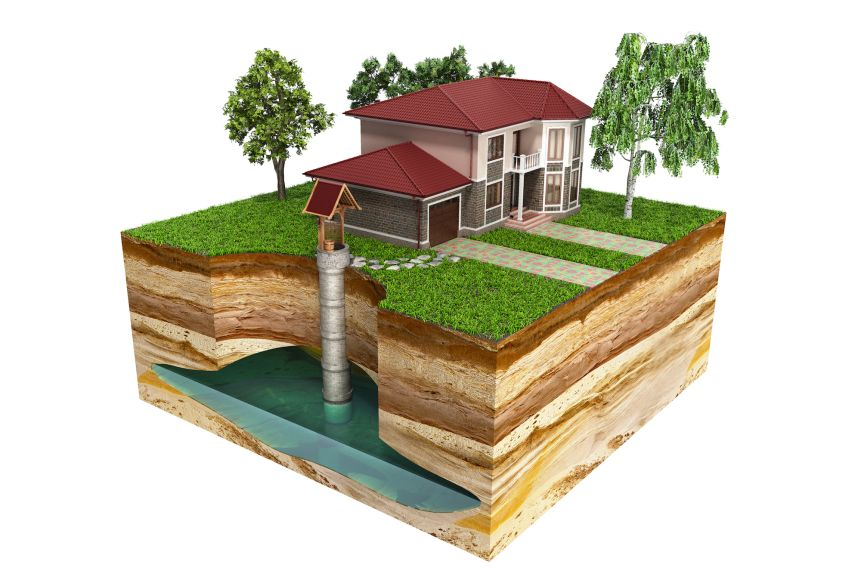
An aquifer is a body of porous rock or sediment saturated with groundwater. Groundwater enters an aquifer as precipitation seeps through the soil. It can move through the aquifer and resurface through springs and wells.


An aquifer is a body of rock and/or sediment that holds groundwater. Groundwater is the word used to describe precipitation that has infiltrated the soil beyond the surface and collected in empty spaces underground.

There are two general types of aquifers: confined and unconfined. Confined aquifers have a layer of impenetrable rock or clay above them, while unconfined aquifers lie below a permeable layer of soil.

Many different types of sediments and rocks can form aquifers, including gravel, sandstone, conglomerates, and fractured limestone. Aquifers are sometimes categorized according to the type of rock or sediments of which they are composed.

A common misconception about aquifers is that they are underground rivers or lakes. While groundwater can seep into or out of aquifers due to their porous nature, it cannot move fast enough to flow like a river. The rate at which groundwater moves through an aquifer varies depending on the rock’s permeability.

Much of the water we use for domestic, industrial, or agricultural purposes is groundwater. Most groundwater, including a significant amount of our drinking water, comes from aquifers. In order to access this water, a well must be created by drilling a hole that reaches the aquifer. While wells are manmade points of discharge for aquifers, they also discharge naturally at springs and in wetlands.

Groundwater can become depleted if we use it at a faster rate than it can replenish itself. The replenishment of aquifers by precipitation is called recharging. Depletion of aquifers has increased primarily due to expanding agricultural irrigation. Groundwater can become contaminated when an excessive amount of pesticides and herbicides are sprayed on agricultural fields, septic tanks leak, or landfills are improperly lined or managed and toxic materials seep through the soil into the aquifer.

Aquifers naturally filter groundwater by forcing it to pass through small pores and between sediments, which helps to remove substances from the water. This natural filtration process, however, may not be enough to remove all of the contaminants.
1

Why are aquifers important to our freshwater supply?

1

How do aquifers separate substances in groundwater?

1

What is an aquifer?

1

What distinguishes a confined aquifer from an unconfined one?

1

Can groundwater in an aquifer flow like a river?

Video: Centrifuge


Click on the link to learn how motion and density are used to separate solids, liquids, and gases.
1

How are mixtures separated inside of a centrifuge?

1
_____________are combinations of ingredients. Some mixtures are simple and easy to separate. Other mixtures, where ingredients _____________to form ______________, require more complex separation techniques. Mixtures are everywhere in our world and sometimes we need to separate them. Understanding the _______________of the ________________is the first step to understanding what tools are required to separate them.
Other Answer Choices:
properties
Mixtures
dissolve
ingredients
solutions
1
More than 70% of the Earth is covered in water, but most of that supply is saltwater. Of the
freshwater we have access to, we often need more than we have readily available. In
order to keep up with the demand for agriculture, drinking water, and commercial use,
scientists developed a process called desalination. _________________uses ________________ to separate the _________ from the water. Although this is a solution to our freshwater demand, desalination can be expensive and contribute to environmental pollution.
Other Answer Choices:
Desalination
evaporation
salt
1
_______________ is a process of removing solids from liquids. This process is used in many ways all over the world. Peat filtration uses organic matter, which is filled with microorganisms, to remove waste from water. _____________found naturally underground, contain the water we access for drinking, cleaning, and agriculture. As the water runs through, the rock separates particles and contaminants from the water.

A _______________is a machine used in commercial, food and medical industries to separate solids, liquids and gases. Both speed and ____________are a factor. As the device spins at a high speed, denser matter moves outward, and the less dense matter moves inward. A centrifuge is used to separate DNA, investigate blood, make olive oil, and even wash your clothes!
Other Answer Choices:
Filtration
density
Aquifers
centrifuge