Digital Inquiry - Metal Property
star
star
star
star
star
Last updated 7 months ago
5 questions
TEXT: Properties of METALS
Aluminum, copper, and iron are metals that share some common properties. They are solid at room temperature, they have luster (shine), and they can be stretched into wires.
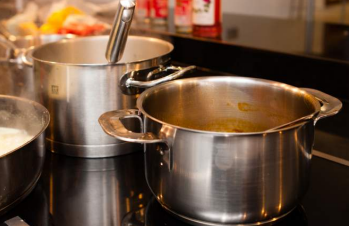
All of them conduct (allow flow of) electricity and heat, but aluminum and copper are much better thermal and electrical conductors than iron. Because of conductivity, electric wires are usually either copper or aluminum. You will find copper in many kitchen pots and pans.
Copper and aluminum share some properties that iron does not. One big difference between these metals is magnetism. Iron is magnetic. Copper and aluminum are not magnetic.
Copper and aluminum are more malleable (easily shaped) than iron. Pure iron is soft.
However, most iron found in the Earth is not pure iron but a combination of iron and
other elements. You might think copper and aluminum are light. Aluminum is least
dense. Iron is dense, and copper is the densest of all.
1
How do the physical properties of each metal compare?
Video: Exploring Conductivity
In this video segment adapted from ZOOM, cast members become electron conductors to reconnect a broken electric circuit. By joining hands, the cast members complete, or close, a circuit that had been broken when the lemon powering a digital clock was sliced in half. Power is restored as soon as electrons are again allowed to flow uninterrupted from the lemon battery to the clock.
1
Why is metal considered a conductor of electricity?
1
Why is electrical conductivity a resourceful property of metals like copper, silver, and aluminum?
Article: Olympic Medals
Tokyo 2020 Olympic Medals Are Made From Recycled Cell Phones And Gadgets
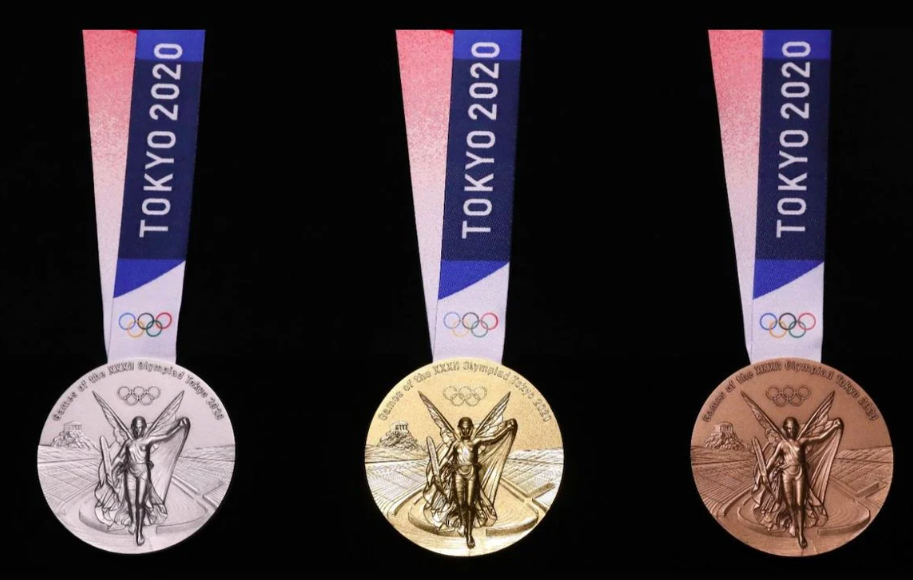
Japan, the host country of the 2020 Olympic and Paralympic Games, has promised to deliver "the most innovative Games ever organized." On July 24, 2019, a year before the competition begins in Tokyo on July 24, 2020, the Olympic Committee unveiled its first ingenious idea — medals made using precious metals extracted from discarded electronics.
The idea to strip the small quantities of gold, silver, platinum, and nickel from old devices was first proposed in 2016 by a group of young Japanese environmentalists. The students wanted to raise awareness of the amount of electronic waste generated by the country's tech-loving residents, who are notorious for replacing gadgets frequently. Japanese citizens toss an estimated 650,000 tons of small electronics and home appliances every year, only about 100,000 tons of which are recycled.
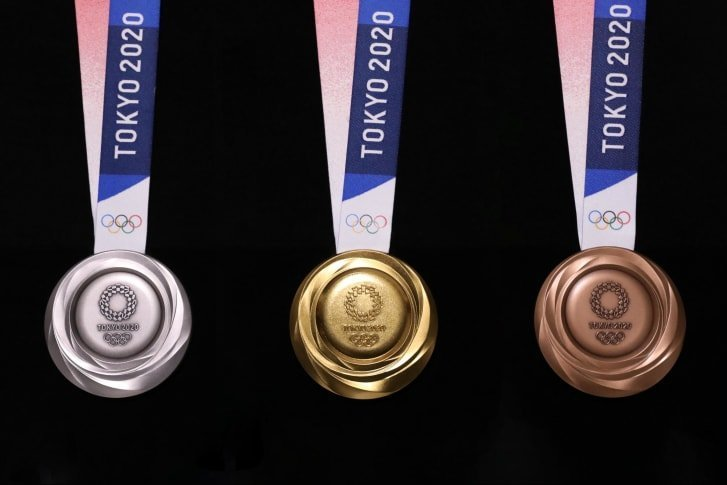
Eager to help the environment and raise awareness of the issue, the Olympic Committee launched the “Everyone’s Medal” program in February 2017. The campaign encouraged citizens to drop off unused gadgets at one of Japanese cellular giant NTT Docomo's 2,400 stores, or at locations set up by Japan's Environmental Sanitation Center.
Since each gadget contains just traces of the precious metals, the organizers needed millions of devices to accumulate the 8 tons of material needed to craft the 5,000 Olympic and Paralympic medals. However, they had nothing to worry about. By the time the collection drive ended in March 2017, Japanese residents had donated an astounding 78,895 tons of gadgets, including 6.21 million smartphones. The haul yielded the officials 70 pounds (32 kilos) of gold, 7,716 pounds (3,500 kilos) of silver, and 4,850 pounds (2,200 kilos) of bronze — more than enough to make every medal.
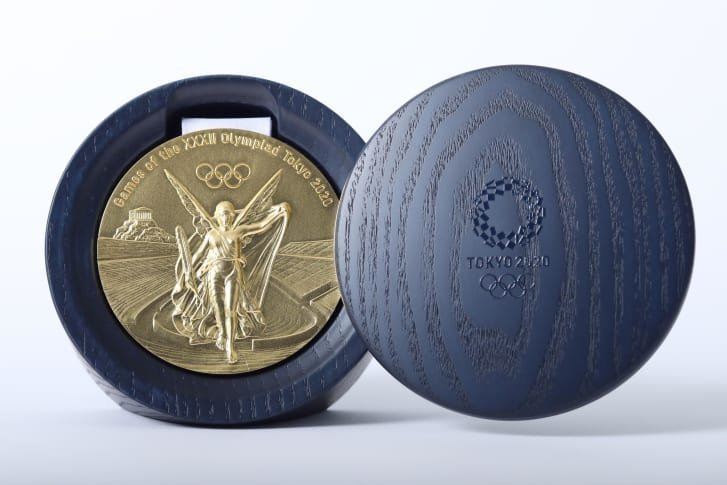
Revealed on July 24, 2019, the medals, which measure 85 mm in diameter, are designed by Osaka-based graphic artist Junichi Kawanishi. They feature the five interlocking Olympic rings, the official name of the games, and the Greek goddess of victory Nike in front of the Panathenaic stadium — the venue of the first Olympics.
In keeping with the International Olympics Committee (IOC) regulations, each gold medal is crafted from pure silver with 6 grams of gold plating. Though the IOC guidelines only require the silver medal to contain 92.5 percent of the metal, thanks to the successful recycling effort, the Tokyo 2020 medals are 100 percent pure silver. The bronze medal comprises a red brass alloy made up of 95 percent copper and 5 percent zinc. The medals will be placed in a circular case made from Japanese ash wood and accompanied by unique ribbons, which were inspired by traditional Japanese patterns and kimono-layering techniques.
The Olympic Committee hopes the Tokyo 2020 medals will help raise awareness of the alarming increase in electronic waste — not just in Japan but worldwide — and cause consumers to rethink upgrading devices unnecessarily. As Japan's three-time Olympic gold medal-winning gymnast Kohei Uchimura succinctly put it: “Tokyo 2020 Olympic and Paralympic medals will be made out of people’s thoughts and appreciation for avoiding waste. I think there is an important message in this for future generations.”
Though Japan is the first Olympic host country to make all the medals using metals from discarded electronics, it is not the first to think of the idea. That credit goes to Rio de Janeiro, Brazil which crafted about 30% of the silver and bronze medals for the 2016 Summer Olympics from recycled materials.
1
Why are cell phones and other electronic equipment a valuable resource for Olympic medalsproduction?
Why are cell phones and other electronic equipment a valuable resource for Olympic medals
production?
9
__________ is considered one of the most resourceful materials in our world. Because of its physical properties, we can use metal in so many ways. The most common metal is _________ .
There are several ________________________ of metal that make it so versatile. Some metals, such as copper and aluminum, are both ______________ and _______________. They can be easily shaped and carry energy from one place to another. Iron, a stronger and less malleable metal, is magnetic. ______________ is a property that only a few metals have. One of the most abundant uses of metal in our world is wiring. We depend on the transmission of electricity for almost everything we do. ___________ is typically the metal of choice based on malleability, conductivity, and cost. Depending on what is being manufactured, various other metals may be chosen for their unique properties.
____________ is a process used in metal manufacturing to join pieces of metal and strengthen the joint. In order to join pieces of metal successfully, electricity is used to melt the solid metal into a liquid where a filler is added. Then, the metal quickly freezes, creating the joint. Joints provide an additional level of support for things like building frames, fences, and vehicles.
Due to an overabundance of metal manufacturing and physical properties, metal can be _____________ and repurposed into other types of goods, like Olympic medals!
Other Answer Choices:
Metal
recycled
Welding
Magnetism
Copper
physical properties
iron
malleable
conductive