What poetry element is this called?
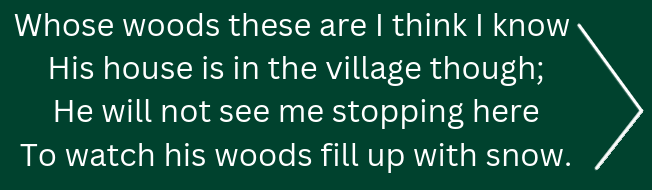
What poetry element is this called?
Review for Phil's ENG9 Quarter Exam
Tone refers to the feelings evoked in the reader while Mood refers to the authors attitude or emotions towards a subject matter.
Themes are often universal concepts or topics that reflect the human experience and emotions. They provide the deeper meaning of the poem.
The
Match the description to its mood type.
love, passion, and emotional connection
happiness, delight, and positivity
tension, worry, and unease
mood of calmness, peace, and tranquility
longing for the past, reminiscence, and sentimentality
optimism, anticipation, and aspiration
sadness, sorrow, and introspection
intrigue, uncertainty, and enigma
unease, strangeness, and the supernatural
Joyful
Melancholic
Mysterious
Eerie
Romantic
Serene
Hopeful
Nostalgic
Anxious
Mood is not created through various literary devices, such as imagery, word choice, rhythm, and even the subject matter of the poem.
What could be the possible tone of the poem given the description?
The poem use lively language, vibrant imagery, and enthusiastic descriptions.
The poem use seemingly positive language to convey a negative or critical meaning.
The tone is intense, urgent, and distressed
The poem use gentle language and soothing imagery.
The poem’s language is intense, frustrated, and indignant. The poem use strong and forceful language.
The poem may use uplifting language and imagery to inspire a sense of possibility.
The poem use somber imagery, and themes of loss or longing.
The tone is unsettling. The poem use unusual or uncanny imagery and language to create a sense of unease.
8. : The tone is intense, urgent, and distressed.
Joyful
Melancholic
Angry
Calm
Mocking
Hopeful
Eerie
Desperation
The tone can be complex, encompassing various emotions and attitudes that contribute to the overall meaning of the poem.
It refers to the attitude or emotional state of the speaker or narrator as conveyed through the words and language choices in the poem.
The persona is not the poet's own voice, but rather a mask that the poet wears to convey a particular point of view or convey a certain message.
It's a literary device that allows the poet to explore different perspectives, emotions, or experiences by stepping into the shoes of someone else.
Match the description and sample poem to its type of rhyme:
Features words with similar but not identical sounds. It includes variations like consonance and assonance.
Involves rhyming words within the same line of verse.
Romance, who loves to nod and sing,
With drowsy head and folded wing,
Among the green leaves as they shake
Far down within some shadowy lake,
Involves words with identical sounds (both vowel and consonant) in their final stressed syllables (e.g., "cat" and "hat").
Once upon a midnight dreary, while I pondered, weak and weary,
While I nodded, nearly napping, suddenly there came a tapping
Hope is a thing with feathers
That perches in the soul
And sings the tune without the words
And never stops at all….
Internal Rhyme
Slant Rhyme or Near Rhyme
Perfect Rhyme
Rhyming words create a sense of musicality, rhythm, and coherence, enhancing the aesthetic appeal of the poem.
What is a poetic device involving the repetition of similar or identical sounds at the end of words or in specific patterns within a poem?
da-da-DUM, "And the SOUND of a VOICE that is STILL."
DUM-da-da, “HALF a league, HALF a league,
HALF a league ONward,
da-DUM, "To BE or NOT to BE, THAT is the QUESTion."
DUM-DUM, “BREAK, BREAK, BREAK, On thy COLD GREY STONES, O Sea"
DUM-da, "TELL me NOT in MOURNful NUMbers."
Iambic Meter
Trochaic Meter
Anapestic Meter
Dactylic Meter
Spondaic Meter
Each types of syllables have two characteristics.
It is often marked with an "x" symbol or a horizontal line (-).
syllable is one that is pronounced with more emphasis or force than the other syllables.
syllable is pronounced with less emphasis or force, making it sound more relaxed or soft.
It is often marked with an "x" symbol or a horizontal line (-).
Stressed
Unstressed
Meter is the arrangement of these syllables to create a sense of rhythm and musicality in poetry.
What element in poetry refers to the RHYTHMIC PATTERN of stressed and unstressed syllables in a line?
Categorize the stanzas to its type.
Couplet
Septet
Quantain
Octave
Monostitch
Tercet
Sestet
Quatrain
1 line
2 lines
3 lines
4 lines
5 lines
6 lines
7 lines
8 lines
What poetry element is this called?
Stanzas help to organize the flow of ideas, themes, or emotions.
A
What makes up an exceptional and well-crafted poem?
Poetry is shorter than most literary forms because they are written with carefully chosen sets of words.
What is a literary form that uses language in its finest, most beautiful form?
I'm the author's attitude, so clear,
How they feel about what you hear.
I can be serious, playful, or grave,
In the words I shape, my traces you'll crave.
What am I?
I'm the atmosphere of a poem so grand,
The feelings and emotions that expand.
Whether happy, sad, or eerie and dark,
I set the vibe like a creative spark.
What am I?
I'm the mask a poet wears for a while,
Stepping into another's shoes with a smile.
Through my eyes, the words take a new view,
A different perspective, crafted just for you.
What am I?
I'm the message hidden between the lines,
The central idea that often shines.
I tie together the elements so fine,
In the heart of a poem, I'm what you'll find.
What am I?
I'm the reason behind words that chime,
Creating musicality in every line.
When sounds repeat at the end of a phrase,
I'm the element that poets often praise.
What am I?
The Chronicles of Narnia is NOT an example of an allegory because of its Christian themes of redemption and sacrifice.
These are features of allegories:
It is a story in which the characters, events, or element are used to represent abstract concepts, moral qualities, or symbolic meanings.
What is the title of this lyric poem?
"My heart aches, and a drowsy numbness pains
My sense, as though of hemlock I had drunk...""
Who wrote "Ode to a Nightingale" ?
Lyric Poetry is not deeply subjective and often does not use emotional language to convey the inner experiences of the poet.
It is characterized by its musical and rhythmic qualities, often intended to be sung or accompanied by music.
It is specific genre of poetry that focuses on the expression of emotions, thoughts, and personal feelings of the poet.
This is a literary work characterized by its carefully crafted use of language, rhythm, and imagery to convey emotions, ideas, stories, or concepts in an artistic form.
What is the title of this sample poem?
"I wandered lonely as a cloud That floats on high o'er vales and hills, When all at once I saw a crowd, A host, of golden daffodils..."
What is the title of this sample poem?
"Two roads diverged in a yellow wood, And sorry I could not travel both And be one traveler, long I stood And looked down one as far as I could..."
Who wrote "I Wandered Lonely as a Cloud"?
Who wrote "The Road Not Taken"?
Poems use various techniques to create a unique expression. What are the techniques?
These are the notable forms of Anglo-American Literature:
Regional dialects and linguistic variations emerged due to immigration and cultural influences.
These British Authors were widely read and studied by American writers.
The most significant influence on the use of English in America came from the colonization efforts of England during the ...
With the Anglo Saxon settlement in
The language spoken by the Anglo-Saxons is called
The Angles, Saxons, and Jutes, a.k.a. Anglo-Saxons, are usually known as the...
What term refers to the Angles, one of the three major Germanic tribes that played a significant role in the early history of England?
What are the three major Germanic tribes?
Old English: bēc
Old English: wǣpen
Old English: fæder
Old English: Bēor
Old English: Sunne