Log in
Sign up for FREE
arrow_back
Library

Topic 2.6 WSA Competing Model Validation

star
star
star
star
star
Last updated about 1 year ago
33 questions
Required
1
Required
1
Required
1
Required
1
Required
1
Required
1
Required
1
Required
1
Required
1
Required
1
Required
1
Required
1
Required
1
Required
1
Required
1
Required
1
Required
1
Required
1
Required
1
Required
1
Required
1
Required
1
Required
1
Required
1
Required
1
Required
1
Required
1
Required
1
1
Question 29
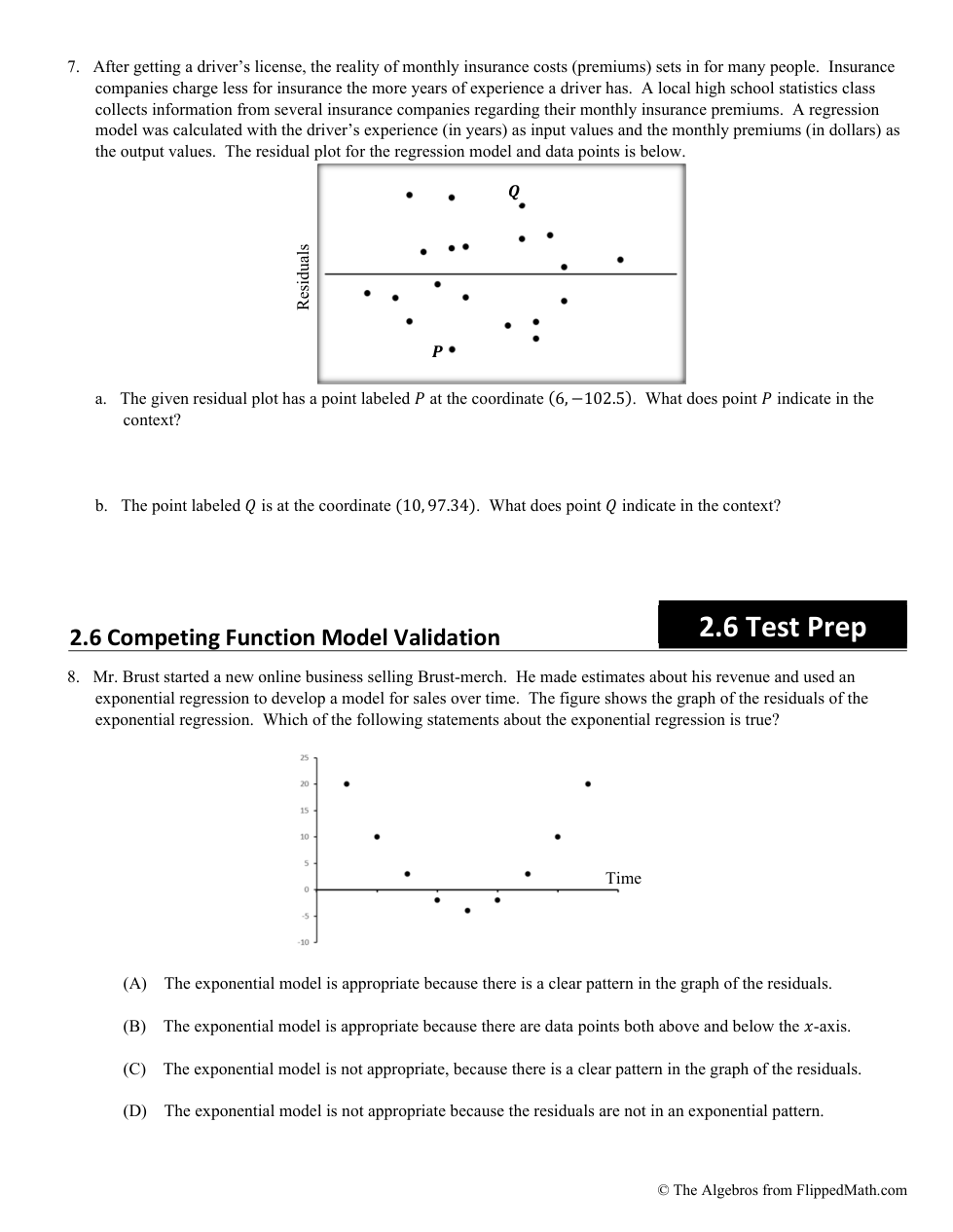
29.

Explain it in terms of the context of the problem

1
1
Question 31
31.

Explain it in terms of the context of the problem

1
1
Question 1
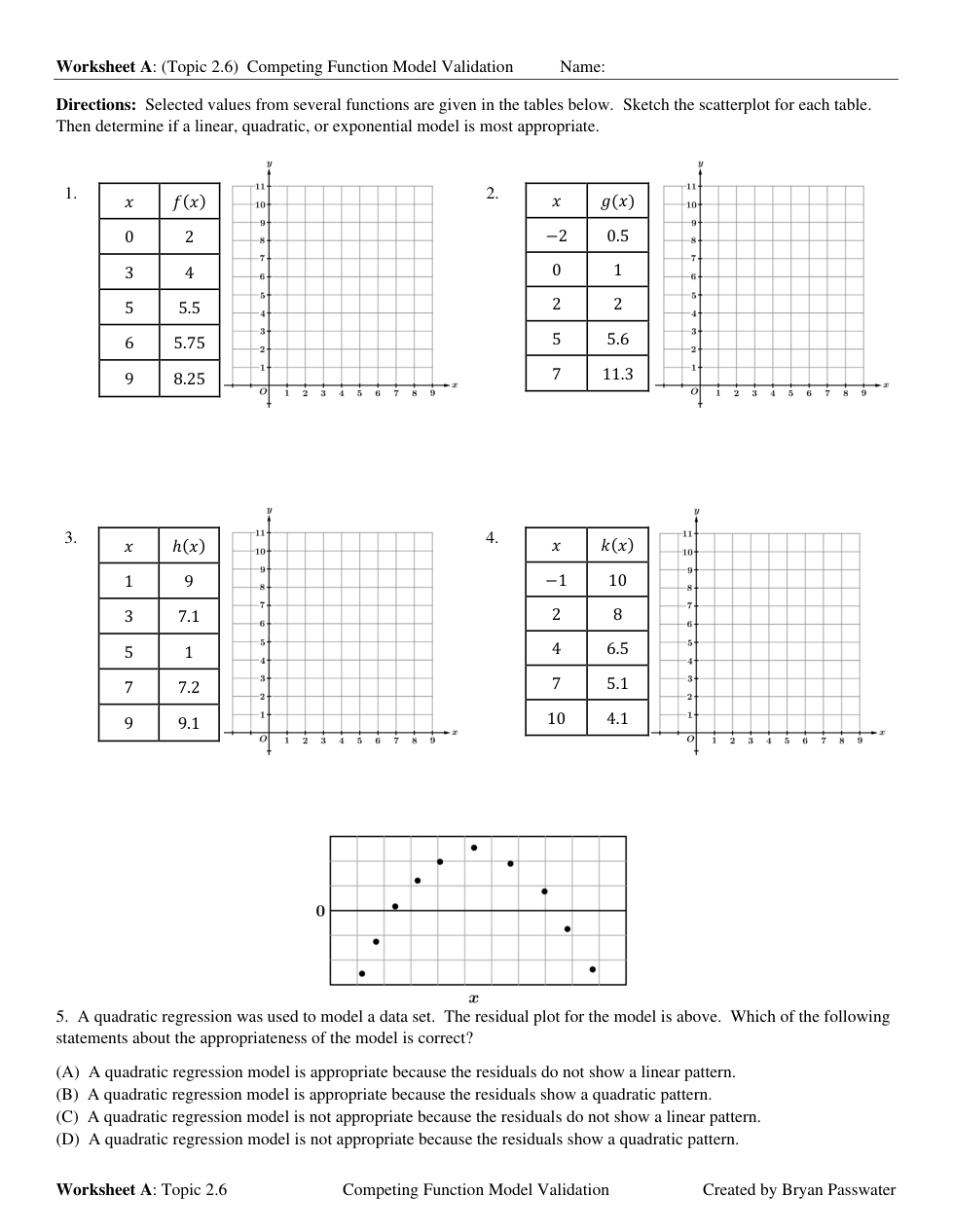
1.

Plot here

Question 2
2.

Question 3
3.

Plot Here

Question 4
4.

Question 5
5.

Plot Here

Question 6
6.

Question 7
7.

Plot Here

Question 8
8.

Question 9
9.
Question 10
10.

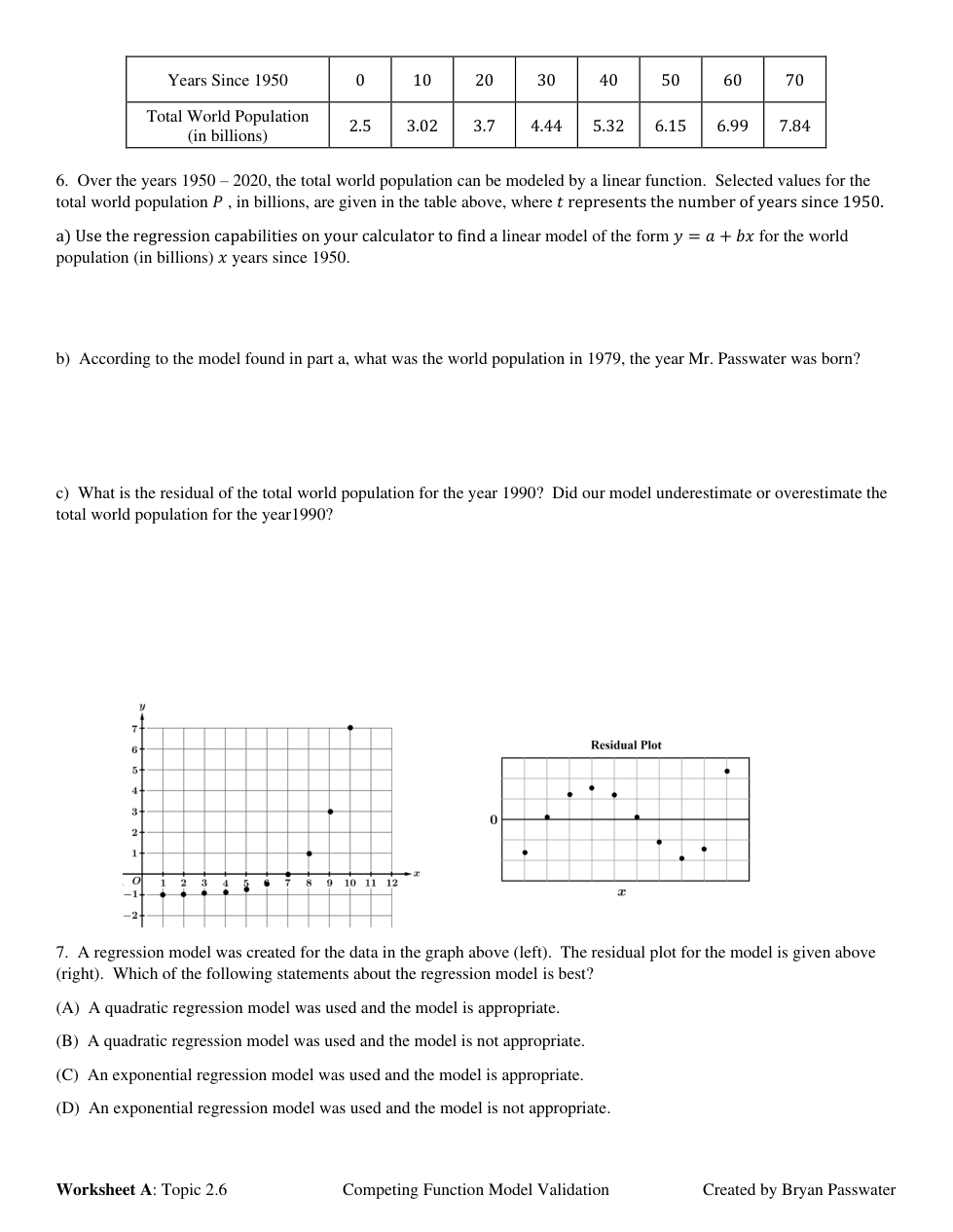
Type your equation in the form y=a+bx.
Round decimals to the nearest ten-thousandth
Question 11
11.

The population in 1979 would be _____billion. Round to the nearest ten-thousandth.

Question 12
12.

What is the residual?

Question 13
13.

Question 14
14.
Question 15
15.
Question 16
16.
Question 17
17.

Question 18
18.

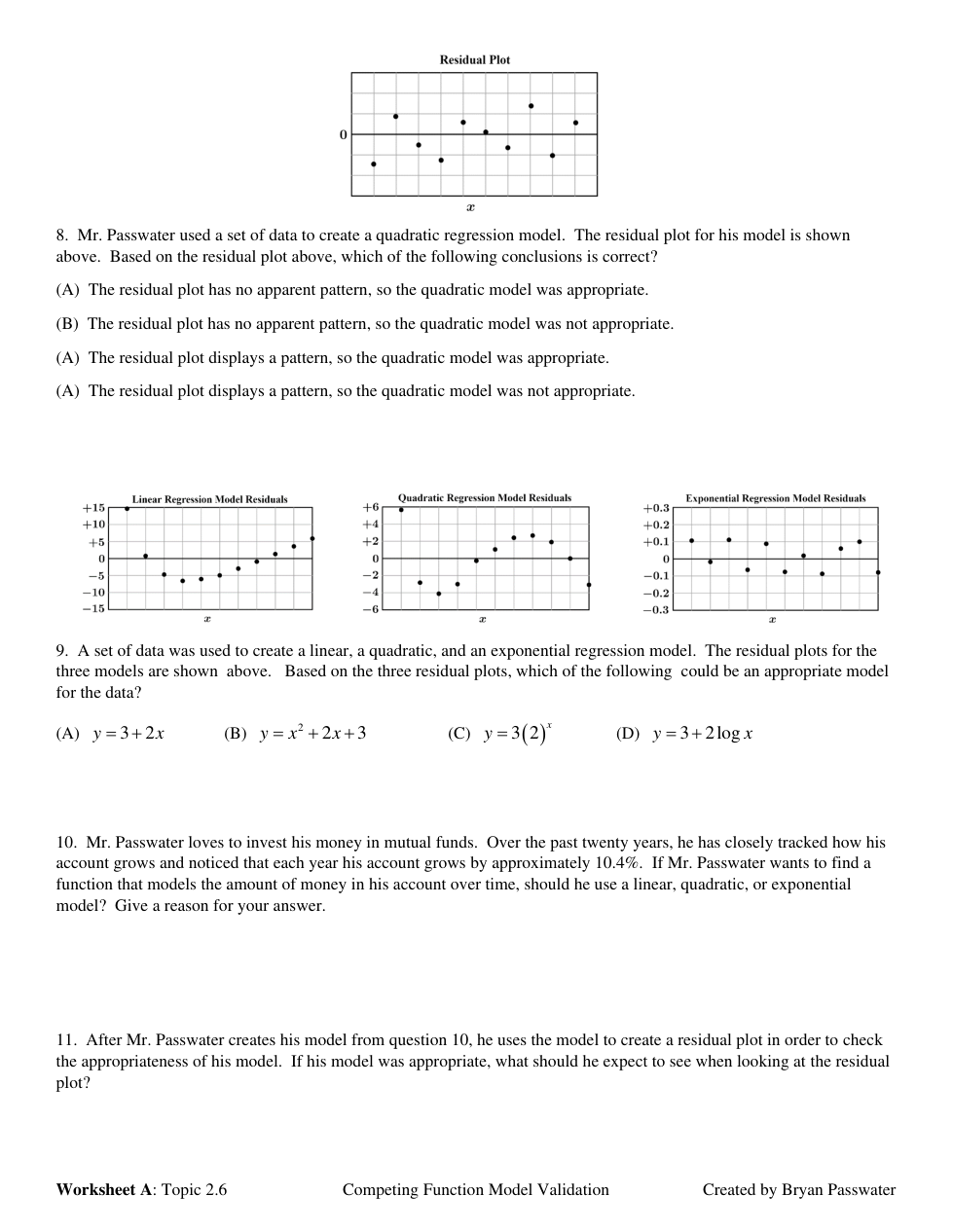
Explain why he should use the type model you selected in #17?

Question 19
19.

Explain what he should see in his residual plot if his model is appropriate?

Question 20
20.

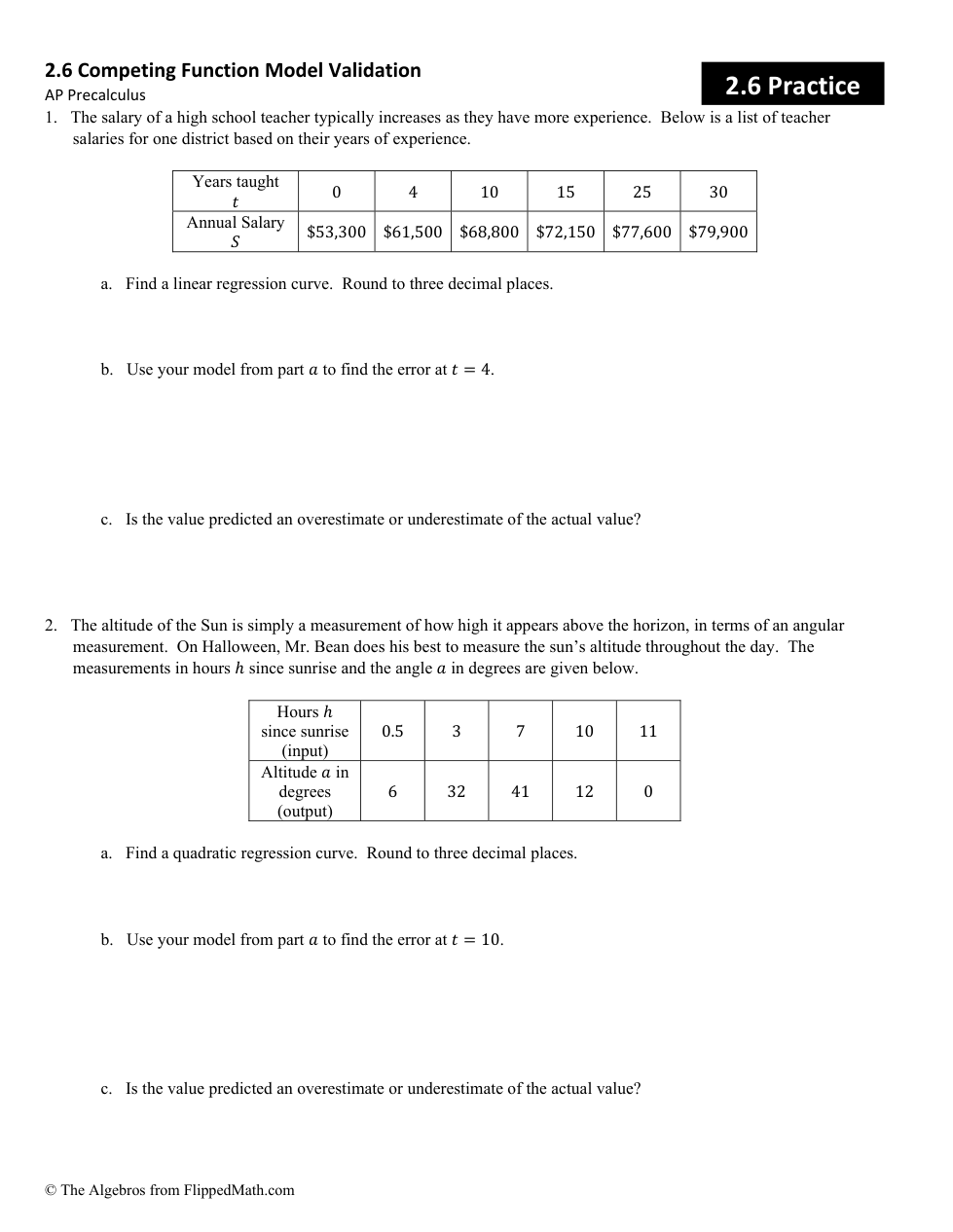
Type in the form y=a+bx

Question 21
21.

round to the nearest thousandth

Question 22
22.
Question 23
23.

Type in the form
a(h)=ah^2+bh+c

Question 24
24.
Question 25
25.
Question 26
26.
Question 27
27.
Question 28
28.
Question 30
30.

Explain it in terms of the context of the problem

Question 32
32.

Explain it in terms of the context of the problem

Question 33
33.
Which model is most appropriate?
Linear
Quadratic
Exponential
Which model is most appropriate?
Linear
Quadratic
Exponential
Which model is most appropriate?
Linear
Quadratic
Exponential
Which model is most appropriate?
Linear
Quadratic
Exponential
A
B
C
D
The model prediction was an______
underestimate
overestimate
A
B
C
D
A
B
C
D
A
B
C
D
He should use what type of model?
Linear
Quadratic
Exponential
overestimate
overestimate
I
II
III
IV
I
II
III
IV
I
II
III
IV
A
B
C
D