Which civilization was the origin of these inventions?
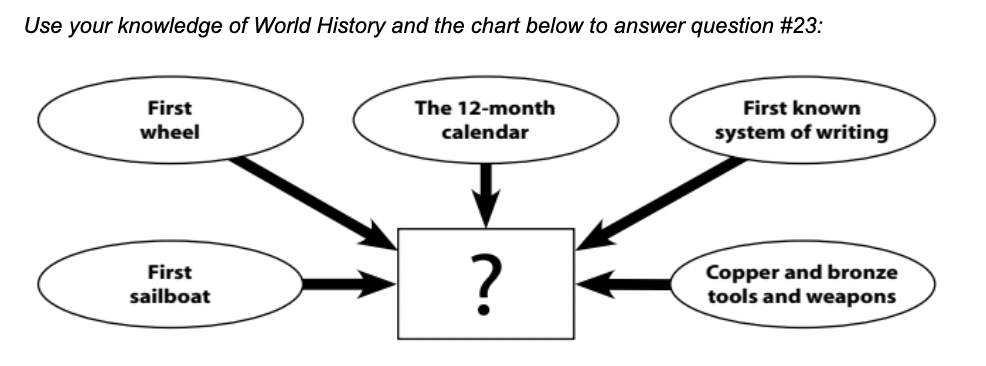
Which civilization was the origin of these inventions?
Your First and Last Name
Teacher
Choose your class period.
2. How did the domestication of plants and animals during the Neolithic Revolution affect human societies?
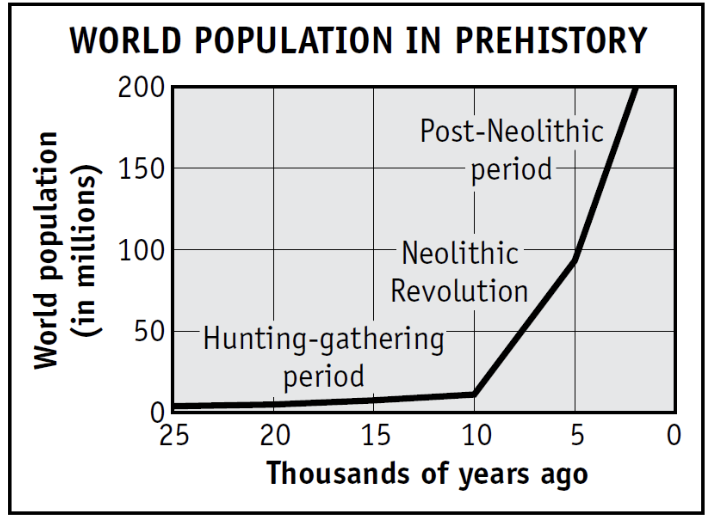
What effect did the Neolithic Revolution have on population density?
Which civilization was the origin of these inventions?
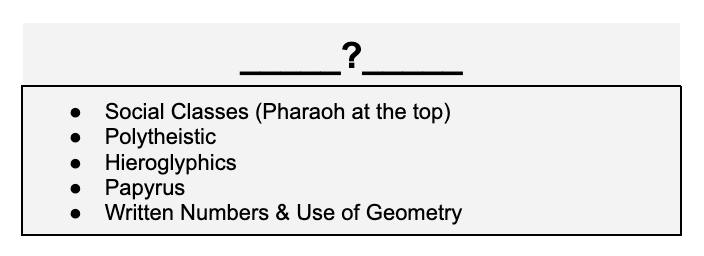
What is the best title for this chart?
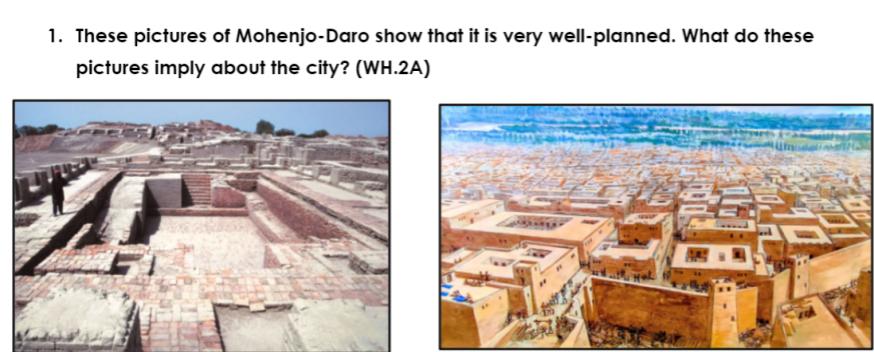
"The Indus Valley civilization, which flourished around 2500 BCE, is known for its advanced urban planning and sophisticated drainage systems. The cities of Harappa and Mohenjo-Daro were laid out on a grid pattern, with streets oriented in cardinal directions. The civilization engaged in extensive trade, both within the region and with distant lands, as evidenced by artifacts found as far away as Mesopotamia." What does the urban planning of the Indus Valley cities suggest about their society?
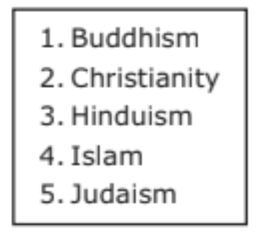
Name the religion(s) that this excerpt is from? "You shall not bear false witness against your neighbor." "
"The Indus Valley civilization, which flourished around 2500 BCE, is known for its advanced urban planning and sophisticated drainage systems. The cities of Harappa and Mohenjo-Daro were laid out on a grid pattern, with streets oriented in cardinal directions. The civilization engaged in extensive trade, both within the region and with distant lands, as evidenced by artifacts found as far away as Mesopotamia." The grid layout of Harappa and Mohenjo-Daro suggests that the Indus Valley civilization valued:
"The development of agriculture allowed for the establishment of permanent settlements, leading to the rise of civilizations. These early societies, often centered around fertile river valleys, saw the emergence of cities, complex institutions, and technological advancements. The rivers provided not only water for crops but also a means of transportation and trade. Among the most notable early river valley civilizations were those of Mesopotamia, Egypt, the Indus Valley, and China." Which of the following best describes a common feature of early river valley civilizations?
"The development of agriculture allowed for the establishment of permanent settlements, leading to the rise of civilizations. These early societies, often centered around fertile river valleys, saw the emergence of cities, complex institutions, and technological advancements. The rivers provided not only water for crops but also a means of transportation and trade. Among the most notable early river valley civilizations were those of Mesopotamia, Egypt, the Indus Valley, and China." What was the primary advantage of river valleys for the development of early civilizations?
"The development of agriculture allowed for the establishment of permanent settlements, leading to the rise of civilizations. These early societies, often centered around fertile river valleys, saw the emergence of cities, complex institutions, and technological advancements. The rivers provided not only water for crops but also a means of transportation and trade. Among the most notable early river valley civilizations were those of Mesopotamia, Egypt, the Indus Valley, and China." What role did rivers play in the economy of early river valley civilizations?
The Great Pyramid of Giza is most closely associated with which aspect of Egyptian civilization?
How did the Neolithic Revolution lead to later urban growth?
Which correctly describes world population growth after the Neolithic Revolution?
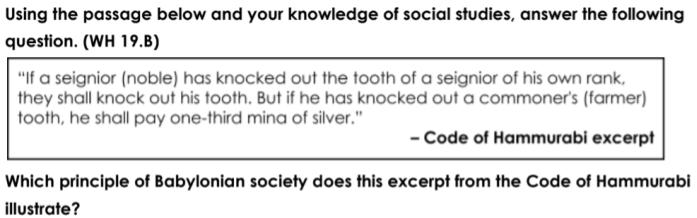
Use your knowledge of World History and the passage. "If a man wishes tp put his son out of his house, and declares before the judge: "I want to put me son out" then the judge shall examine his reasons. If the son is guilty of no great fault for which he should rightfully e put out, then the father shall not put him out" - law 168 of the Code of Hammurabi (circa 1700BC) This excerpt shows that Hammurabi’s Code continues to affect us today in its belief that —
The Code of Hammurabi was a major contribution to the development of civilization because it --
Which Chinese political philosophy used God to justify the Emperor’s right to rule?
Which of the religions listed above originated in the Indian subcontinent?
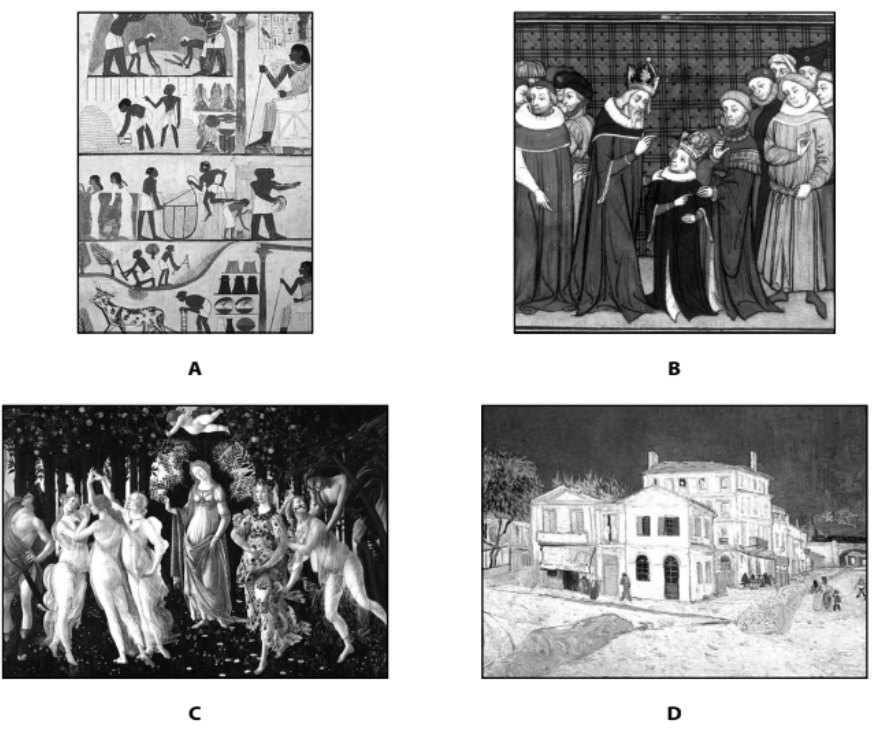
Which of the following portrays the elements of Egyptian art?
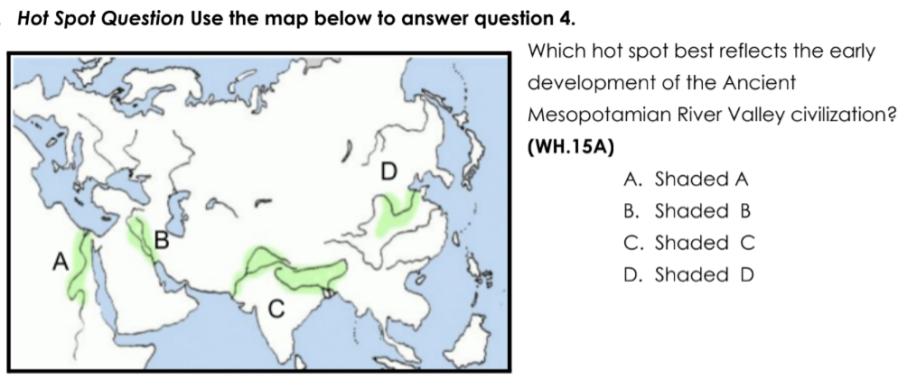
Which geographic characteristic most influenced where the ancient civilization of Mesopotamia developed?
Which of the following was not an important change caused by the Neolithic Revolution?
___________________________ and the oldest religion in the world ________________ originated in India.
Which ancient civilization developed the plow, the wheel, and cuneiform writing?
Why is the Neolithic Revolution often considered a turning point in history?
Which best explains the rise of the first river valley civilizations?
Which of the following best describes the role of women in river valley civilizations?
Which of the following is an essential characteristic of a civilization?
Early civilizations emerged as early as 7,000 years ago. What was one characteristic of these early civilizations?
An archaeologist leads a team to an excavation site where they hope to find the remains of an ancient culture. Which of the following would be considered a primary source?
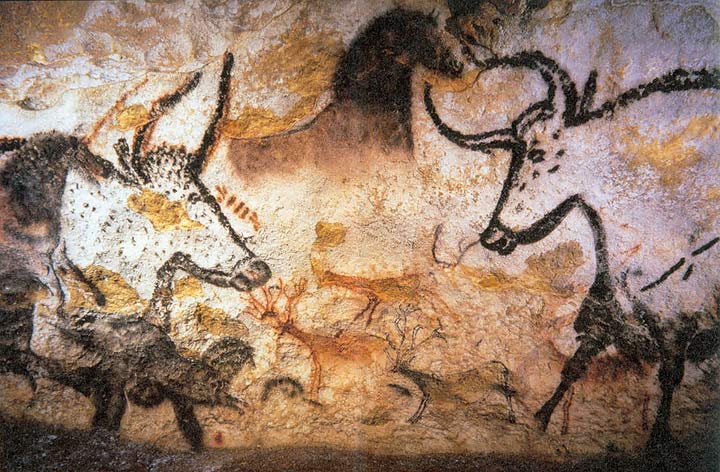
This prehistoric painting was discovered on a wall in a cave in France. Which conclusion would be most appropriate based on this cave picture?
The scene above was found by archaeologists on the wall of a tomb in Egypt. By studying this narrative, archaeologists learned important facts about life in ancient Egypt. What might archaeologists have learned?
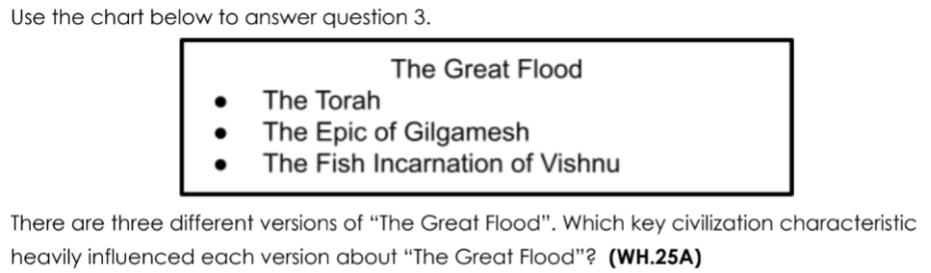
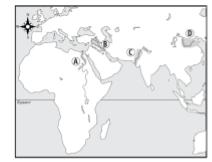
What do all of the locations indicated by letters on this map have in common?
Which characteristic best completes this chart?
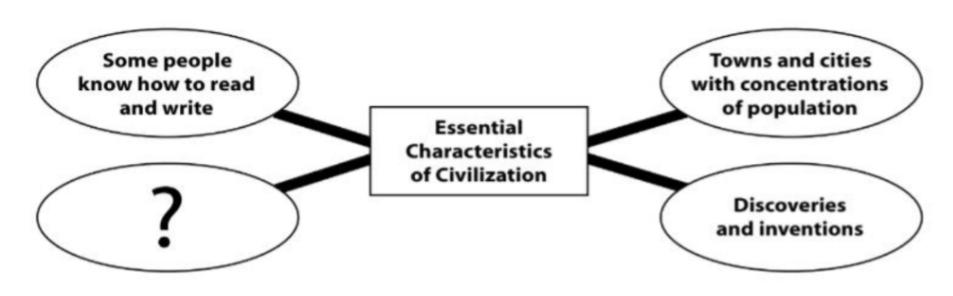
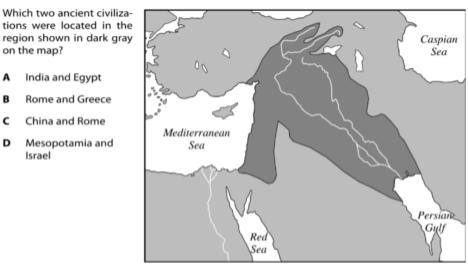
Which of the following best describes the significance of the Shang Dynasty in the Yellow River Valley?
The Yellow River, also known as the Huang He, is often called "China's Sorrow" due to its frequent and devastating floods. However, it was along this river that one of the world's earliest civilizations flourished. The fertile silt deposited by the river supported the growth of agriculture, allowing the rise of villages and, eventually, complex societies. The Shang Dynasty, one of the earliest recorded Chinese dynasties, emerged in this region. The people of the Yellow River civilization developed unique writing, advanced bronze casting techniques, and constructed large cities with elaborate palaces and tombs. Based on the passage, why is the Yellow River considered both a blessing and a curse to the civilization that developed along its banks?
