Monday 9/8 - PES 2.2
star
star
star
star
star
Last updated about 1 month ago
26 Nsɛmmisa
PES 2.2: The Daily Pattern
1

Part 2
1
1
1
1
Part 3
1
1
1
1
1
1
1
1
1
1
Part 4 - Using Data in an Investigation
Part 5 - Independent Practice
Exit Ticket
1
1
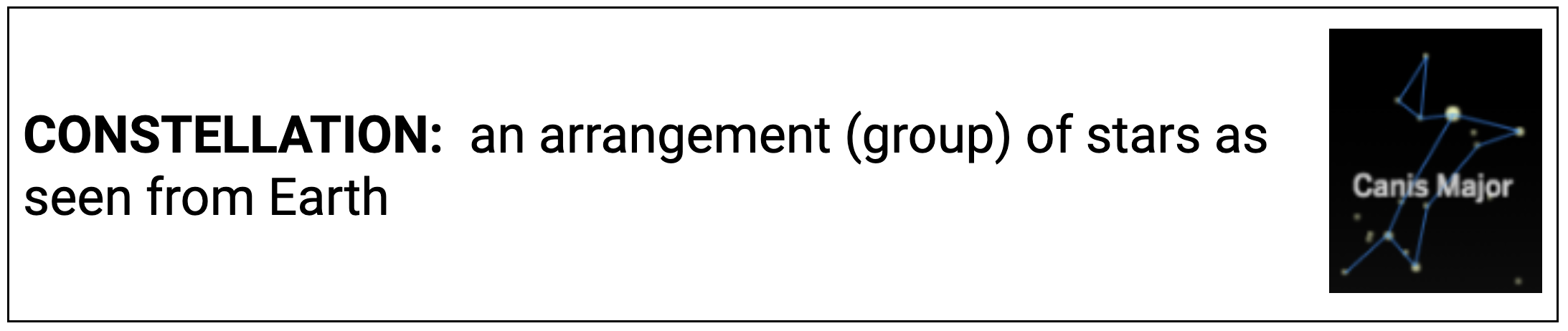
💚 Are the constellations (group of stars, dots) the same or different on each section of the artifact?

Setting up Our Investigation:
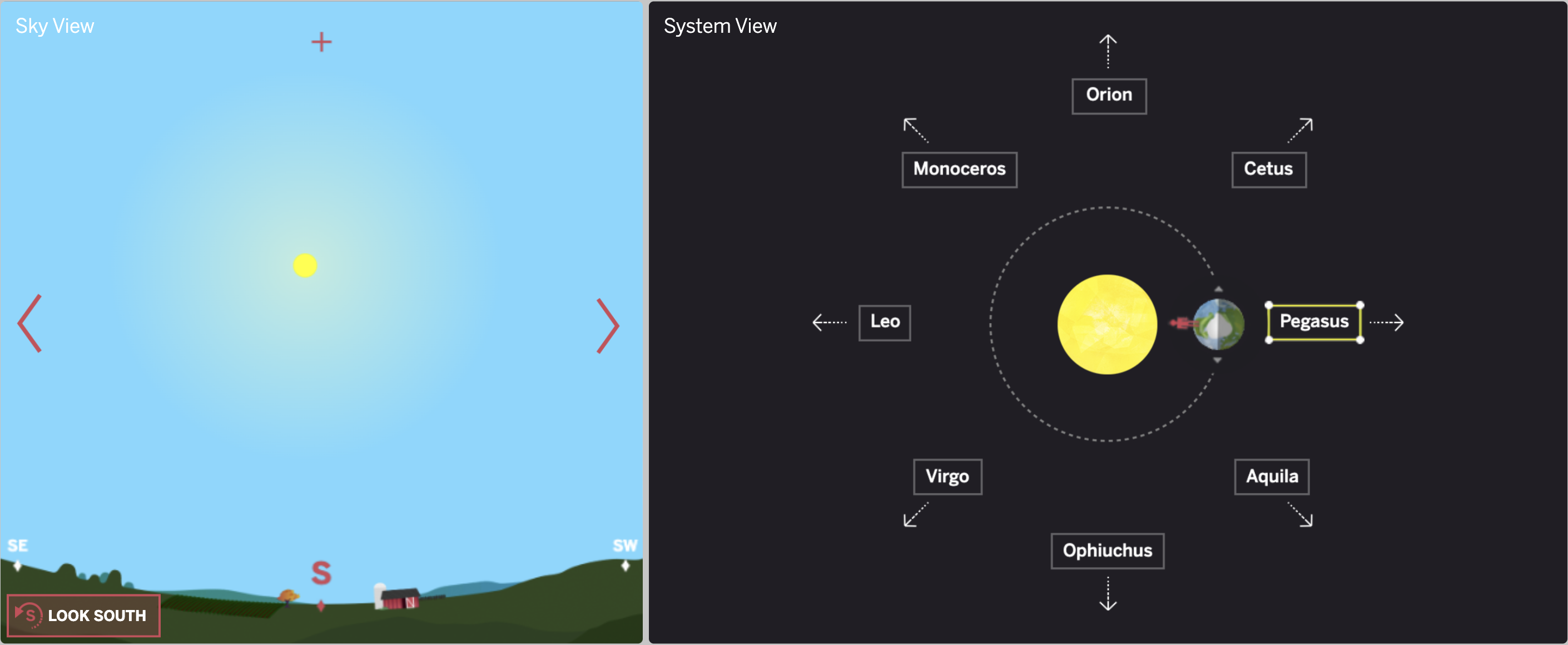
During today’s investigation, we will be tracking our constellation every 6 hours to see when it is visible in the sky. We’ll focus on one group of stars, the constellation Pegasus.
Click on the link to go to the PES Simulation: https://apps.learning.amplify.com/patternsofearthandsky/
DATA COLLECTION DIRECTIONS
For each time, decide if the constellation is visible.
Look at the System View and notice the position of the observer on Earth. Pick and record the image option that matches from the next page (Image A, B, C or D).
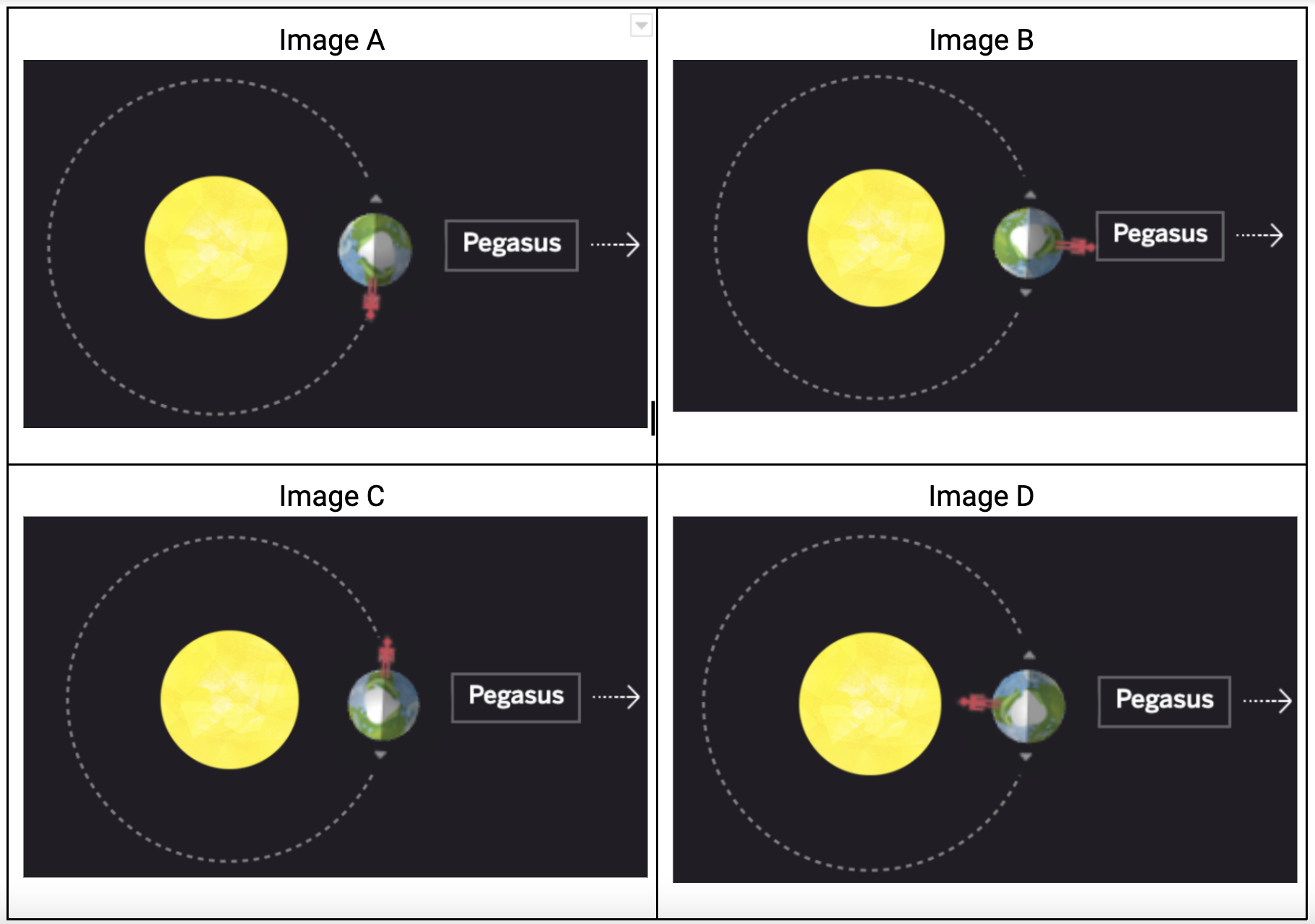
💚 Sept 1st 6:00 am: Is the constellation Pegasus visible - can you see it in the sky?
💚 Sept 1st 6:00 am: Which picture shows the correct position of the Earth and the observer on the Earth at this time?
💚 Sept 1st Noon 12:00pm: Is the constellation Pegasus visible - can you see it in the sky?
💚 Sept 1st 12:00 pm Noon: Which picture shows the correct position of the Earth and the observer on the Earth at this time?
💚 Sept 1st 6:00 pm: Is the constellation Pegasus visible - can you see it in the sky?
💚 Sept 1st 6:00 pm: Which picture shows the correct position of the Earth and the observer on the Earth at this time?
💚 Sept 2nd Midnight 12:00 am: Is the constellation Pegasus visible - can you see it in the sky?
💚 Sept 2nd 12:00 am Midnight: Which picture shows the correct position of the Earth and the observer on the Earth at this time?
Sept 2nd 6:00 am: Is the constellation Pegasus visible - can you see it in the sky?
Sept 2nd 6:00 am: Which picture shows the correct position of the Earth and the observer on the Earth at this time?
Sept 2nd Noon 12:00 pm: Is the constellation Pegasus visible - can you see it in the sky?
Sept 2nd 12:00 pm Noon: Which picture shows the correct position of the Earth and the observer on the Earth at this time?
Sept 2nd 6:00 pm: Is the constellation Pegasus visible - can you see it in the sky?
Sept 2nd 6:00 pm: Which picture shows the correct position of the Earth and the observer on the Earth at this time?
12:00 am Midnight
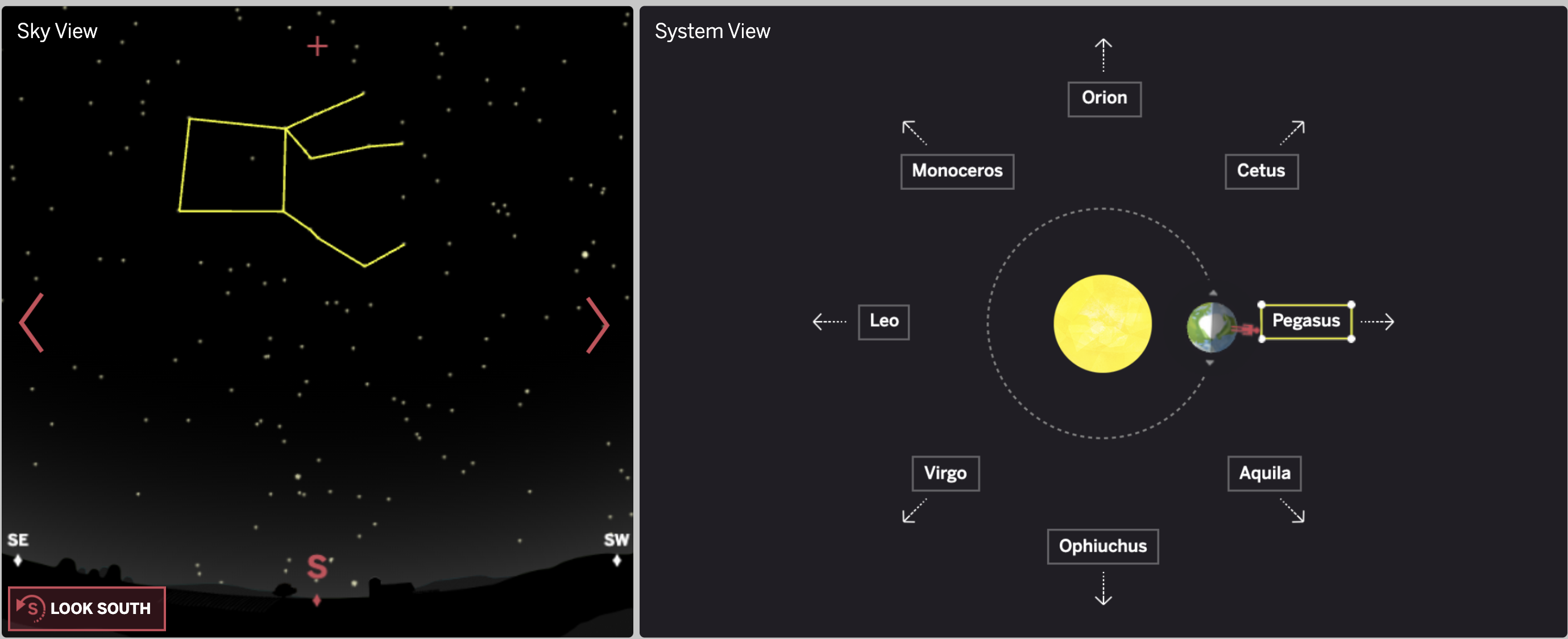
6:00 am
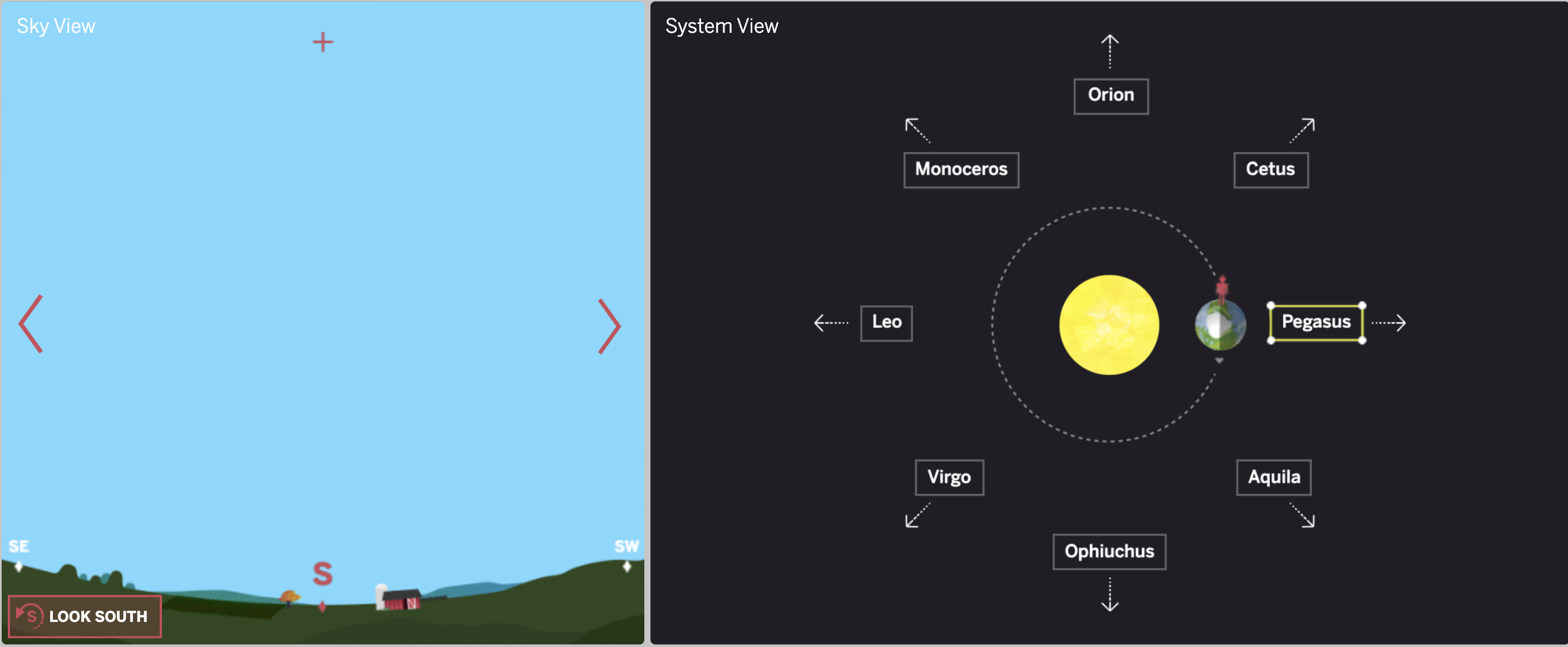
12:00 pm noon
6:00 pm
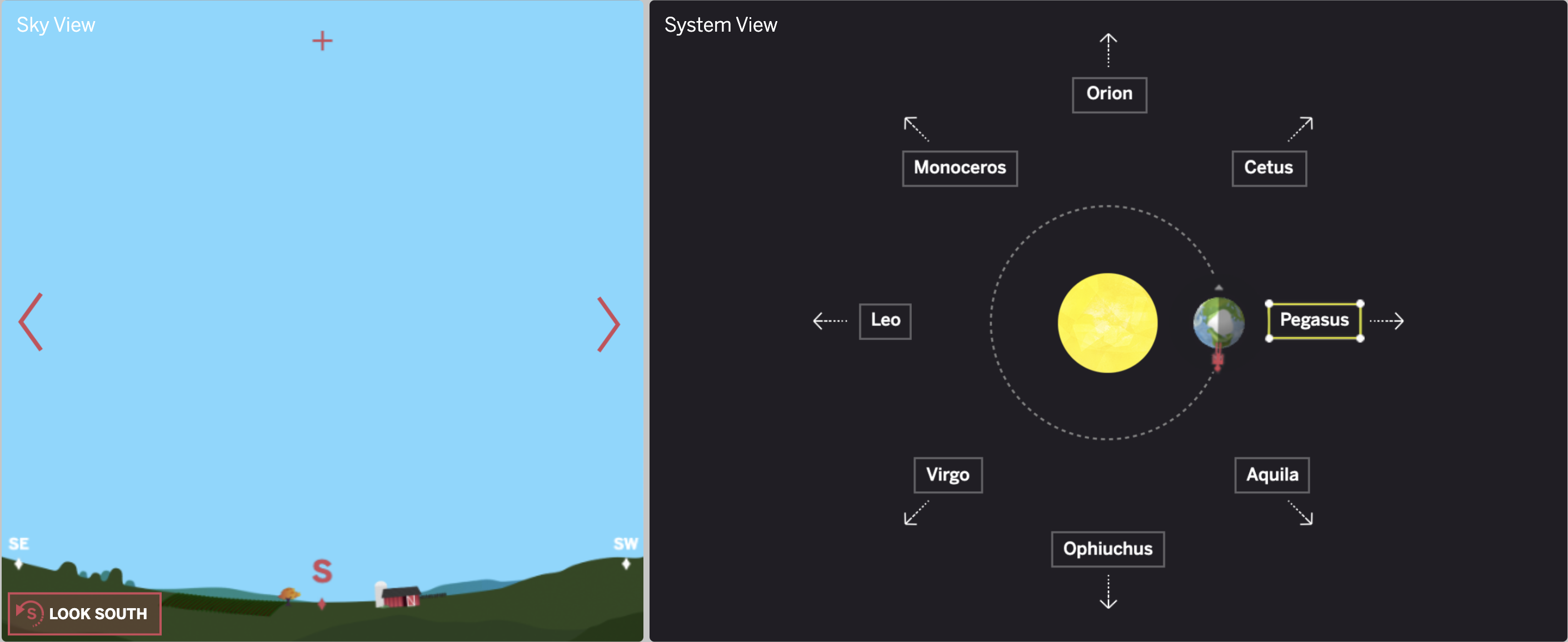
💚 Could you see the constellation at 12:00 am Midnight?

💚 What did you observe moving in Sky View? (left side of sim)
💚 What did you observe moving in System View? (right side of sim)
💚 Check For Understanding
If the Earth rotates (spins around) for one day, how many hours will have passed?
If the sun and stars don’t move in space, why do the sun and stars look like they are moving in the sky?
The sun and stars look like they are moving in the sky because the Earth is ____________
💚 Check For Understanding
Question: What causes the daily pattern of when we see the sun and other stars?
The daily pattern of when we see the sun and other stars is cause by _______
Taylor was making observations about the constellation Leo. He noticed that Leo was in the sky at midnight each night for a week, but it was NOT in the sky at 12pm noon.
What causes the pattern of when Taylor could see Leo?
The sun and other stars look like they move across the sky as time moves forward.
Are the stars actually moving? Explain your answer.
💚 Could you see the constellation at 6:00 am?
Could you see the constellation at 12:00 pm noon?
Could you see the constellation at 6:00 pm?