Log in
Sign up for FREE
arrow_back
Library

Lesson 4: Resources in Ecosystems

star
star
star
star
star
Last updated over 1 year ago
34 questions
Required
1

let's check up on your previous knowledge

1
Question 1
1.

Which is the opposite of condensation?

1
1

Learning Objectives:

1. Distinguish between population, community and ecosystem.

2. Explain how resources affect population size.

You have to start do your starter Activity by using the following oneDrive link :

( 7 mins )
Resources in Ecosystems- Starter activity

Objective 1:

Distinguish between population, community and ecosystem.

1
Question 4
4.

Objective 1- Starter activity :
Why do birds fly together in groups?

Activity 1.1: Keywords [Group work]
Examin the picture and answer question
Required
1
Required
1
Required
1
Required
1
Required
1
1
Required
1

Key Words:

Resource: substance or object in the environment required by an organism for normal growth

species: is a group of organisms that have similar traits and are able to produce fertile offspring.

Individual: a single member of a species

population: all the organisms of the same species that live in the same area at the same time

Community: is all the populations of different species that live together in the same area at the same time

Ecosystem: all the living and nonliving things in an area

Biosphere: The parts of Earth and the surrounding atmosphere where there is life.

Objective 1 - Check your Understanding :

Required
1
Required
1
Required
1
Required
1
Required
1
Required
1

Objective 2:

Explain how resources affect population size.

2.1 How do resources affect populations?

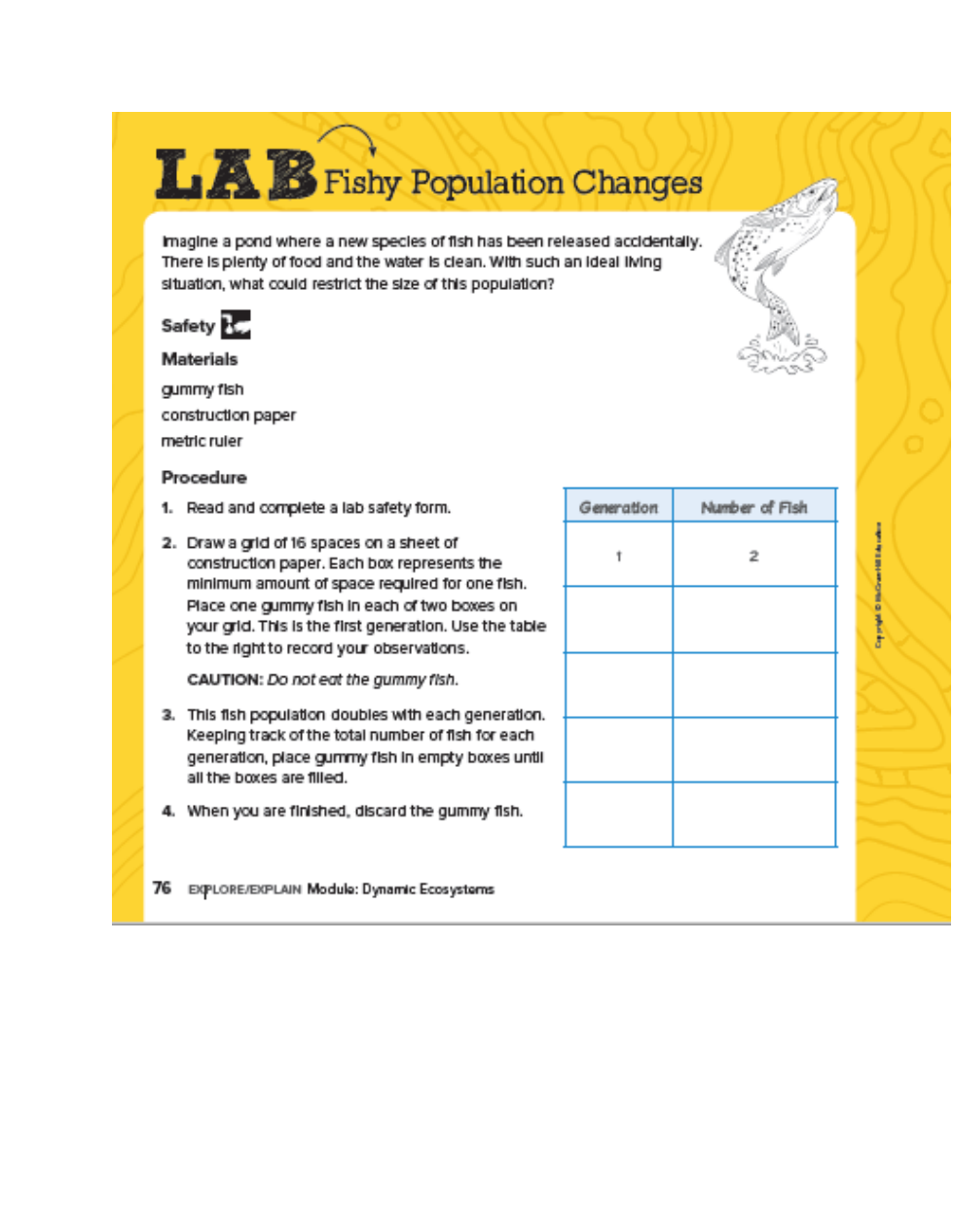
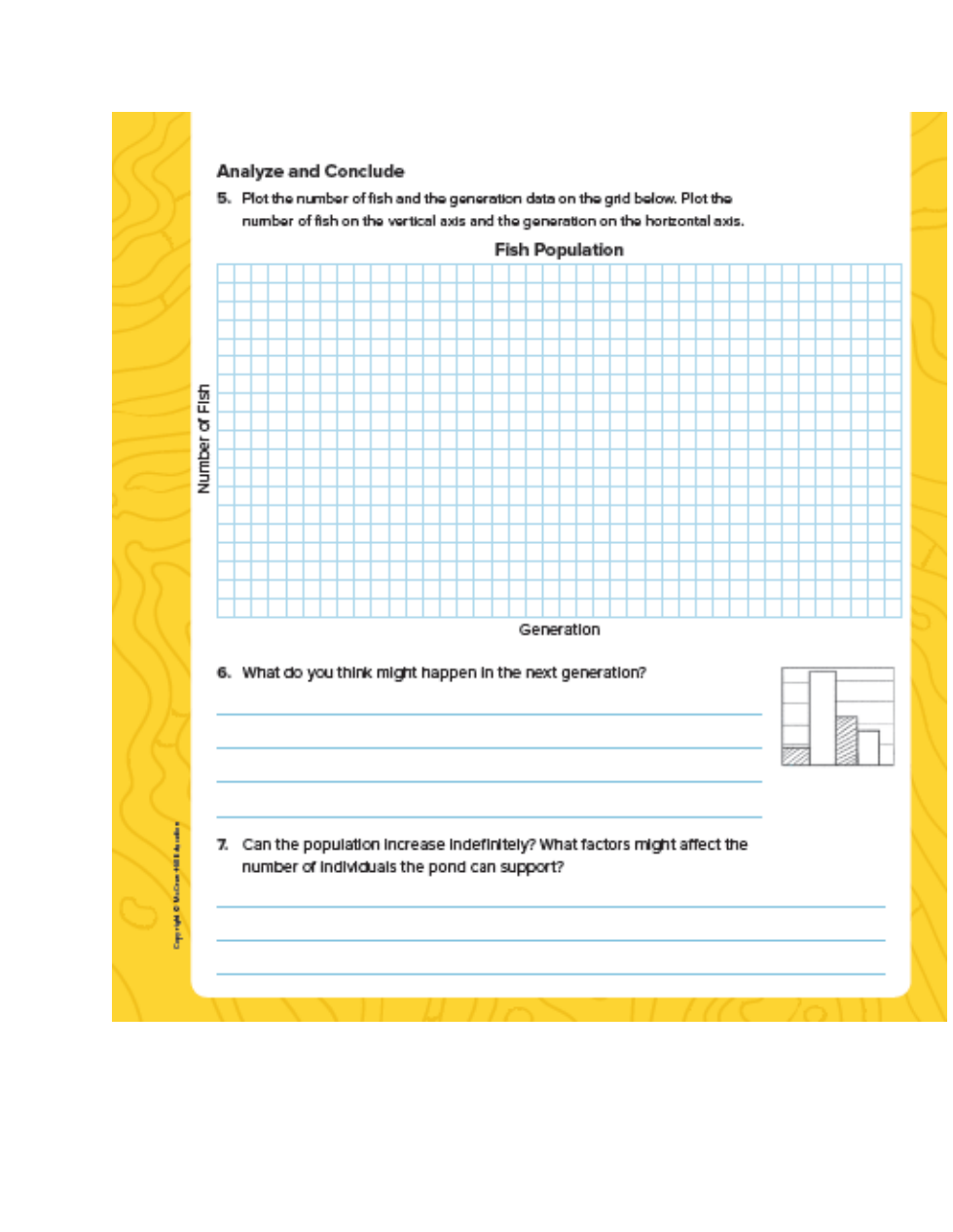
Activity 2.1: Lab Work

Fishy Population Changes

Students will do lab about Fish population and will submit lab work in Go-Formative

2.2 How Limiting Factors Affect Populations

Key words:

limiting factor is anything that restricts the size of a population.
Activity 2.2: Limiting Factors [Group work]
Examine the figure of a population of pikas below and Answer the question
Activity learnign outcome :
- Limiting factors
- Increas & deacrease of population
- Overpopulation
Required
1
Question 18
18.

Give example of resource pikas need to survive ?

Required
1
Required
1
Required
1
Required
1

Check your Understanding :

Required
1
Question 23
23.

If a disease destroy barley plants in an ecosystem, what would happen to the bird population that eat barley plants?

Required
1

2.3 How big can populations get?

Activity 2.3: Reading Activity learning Key words
Read the next paragraph about "How big can populations get?" and answer question as group
Required
1
Question 25
25.

What does Biotic potentiol mean?

Required
1
Question 26
26.

What is carrying Capacity ?

Required
1
Question 27
27.

THREE-DIMENSIONAL THINKING

Check your Knowledge :

Required
1
Question 28
28.

Without limiting factors, populations would keep growing in perfict condetion

Required
1
Required
1

2.4 Population Size Decrease [Self Learnign Mark]

Activity 2.4: Self Learning
Examine the table to learn about what happens to species that see large decreases in population size. Then prepare note about what you read
Required
1
Question 31
31.

Prepare note about what happens to species that see large decreases in population size

Exit Ticket:

A population of coyotes lives in a habitat with plentiful food and no predators. Analyze the graph and interpret
Required
1
Required
1
Question 34
34.

Real-World Connection

Question 2
2.

What follows evaporation during the water cycle? How does this occur?

Question 3
3.

What is the water cycle?

Question 5
5.

Resource:
Find any thing the animals & plants need to be a live ?

Question 6
6.

Species:
Find group of organisms that have similar traits?

Question 7
7.

Individual:
Find single member of organism ?

Question 8
8.

population:
Find organisms of the same type that live in the same area

Question 9
9.

Community:
Circle organism from different species that live together in the same area at the same time ( 3 mins )

Question 10
10.

Ecosystem:
Give example of living and nonliving things in same area - By designing a poster ( you can use play Dough) ( 10 mins )

Question 11
11.

Biosphere:
Do all parts of Earth and the surrounding atmosphere have life?

What level of organization each letter in below diagram represent
[ Individual - Biosphere – Ecosystem – Community - Population]
Question 12
12.

A

Question 13
13.

B

Question 14
14.

C

Question 15
15.

D

Question 16
16.

E

Question 17
17.

What dose the question mark [???] represent ? [Extra Mark]

Evaluate objective 1 - Understanding

https://forms.office.com/Pages/ResponsePage.aspx?id=BcfdYznIHEegZcnM9MOT0PNyJjLlvcVHt-5nZtmjny1UNk0ySDY3MFk1REhSQ1dRRDA2QjVOSUhTMC4u
Question 19
19.

What will happen to the water if population of pikas grows?

Question 20
20.

What will happen to the population of pikas if number of predators increase ?

Question 21
21.

List all factors that limit population of pikas ?

Question 22
22.

If the pikas population’s size grows so large more than the space and resources available in this area, this is

Question 24
24.

Which of the following are examples of limiting factors

Question 29
29.

What does a limiting factor do?

Question 30
30.

In a forest , what is a limiting factor for a rabbit population?

Question 32
32.

what is happening to their population size at the one year mark.

Question 33
33.

Which of the following explains what happened to the coyote population size when it reached its carrying capacity, and why?