HG U3D6 Rotations Sept10
star
star
star
star
star
Last updated about 1 year ago
16 Nsɛmmisa

1
1
1
1
1
1
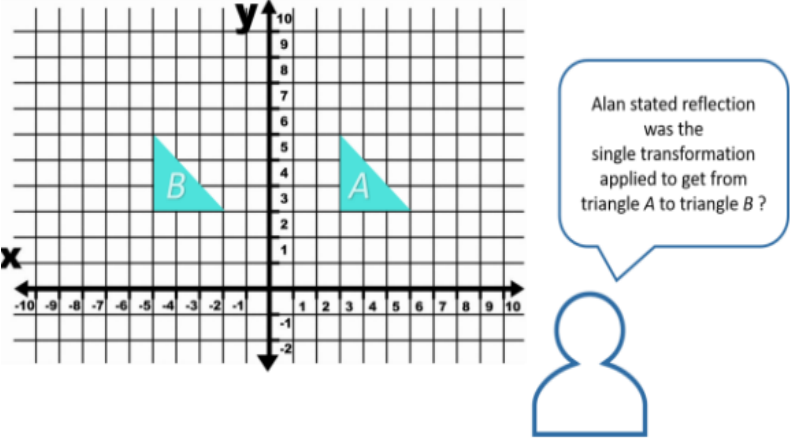
Explain why you agree or disagree with each of Alan’s statement below.
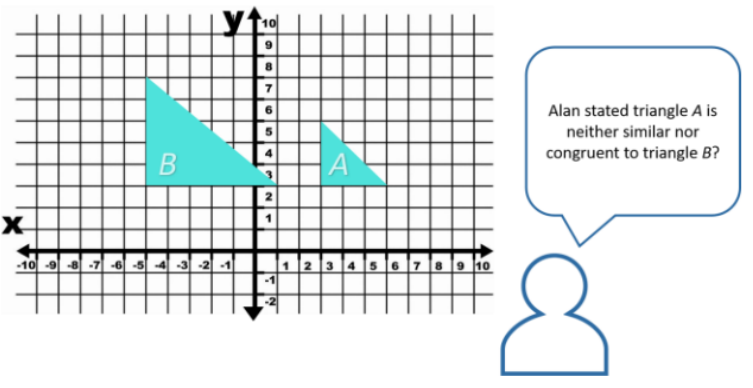
Explain why you agree or disagree with each of Alan’s statement below.
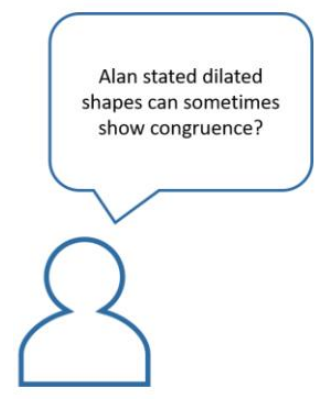
Explain why you agree or disagree with each of Alan’s statement below.
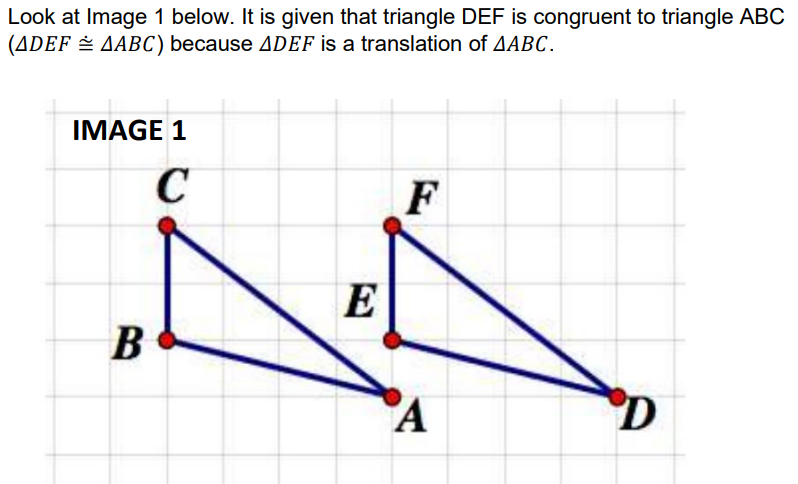
If 𝛥𝐷𝐸𝐹 is a translation of 𝛥𝐴𝐵𝐶, then what is true about the various sides and angles of the triangles? Specifically, what parts of these two triangles are related, and how are they related?
Are the triangles in the figure for Image 1 congruent? Why or why not?
How can you tell if a figure is a translation of another figure?
In general, what can you say about the sides and angles of figures that are translations, reflections, or rotations of other figures?
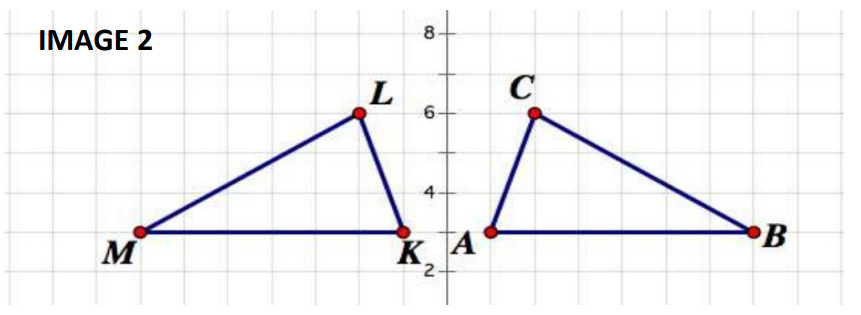
Are the triangles in Image 2 congruent? Why or why not? Justify your answers using the distance formula and measuring the angles on each triangle.
What transformation of 𝛥𝑀𝐿𝐾 creates the image for 𝛥𝐵𝐶𝐴?
Describe how you know using solid mathematical reasoning. How can you tell if a figure is a reflection of another figure?
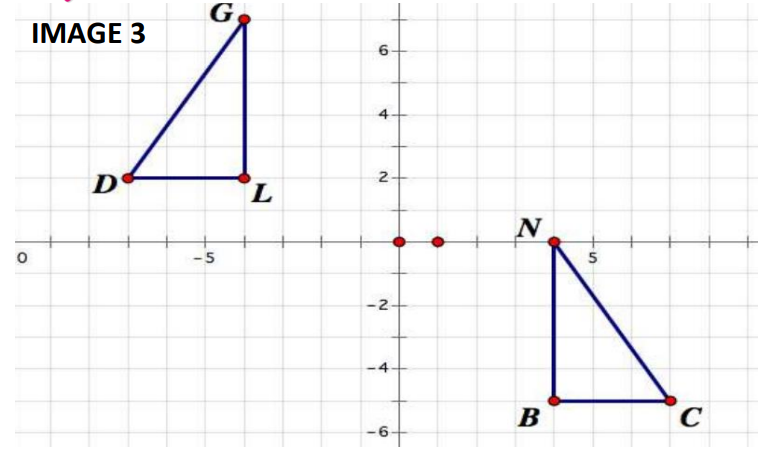
What sequence of rigid motions maps 𝛥𝐷𝐺𝐿 to 𝛥𝐶𝑁𝐵?
Which parts of the triangles in Image 3 must be congruent?
a. Segment GL is congruent to segment
b. Angle L is congruent to
c. Segment DL is congruent to segment
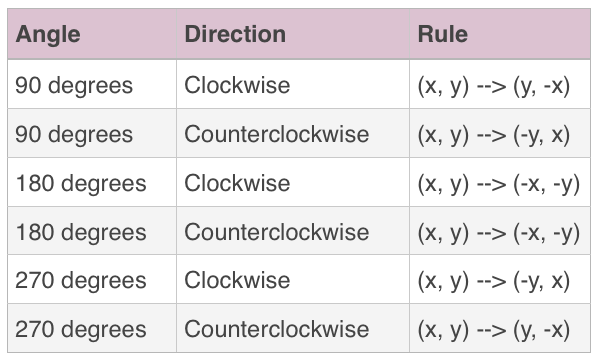
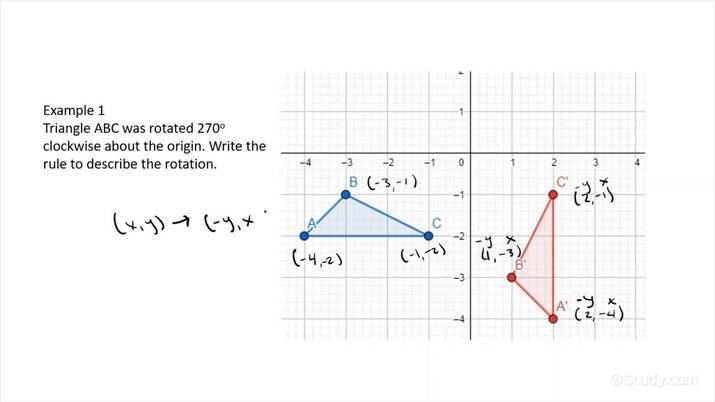
How can you tell if a figure is a rotation of another figure?
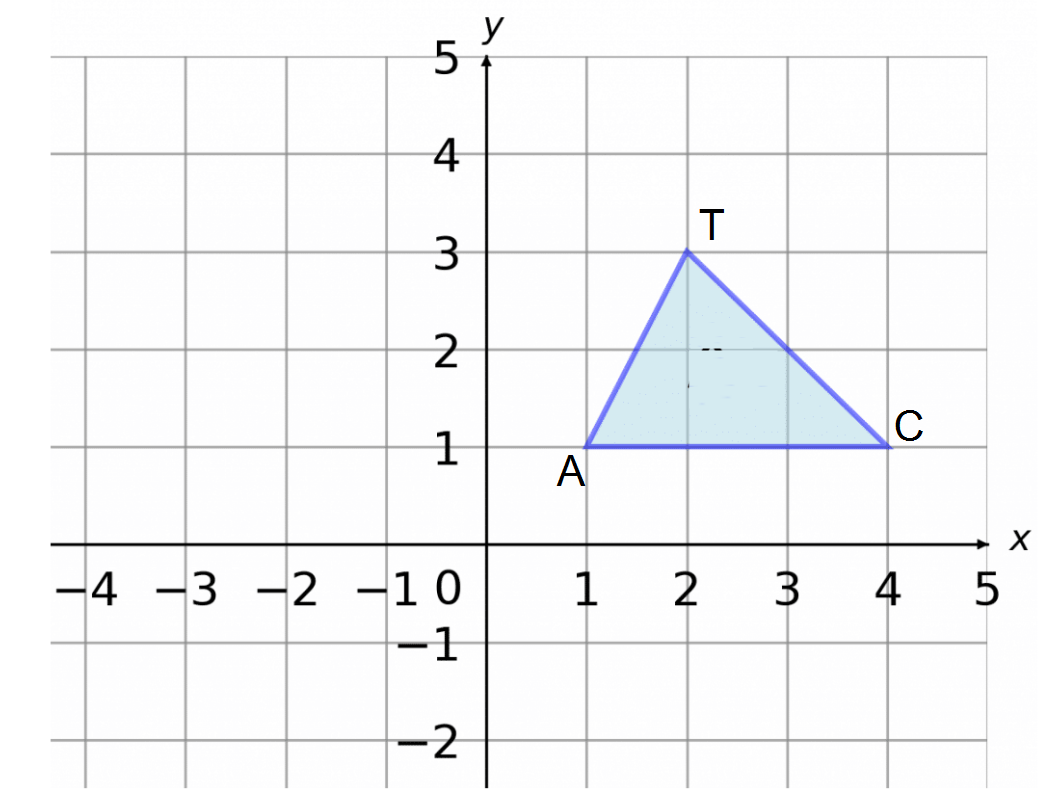
Rotate the triangle 90 degrees counterclockwise around the origin.
The new coordinates for 𝛥CAT would be:
C'
A'
T'
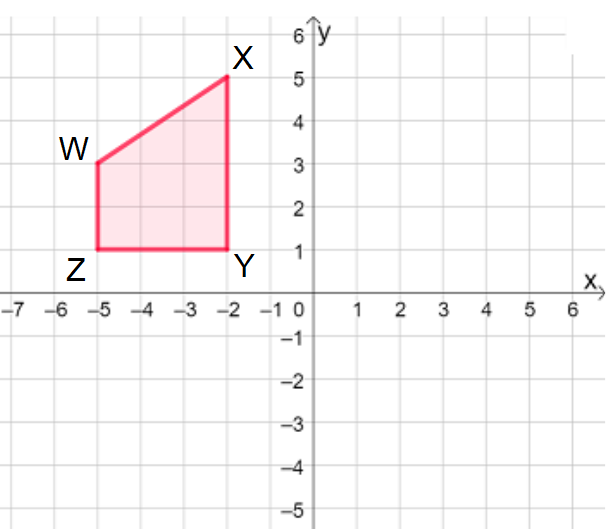
What are the coordinates of the image after completing 180 degree rotation around the origin?
W'
X'
Y'
Z'
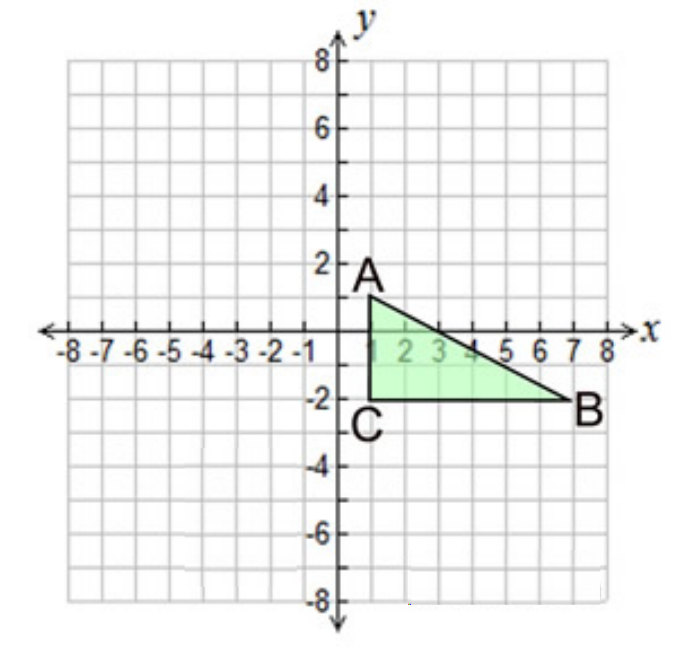
Rotate the triangle 270 degrees counterclockwise around the origin.
The new coordinates for 𝛥ABC would be:
A'
B'
C'
The blue triangle was rotated to the red triangle. The rotation was not around the origin, (0,0). What coordinate was the blue triangle rotated around to land onto the red one?