Log in
Sign up for FREE
arrow_back
Library

E.8.9A.1 & E.8.10.4

star
star
star
star
star
Last updated over 1 year ago
3 questions
1
E.8.9A.1
1
E.8.10A.4
1
E.8.9A.1
Question 1
1.

Question 2
2.

Question 3
3.

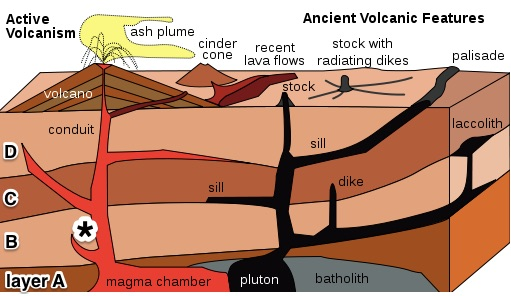
A. Magma exists below the Earth's crust.
B. Magma can push through holes or cracks in the crust.
C. All magma intrusions result in volcanoes on Earth's surface.
D. Layer A must exist at higher temperatures than the other layers.

According to the law of superposition, we can conclude that layer A in the diagram is the oldest layer. Based on the layers and structures seen here, we can draw additional conclusions. Review the prompt and select all that could apply.
A and D
A, B, D
A and B
A, B, C, D
An architectural team is planning the design of their client's home. They are meeting with the client today to explain how they would like to design his home using passive solar design. How might they pitch this idea to their client?
We would like to design your home using a passive solar design so we can add this to our reperotoire of designs.
We would like to use passive solar heating in your home so we need to design your home with large windows facing north.
We would like to use passive solar heating in your home so we need to use lots of mechanical devices to heat and cool your home.
We would like to design your home using passive solar design so you can cut down on energy costs and maximize the use of sunlight in your home.
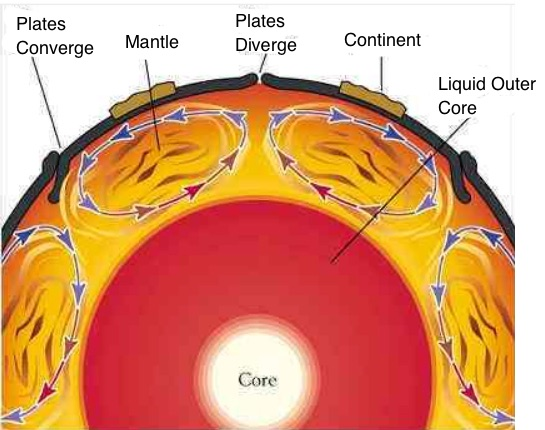
Heat generated from the radioactive decay of elements deep in Earth's interior creates magma or superheated molten rock in upper area of the mantle. Using a method of heat transfer (conduction, convection, or radiation), explain how the super hot magma is transferred up to the Earth's crust, creating the currents you see here.
Heat energy produced in the core radiates up through the magma. The heat energy forces the warming magma upward toward the crust. When the magma cools, it sinks back down toward the core.
Heat energy is conducted up through Earth's layers. The metallic minerals within the layers are excellent conductors of heat. As the heat energy travels through the rock, some melts and rise up to the crust.
The super-heated magma creates convection currents by a combination of radiation and convection. Heat radiates through the magma. Some magma melts because of its chemical composition and flows or convects up to the crust.
The deep, hot magma becomes less dense than the cooler, upper mantle rocks and it rises. At the same time, the magma close to the surface cools and sinks to replace the rising magma. This movement creates convection currents.