HG U4D2 Executing Dilations Sept19
star
star
star
star
star
Last updated about 1 year ago
26 Nsɛmmisa
1
Vocabulary:
How is a dilation different from a reflection, rotation, and translation?
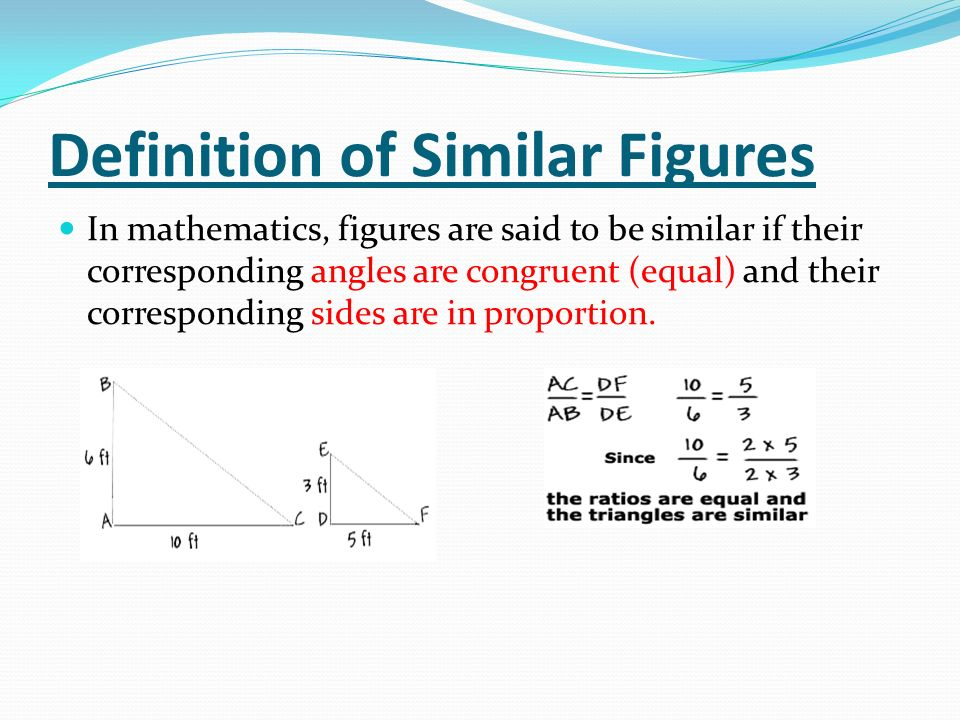
What does it mean for two figures to be similar?
How do you determine if a dilation is an enlargement or reduction?
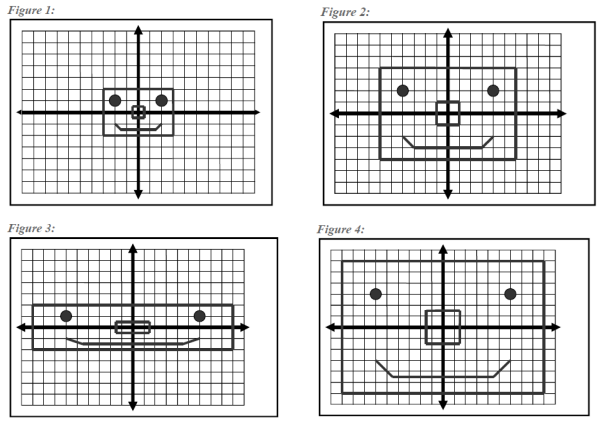
Compare Figure 1 to each of the other figures and answer the following questions.
Which figures are similar to figure 1?
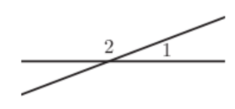
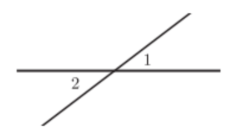
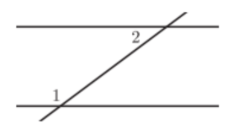
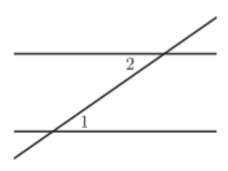
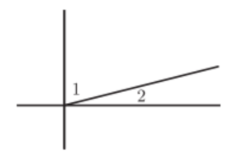
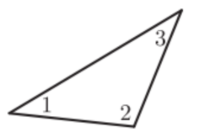
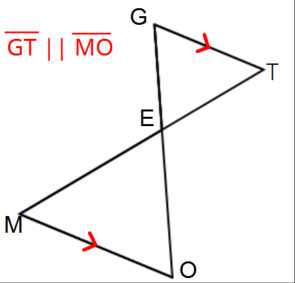
Match the diagrams below with the best name or phrase that describes the angles.
| Draggable item | arrow_right_alt | Corresponding Item |
|---|---|---|
| arrow_right_alt | Vertical Angles | |
| arrow_right_alt | Same Side Interior Angles or Consecutive Interior Angles | |
| arrow_right_alt | Triangle Sum Theorem | |
| arrow_right_alt | Complementary Angles | |
| arrow_right_alt | Linear Pair | |
| arrow_right_alt | Alternate Interior Angles |
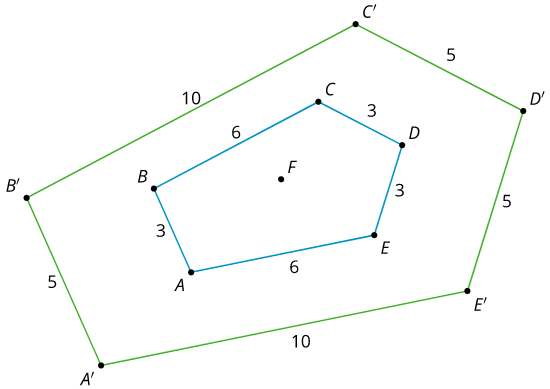
Pentagon A'B'C'D'E' is the image of pentagon ABCDE after a dilation centered at F.
What is the scale factor?
The scale factor to dilate pentagon ABCDE to pentagon A'B'C'D'E' is
A polygon has a perimeter of 18 units. It is dilated with a scale factor of 3. What is the perimeter of its image?
Another polygon has a perimeter of 12 units. It is dilated with a scale factor of 3/4. What is the perimeter of its image?
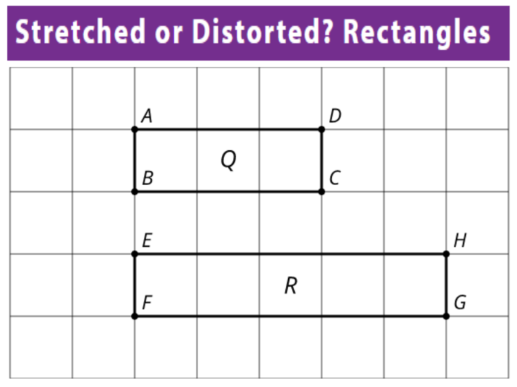
Are these rectangles similar?
Explain how you know.
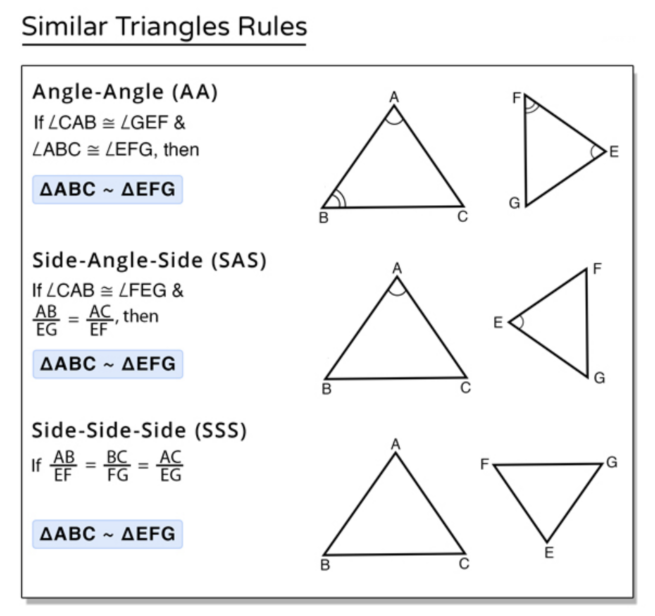
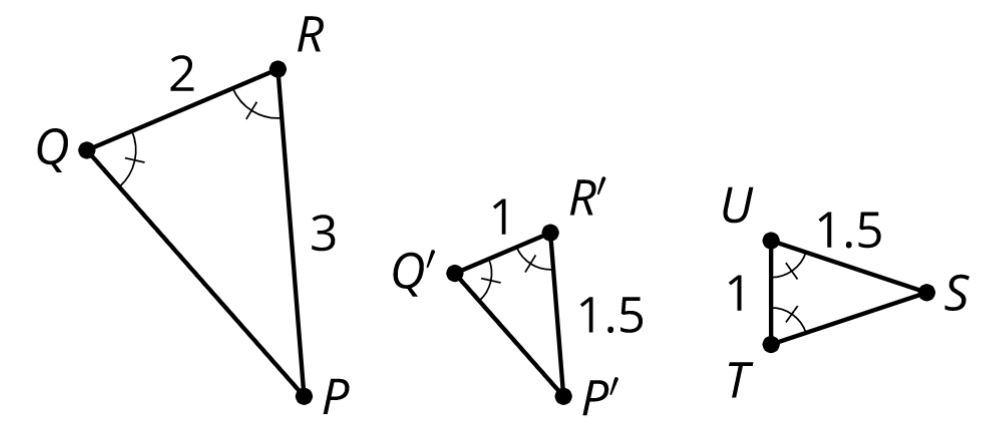
How can we prove the two triangles are similar?
How could you justify the statement?
Triangle P'Q'R' is congruent to triangle STU.
Angle Q' is congruent to
Segment Q'R' is congruent to segment
Angle R' is congruent to
Therefore, triangle P'Q'R' is congruent to triangle STU by
How could you justify the statement?
Triangle PQR is similar to triangle STU.
Angle Q is congruent to
Angle R is congruent to
Therefore, triangle PQR is similar to triangle
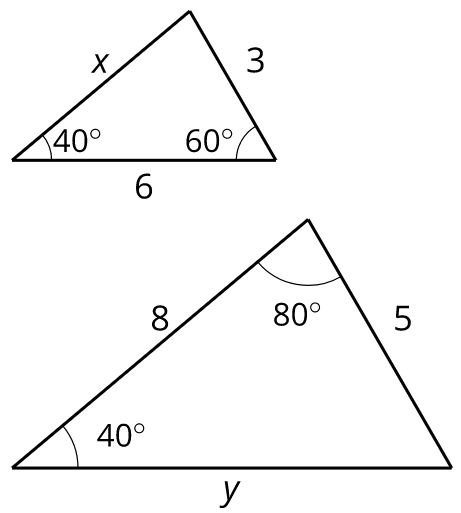
Explain how you know the triangles are similar.
If the small triangle increased in size to become the larger one, what is the scale factor?
Scale factor =
Use the scale factor to find the value of x and y.
x =
y =
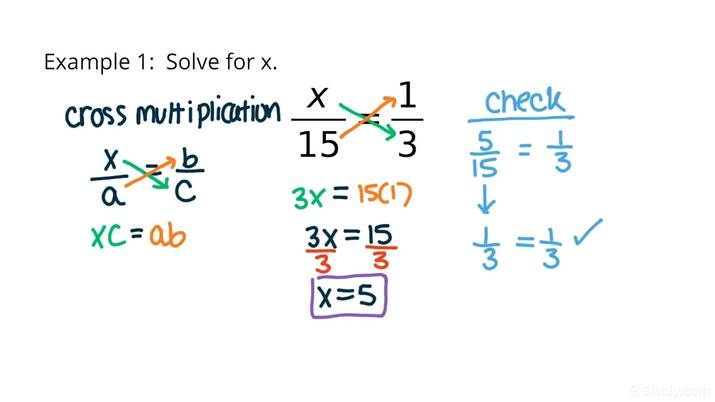
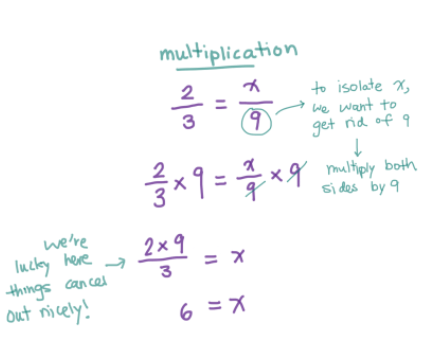
Solve the proportion.
x =
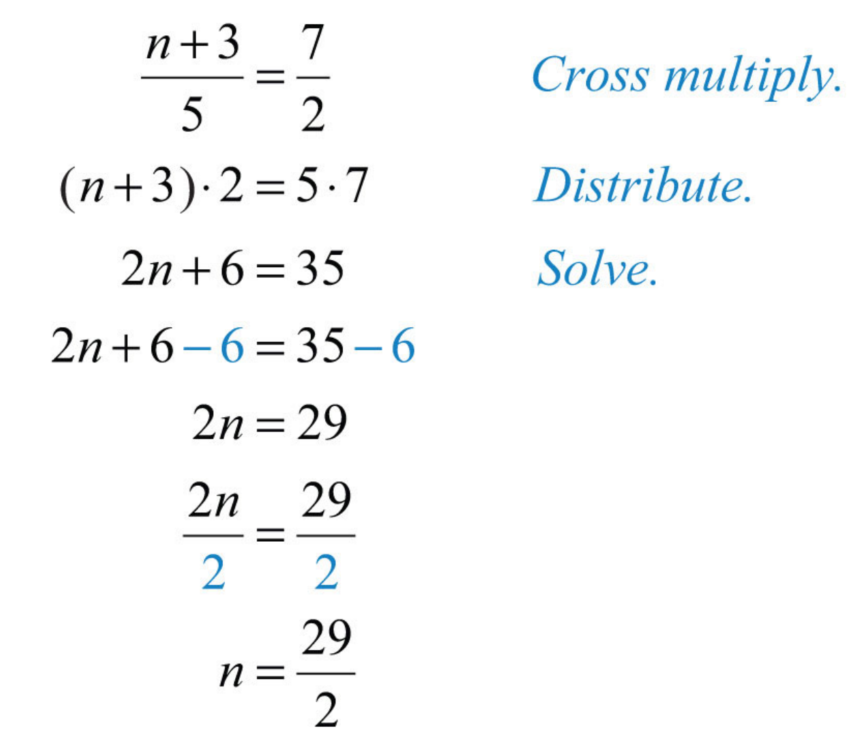
Solve the proportion.
x =
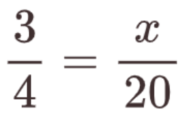
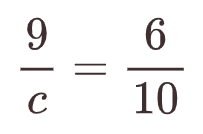
Solve the proportion.
c =
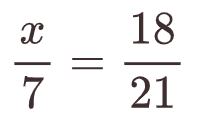
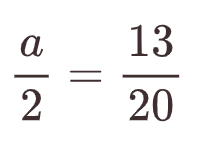
Solve the proportion.
a =
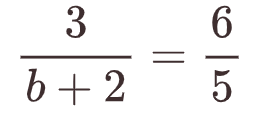
Solve for b.
b =
Use the definition of similar figures to justify your response.
How do the coordinates of Figure 2 compare to the coordinates of Figure 1?
How do the coordinates of Figure 4 compare to the coordinates of Figure 1?
Is having the same angle measurement enough to make two figures similar? Why or why not?
Triangle ABC is taken to triangle A'B'C' by dilation. Which of these scale factors for the dilation would result in an image that was LARGER than the original figure?