1. Ensure all tabs on your Chromebook are closed before beginning your assessment.
2. You will be given 70 minutes to complete your Unit 2 End of Unit Assessment
3. Please read all questions carefully and make sure to check your work before submitting.
1. Ensure all tabs on your Chromebook are closed before beginning your assessment.
2. You will be given 70 minutes to complete your Unit 2 End of Unit Assessment
3. Please read all questions carefully and make sure to check your work before submitting.
Required
1 point
1
Question 1
1.
Which cell structure is mainly responsible for releasing energy from food molecules in some single-celled organisms?
Required
1 point
1
Question 2
2.
The data table below shows the presence or absence of DNA in four different cell organelles.
Information in the table suggests that DNA functions:
Required
1 point
1
Question 3
3.
Which organism is considered an exception to the cell theory because it has a noncellular structure?
Required
1 point
1
Question 4
4.
Which sequence represents structures organized from least complex to most complex?
Required
1 point
1
Question 5
5.
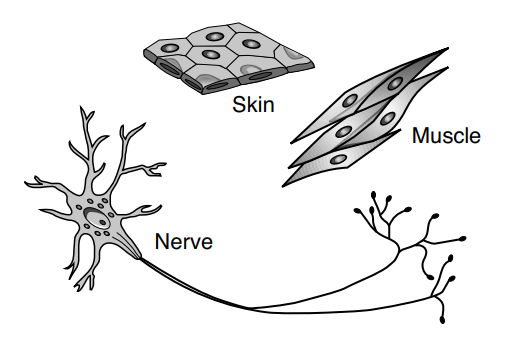
The cells in the diagram below were present in the same individual.
These cells are most similar in the:
Required
1 point
1
Question 6
6.
The cell theory states that:
Required
1 point
1
Question 7
7.
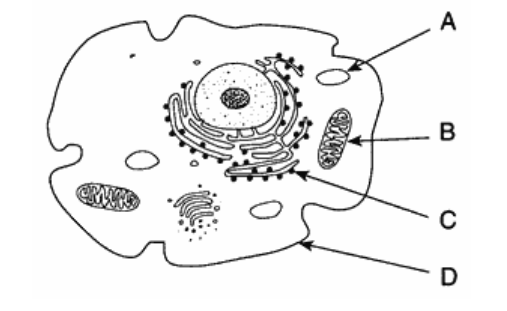
Which letter in the diagram below indicates an organelle that functions primarily in the synthesis of long chains of amino acids?
Required
1 point
1
Question 8
8.
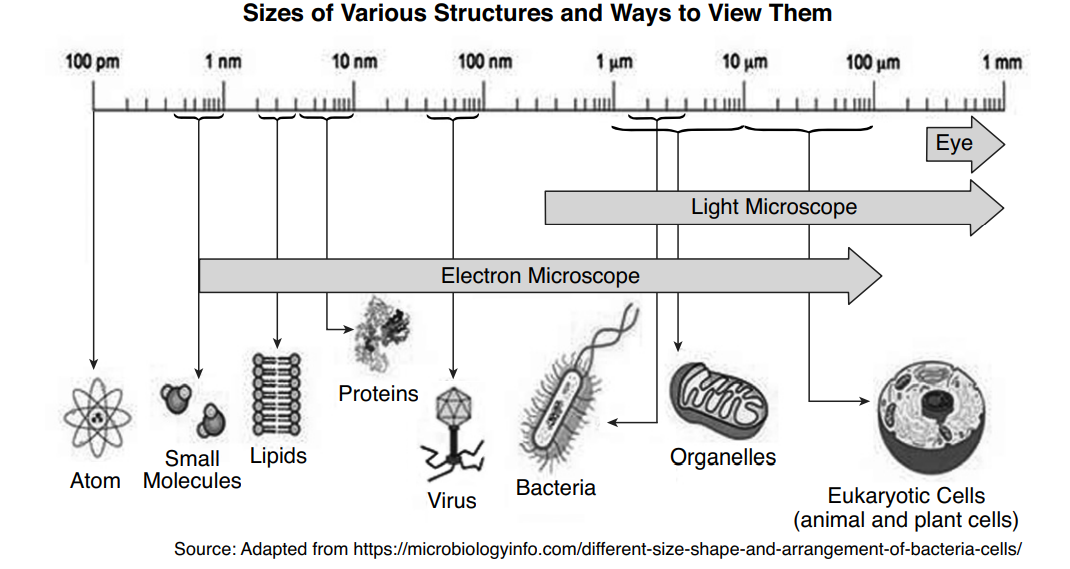
Base your answers to question 8 on the diagram below and on your knowledge of biology.
ONLY an electron microscope can be used to view:
Required
1 point
1
Question 9
9.
Base your answers to question 9 on the information below and on your knowledge of biology.
"Proteins are an important part of any diet. Many kinds of food can provide the proteins that we need."
Identify the structure in a cell where proteins are synthesized:
Required
1 point
1
Question 10
10.
Sequence the structures listed below in order from least complex to most complex.
1= least complex, 5= most complex
organelle
tissue
organism
organ
cell
Required
1 point
1
Question 11
11.
Single-celled organisms are able to maintain homeostasis, even though they lack higher levels of organization such as organs and organ systems, because:
Required
1 point
1
Question 12
12.
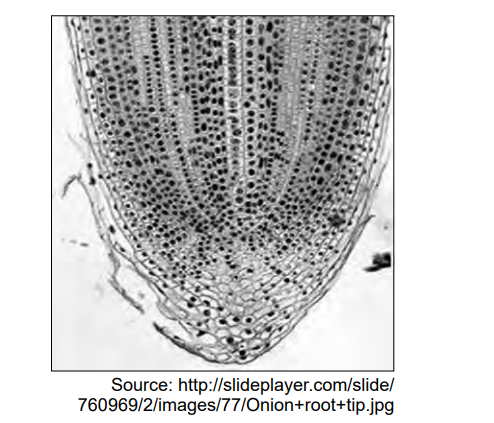
A student viewed a slide of an onion root tip with a compound light microscope. The photograph below represents what he saw.
In order to observe whether or not this root tip was growing, the student should:
Required
1 point
1
Question 13
13.
Viruses are exceptions to the cell theory, but they have some characteristics of living things. What is one of these characteristics?
Required
1 point
1
Question 14
14.
What structures are found within plant cells that you won't find in an animal cell? (select all that apply)
Required
1 point
1
Question 15
15.
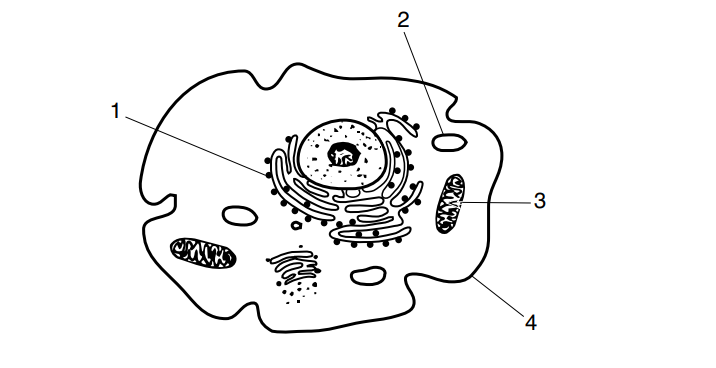
In the cell below, identify both the number and name of the structure in the cell that regulates what is allowed in and out of the cell. (Example: #. Name of the structure)
Required
1 point
1
Question 16
16.
Many biotic factors affect individuals in a population. An example of an organism being directly affected by a biotic factor is:
Required
1 point
1
Question 17
17.
The diagram below represents a laboratory technique.
State one reason a student would use this technique during a scientific investigation.
Required
1 point
1
Question 18
18.
Bacteria and humans are similar in that they both:
Required
1 point
1
Question 19
19.
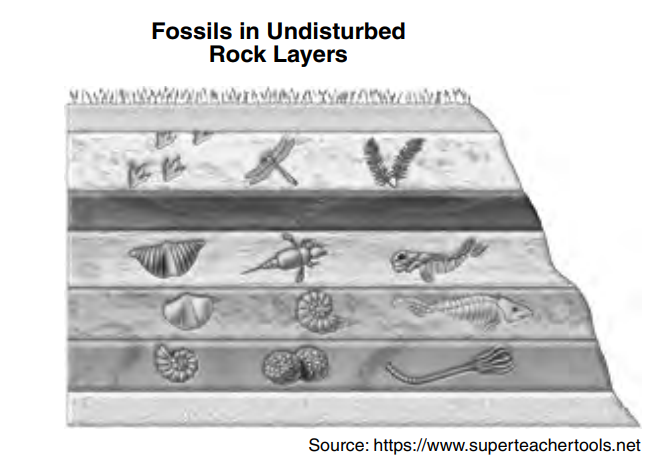
After a lake dried up during a severe drought, a section of undisturbed rock layers was exposed. The layers are represented below.
This sequence of rock layers best illustrates the concept that:
Title: Turtle Cells and Human Skin
New research has demonstrated that turtles and humans may have had a common
ancestor 310 million years ago. A recent study looked at the genes responsible for the skin
layers of turtle shells compared to the genes for human skin. The findings of the study
suggest that about 250 million years ago, when turtle evolution split from other reptiles, a
mutation in a specifi c group of genes occurred. The basic organization of this group of genes
is similar in turtles and humans, and they produce the important skin proteins that produce
shells in turtles and protect against infection in the skin of humans.
Base your answer to question 20 on the information to the left and on your knowledge of biology.
Required
1 point
1
Question 20
20.
Identify the molecule that contains the hereditary material and the organelle in which it is found in turtle cells. (Example: molecule, organelle in turtle cells)