On the diagram below, circle the dot that best represents the common ancestor of species A, B, and C.
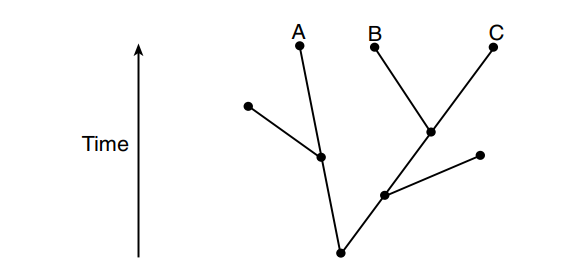
On the diagram below, circle the dot that best represents the common ancestor of species A, B, and C.
1. Ensure all tabs on your Chromebook are closed before beginning your assessment.
2. You will be given 15 minutes to complete your Unit 6 Mid-Unit Assessment.
3. Please read all questions carefully and make sure to check your work before submitting.
1. Ensure all tabs on your Chromebook are closed before beginning your assessment.
2. You will be given 15 minutes to complete your Unit 6 Mid-Unit Assessment.
3. Please read all questions carefully and make sure to check your work before submitting.
On the diagram below, circle the dot that best represents the common ancestor of species A, B, and C.
Potato plants reproduce both sexually and asexually. Depending on the desired outcome, potato growers use both types of reproduction. A grower would most likely want the potato plants to reproduce asexually when:
A student made a wet mount slide of living onion root cells to observe with a microscope. The diagram below represents what the student saw.
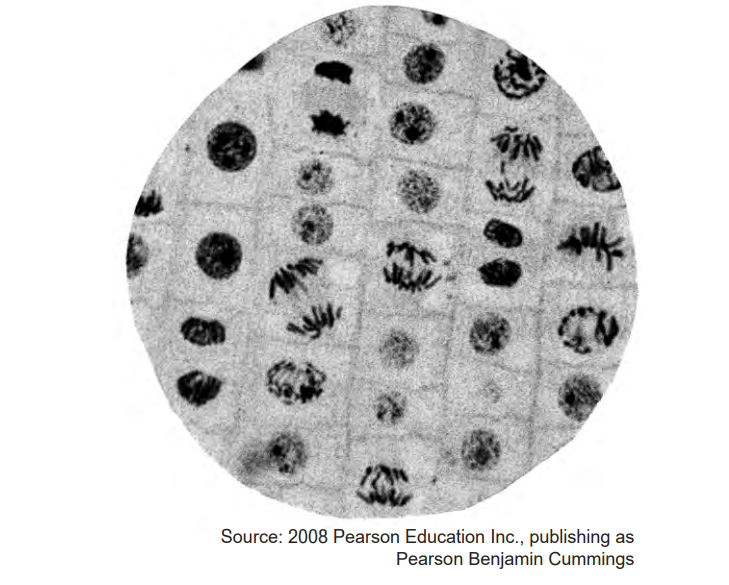
When cells divide, the chromosomes become visible. As the student studied this slide, she determined that some of the root cells were dividing. Support the student’s claim by drawing a diagram in the box provided below of one specific cell on the slide where mitosis is clearly occurring.
Models A and B below illustrate two different methods of reproduction.
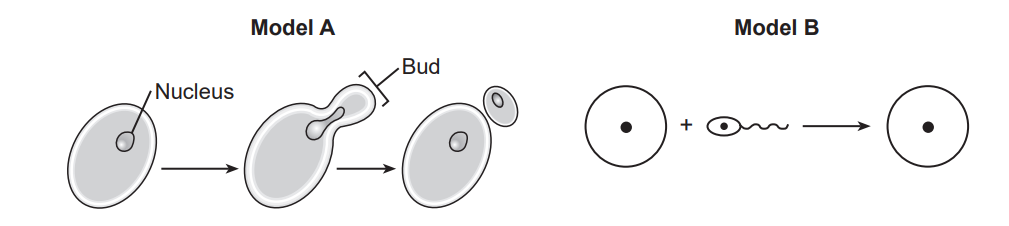
Which statement best describes the offspring that result from these methods?
Which diagram below indicates that species D is more closely related to C than it is to either A or B?
Which two structures are directly involved in the normal development of a human fetus?
The diagram below represents a portion of a cell membrane.
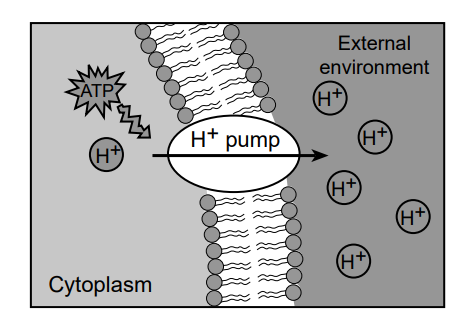
The arrow indicates that the cell membrane is carrying out the process of:
Which sequence best represents the correct order of events in the formation of a sexually reproduced individual?
Following fertilization, a zygote divides and soon becomes a multicelled embryo with many different cell types, as represented below.
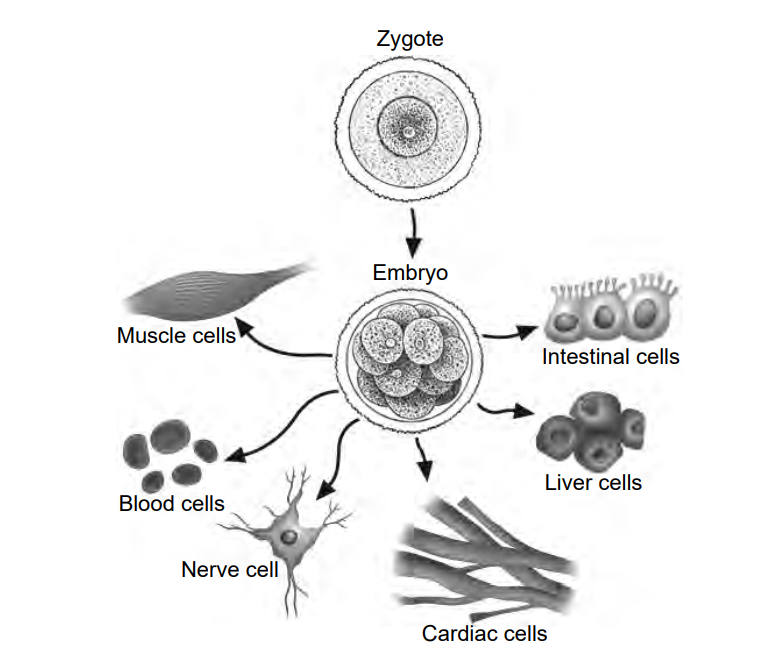
Which statement best explains this development?
In the cell below, identify both the number and name of the structure in the cell that produces proteins.
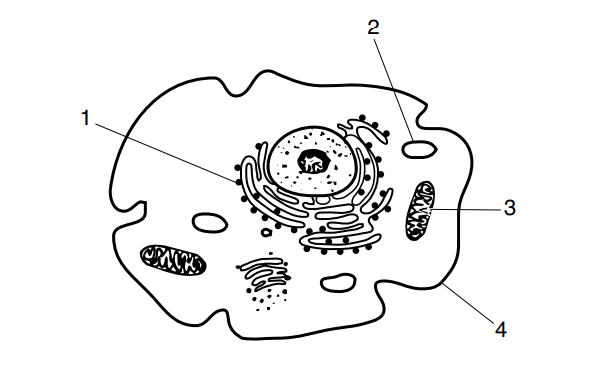
1) Number of Structure
2) Name of Strucutre
Cells may divide abnormally and produce cells like some of those shown in the photograph below.
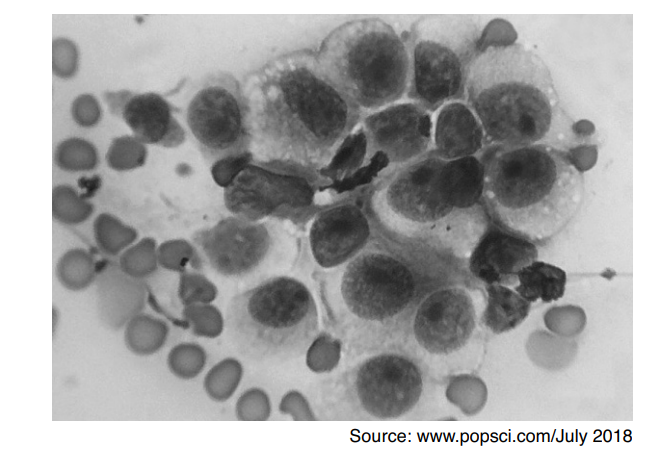
When cells such as the skin cells shown reproduce abnormally, it could be a sign of:
As climate changes, which type of reproduction would most likely result in a greater chance of survival for a species?
Base your answers to questions 13 through 15 on the diagram below and your knowledge of biology. The diagram indicates some parts of the human female reproductive system.
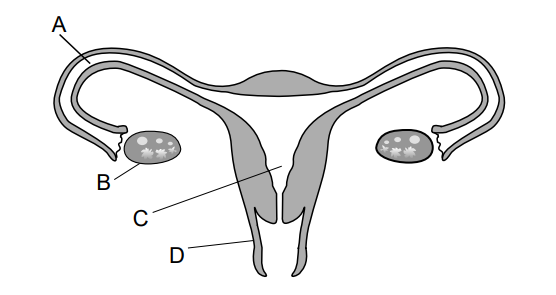
The structure in which fertilization normally takes place is:
State one function of organ B.
State one advantage of internal development for the human embryo.