Ɛhia
1
Ɛhia
1
Ɛhia
3
Ɛhia
1
1
1
1
We all know that heat flows from hot things to cold things. The second law of thermodynamics is the scientific principle that
We all know that heat flows from hot things to cold things. The second law of thermodynamics is the scientific principle that
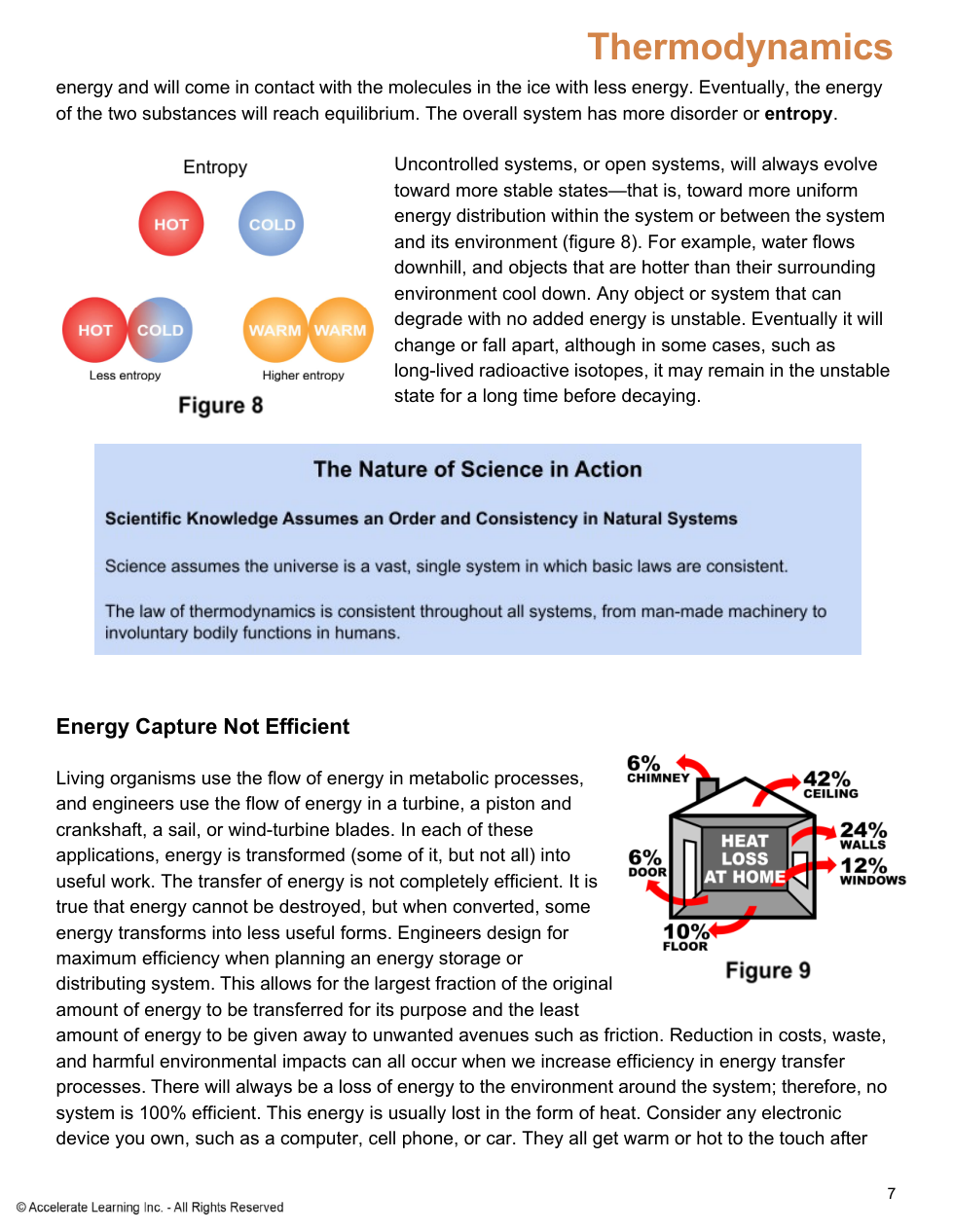
When heat flows from a hot object to a cold object, the entropy of the system goes
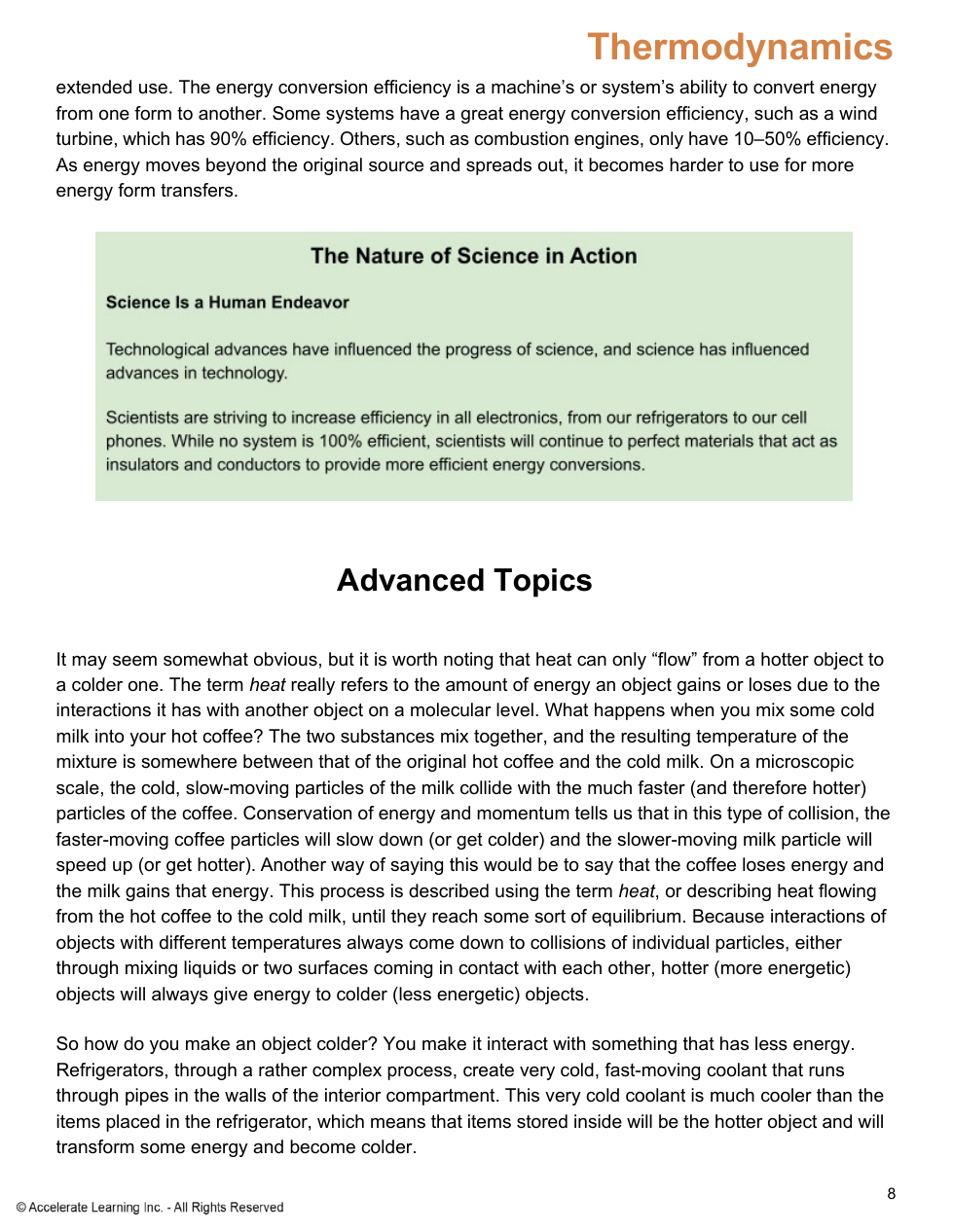
spreading out and becoming less dense as it moves away from its original source means that there is less in any one place so the goes .
How does the collision of milk particles with coffee particles relate to the phenomenon that adding cold milk to hot coffee results in a mixture whose temperature is in between the original temperature of the milk and the coffee.
When you mix the hot water molecules and the cold water molecules, which statements are true about the water molecules at the end of the simulation?
Now you know how to run the simulation. To get out of the tutorial, click on learning outcomes and then experiment. It should look like the picture below.
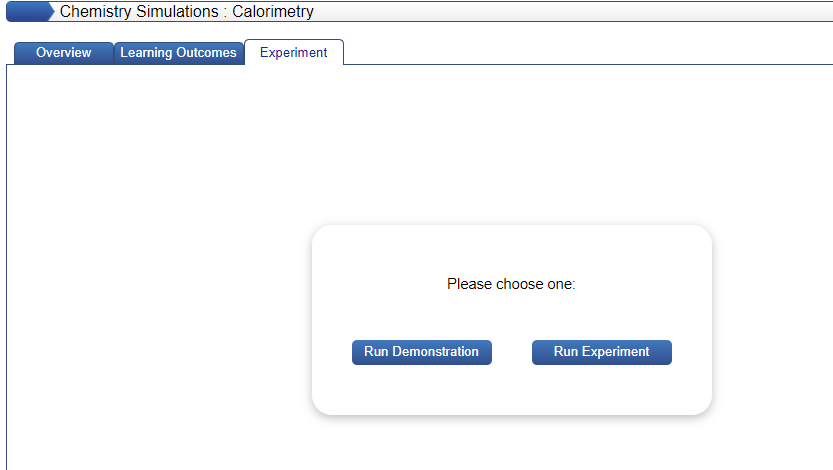
Now click on run experiment and you will be to the part of the simulation where you can choose to combine either liquids or solids, their masses and their temperatures. Run some experiments putting hot solids into cold water and watch the graph view and the microscopic view. This simulation is really helpful for understanding what is happening at the particles level and will be very helpful when you are trying to explain your results for your project.
Describe at least one experiment that you set up with the simulator. What were the results that you got? How did it help you understand heat transfer at the particle level? What changed your thinking about the process?
For heat to flow which conditions must be present?
Two systems are in thermal equilibrium when
Why is heat considered a less useful form of energy compared to mechanical or electrical energy?
The efficiency of an engine is determined by
In an open system, the second Law of Thermodynamics says that
In an closed system, the second Law of Thermodynamics says that
In an isolated system, the second Law of Thermodynamics says that
Adding to a system so that one part is than another decreases the of the system.
Why will there never be a machine that is 100% efficient according to the second law?
When engineers design storage systems, they always have to plan that some energy will be lost because always increases over time which is the law of thermodynamics.
What does the desire for useful forms of energy mean in practical terms?