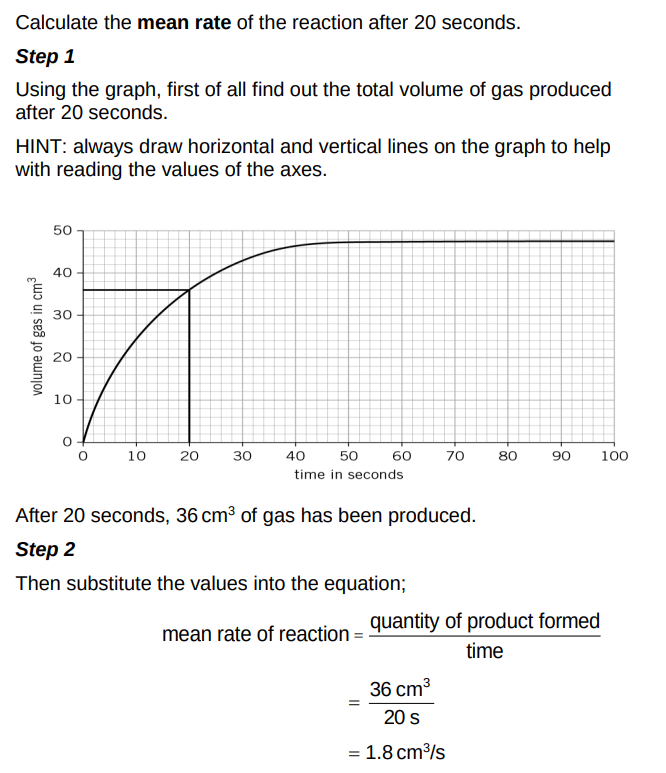
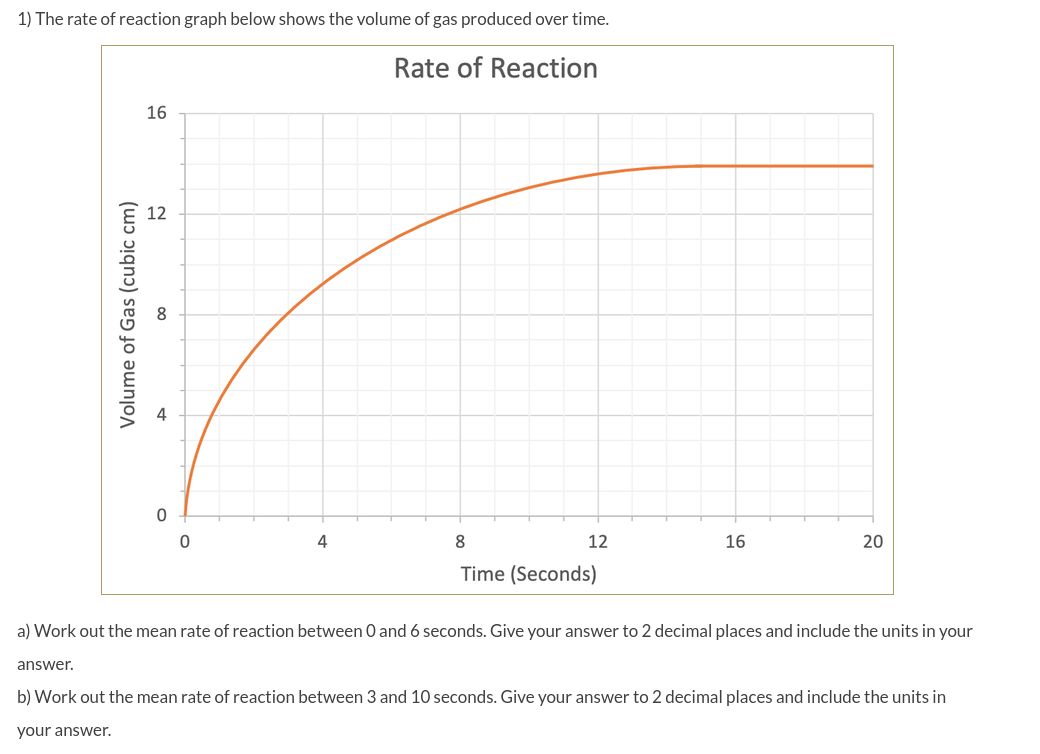
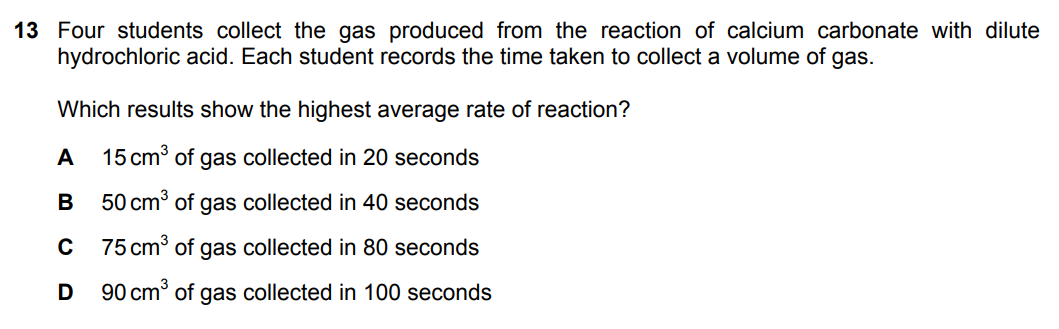
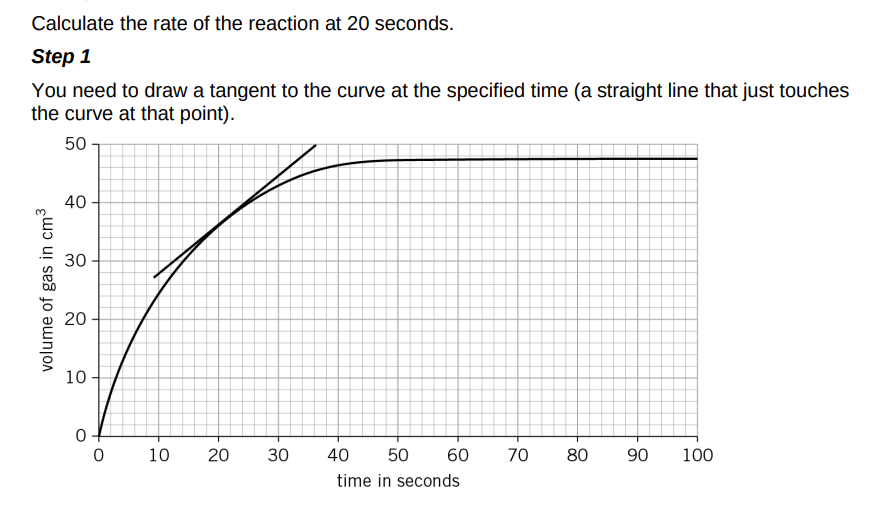
Work out the average rates of reaction for the time periods given.
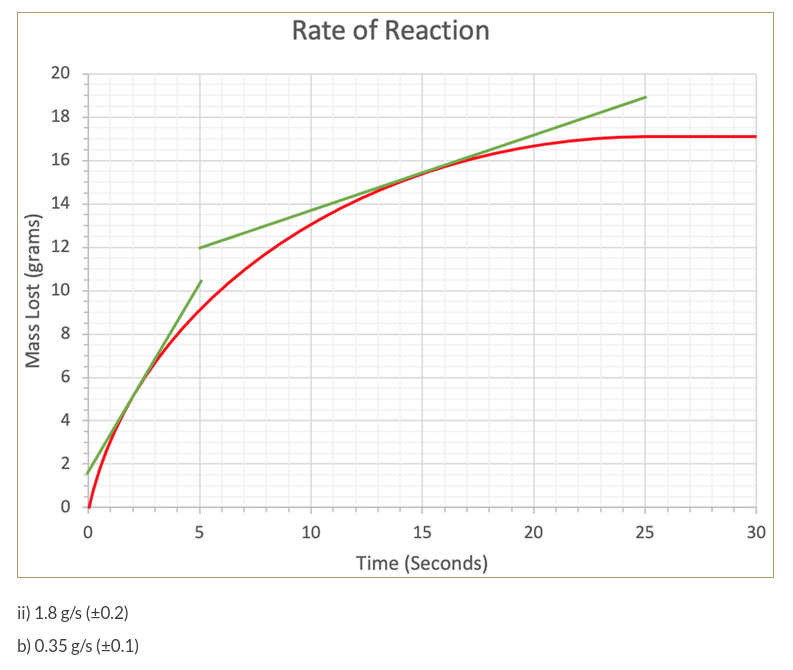
a) average rate between 0 and 6 seconds = (change in volume / time = 11/6)
b) average rate between 3 and 10 seconds = (Change in volume / time = 13/8)
c) The reaction ends at
Show your calculations
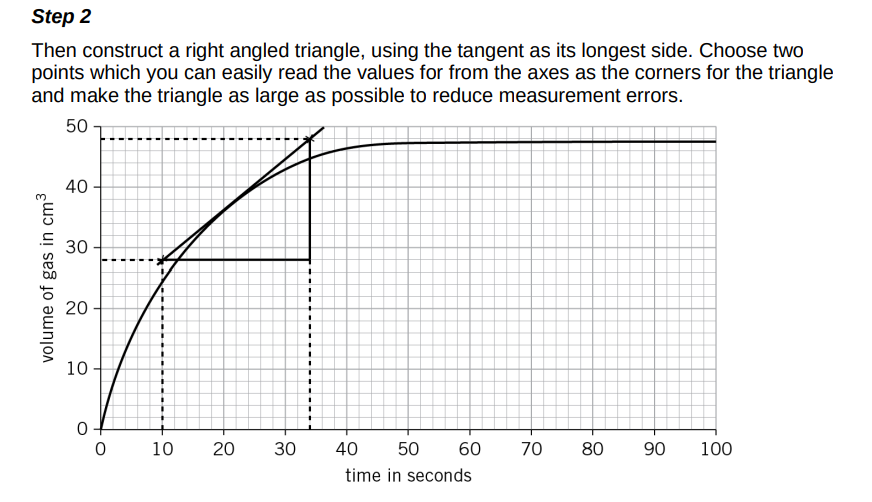
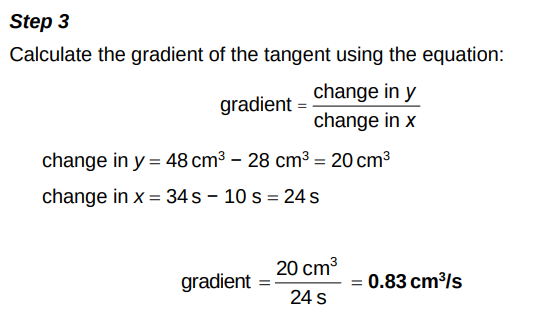
(note your should make the large to minimise error and use values that are easy to read from the graph)
On the show your work section draw the triangles that you need to calculate the rates of reaction.
The rate of reaction at 2 seconds is
The rate of reaction at 15 seconds is
Note that as the concentration of he reactants decreases the rate of reaction also
This is seen on the graph as the slope of the line
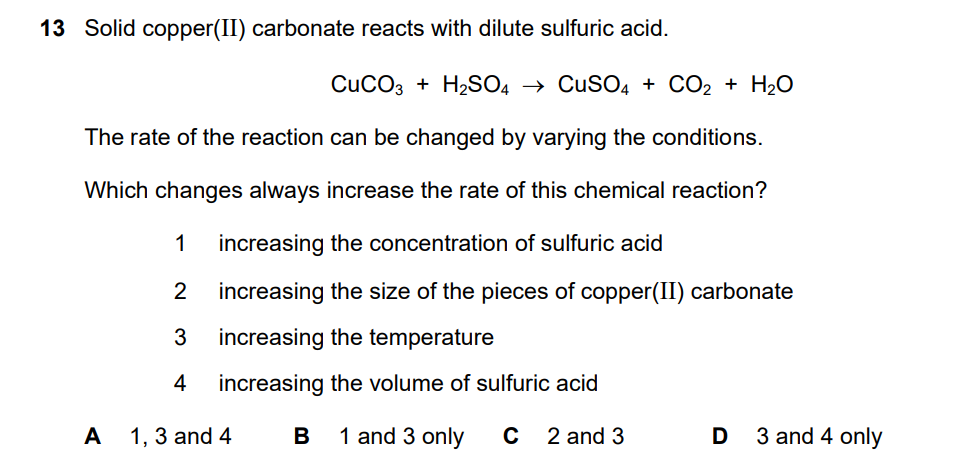
State and explain how increasing concentration affect the rate of reaction.
A greater concentration means that there are
Word bank
closer
frequent
greater
more
volume
State and explain how increasing the surface area affect the rate of reaction
A greater surface
Note only the particles on the
Word bank
area
collide
frequent
outer
volume
State and explain how a catalyst affect the rate of reaction.
A catalyst
Word bank
activation
alternative
lower
Speeds
State and explain how does an increase in temperature affects the rate of reaction.
A greater temperature gives the particles more
Also, as the particles have more
Word bank
activation
collision
energy
faster
frequent
increasing
kinetic
reaction
Increase rate of reaction | Decrease rate of reaction | |
|---|---|---|
More dilute acid | ||
More concentrated acid | ||
Higher temperature | ||
Powdered magnesium |
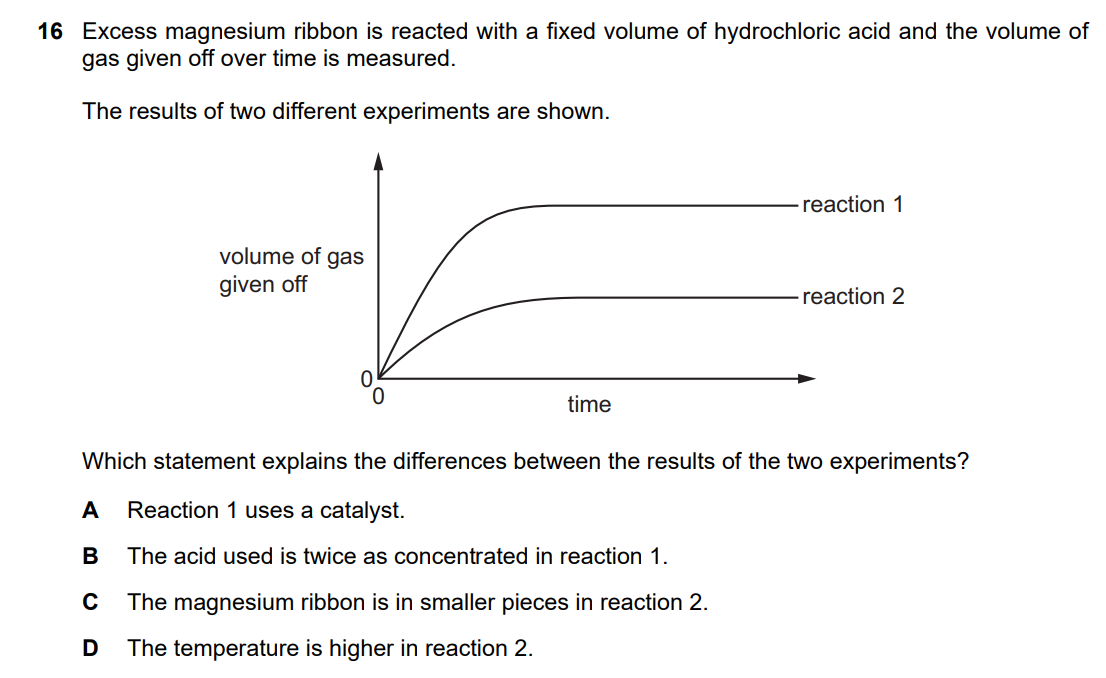
Rate of reaction graphs
(Hint the acid is in a large excess).
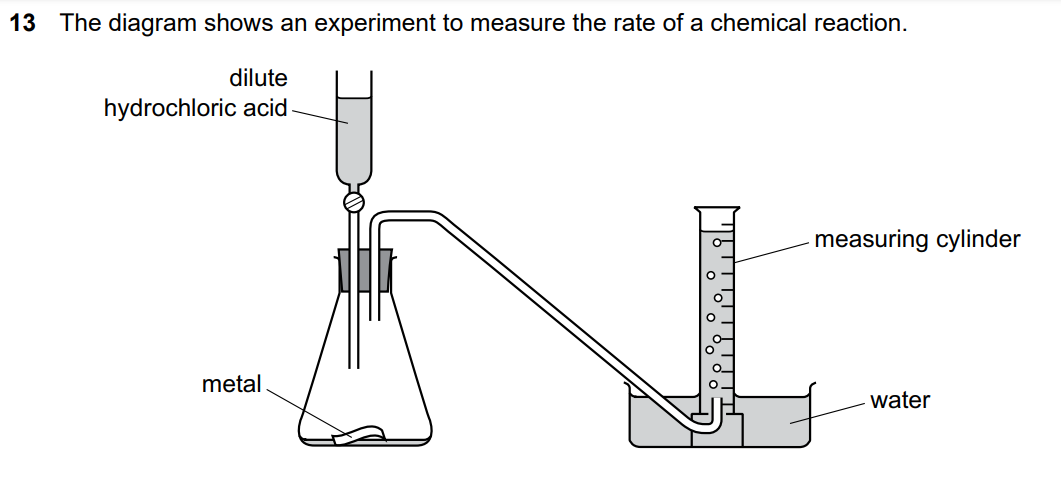
When a piece of marble is added to hydrochloric acid, bubbles of carbon dioxide gas are given off. Which method is used to find the rate of the reaction?