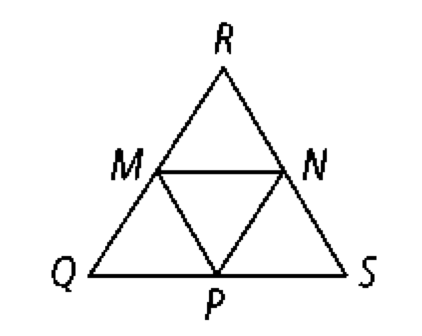
Use the diagram to answer problems #3 - 8.
Points M, N, and P are the midpoints of the sides of ▵QRS.
RQ = 30, RS = 30, and QS = 18.
Just type the numbers only as your answer.
Find RN.
Find QP.
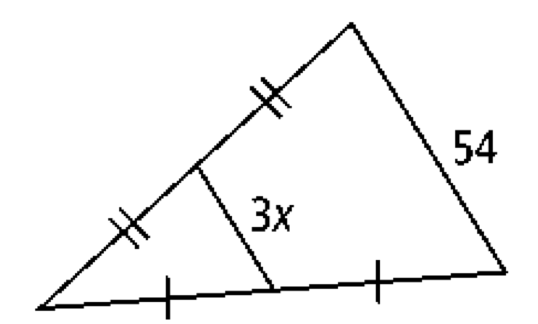
Find the value of x.
![]()
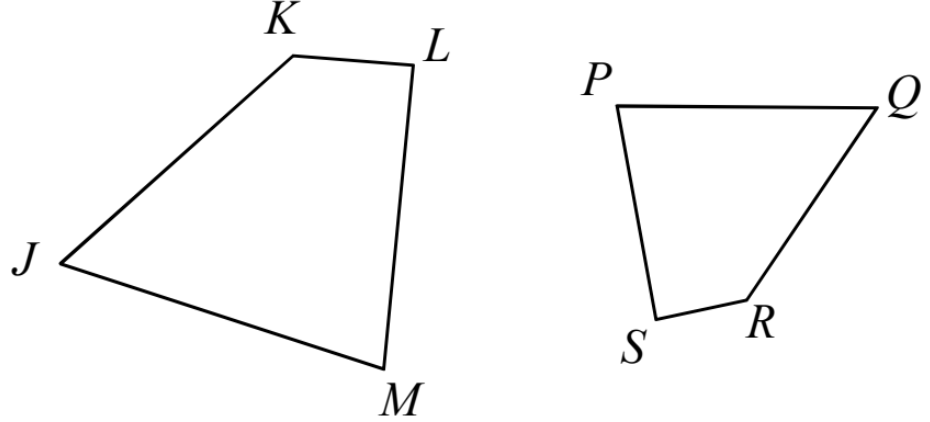
In the polygons, JKLM ~ QRSP, indicate all true statements based off the similarity statement by checking all that apply.

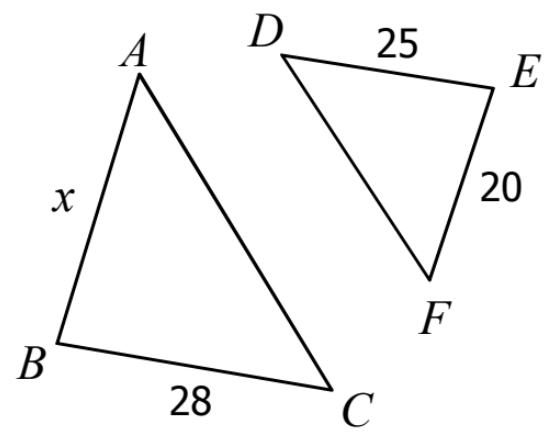
If ∆ ABC ~ ∆ DEF, find the value of x.

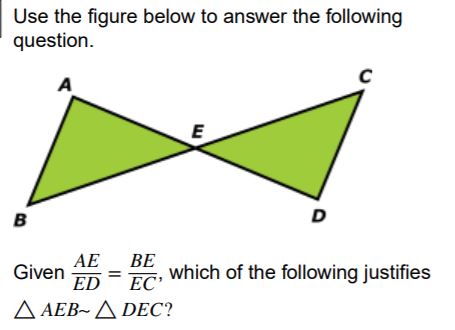
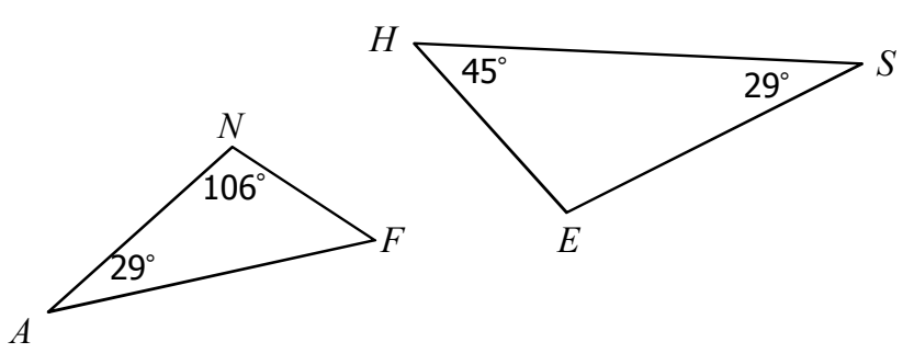
Determine whether the triangles are similar by AA~, SSS~, SAS~, or not similar.

Determine whether the triangles are similar by AA~, SSS~, SAS~, or not similar.

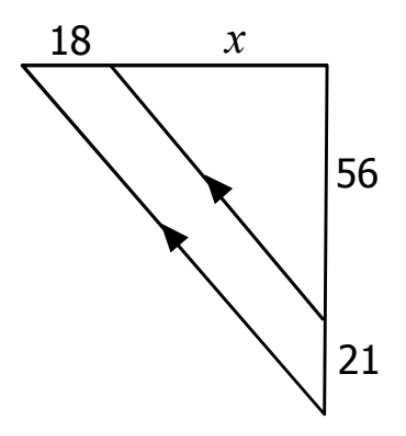
Find the value of x.

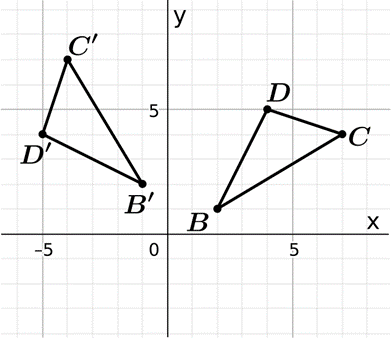
Which transformation or sequence of transformations the graph showing the pre-image and image.
Which transformation(s) produce(s) an image that is congruent to its pre-image.
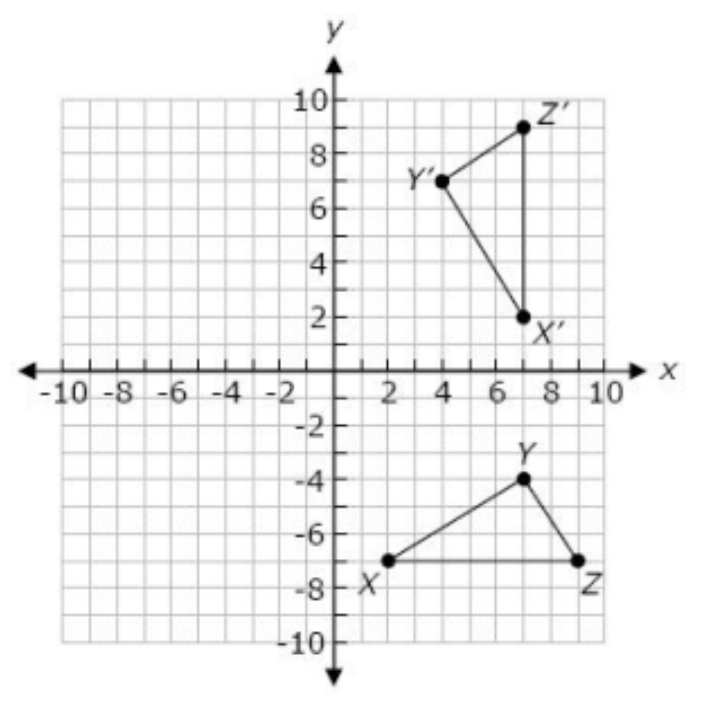
Describe the transformation used to carry ΔXYZ onto its image ΔX'Y'Z'.

The vertices of parallelogram ABCD are A(2,1), B(3,4), C(5,3) and D(4,0). ABCD is reflected over the x-axis to create parallelogram A'B'C'D'. What are the coordinates of A'B'C'D'?
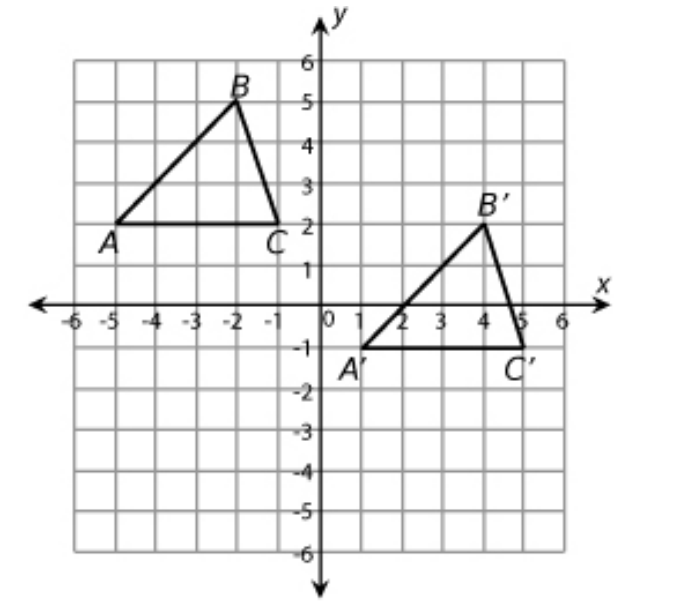
In the graph below, △ABC has been translated to form △A ′B ′C ′ .

Which rule describes this translation?
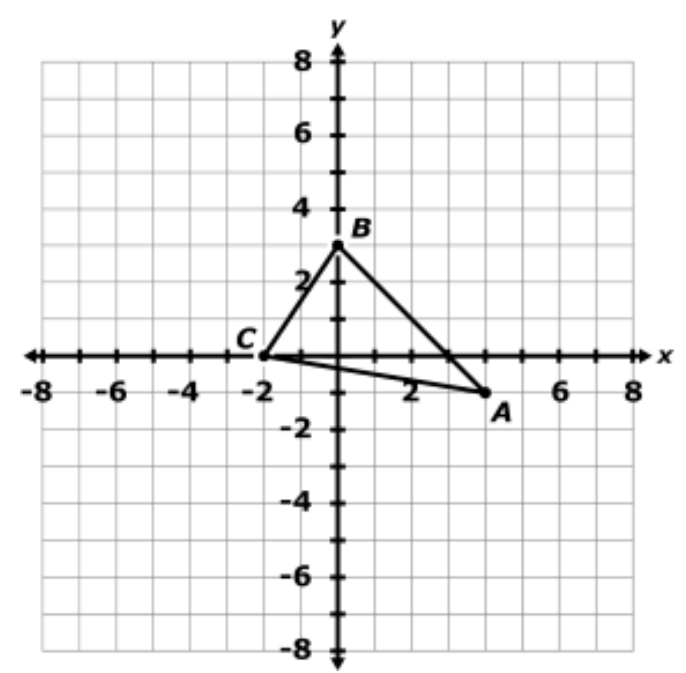
If triangle ABC is reflected over the y-axis which point(s) will be their own image(s)?

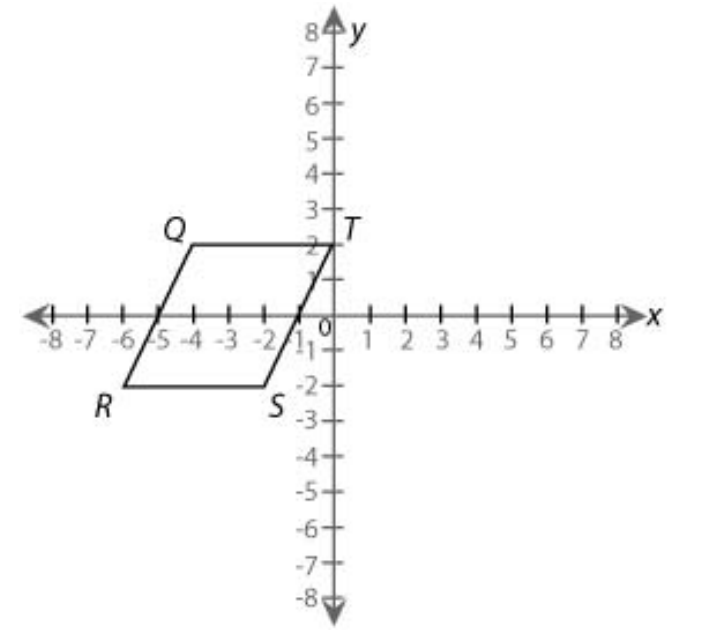
A parallelogram is shown on the coordinate plane below.

The following transformations are to be performed, in order, on the parallelogram.
● Translate 2 units in a positive y-direction.
● Translate 6 units in a positive x-direction.
● Reflect about the x-axis.
Which of the following describes the location of vertex Q after the transformations?
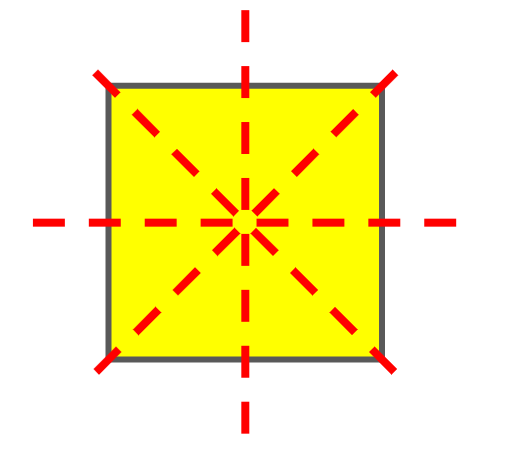
The dashed lines shows all lines of symmetry.
Which quadrilaterals have four equal sides?
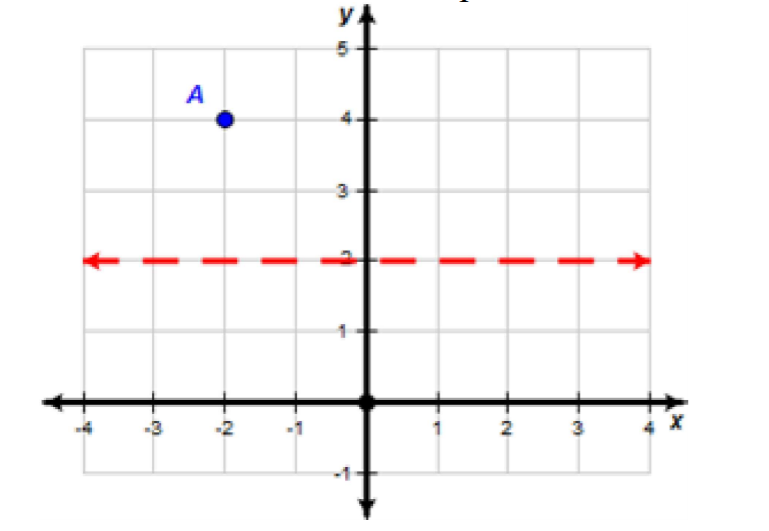
What are the coordinates of A' if point A is reflected over the line y=2?
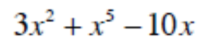
What is the degree of the polynomial?
Simplify the polynomial expression. Write your answer in standard form.
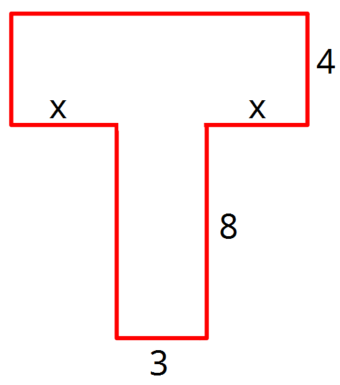
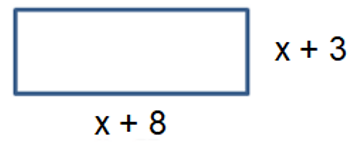
Simplify an expression that best represents the area of the rectangle below.
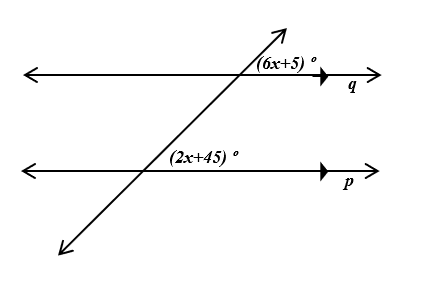
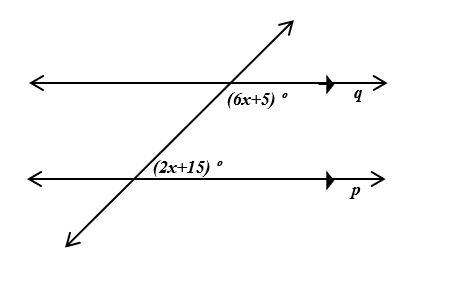
Given lines p and q are parallel, find the value of x.
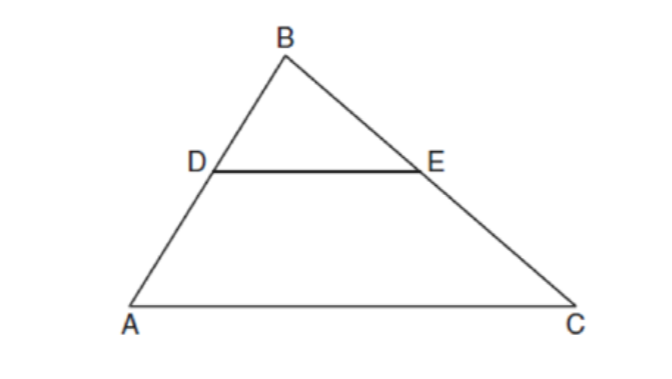
In the diagram below of ABC, DE is a midsegment of ABC, DE = 7, AB = 10, and BC = 13. Find the perimeter of ABC.
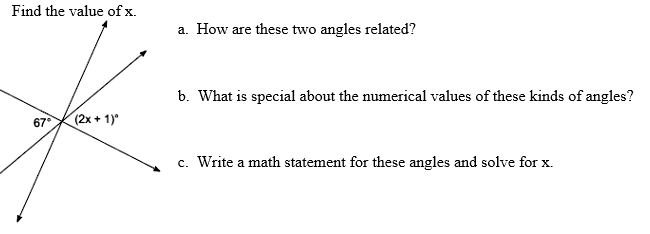
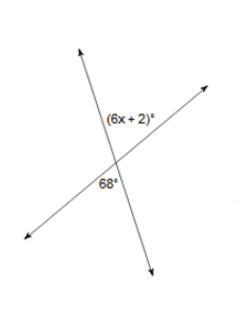
Solve for x

a. how are these angles related?
b. what is special about the numerical value of these angles?
c. x = ?
Polynomial A minus Polynomial B equals (2x+6). If Polynomial A is below, what is Polynomial B
Polynomial A
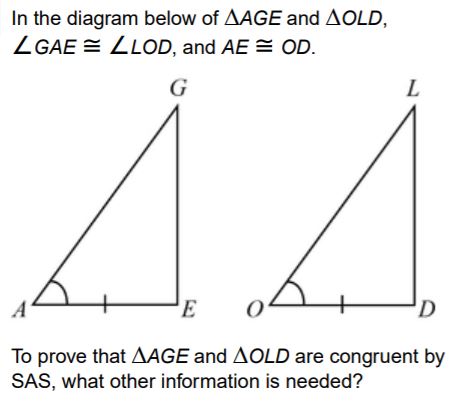
Which statements are true?