Twa kɔ nsɛm atitiriw so
Log in
Sign up for FREE
arrow_back
Laabri

NMR

star
star
star
star
star
Last updated over 1 year ago
24 Nsɛmmisa
Hyɛ no nsow a efi ɔkyerɛwfo no hɔ:

Interpreting NMR spectra

https://resource.download.wjec.co.uk/vtc/2015-16/14-15_14/eduqas/NMR_Background.html

1
1
1
1
1
1
1
1
1
1
1
1
1
1
1
1
1
1
1
6
1
0
1
1
Asemmisa {{asɛmmisaAhyɛnsode}}
1.

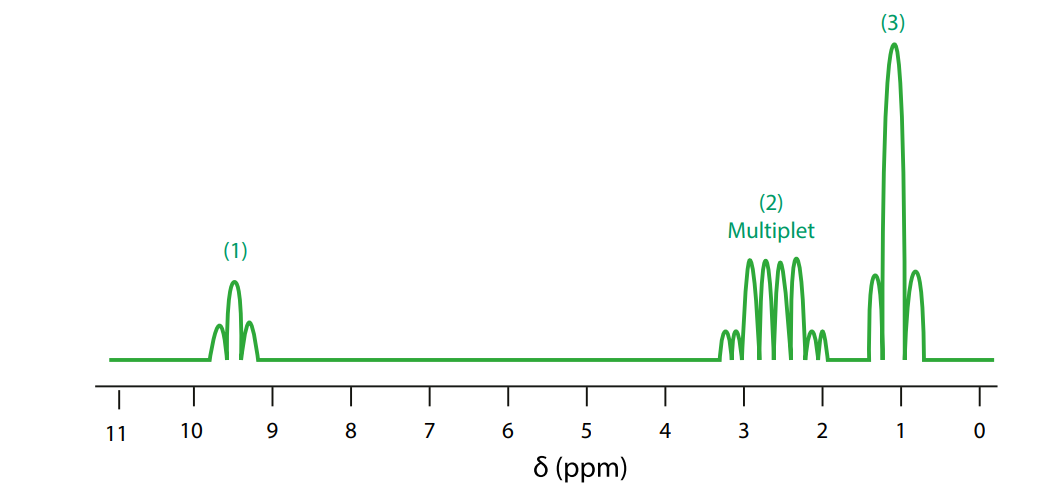
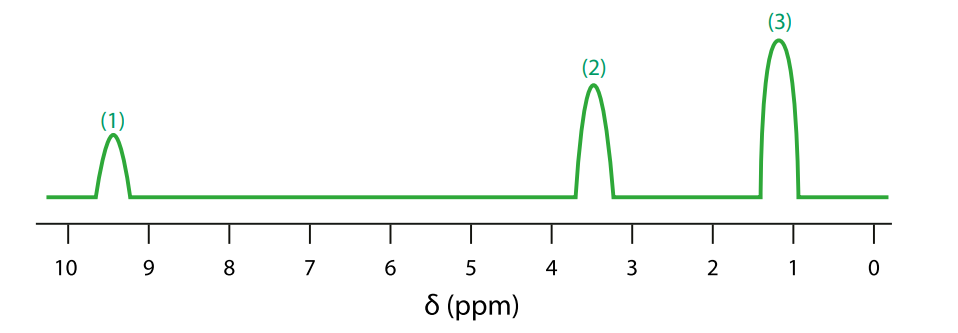
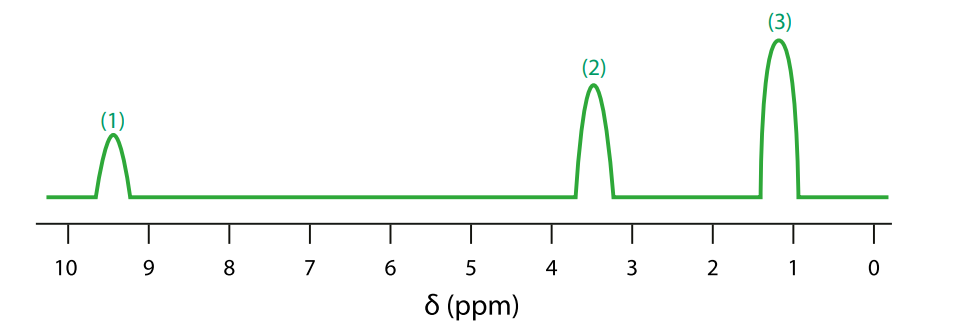
How many proton environments are there

How many hydrogens are there in the peak at approximately 1

How many hydrogens are there in the peak at approximately 3.5

How many hydrogens are there in the peak at approximately 9.5

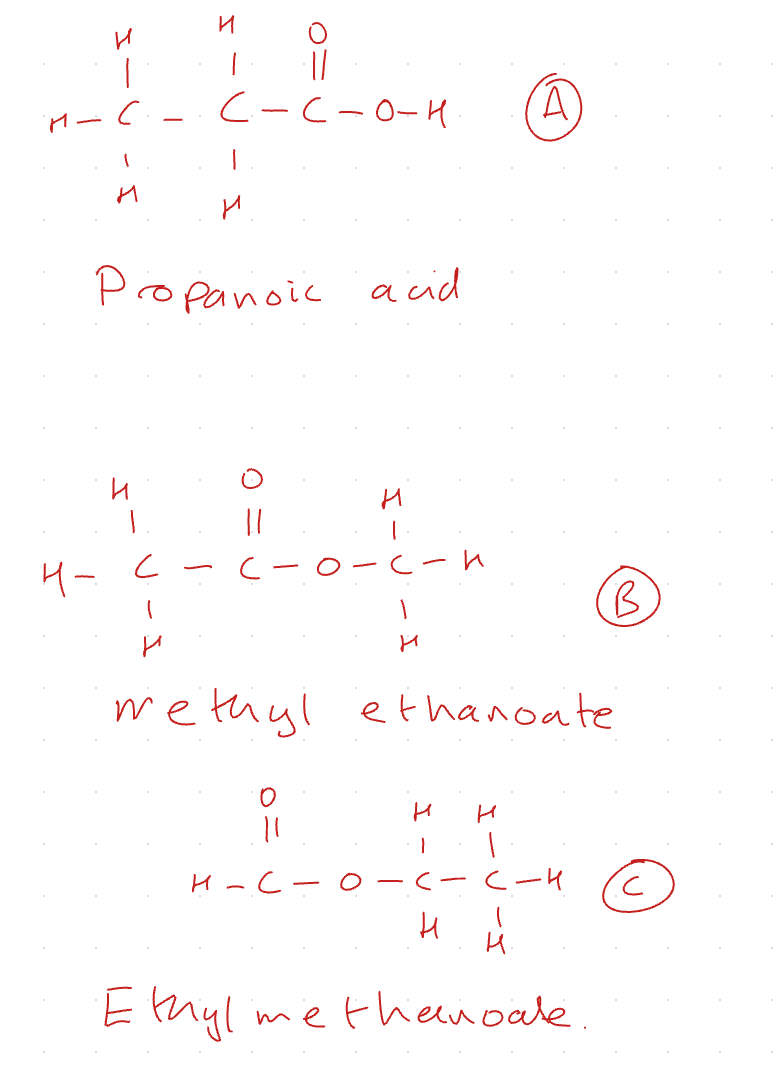
The formula for this molecule is C3H6O2
Asemmisa {{asɛmmisaAhyɛnsode}}
2.

Which molecule is consistent with the spectra?

Asemmisa {{asɛmmisaAhyɛnsode}}
3.

Why is methyl ethanoate clearly not the correct option?

Asemmisa {{asɛmmisaAhyɛnsode}}
4.

What data lets us differentiate between methanoic acid and ethyl methanoate.

Asemmisa {{asɛmmisaAhyɛnsode}}
5.

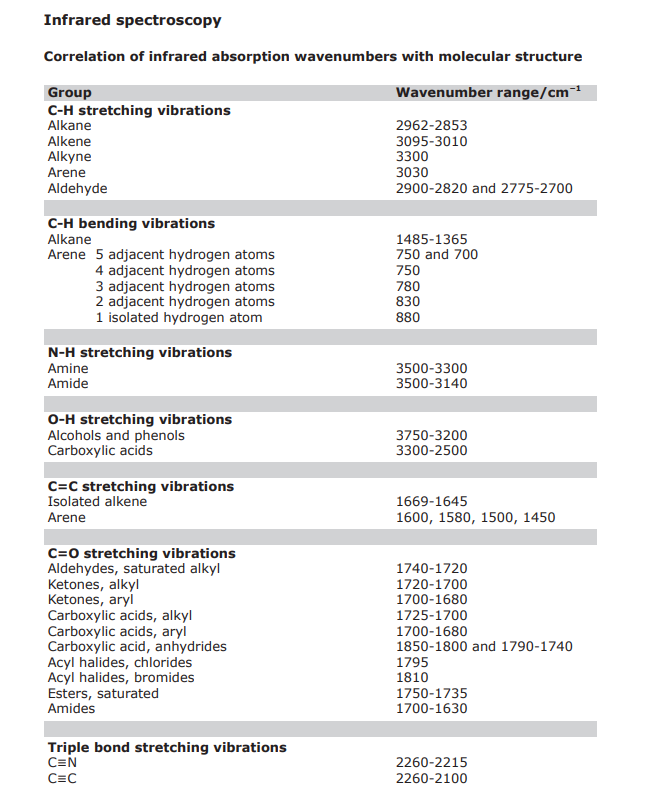
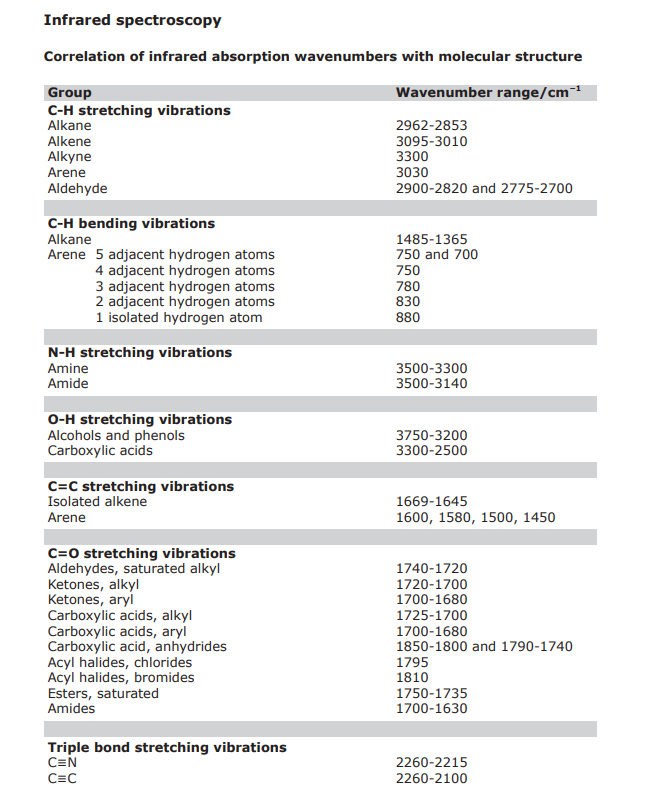
What simple lab test would confirm that an ester was present?

Asemmisa {{asɛmmisaAhyɛnsode}}
6.

What wet test could be used to confirm that a carboxylic acid was present.

Asemmisa {{asɛmmisaAhyɛnsode}}
7.

What is the positive results of this test?

Asemmisa {{asɛmmisaAhyɛnsode}}
8.

Which trough on an IR specta would be present on the carboxylic acid and the the ester?

Asemmisa {{asɛmmisaAhyɛnsode}}
9.

Which trough on an IR specta would be present on the carboxylic acid but not on the the ester?

Asemmisa {{asɛmmisaAhyɛnsode}}
10.

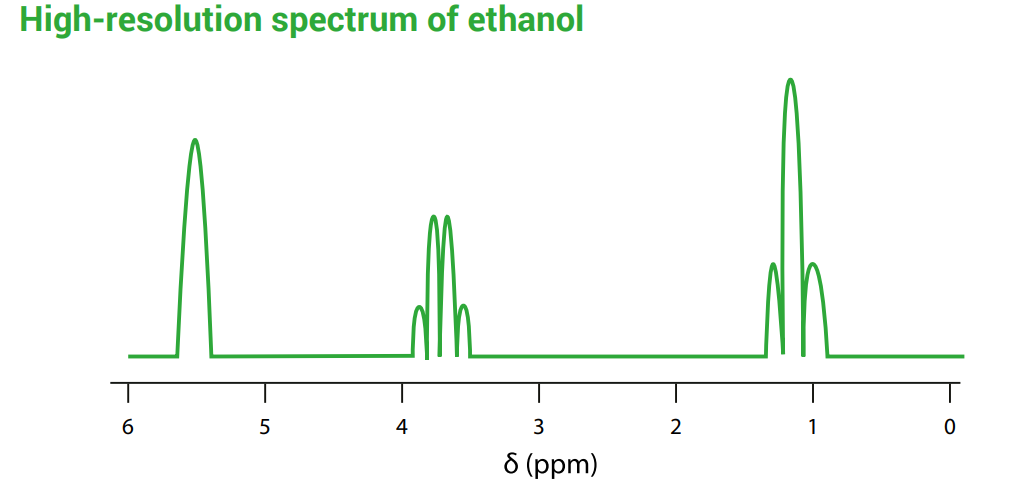
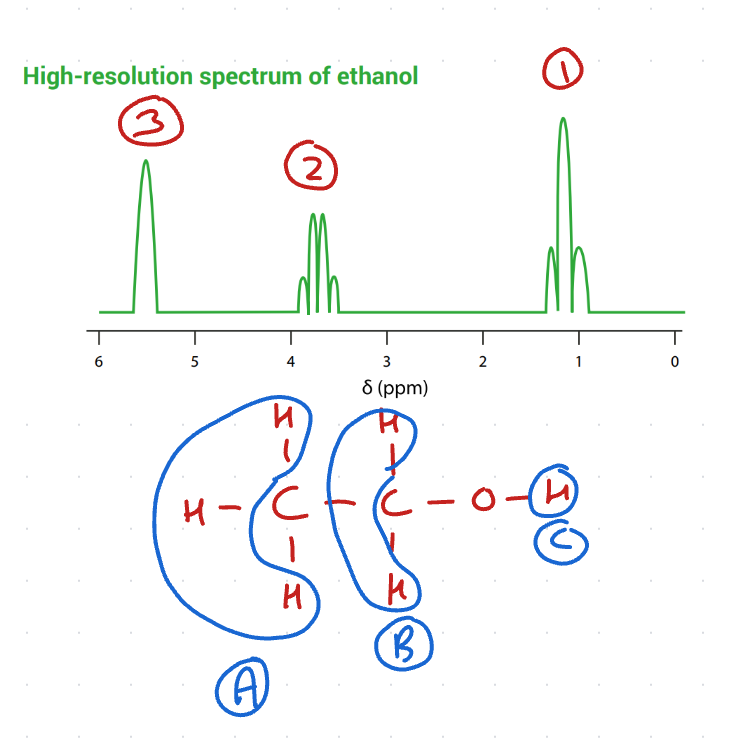
How many proton environments are there?

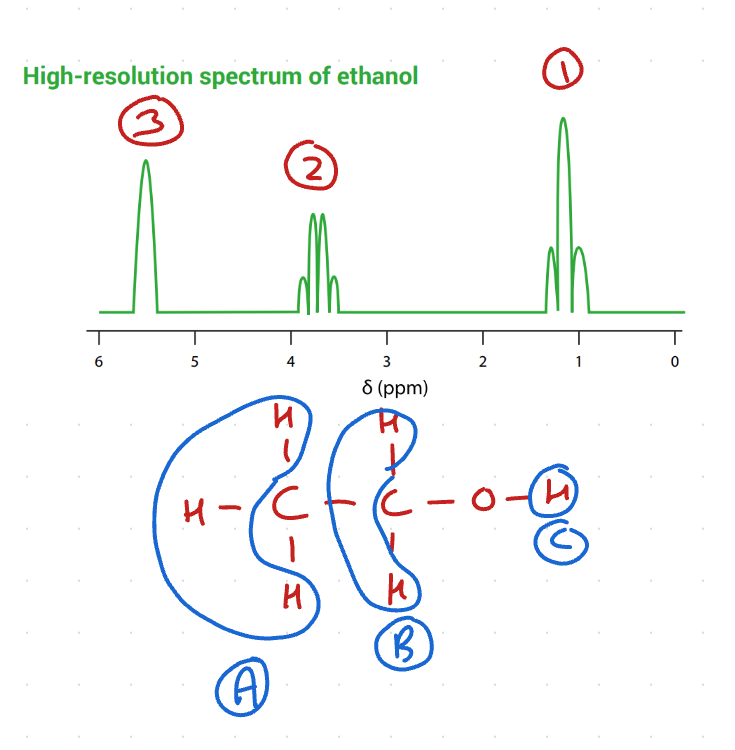
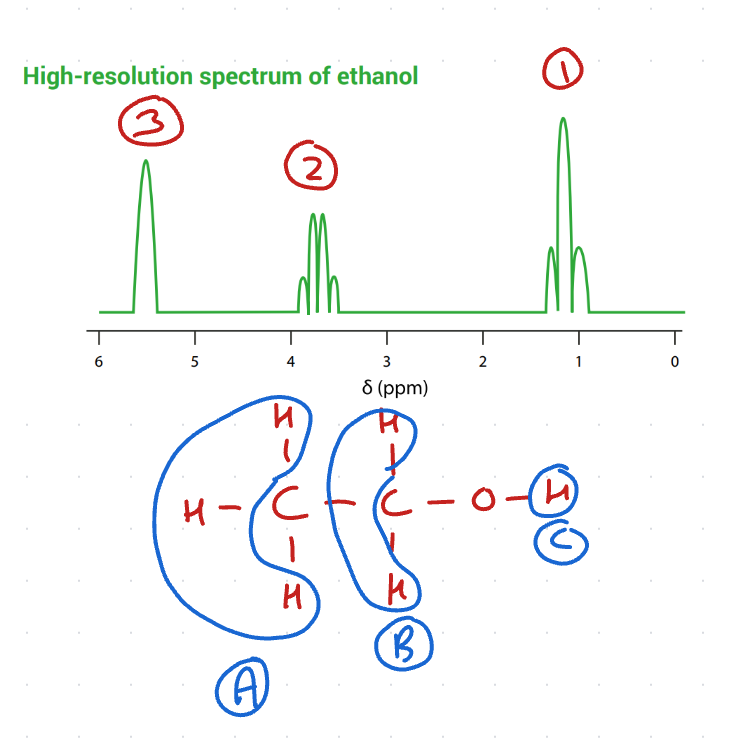
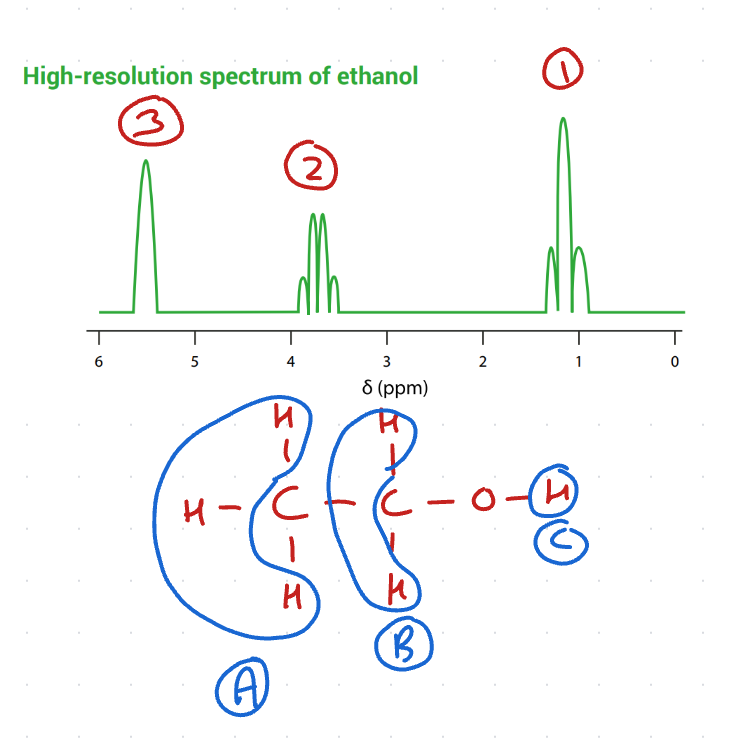
How do we know ? We know that there are three proton environments as there are 3 peaks on the spectrum.

Asemmisa {{asɛmmisaAhyɛnsode}}
11.

Peak 1

Peak 2

Peak 3

Environment A

Envoronment B

Environment C

Asemmisa {{asɛmmisaAhyɛnsode}}
12.

Environment 1

Asemmisa {{asɛmmisaAhyɛnsode}}
13.

Environment 2

Asemmisa {{asɛmmisaAhyɛnsode}}
14.

Environment 3

Asemmisa {{asɛmmisaAhyɛnsode}}
15.

Peak 1 is a

Peak 2 is a

Peak 3 is a

Asemmisa {{asɛmmisaAhyɛnsode}}
16.

There are hydrogens on the carbon atoms adjacent to environment 1

There are hydrogens on the carbon atoms adjacent to environment 2

There are hydrogens on the atom adjacent to environment 3

Asemmisa {{asɛmmisaAhyɛnsode}}
17.

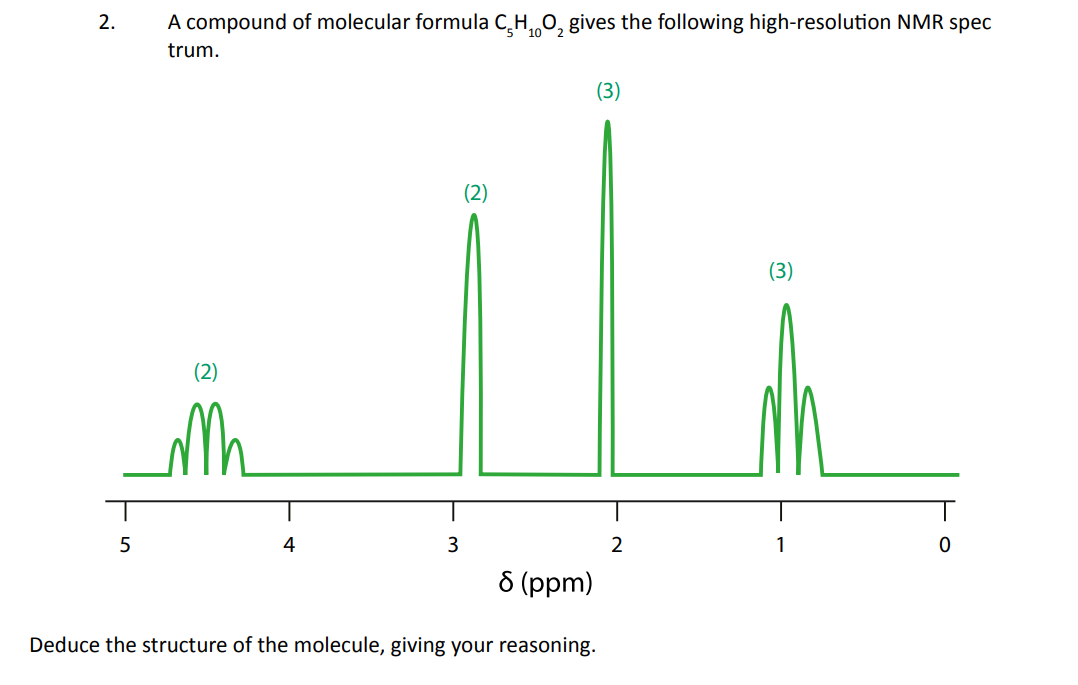
Analyse the spectrum to determine whether this is a spectrum for proponone or propanal.

How could you confirm your conclusion using mass spectra?

What wet tests could you use and what would the results of the test be?

What physical test could you use and how could you use the results to conform your conclusion?

Asemmisa {{asɛmmisaAhyɛnsode}}
18.

Asemmisa {{asɛmmisaAhyɛnsode}}
19.

Asemmisa {{asɛmmisaAhyɛnsode}}
20.

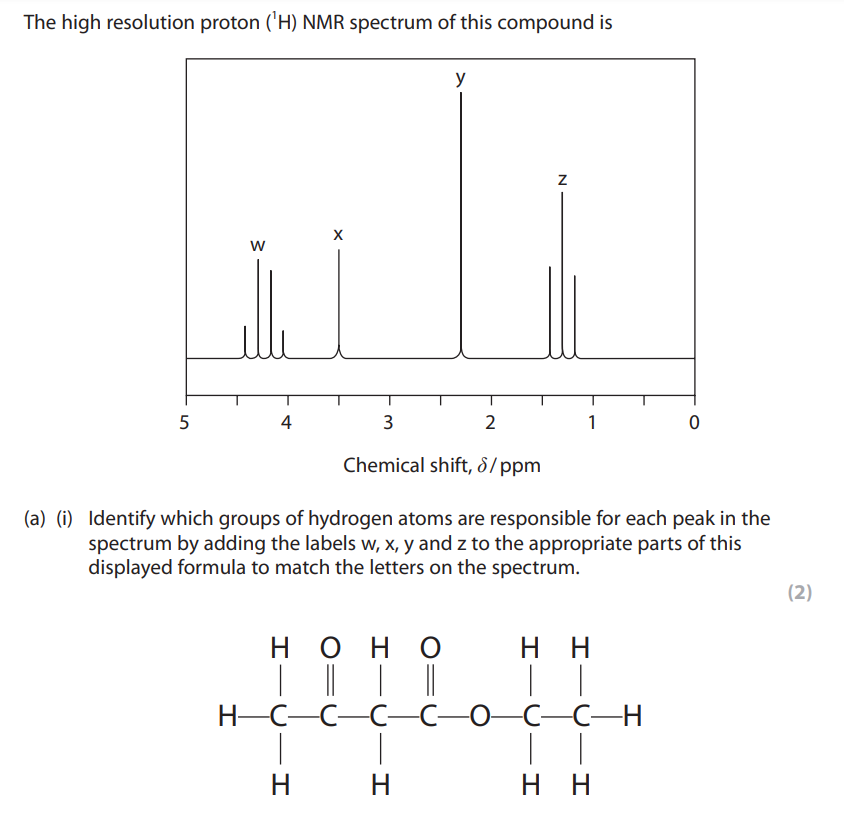
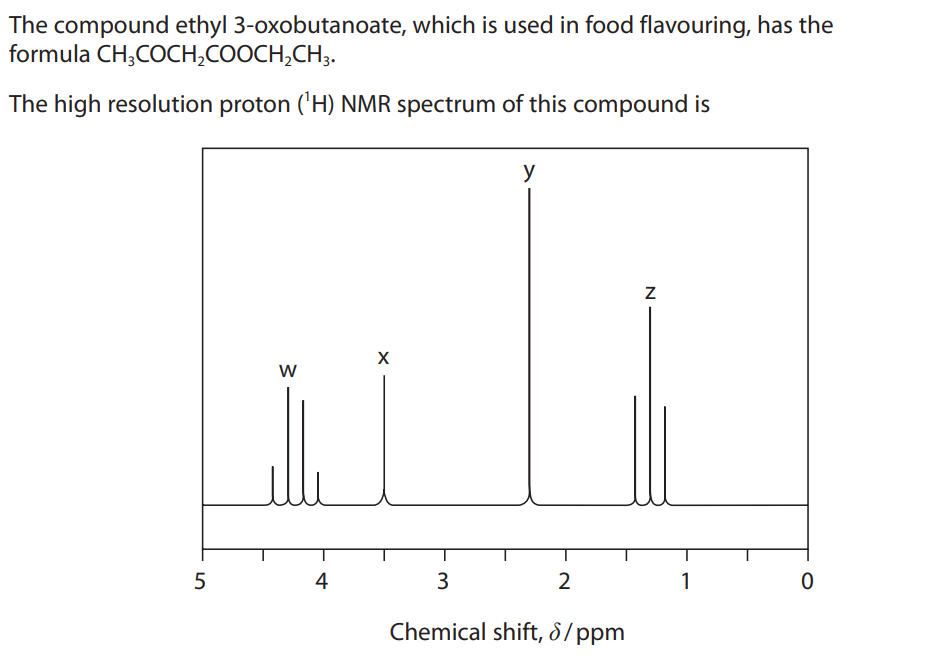
NMR analysis question

Mmuae Afoforo a Wobɛpaw:
W
Y
X
I = 3
Z
I = 2
Asemmisa {{asɛmmisaAhyɛnsode}}
21.

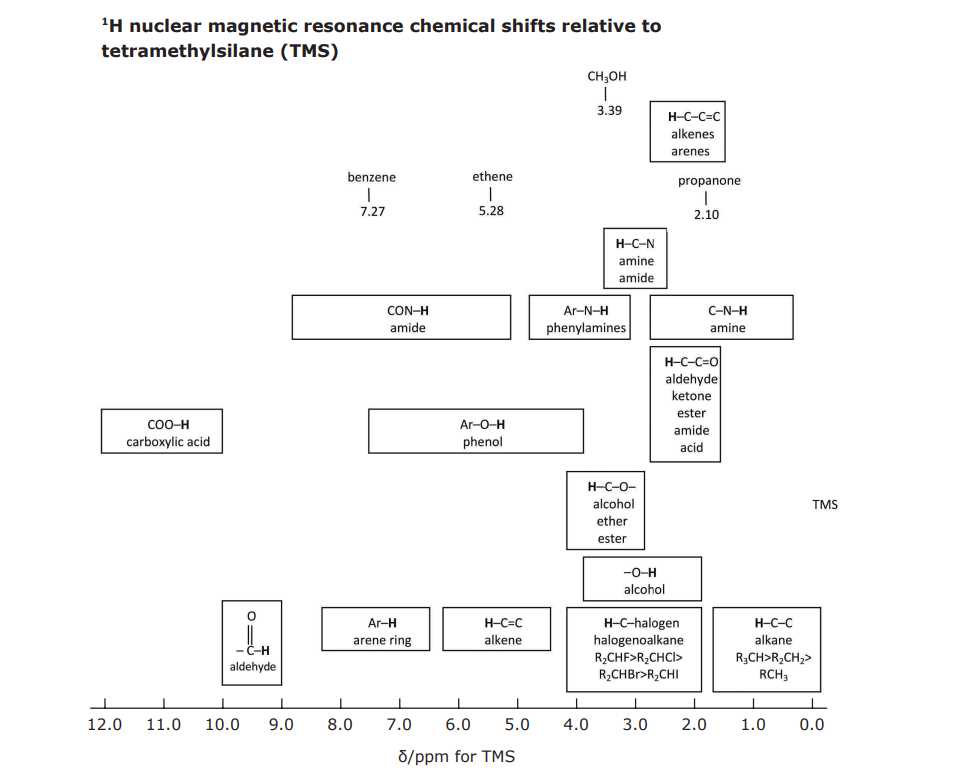
(ii) Explain the splitting patterns of the peaks at 4.2 ppm and 1.3 ppm.

4.2 ppm due to hydrogen (atoms) on adjacent carbon

1.3 ppm due to hydrogen (atoms) on adjacent carbon

Asemmisa {{asɛmmisaAhyɛnsode}}
22.

Asemmisa {{asɛmmisaAhyɛnsode}}
23.

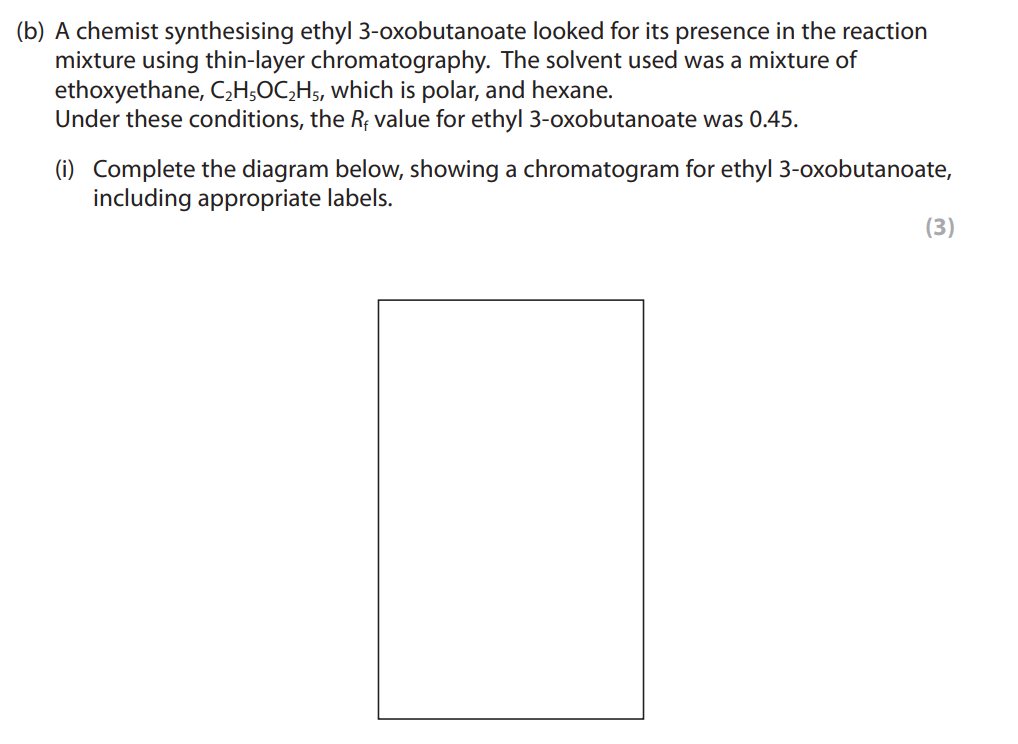
MS.

Origin/start line shown above bottom of paper (1)

Straight line for solvent front added and labelled (1)

Spot due to ethyl-3-oxobutanoate in position consistent with Rf between 0.4 and 0.5 (1)

Asemmisa {{asɛmmisaAhyɛnsode}}
24.

(ii) Suggest why the Rf value for ethyl 3-oxobutanoate is significantly lower than 0.45 when just hexane is used as the solvent. (2)

M1 As only forces form between them (so spot moves a distance)

ethyl-3-oxobutanoate is , hexane is -polar / (1)

M2 interaction between hexane and ethyl-3- oxobutanoate

/ ethyl-3-oxobutanoate is less in hexane

Mmuae Afoforo a Wobɛpaw:
non
Weaker
shorter
soluble
London
polar