PRACTICE: classifying matter ECM, chemical & physical changes/properties (2024)
star
star
star
star
star
Last updated 4 months ago
17 questions
Required
6
Required
5
Required
2
Required
4
Required
1
Required
1
Required
1
Required
1
Question 1
1.
Question 2
2.
Question 3
3.
A substance that appears to "disappear" might do so because of a chemical change, but it might "disappear" because of a physical change. Explain what (and why!) you would need to look for (evidence!) in order to determine whether the change is chemical or physical.
Question 4
4.
Required
0.5
Required
0.5
Required
0.5
Required
0.5
Required
0.5
Required
0.5
Question 11
11.
Question 12
12.
Question 13
00:38
keyboard_arrow_down
Required
2
Question 14
14.
What is one thing you could do to a piece of paper that represents a physical change?
Question 15
15.
What is one thing you could do to a piece of paper that represents a chemical change?
Question 16
04:50
keyboard_arrow_down
Required
1
Question 16
16.
Boiling water is an example of__________
Question 17
04:09
keyboard_arrow_down
Required
1
Question 17
17.
Metal rusting is an example of__________
Classify each description as either a chemical or physical change.
firefly glowing
inflating a balloon with helium
shredding paper
boiling water
gasoline burning
dissolving sugar in water
fall foliage changing color
sharpening a pencil
making ice cubes
glass cup shattering
apple rotting
fireworks exploding
copper tarnishing
baking cookies
photosynthesis
physical change
chemical change
Classify each description as either a chemical or physical property.
volatility (ease of turning into a gas)
melting point
solubility (ease of dissolving)
luster (shiny or dull)
flammability
malleability
reactivity
density
color
combustibility
physical property
chemical property
Label each item as one of the following: element, compound, homogeneous mixture, or heterogeneous mixture.
milk
trail mix
table salt (NaCl)
oil and vinegar salad dressing
sugar (C12H22O11)
helium (He)
jello
water (H2O)
copper (Cu)
carbon (C)
pizza
cake batter
element
compound
homogeneous mixture
heterogeneous mixture
Question 5
5.
Question 6
6.
Question 7
7.
Question 8
8.
Question 9
9.
Question 10
10.
Which of the following is a physical change that takes place in the stomach?
Hydrochloric acid in the stomach breaks food down into different substances
Muscle churning causes the food to break into smaller pieces
Enzymes from the liver break down fats
Which of the following is a chemical change that takes place in the stomach?
Muscle churning causes the food to break into smaller pieces.
Movement of the esophagus pushes food to the stomach.
Acids in the stomach break down food into different substances.
Question 13
13.
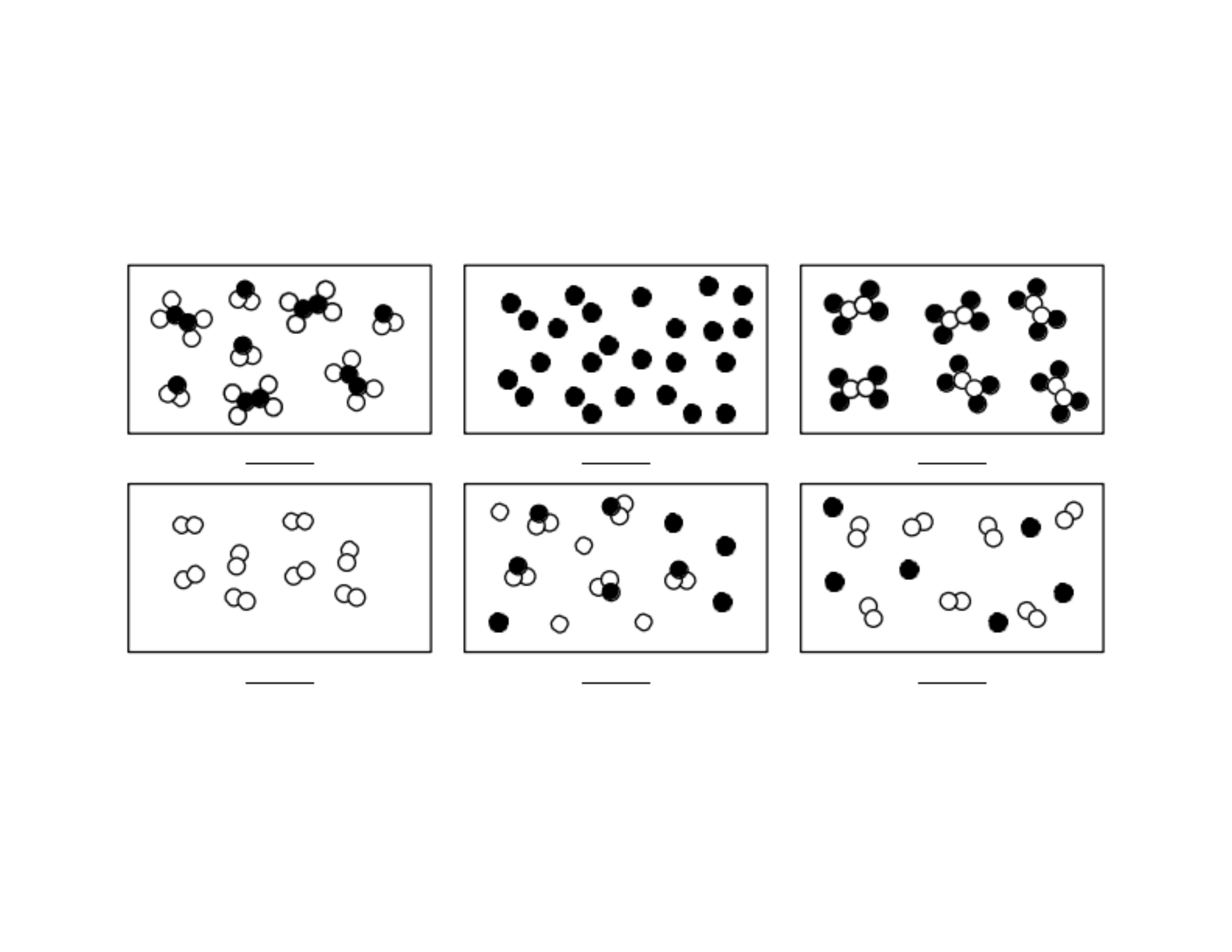
Picture 5 is best classified as...
Element
Compound
Mixture of compounds
Mixture of elements
Mixture of elements & compounds
Picture 6 is best classified as...
Element
Compound
Mixture of compounds
Mixture of elements
Mixture of elements & compounds
Picture 7 is best classified as...
Element
Compound
Mixture of compounds
Mixture of elements
Mixture of elements & compounds
Picture is 8 best classified as...
Element
Compound
Mixture of compounds
Mixture of elements
Mixture of elements & compounds
Picture 9 is best classified as...
Element
Compound
Mixture of compounds
Mixture of elements
Mixture of elements & compounds
Picture 10 is best classified as...
Element
Compound
Mixture of compounds
Mixture of elements
Mixture of elements & compounds
Watch the video of potassium being placed into water, then categorize the following statements as physical or chemical properties.
potassium is solid at room temperature
potassium is a soft metal
potassium reacts with water to produce hydrogen gas