Step 1: draw a
Step 2: calculate the
(s)
Rate =
(note the values are in mass not in moles so the axis is incorrectly labelled!
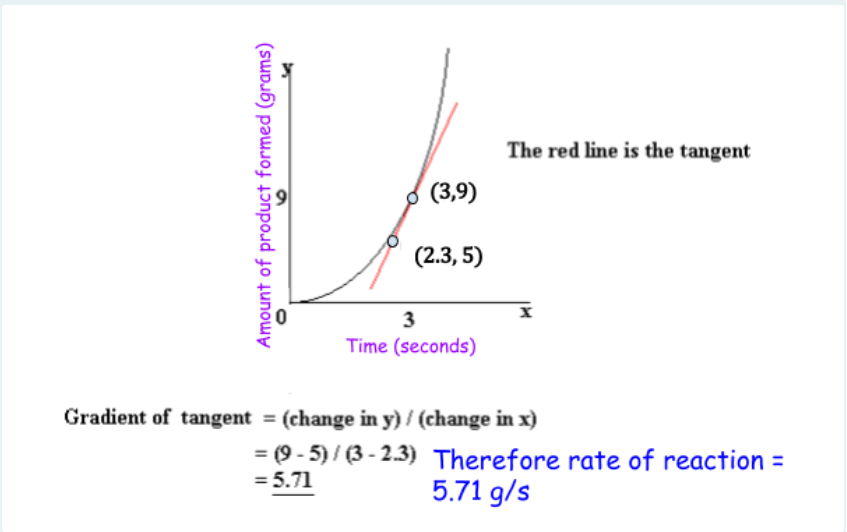
What is the rate of reaction at 3 seconds (1 Point)
The best explanation is:
Increasing concentration of a solution increases the rate of reaction as there are:
Increasing pressure of a gas increases the rate of reaction as there are:
Increasing surface area to volume ratio of a solid increases the rate of reaction as there are:
The rate of reaction for a powder is greater than the rate of reaction for small chips as there are:
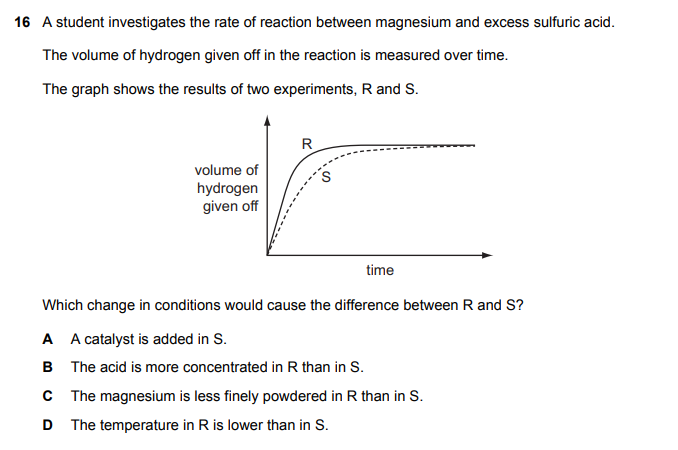
As a reaction proceeds, the rate of reaction decreases and the slope of the tangent:
When one of the reactants is used up, the slope of the line (on a graph of concentration vs time):
Step 1: draw a
Step 2: calculate the
(s)
Rate =
(note the values are in mass not in moles so the axis is incorrectly labelled!
What is the rate of reaction at 3 seconds (1 Point)
(Decreasing the rate of reaction means less frequent and/or fewer successful collisions).
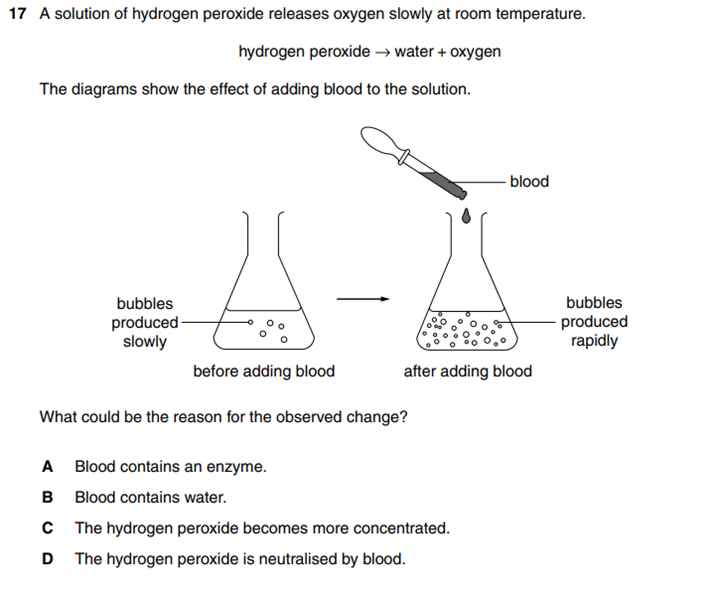
Hint think of enzymes in biology
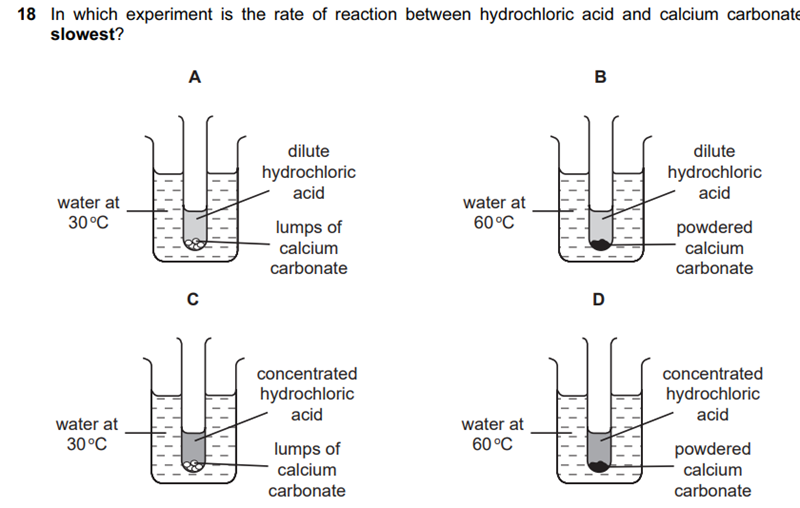
Why does the powdering of calcium carbonate increase the rate of its reaction with an acid?
Why does the powdering of calcium carbonate increase the rate of its reaction with an acid?
Hint look at the state symbols
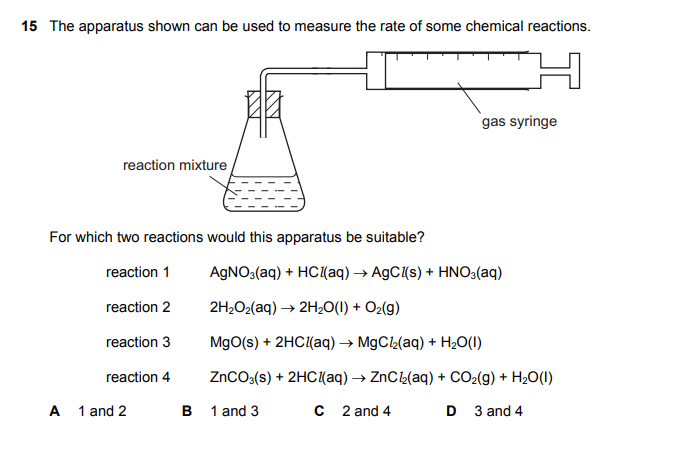
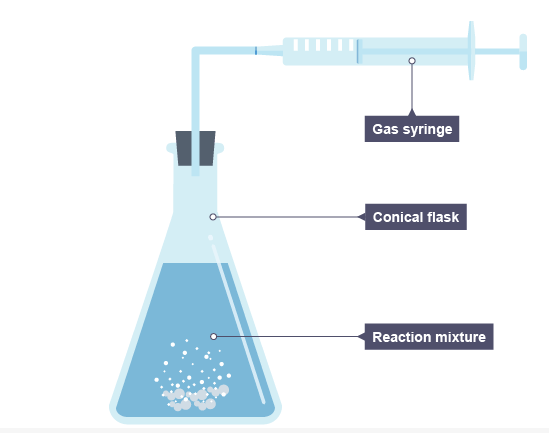
A gas syringe is better than collecting over water as the less
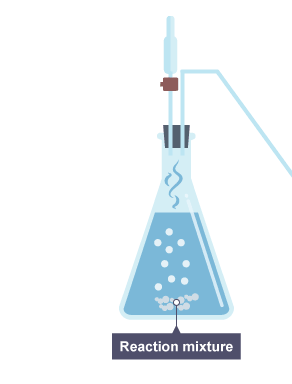
This method of adding the acid to the marble chips is better as the
If the water in the trough is saturated with sodium carbonate