Ɛhia
1
Ɛhia
1
Ɛhia
1
Ɛhia
1
Essential Question: What is civic engagement, and how can I get involved?
Estimated Time: 3 weeks
Facilitation Notes: Use this lesson and performance task to provide an opportunity for students to be introduced to the concept of civic engagement and propose a community action project.

You have to be able to vote in order to be civically engaged.
Which of the following is a historical example of civic engagement in the United States?
After learning about civic engagement in the U.S., research civic engagement in another country and share 2 learnings that you discover here. Be sure to cite your source 😀 .
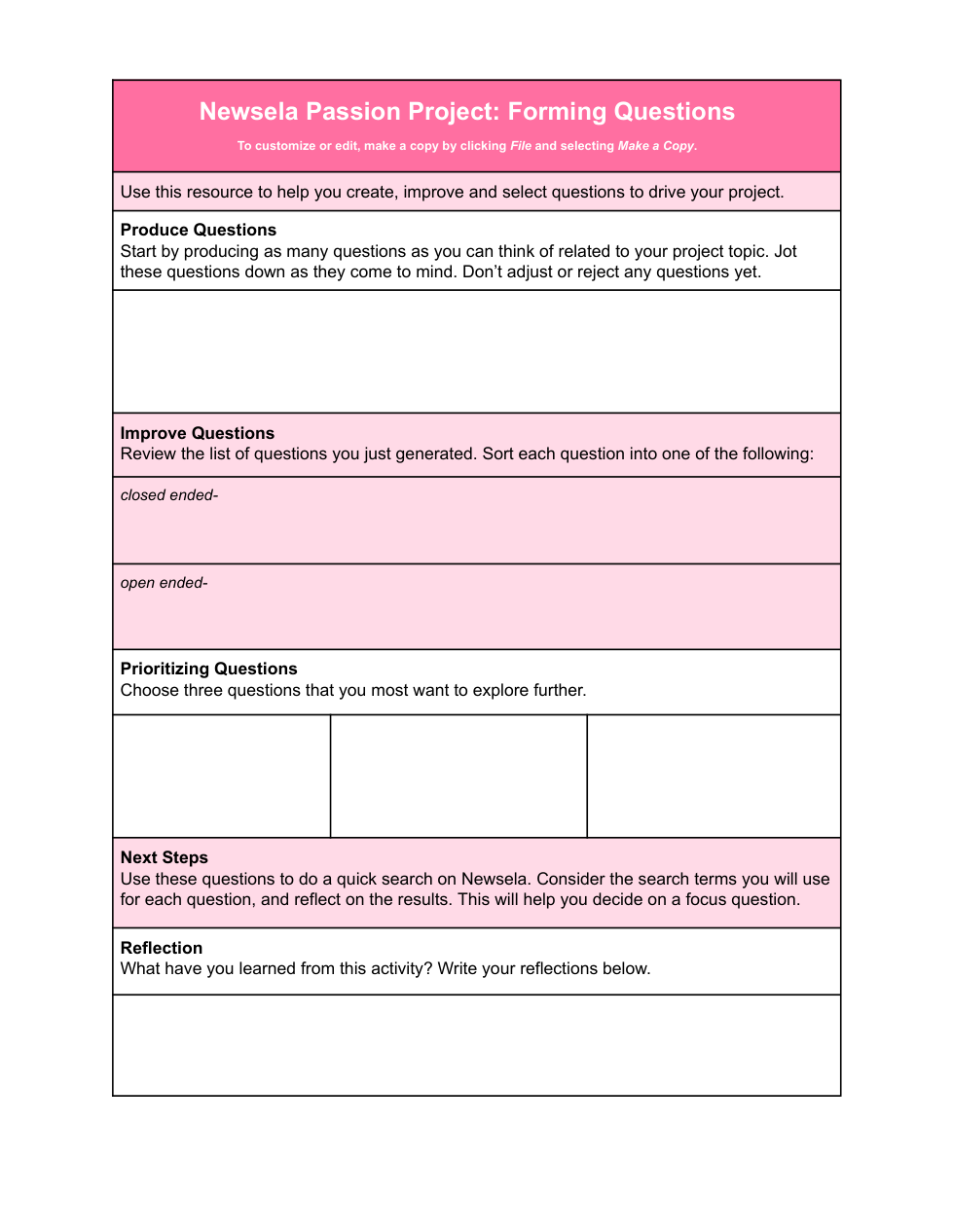
Produce Questions: Start by producing questions related to your project topic. Jot these questions down as they come to mind. Do not reject any questions yet.
Select 3 questions that you want to explore further. These questions will guide the deeper research.
Sketch Noting or Free Planning
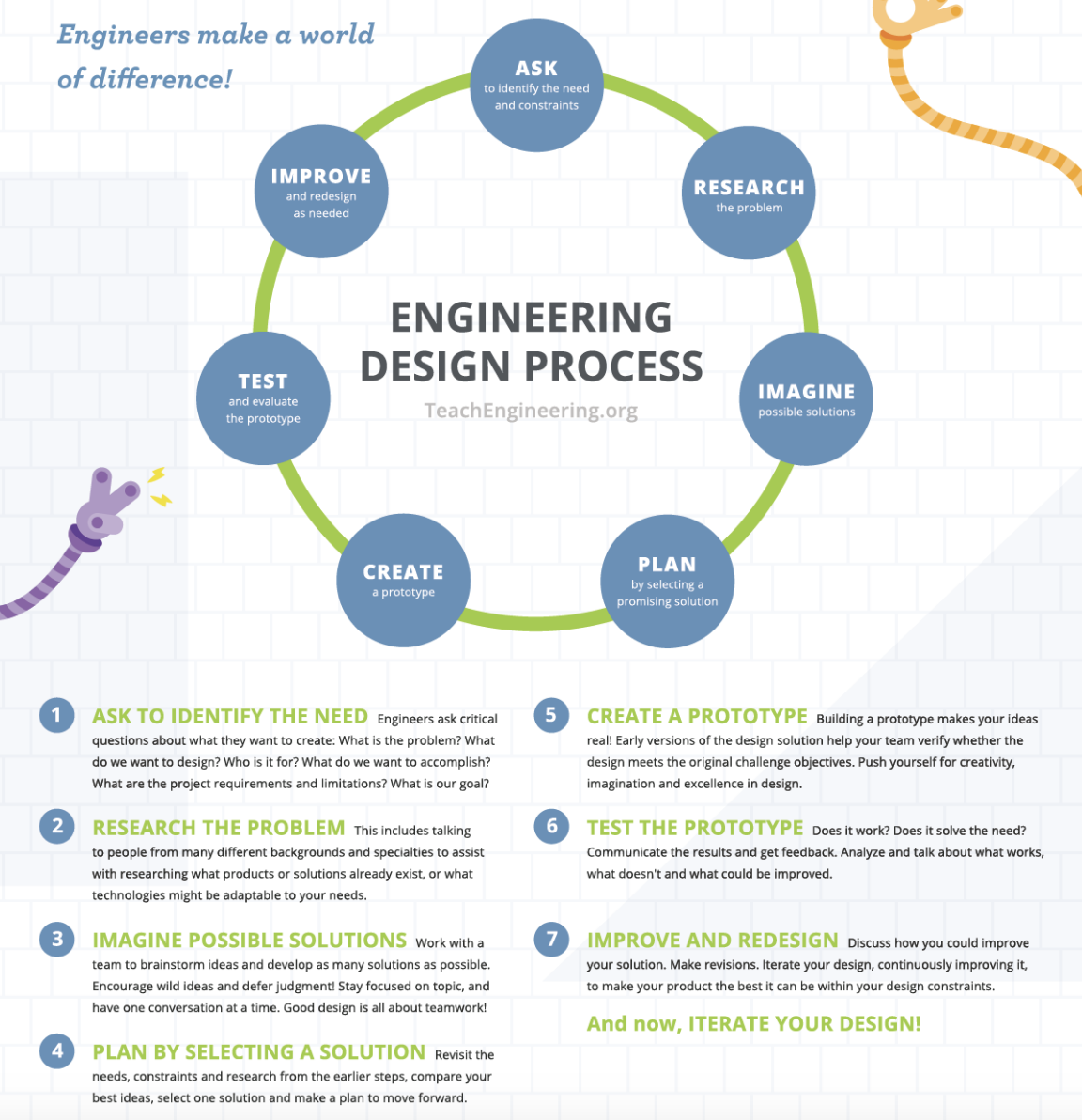
What is the challenge/problem?
Based on your research, what are some of the possible solutions?
What is the solution that seems like the best choice and WHY?
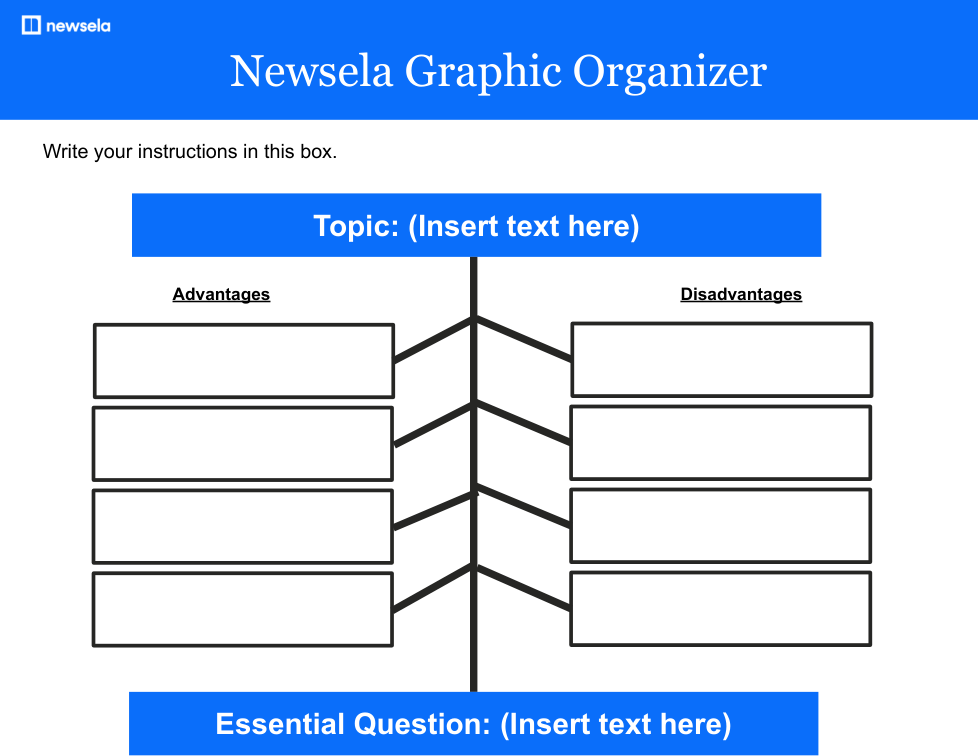
Use this graphic organizer to map out your challenge and the "advantages" and "disadvantages" of proposed solutions from your research.
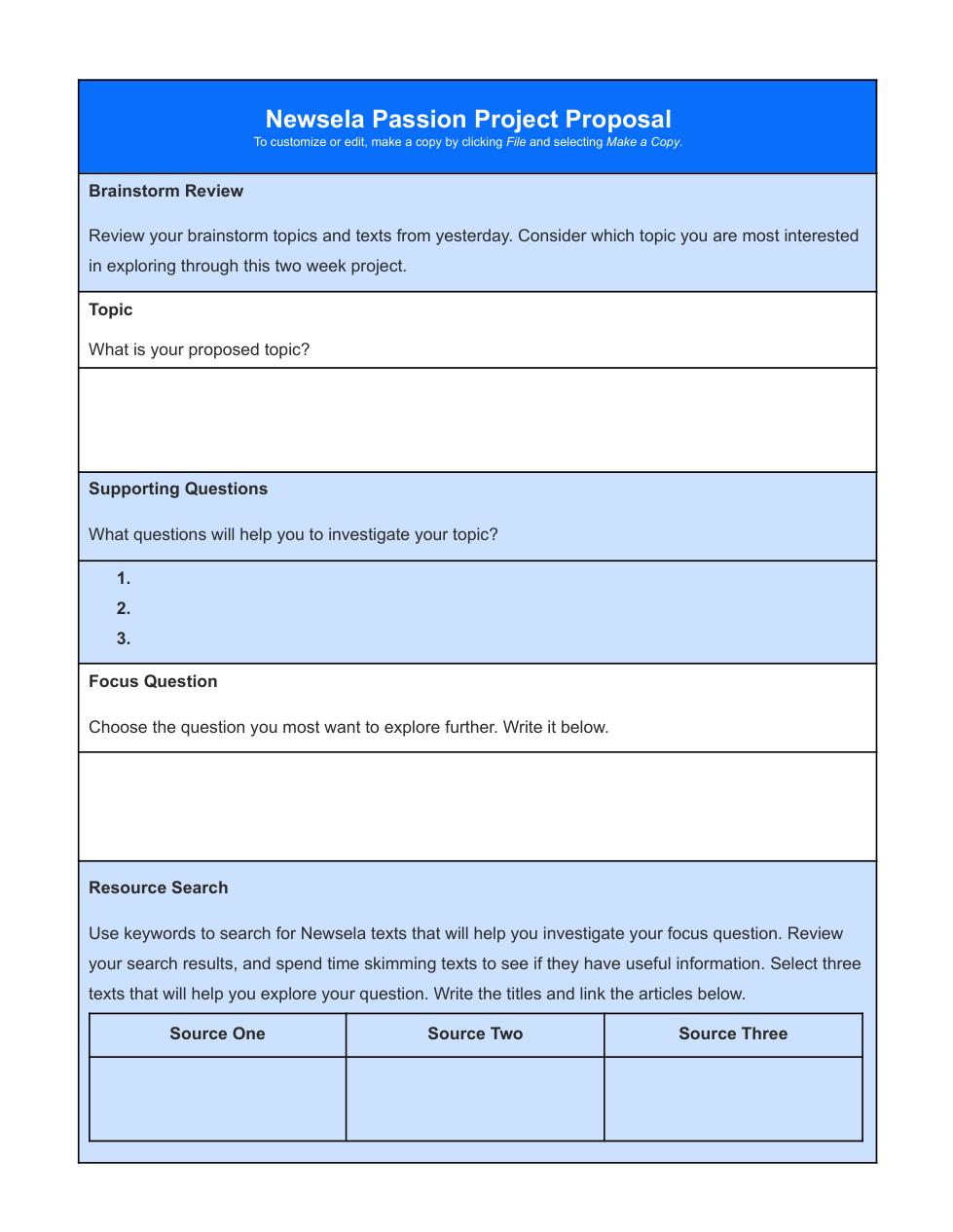
Use this proposal document to submit your ideas and action plan.
Submit your final presentation here.
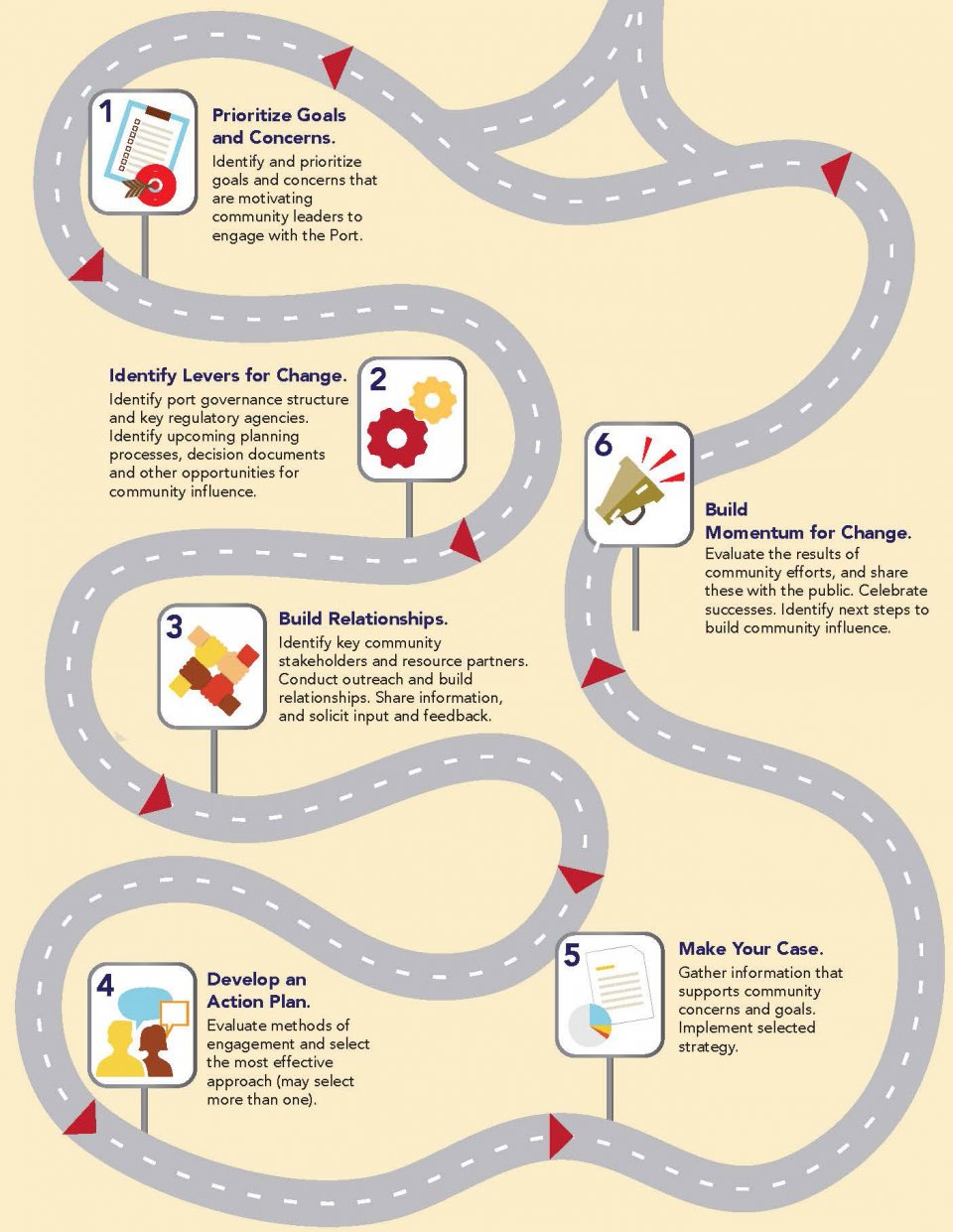
What is the first step in the civic engagement process?
Why is building relationships important in civic engagement?
What comes after developing an action plan?
Which step assesses the results of community efforts?
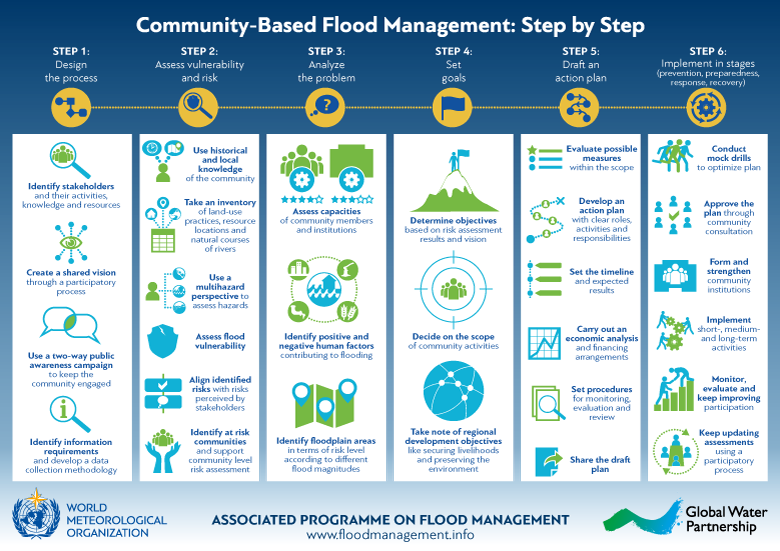
What is the first step in community-based flood management?
Why is local knowledge important in flood management?
What should a community aim for when setting goals?
What is a key benefit of conducting mock drills?
Read this sentence from the section “Civic Engagement Definition.” The success of civic engagement activities depends on the tendency of people to consider themselves to be an integral part of society and therefore view problems facing society to be at least partly their own. Which sentence from the article BEST supports this idea?
Which claim does the author support the LEAST?
What purpose is served by including examples in the article of civic engagement success stories from history?
How effective is the first paragraph at engaging the reader in the idea of civic engagement? Why?
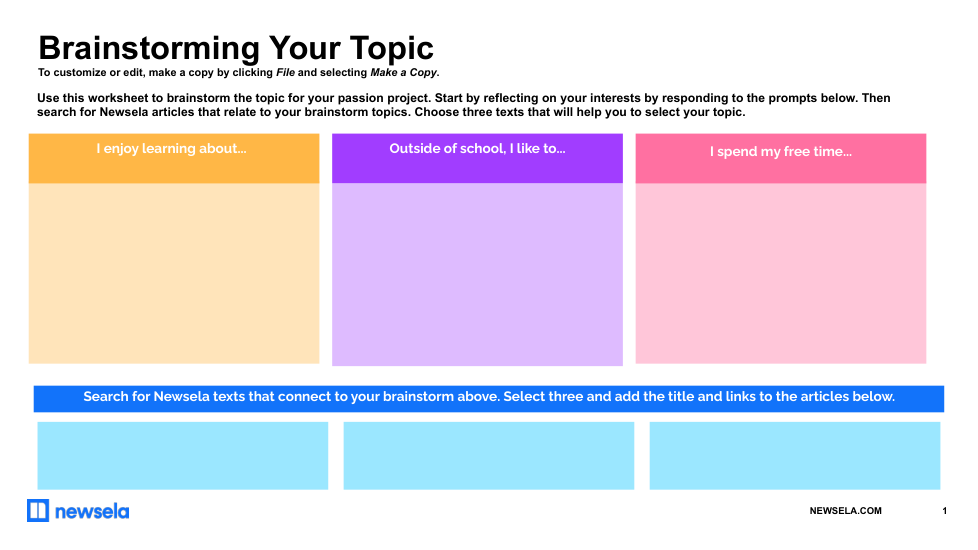
I enjoy learning about...
Outside of school, I like to...
I spend my free time...
Link 1
Link 2
Link 3
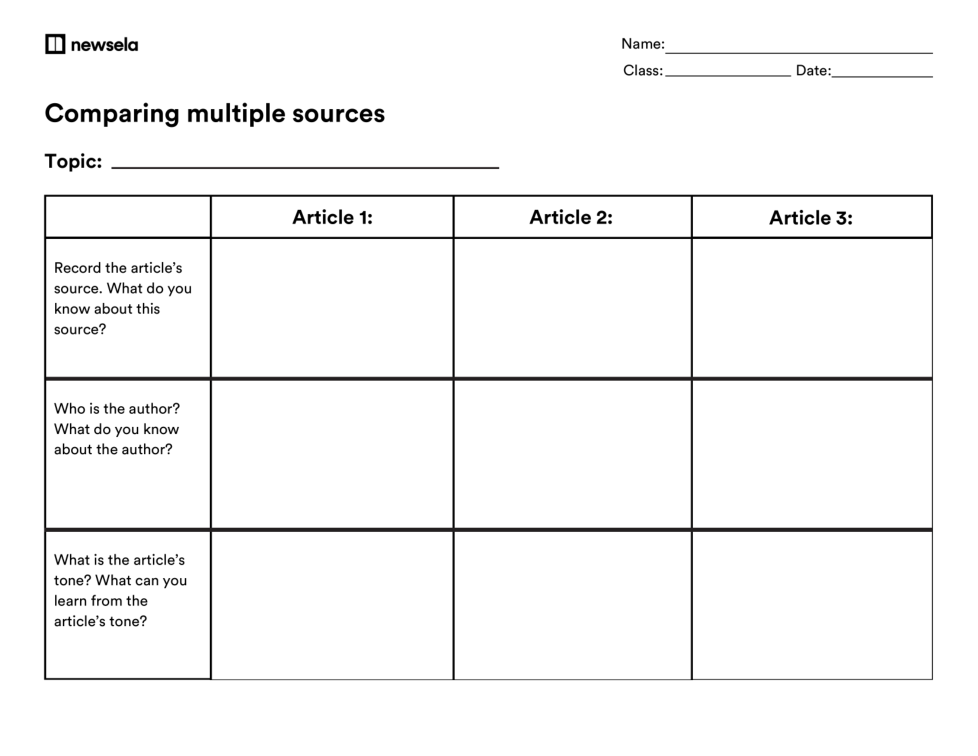
Record the article's source. What do you know about this source?
Who is the author? What do you know about the author?
What is the article's tone? What can you learn from the article's tone?
Record the article's source. What do you know about this source?
Who is the author? What do you know about the author?
What is the article's tone? What can you learn from the article's tone?
Record the article's source. What do you know about this source?
Who is the author? What do you know about the author?
What is the article's tone? What can you learn from the article's tone?
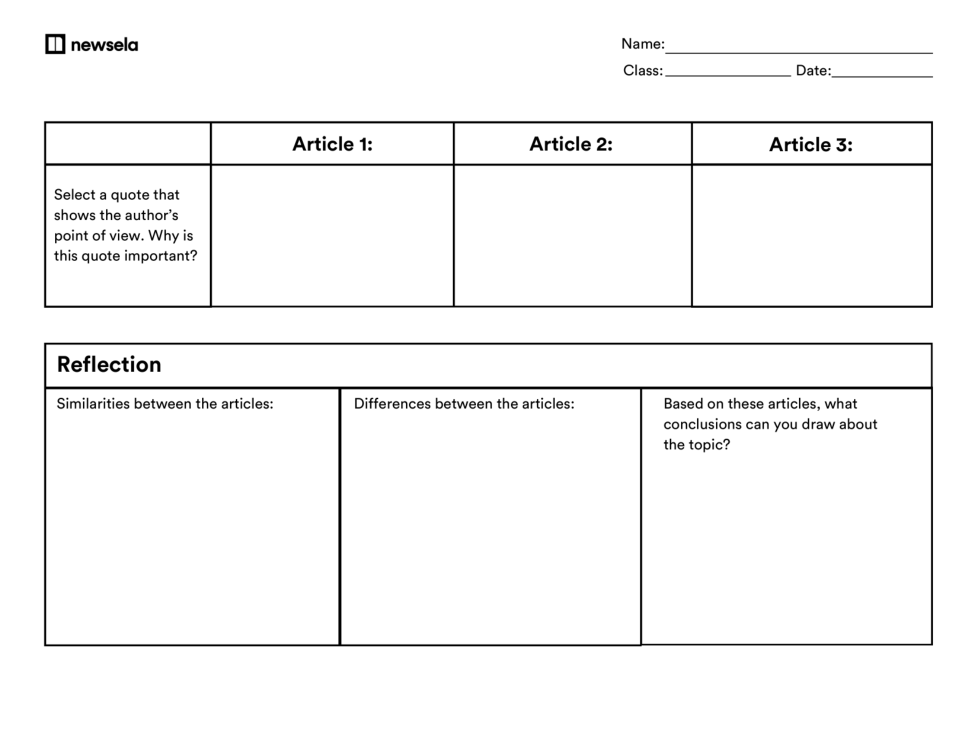
Article 1: Select a quote that shows the author's point of view. Why is this quote important?
Article 2: Select a quote that shows the author's point of view. Why is this quote important?
Article 3: Select a quote that shows the author's point of view. Why is this quote important?
Similarities between the articles:
Differences between the articles:
Based on these articles, what conclusions can you draw about the topic?