Twa kɔ nsɛm atitiriw so
Log in
Sign up for FREE
arrow_back
Laabri

Cell Structures (Part 1: Shape & Movement)

star
star
star
star
star
Last updated about 1 year ago
4 Nsɛmmisa

The Cytoskeleton

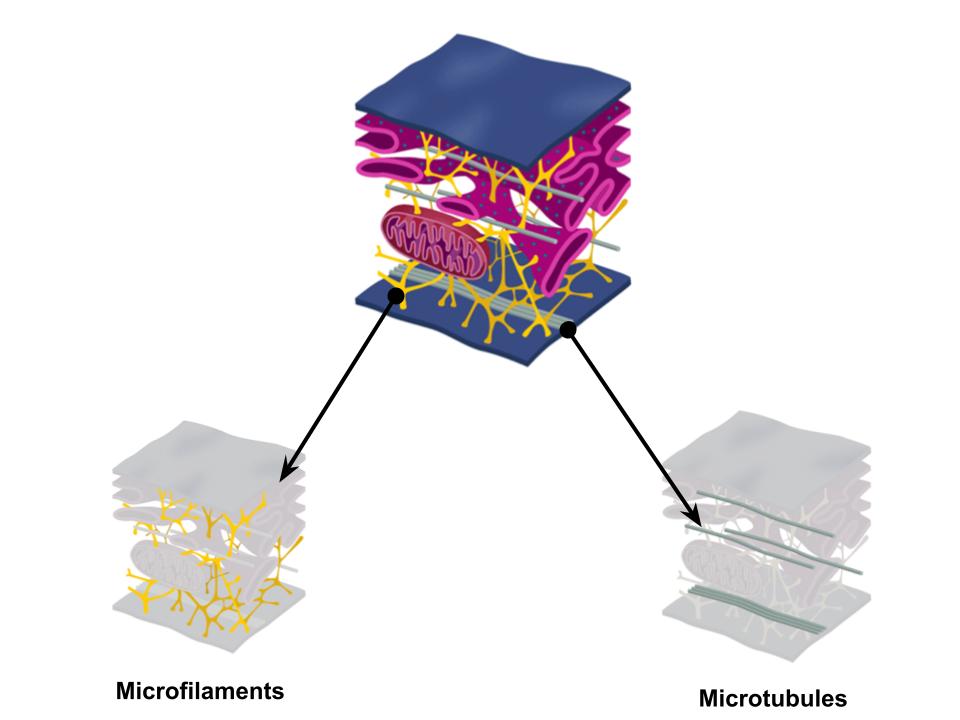
Our cells shape and the position of its organelles are supported by a cell's cytoskeleton. The cytoskeleton is a supporting network of long, thin protein fibers that form a framework for the cell and provide an anchor for the organelles inside the cell. The cytoskeleton can also play a role in cell movement and is made up of substructures called microtubules and microfilaments.

1
1
1
7

Microtubules & Microfilaments

Microtubules are long, hollow protein cylinders that form a rigid skeleton for the cell and assist in moving substances within the cell. Microfilaments are thin protein threads that help give the cell shape and enables the entire cell or parts of the cell to move. Microtubules and microfilaments rapidly assemble and disassemble and slide past one another. This allows cells and organelles to move.
Centrioles

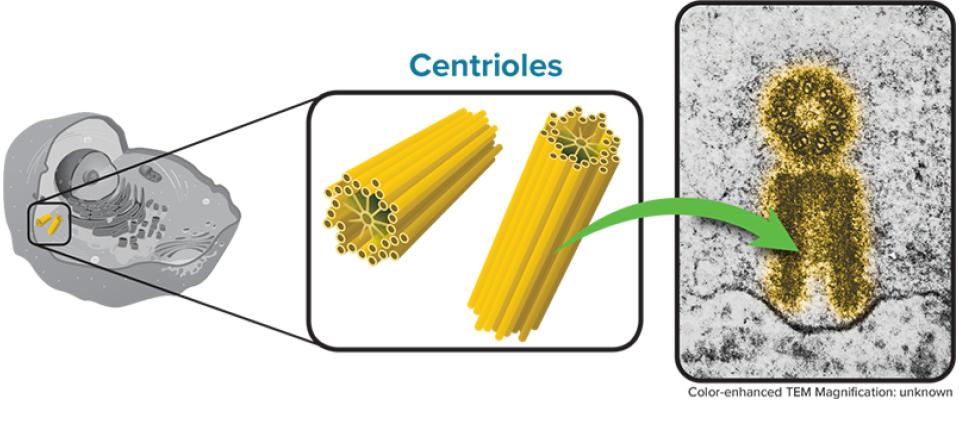
Groups of microtubules form another structure called a centriole. Centrioles are organelles made of microtubules that function during cell division. Centrioles are located in the cytoplasm of animal cells and most protists and are usually found near the nucleus.

Cell Appendages

Some cell surfaces have structures called cilia and flagella that project outside the cell. Cilia are short, numerous projections that look like hairs. The motion of cilia is similar to the motion of oars in a rowboat. Cilia are also found on stationary cells, and sometimes can aid in feeding.

Flagella are longer and less numerous than cilia. These projections move with a whiplike motion. Typically, a cell has only one or two flagella.

Asemmisa {{asɛmmisaAhyɛnsode}}
1.

What components make up the cytoskeleton?

Asemmisa {{asɛmmisaAhyɛnsode}}
2.

What is a centriole?

Asemmisa {{asɛmmisaAhyɛnsode}}
3.

Which one of these is NOT a function of the cilia?

Asemmisa {{asɛmmisaAhyɛnsode}}
4.
Draggable itemarrow_right_altCorresponding Item

Short, numerous projections from the cell surfaces that aid in locomotion, feeding, and sweeping substances along surfaces

arrow_right_alt

Cytoskeleton

Supporting network of long, thin protein fibers that form a framework for the cell and provide an anchor for the organelles inside the cell

arrow_right_alt

Microtubules

Organelles that are made of microtubules that function during cell division

arrow_right_alt

Microfilaments

Jellylike, semifluid substance that fills cells

arrow_right_alt

Centrioles

Thin protein threads that help give the cell shape and enable the entire cell or parts of the cell to move

arrow_right_alt

Cilia

Long, hollow protein cylinders that form a rigid skeleton for the cell and assist in moving substances within the cell

arrow_right_alt

Flagella

Longer, less numerous projections that move with a whiplike motion for locomotion and feeding

arrow_right_alt

Cytoplasm