Intro to Chemistry (in Bio)
star
star
star
star
star
Last updated almost 2 years ago
34 Nsɛmmisa
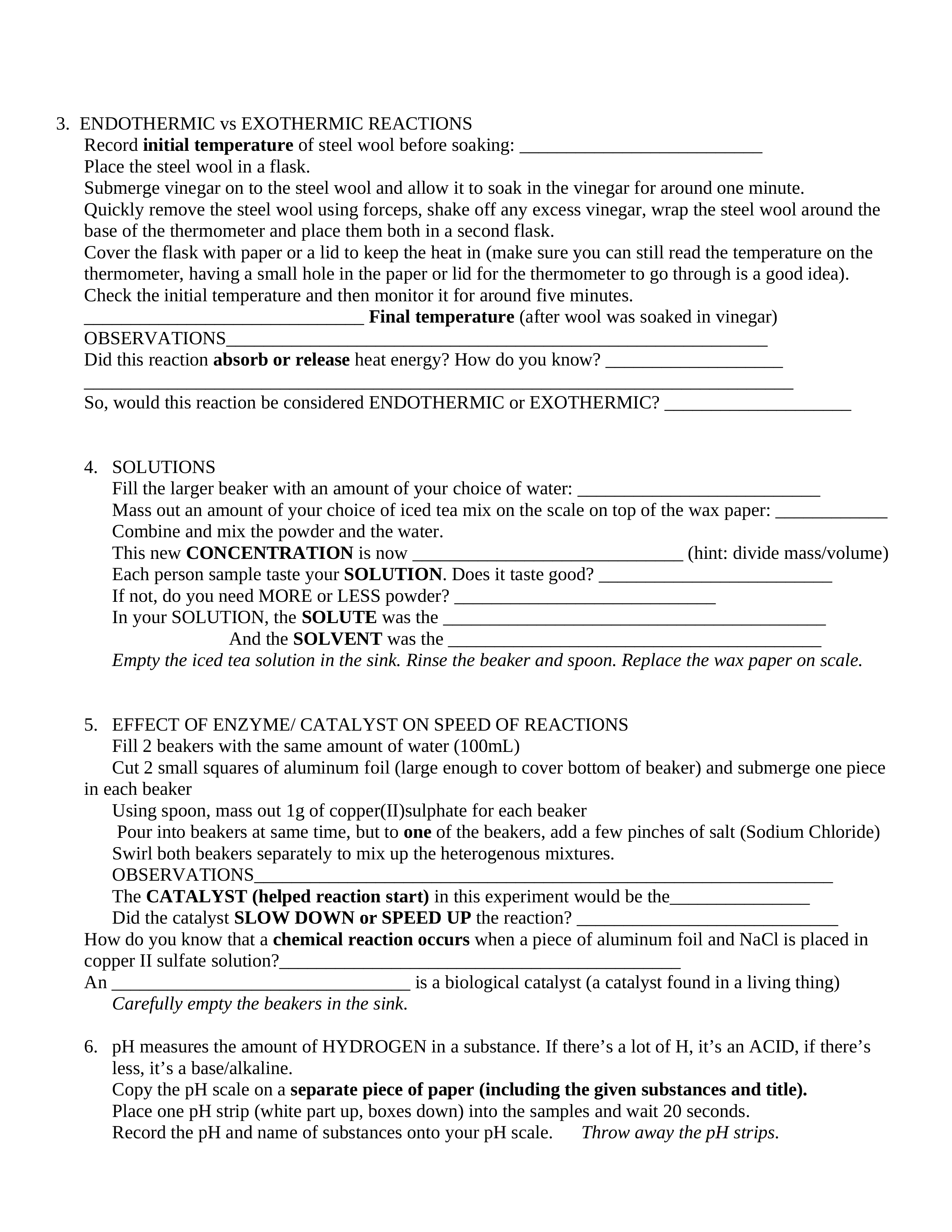
What is the "stuff" that takes up space and makes up things?
What is the amount of this stuff (measured in grams)?
Which state of this stuff has the atoms moving the fastest and most spread out?
Using the scribble tool, draw in arrows to connect the words into a concept map (a flow chart) from smallest --> to --> largest.
COMPOUND molecules are made up of ______ elements, unlike DIATOMIC molecules.
Label this ATOM:
(Drag and Drop)

How do you remember the ELEMENTS of life?
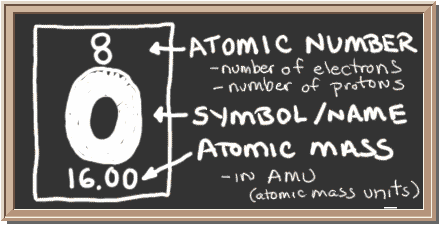
How to read a box in the periodic table of elements:
| Draggable item | arrow_right_alt | Corresponding Item |
|---|---|---|
atomic number | arrow_right_alt | = atomic number |
# of neutrons | arrow_right_alt | = # of protons |
atomic mass number | arrow_right_alt | = mass number - atomic number |
# of electrons | arrow_right_alt | is the small number in the element box (8 for Oxygen) |
# of protons | arrow_right_alt | is the big number in the element box (16 for Oxygen) |
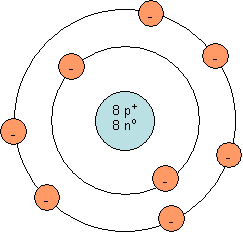
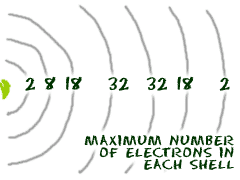
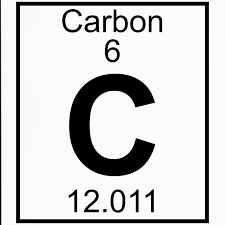
Using the text tool (__p, __n) and the circle tool (for electrons), complete a Bohr model of Carbon.
Use the images to help; I did one for Oxygen for you.
Hint: fill in your electrons from the inner orbit to the outer.
CIRCLE the TWO covalent SHARED BONDS between H and O in a water molecule. Hint: each bond should have 2e-'s
DRAW AN ARROW showing the one IONIC (give and take) BOND between Na and Cl in a salt molecule. Hint: who is giving to who? ..
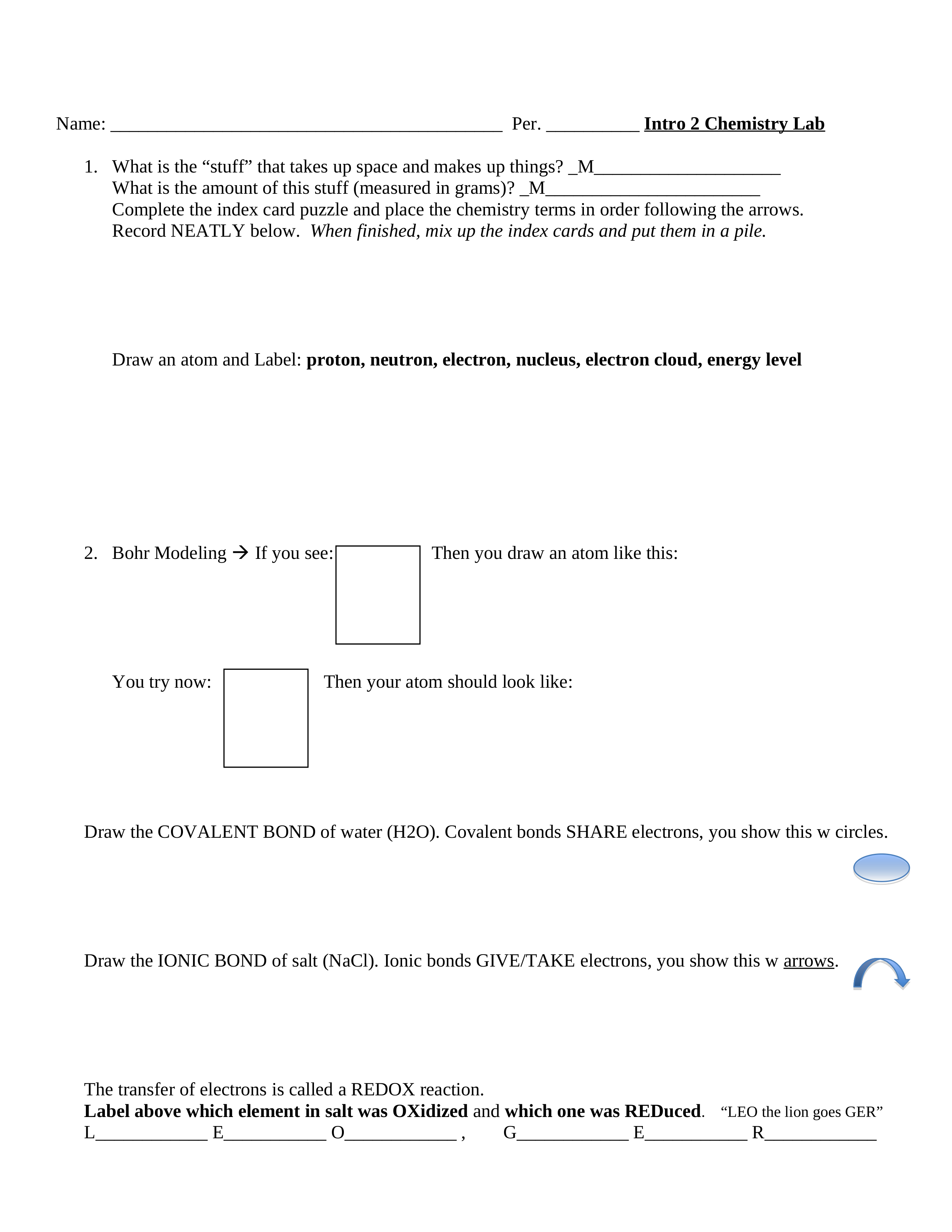
"LEO" stands for?
"GER" stands for?
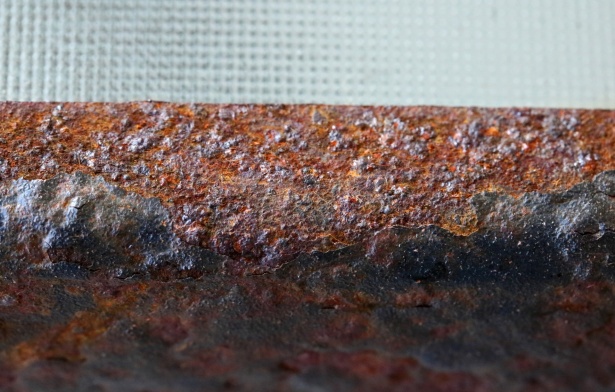
When metal rusts and oxidizes, what is happening to its electrons?
Initial temperature of steel wool?
Final temperature of steel wool?
OBSERVATIONS:
Did this reaction ABSORB or RELEASE heat energy? How do you know?
Therefore, the steel wool and vinegar reaction would be considered _______.
How much water did you add to the beaker?
How much mix did you measure?
Calculate the CONCENTRATION now. (Hint: divide mass/volume)
Did your personal taste test deem your concentration to be "good"?
SOLUTE:
SOLVENT:
Observations:
CATALYST:
The catalyst helps ____ the reaction.
I know a chemical reaction occurred because:
A biological catalyst in your body is called an _______.
1. Add the labels "Acid", "Neutral", and "Base/Alkaline" to the correct spots on your pH scale.
2. Add your tested substances at the correct spot on the pH scale after you figure out their pH's.
What does pH measure?
Acidic solutions have (3):
In your body's Blood ___
CONCLUSION: Wait, based on this lab, what does CHEMISTRY have to do with BIOLOGY???