
Log in
Sign up for FREE
arrow_back
Library
Chapter 3: Developing Good Personal Hygiene
By Robert Butts
star
star
star
star
star
Share
share
Last updated 6 months ago
88 questions
Add this activity
Required
10
Required
10
Required
10
zoom_in
zoom_in
zoom_in
Required
10
Question 1
1.
Which aspects of good hygiene are important to your health?
zoom_in
zoom_in
zoom_in
zoom_in
Required
10
Required
10
Required
10
Required
10
zoom_in
Required
10
Required
10
Required
10
Required
10
zoom_in
Required
10
Required
10
Required
10
Required
10
zoom_in
Required
10
Required
10
Required
10
Required
10
zoom_in
Required
10
Required
10
Required
10
Required
10
zoom_in
zoom_in
Required
10
Required
10
Required
10
Required
10
zoom_in
Required
10
Required
10
Required
10
Required
10
zoom_in
zoom_in
zoom_in
zoom_in
Required
10
Required
10
Required
10
Required
10
zoom_in
zoom_in
Required
10
Required
10
Required
10
Required
10
zoom_in
Required
10
Required
10
Required
10
Required
10
zoom_in
zoom_in
Question 42
42.
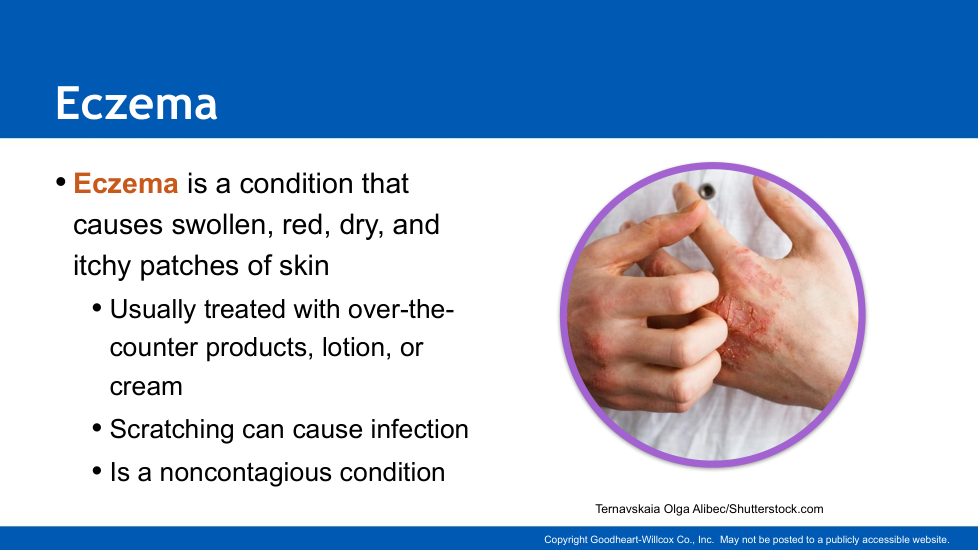
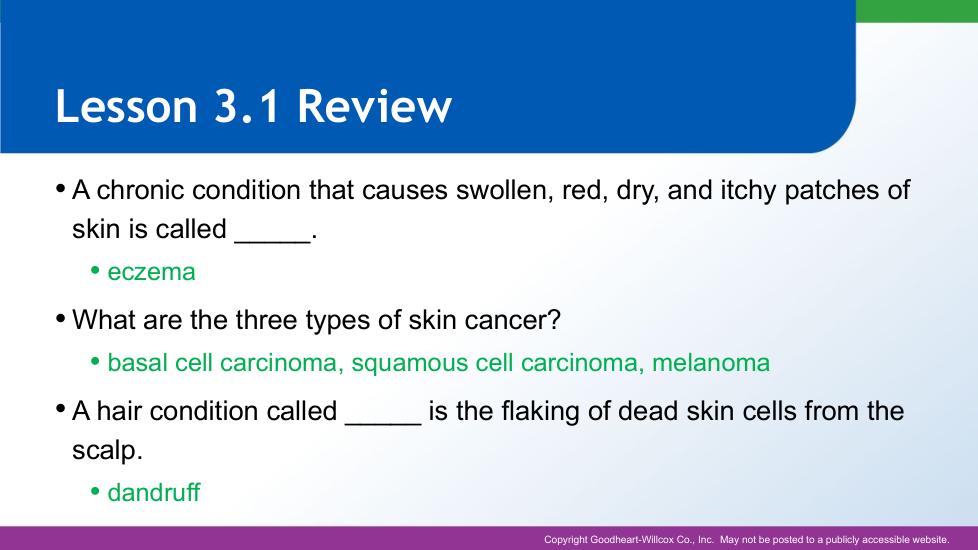
What is a chronic condition that causes red, itchy skin?
acne
rosacea
psoriasis
eczema
Question 43
43.
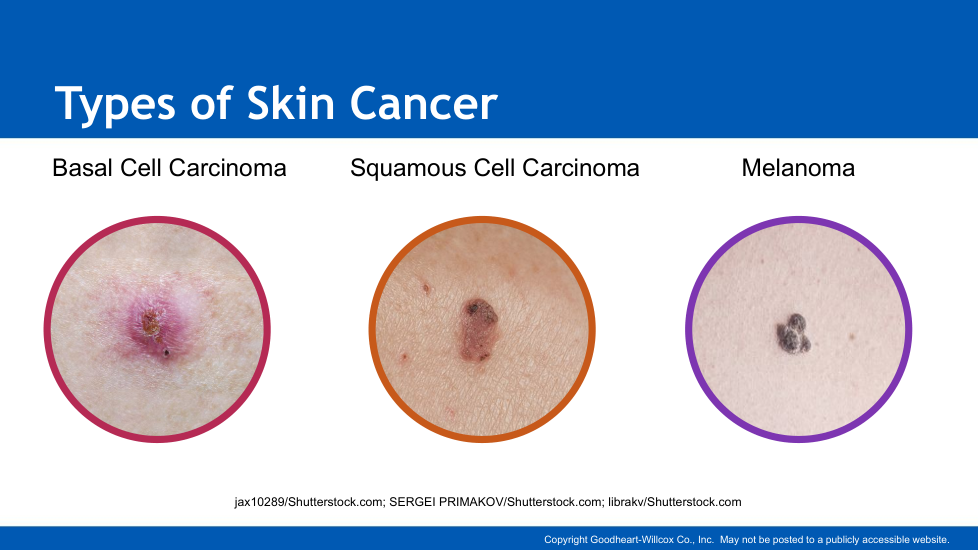
What are the three types of skin cancer?
rash, hives, burns
sprain, fracture, concussion
basal cell carcinoma, squamous cell carcinoma, melanoma
dermatitis, eczema, psoriasis
Question 44
44.
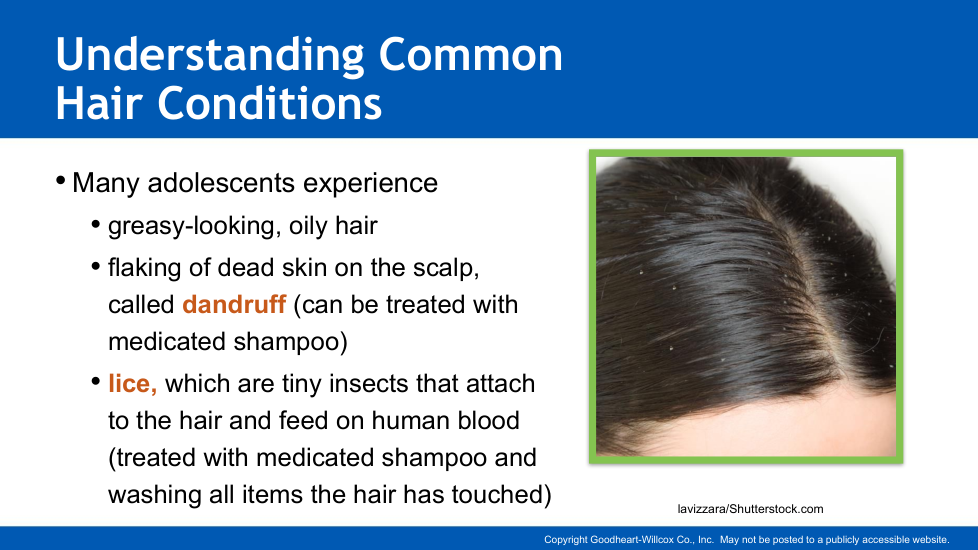
What is the flaking of dead skin cells from the scalp?
dandruff
psoriasis
lice
ringworm
zoom_in
zoom_in
zoom_in
zoom_in
Required
10
Required
10
Required
10
Required
10
zoom_in
Required
10
Required
10
Required
10
Required
10
zoom_in
Required
10
Required
10
Required
10
Required
10
zoom_in
Required
10
Required
10
Required
10
Required
10
zoom_in
zoom_in
Required
10
Required
10
Required
10
Required
10
zoom_in
Required
10
Required
10
Required
10
Required
10
zoom_in
Required
10
Required
10
Required
10
Required
10
zoom_in
Required
10
Required
10
Required
10
Required
10
zoom_in
Required
10
Required
10
Required
10
Required
10
zoom_in
Required
10
Required
10
Required
10
Required
10
zoom_in
Required
10
Required
10
Required
10
Required
10
zoom_in
zoom_in
zoom_in
Question 2
2.
How does the skin help regulate body temperature?
By secreting oil
By producing more skin cells
By producing more hair
Through sweat production
Question 3
3.
What is the primary role of the skin in protection?
Breaking down food
Acting as a barrier
Producing vitamins
Filtering blood
Question 4
4.
What does the skin do to prevent bacteria and viruses?
Creates a protective layer
Attracting germs
Absorbing pathogens
Allowing entry
Question 5
5.
Which organ covers the entire human body?
Lungs
Skin
Heart
Liver
Question 6
6.
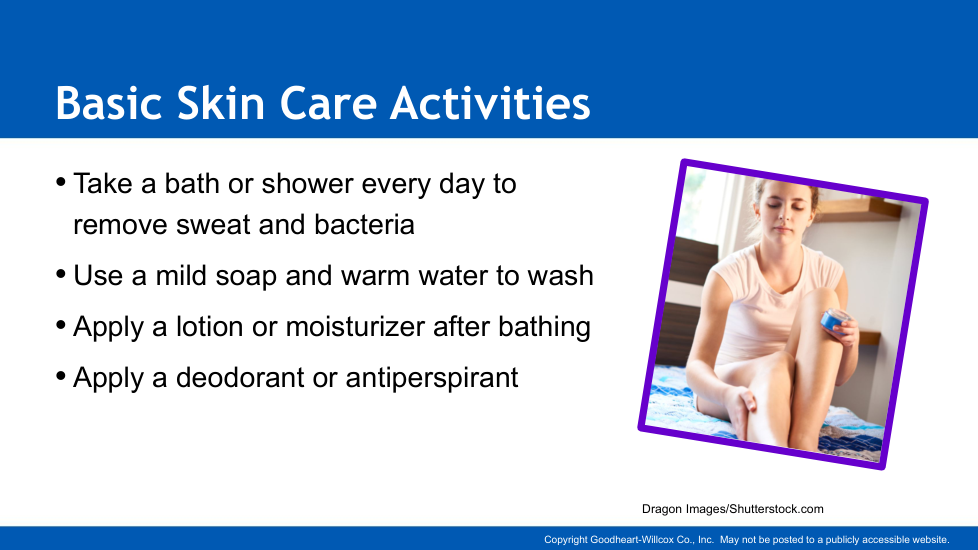
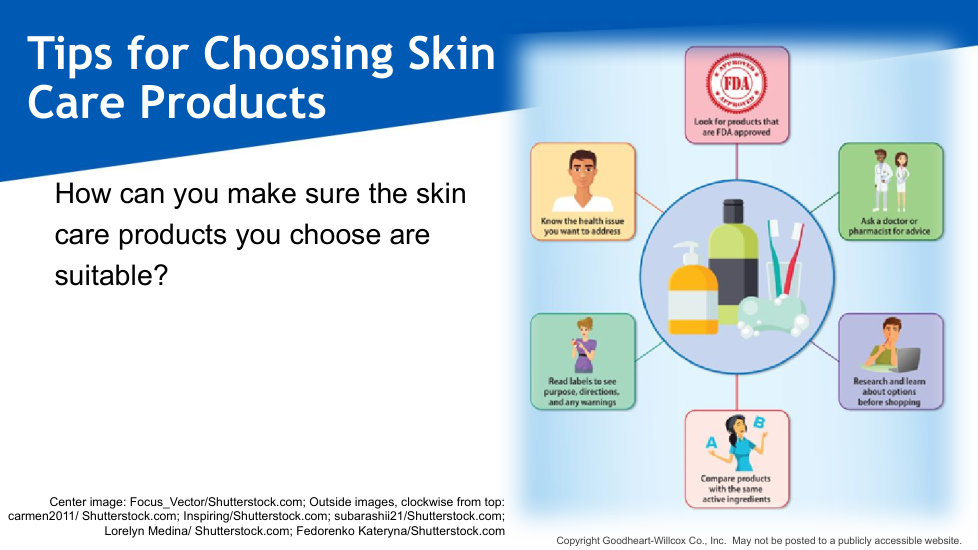
Why is it important to take a bath or shower?
To save time
To stay dirty
To impress friends
To remove sweat and bacteria
Question 7
7.
What should you use to wash your body?
Pet shampoo
Cold water
Toothpaste
Mild soap and warm water
Question 8
8.
What should you apply after bathing?
Cooking oil
Glitter
Lotion or moisturizer
Toothpaste
Question 9
9.
What product can help with body odor?
Body paint
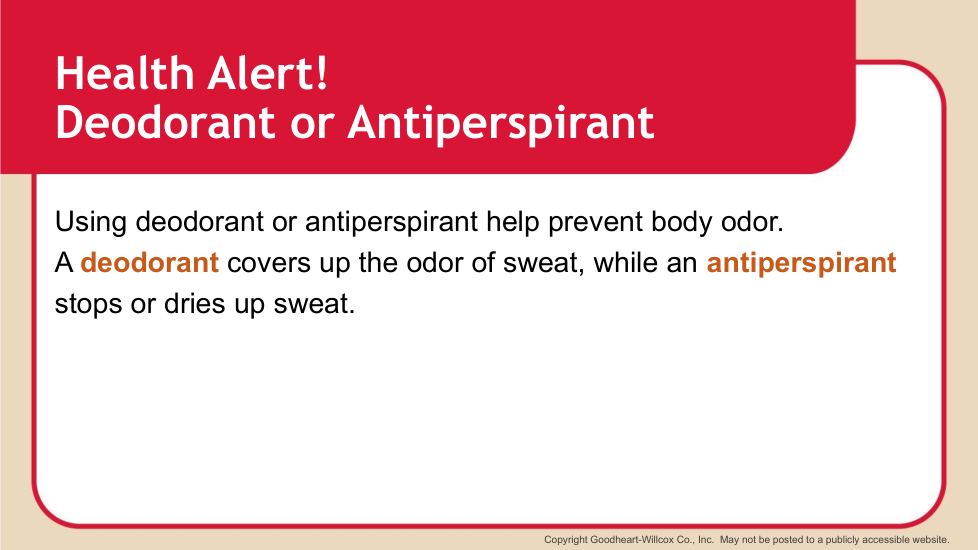
Deodorant or antiperspirant
Candles
Toothbrush
Question 10
10.
Which product covers up the odor of sweat?
Soap
Shampoo
Antiperspirant
Deodorant
Question 11
11.
What stops or dries up sweat?
Lotion
Deodorant
Sunscreen
Antiperspirant
Question 12
12.
Why should we use deodorant or antiperspirant?
Improve eyesight
Cure headaches
Prevent body odor
Change skin color
Question 13
13.
What do deodorants and antiperspirants help with?
Hair loss prevention
Body odor prevention
Nail growth
Teeth whitening
Question 14
14.
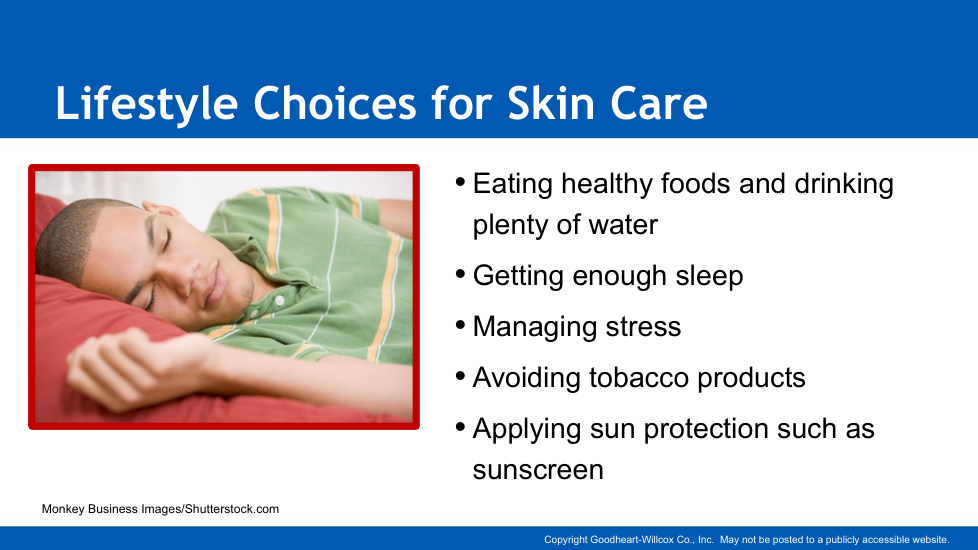
Which activity is important for managing stress effectively?
Sleeping all day
Eating junk food
Exercise
Watching TV
Question 15
15.
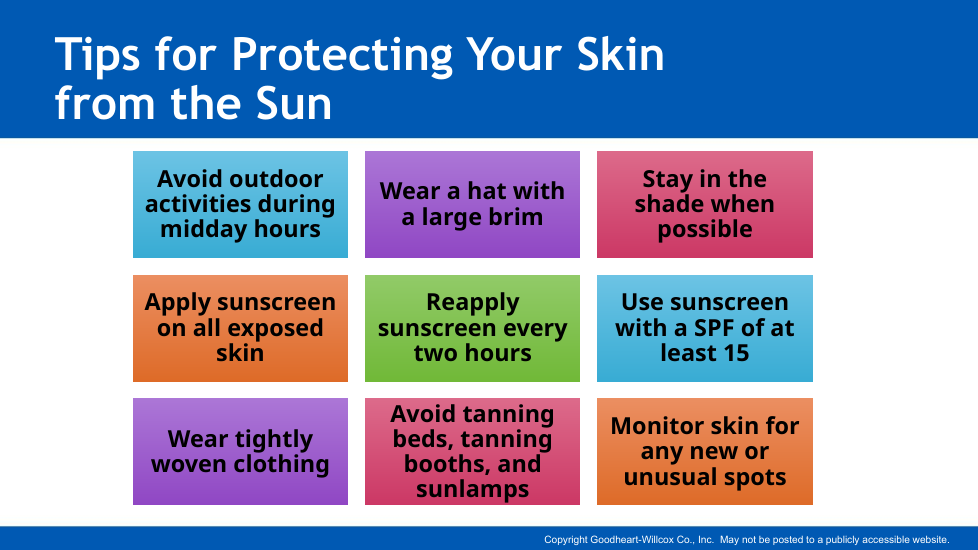
What helps to protect your skin from harmful UV rays?
Nothing at all
Body lotion
Makeup
Sunscreen
Question 16
16.
What is crucial for staying healthy and strong?
Eating junk food
Skipping meals
Drinking soda
Eating nutritious foods
Question 17
17.
What should you avoid to maintain a healthy lifestyle?
Tobacco products
Drinking water
Fresh fruits
Exercise
Question 18
18.
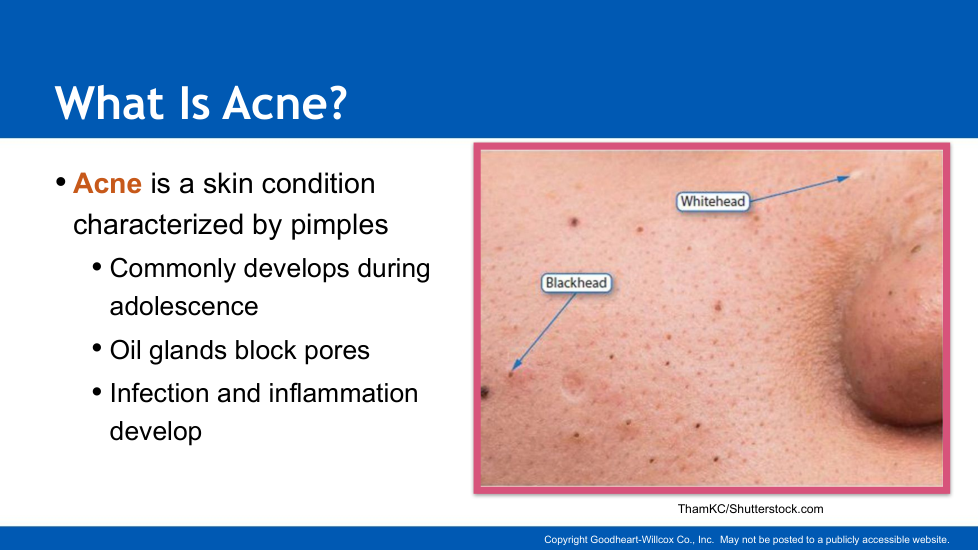
What is acne characterized by?
Scars
Rashes
Wrinkles
Pimples
Question 19
19.
When does acne commonly develop?
Adolescence
Middle age
Infancy
Elderly years
Question 20
20.
What blocks pores in acne?
Oil glands
Hair follicles
Melanin production
Sweat glands
Question 21
21.
What develops due to infection and inflammation in acne?
Skin discoloration
Pimples
Scars
Wrinkles
Question 22
22.
What is a common symptom of eczema?
Swollen patches
Sore bumps
Blistered areas
Cracked skin
Question 23
23.
How is eczema usually treated?
Oral medication
Surgery
Lotion or cream
Injections
Question 24
24.
Why is scratching not recommended for eczema?
Can cause infection
Aids in moisturizing
Reduces redness
Promotes healing
Question 25
25.
Is eczema contagious?
Partially contagious
Becomes contagious
Highly contagious
Noncontagious
Question 26
26.
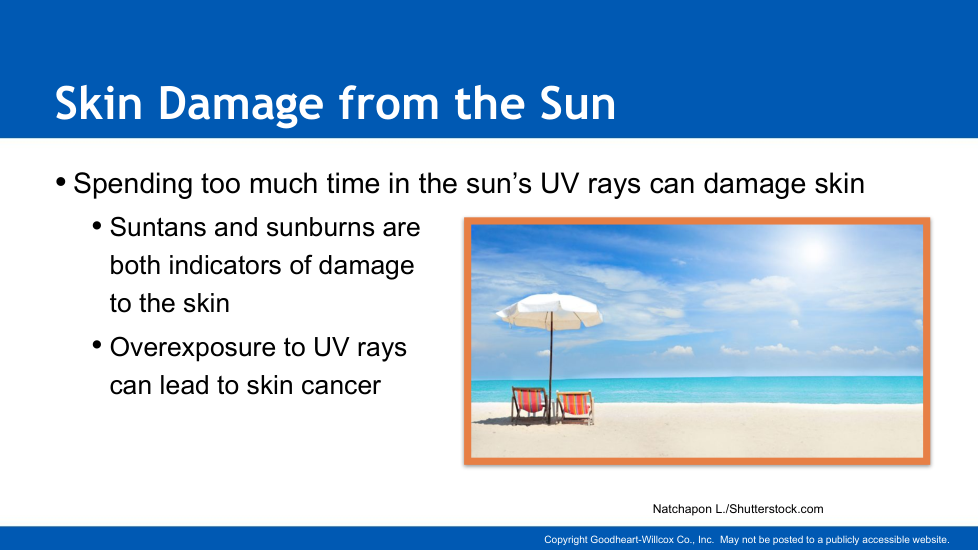
What are two indicators of damage to the skin from the sun?
Bruises and hives
Scars and wrinkles
Suntans and sunburns
Blisters and pimples
Question 27
27.
What can overexposure to UV rays lead to?
Skin cancer
Hair loss
Acne
Eczema
Question 28
28.
Why is spending too much time in the sun harmful?
Improves health
Reduces wrinkles
Damages skin
Boosts immunity
Question 29
29.
What type of rays from the sun can cause skin damage?
Radio waves
Microwaves
Infrared rays
UV rays
Question 30
30.
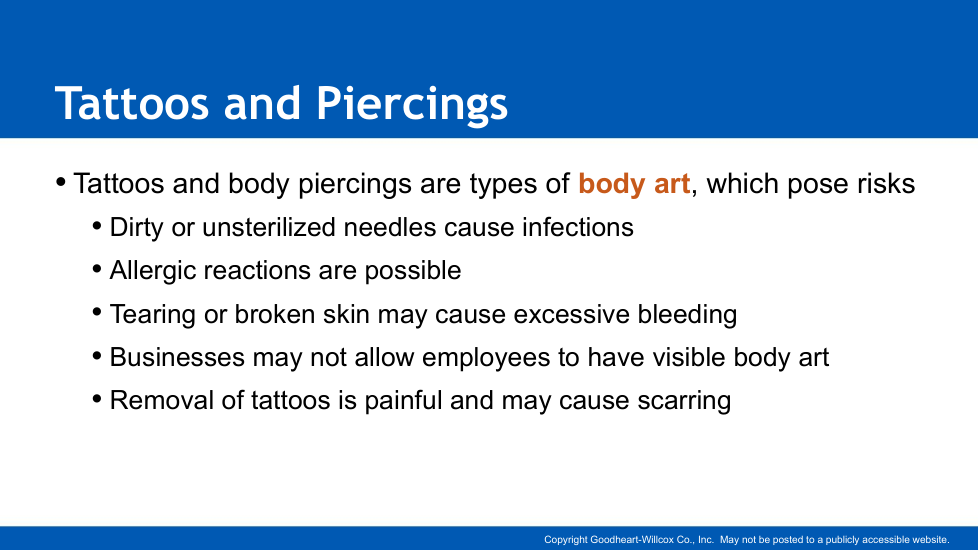
What is a risk associated with getting body art?
Infections
Luck
Confidence
Happiness
Question 31
31.
Why might businesses not allow visible body art on employees?
Rebellion
Fashion
Professionalism
Trendy
Question 32
32.
What can happen if a tattoo needle is not sterilized?
Healing
Trendy
Artistic
Infections
Question 33
33.
Why is removal of tattoos considered painful and risky?
Healing
Trendy
Artistic
Scarring
Question 34
34.
Which risk is associated with dirty needles in body art?
Infections
Allergic reactions
Excessive bleeding
Scarring
Question 35
35.
What is a possible outcome of tearing or broken skin?
Infections
Allergic reactions
Excessive bleeding
Painful removal
Question 36
36.
Why might businesses not allow visible body art?
Personal choice
Painful removal
Health risks
Professional image
Question 37
37.
What risk may come with the removal of tattoos?
Scarring
Excessive bleeding
Infections
Allergic reactions
Question 38
38.
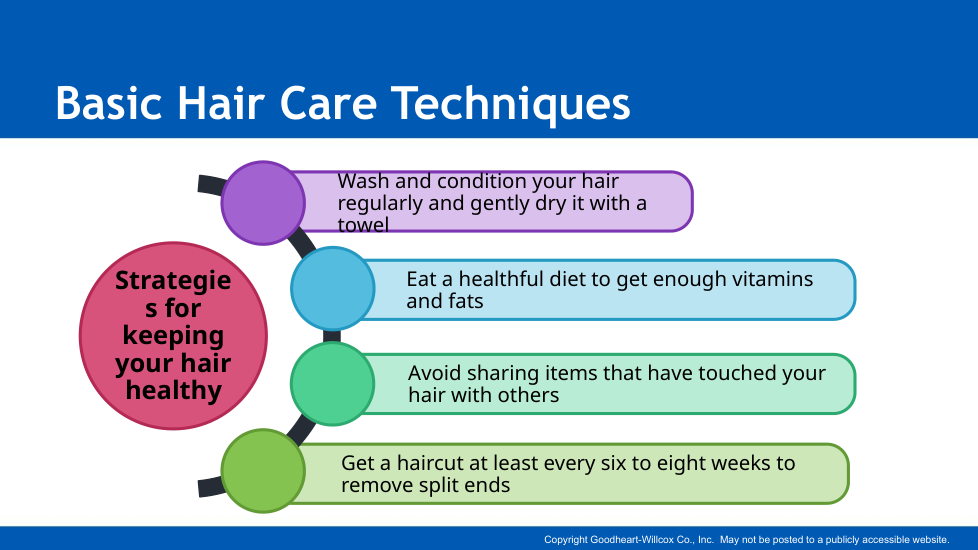
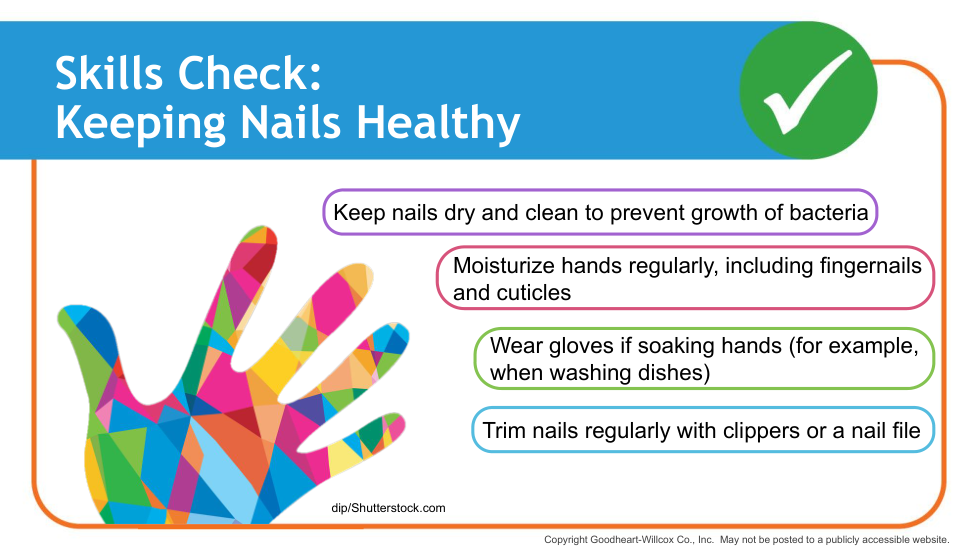
Why is it important to keep nails dry and clean?
Speed up nail growth
Enhance nail strength
Improve nail color
Prevent growth of bacteria
Question 39
39.
What should you do regularly to moisturize hands and nails?
Skip hand washing
Apply lotion
Use nail polish
Soak hands in water
Question 40
40.
When should you wear gloves to protect your hands?
When soaking hands
When playing sports
When brushing teeth
When applying lotion
Question 41
41.
How should you maintain nail length and shape?
Use scissors
Trim with clippers or file
Apply cuticle oil
Bite nails
Question 45
45.
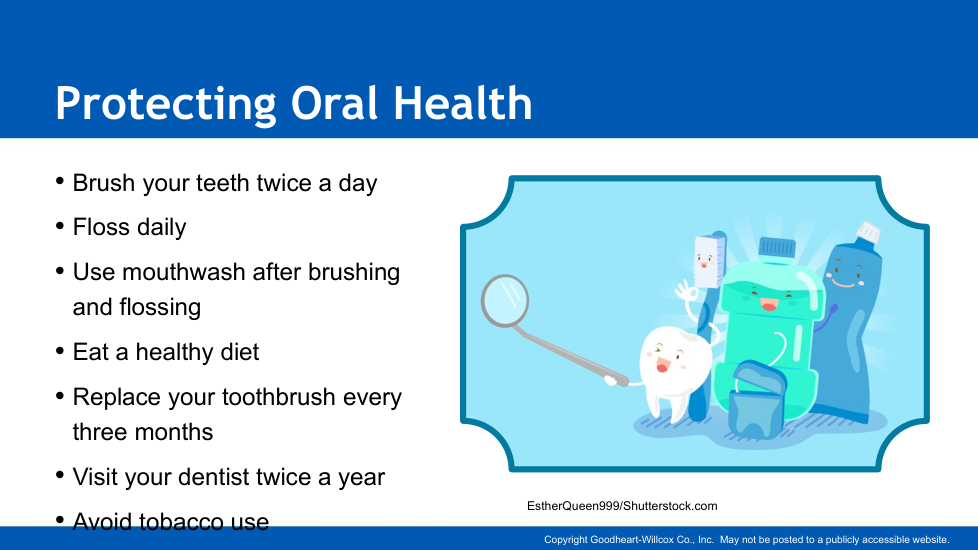
How often should you replace your toothbrush?
Every month
Once a year
Every six months
Every three months
Question 46
46.
When should you use mouthwash?
After eating breakfast
After brushing and flossing
Before brushing
Before flossing
Question 47
47.
What should you avoid to maintain good personal hygiene?
Eating fruits
Tobacco use
Drinking water
Exercising daily
Question 48
48.
How many times should you visit the dentist in a year?
Once
Thrice
Four times
Twice
Question 49
49.
What is the colorless film that coats teeth and dissolves protective surface?
Plaque
Gingivitis
Tartar
Cavity
Question 50
50.
What combines with bacteria in your mouth to form plaque?
Protein
Sugar
Acid
Water
Question 51
51.
What does plaque become if not removed by brushing/flossing?
Tartar
Filling
Enamel
Cavity
Question 52
52.
What helps break down food and combines with bacteria?
Air
Juice
Saliva
Plastic
Question 53
53.
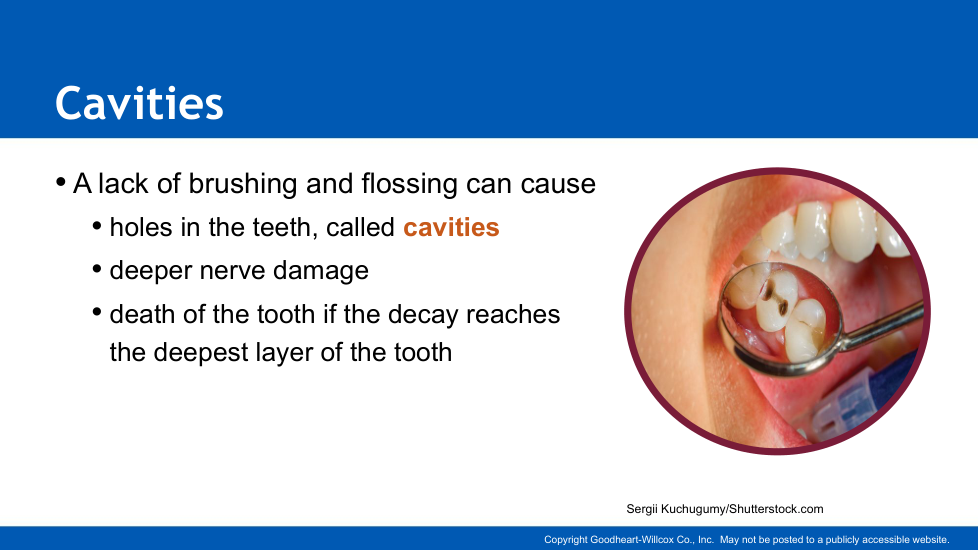
What can happen if you don't brush and floss?
Not brushing leads to stronger tooth enamel
A lack of brushing and flossing can cause holes in the teeth, called cavities
Regular tooth cleaning prevents stomachaches
Skipping brushing results in shinier teeth
Question 54
54.
What is the consequence of tooth decay reaching the deepest layer?
Deep decay typically results in whiter teeth
Death of the tooth if the decay reaches the deepest layer
Tooth decay causes less sensitivity to temperature changes
Decay reaching deep layers creates sweet breath
Question 55
55.
How can poor dental hygiene impact nerves in your teeth?
Deeper nerve damage can result from lack of oral care
Ignoring hygiene reduces chances of nerve sensitivity
Dental care contributes to healthier nerve signals
Poor hygiene can lead to nerve inflammations
Question 56
56.
What can prevent the development of holes in teeth?
Regular brushing and flossing can prevent cavities
Eating more candy strengthens tooth enamel
Neglecting oral care ensures shinier teeth
Brushing teeth too often may harm gum health
Question 57
57.
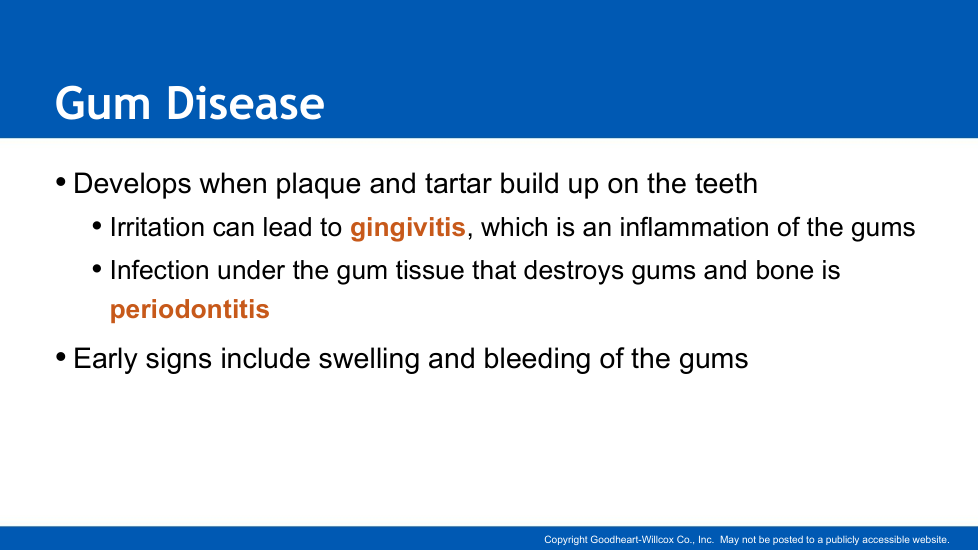
What is the term for an infection under the gum tissue?
Cavity
Filling
Enamel
Periodontitis
Question 58
58.
What is the early sign of gum problems?
Whitening
Numbing
Hardening
Swelling
Question 59
59.
What develops when plaque and tartar build up on teeth?
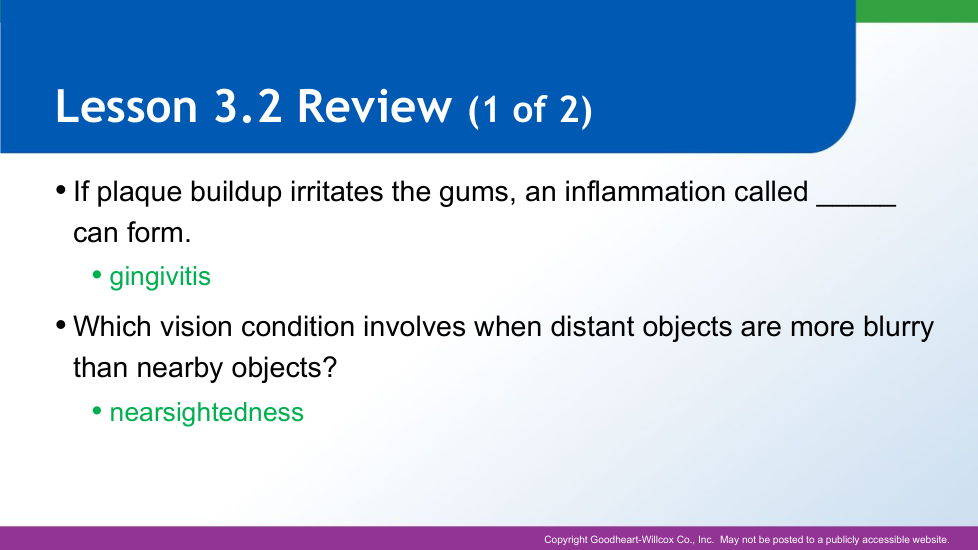
Gingivitis
Fluorosis
Halitosis
Bruxism
Question 60
60.
What is an inflammation of the gums?
Orthodontics
Gingivitis
Fluoride
Root canal
Question 61
61.
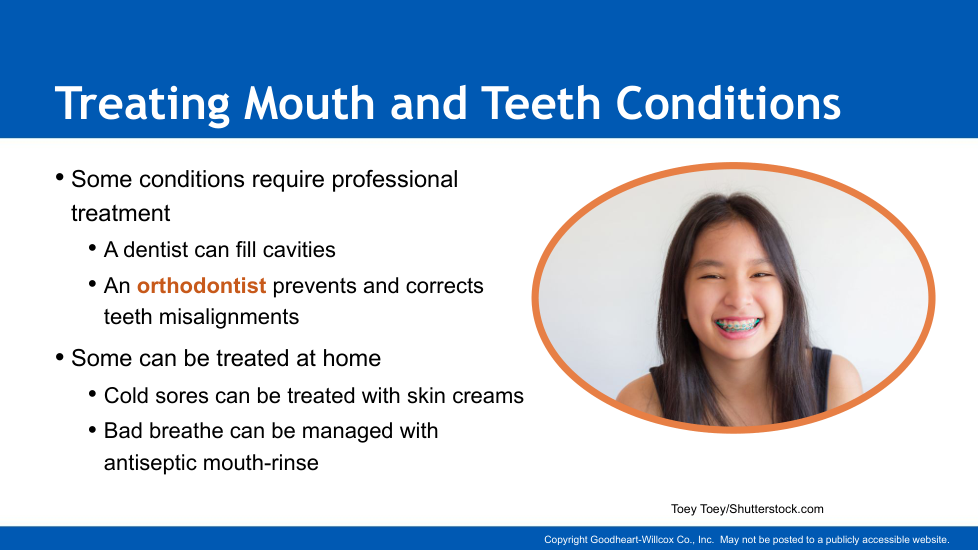
What is a possible professional treatment for cavities?
Physical therapist exercise
Dermatologist consultation
Dentist filling
Pediatrician check-up
Question 62
62.
What is a common at-home treatment for cold sores?
Skin creams
Eye drops
Oral surgery
Hair conditioner
Question 63
63.
How can bad breath be managed effectively?
Antiseptic mouth-rinse
Body lotion
Nose spray
Hand sanitizer
Question 64
64.
What do orthodontists specialize in preventing and correcting?
Skin rashes
Broken bones
Ear infections
Teeth misalignments
Question 65
65.
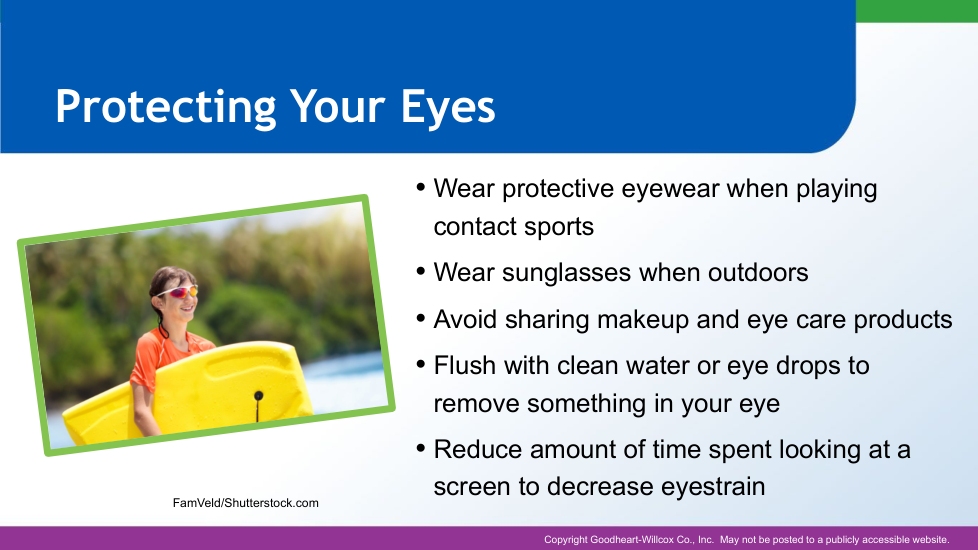
When should you wear sunglasses to protect your eyes?
While swimming
When outdoors
When indoors
During bedtime
Question 66
66.
What should you do to decrease eyestrain from looking at a screen?
Use brighter screen
Increase screen time
Reduce screen time
Avoid breaks
Question 67
67.
What should you do if something gets in your eye?
Use a dirty cloth
Rub vigorously
Flush with clean water
Ignore it
Question 68
68.
When should you wear protective eyewear for sports?
At bedtime
While eating
During contact sports
During homework
Question 69
69.
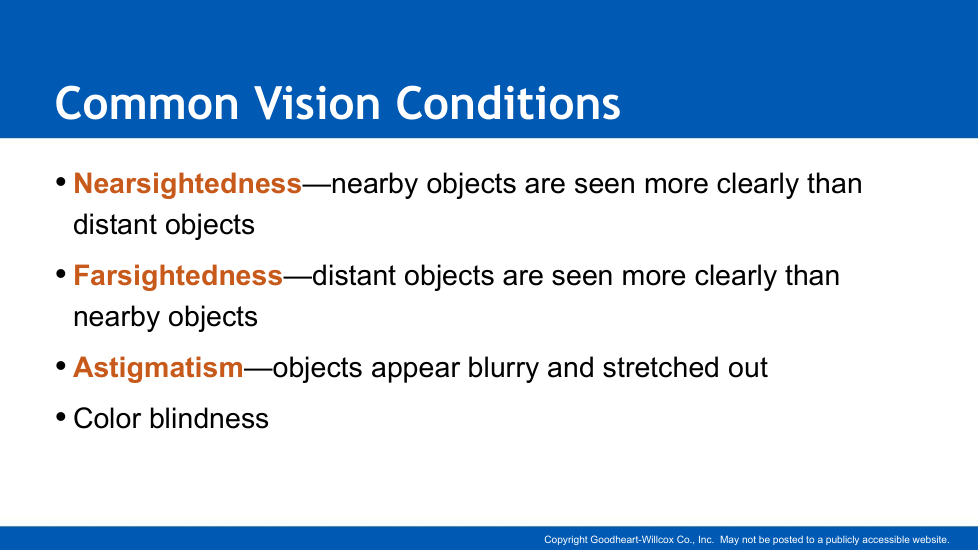
What eye condition results in seeing nearby objects clearly?
Farsightedness
Astigmatism
Color blindness
Nearsightedness
Question 70
70.
Which eye condition makes distant objects appear clearer than nearby?
Color blindness
Astigmatism
Nearsightedness
Farsightedness
Question 71
71.
What eye issue causes objects to look blurry and stretched?
Nearsightedness
Farsightedness
Astigmatism
Color blindness
Question 72
72.
Which eye condition affects the perception of color?
Nearsightedness
Color blindness
Astigmatism
Farsightedness
Question 73
73.
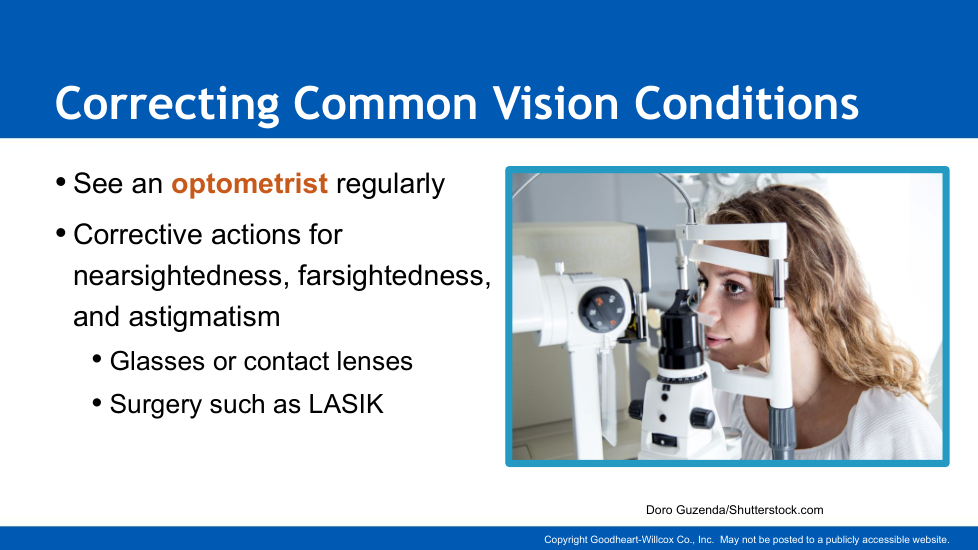
What is the corrective action for astigmatism?
Glasses or contact lenses
Eye drops
Sunglasses
No treatment
Question 74
74.
How can nearsightedness be corrected?
Vitamins
Ear plugs
Glasses or contact lenses
Sunscreen
Question 75
75.
What surgery can be done for vision problems?
LASIK
Root canal
Dental implants
Appendectomy
Question 76
76.
Why is it important to see an optometrist regularly?
To learn a language
To buy new clothes
To maintain good vision
To get vaccines
Question 77
77.
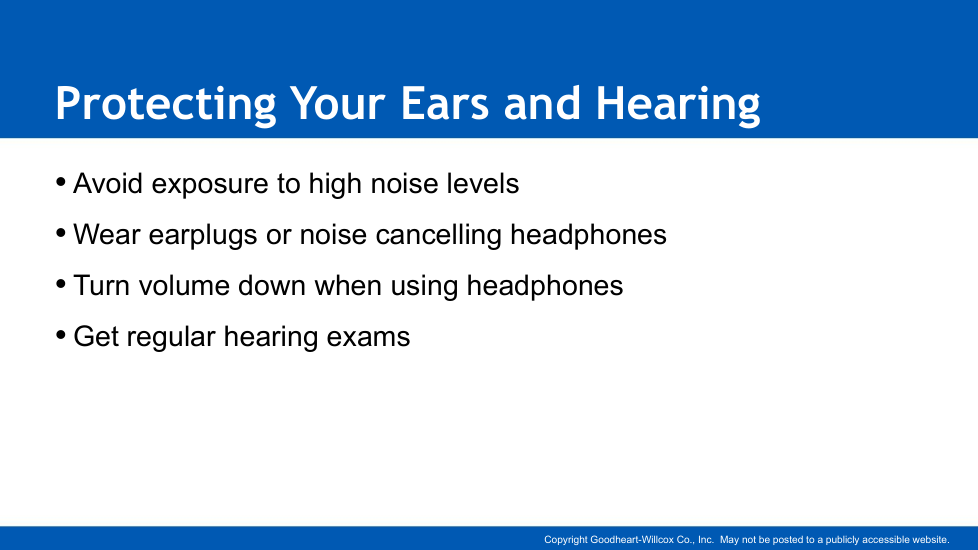
What should you do to protect your ears from noise?
Listen to loud music
Increase volume
Wear earplugs
Avoid noise altogether
Question 78
78.
Why is it important to turn down headphone volume?
Protect hearing
Hear better
Improve sound quality
Avoid distractions
Question 79
79.
What is a preventative measure for hearing loss?
Ignore hearing changes
Listen to music loudly
Use sound amplifiers
Regular hearing exams
Question 80
80.
How can headphones contribute to hearing damage?
Healthy for ears
Exposure to high volume
Noise cancellation feature
Low sound quality
Question 81
81.
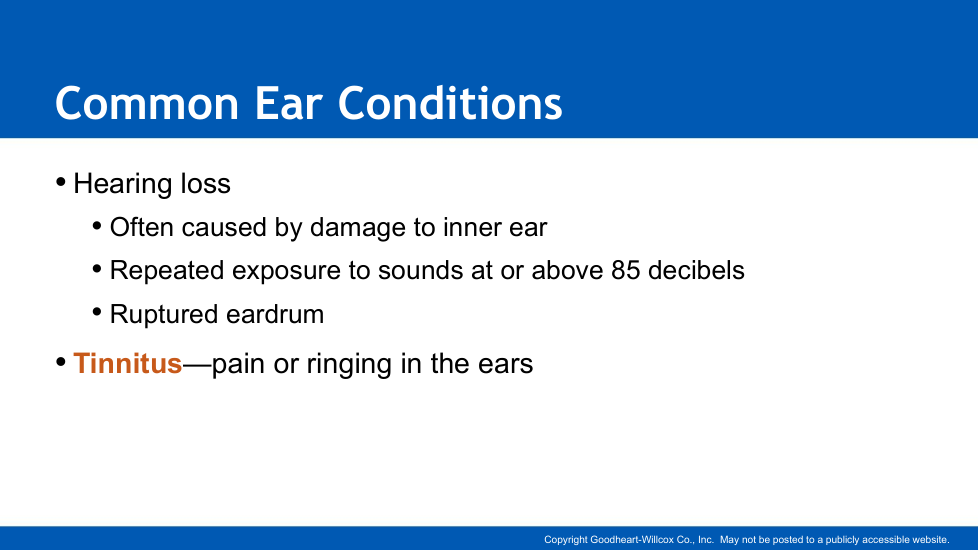
What is a common cause of hearing loss?
Eating spicy foods
Repeated exposure to loud sounds
Using eye drops
Not sleeping enough
Question 82
82.
Which part of the ear is often damaged by loud noises?
Nose
Inner ear
Tooth
Outer ear
Question 83
83.
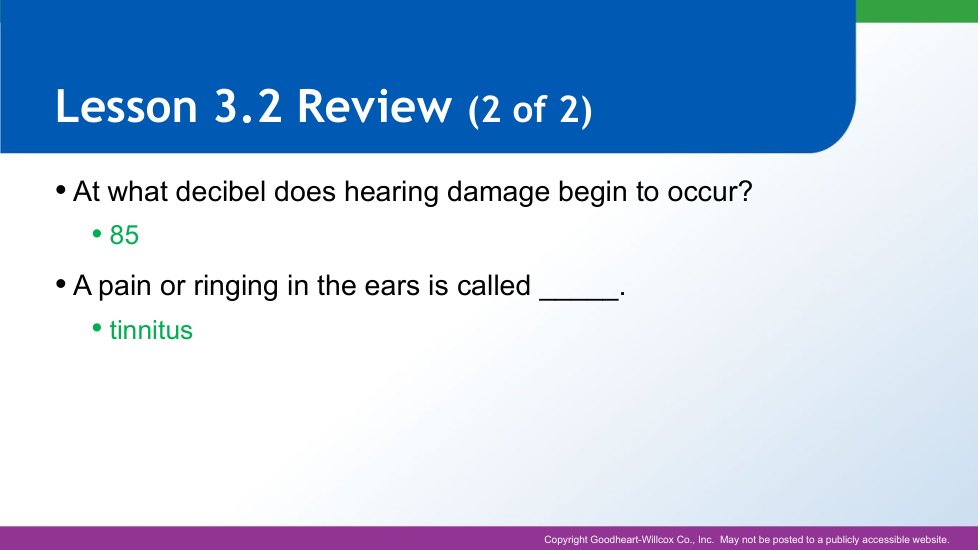
What might you experience with tinnitus?
Sweet taste in mouth
Ringing in the ears
Blurry vision
Cold feet
Question 84
84.
What can lead to a ruptured eardrum?
Loud sounds
Running fast
Drinking hot tea
Brushing teeth
Question 85
85.
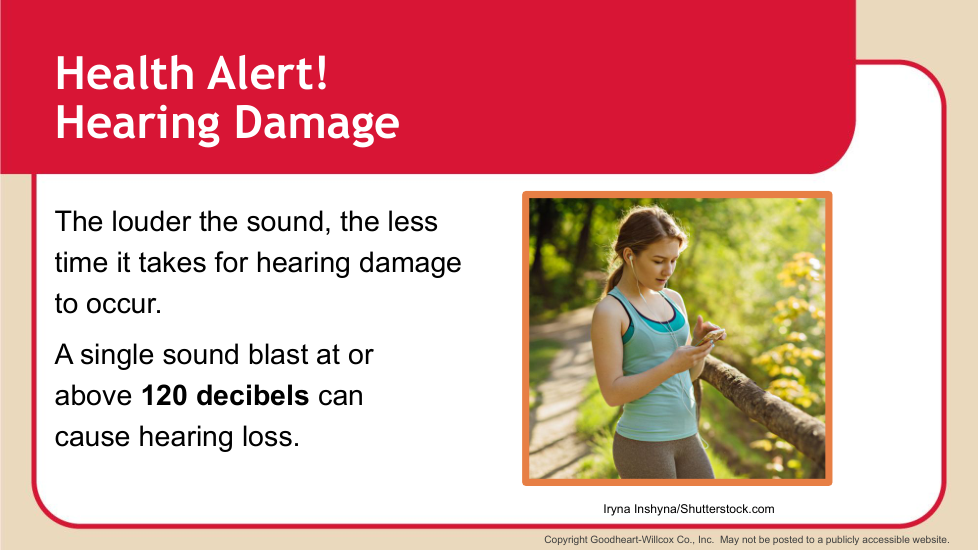
What sound level can cause hearing loss from a single blast?
100 decibels
130 decibels
120 decibels
110 decibels
Question 86
86.
How does sound level relate to time for hearing damage?
Louder sounds cause quicker damage
Softer sounds cause faster damage
All sounds damage equally
Sound level doesn't matter
Question 87
87.
Which factor determines the speed of hearing damage?
Sound pitch
Sound intensity
Sound duration
Sound location
Question 88
88.
Why is a single blast at 120 decibels concerning?
It's not dangerous
It improves hearing
It can cause hearing loss
It's not loud enough