Chloroplasts
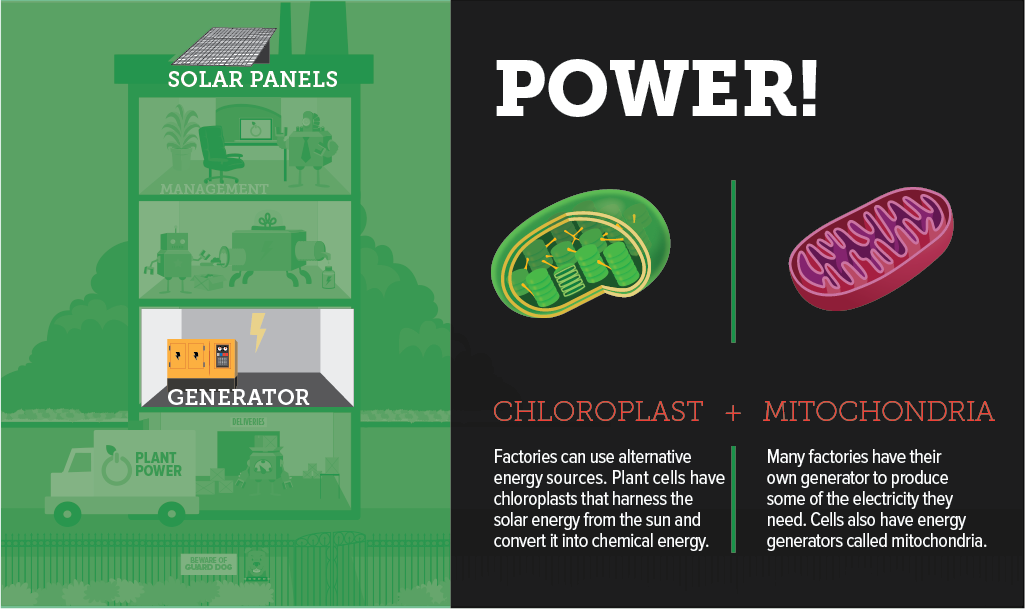
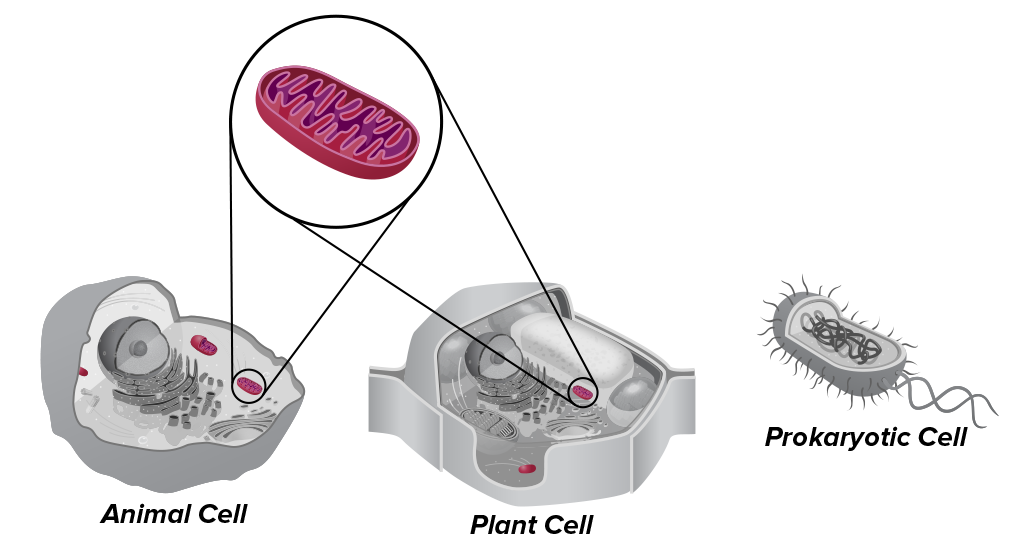
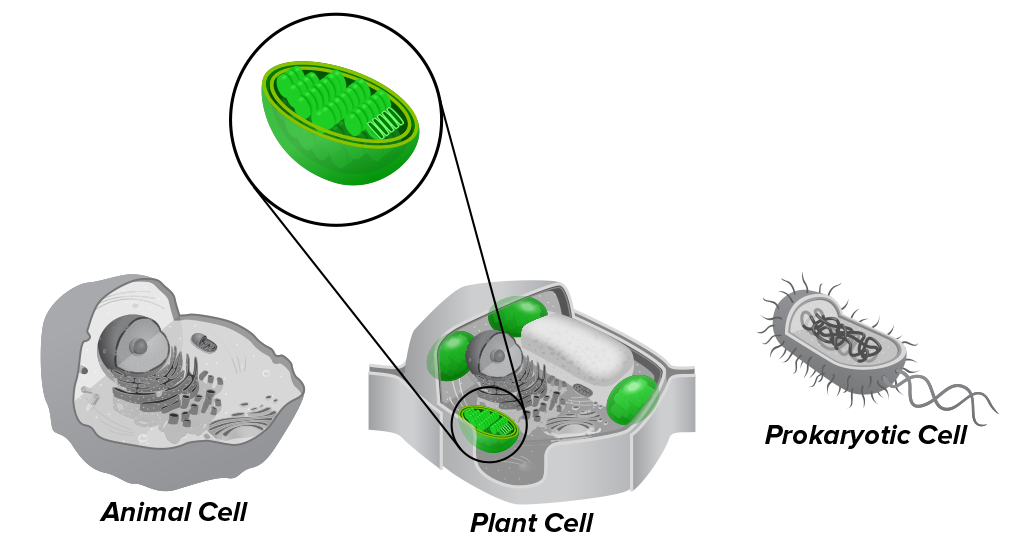
Factory machines need electricity that is generated by burning fossil fuels or by collecting energy from alternative sources, such as the Sun. Plant cells have their own way of using solar energy. In addition to mitochondria, plants and some other eukaryotic cells contain chloroplasts, which are organelles that capture light energy and convert it to chemical energy through a process called photosynthesis.
Chloroplasts are disk-shaped organelles that contain two main compartments essential to photosynthesis. The first is the thylakoid. Thylakoids are flattened, saclike membranes that are arranged in stacks. These stacks are called grana. The light-dependent reactions take place with the thylakoids.
The second important compartment is called the stroma, the fluid-filled space that is outside the grana. This is the location of the light-independent reactions that occur in phase two of photosynthesis.
Light-absorbing colored molecules called pigments are found in the thylakoid membranes of chloroplasts. It is there that energy from sunlight is trapped by a pigment called chlorophyll. Chlorophyll gives leaves and stems their green color.
Chloroplasts belong to a group of plant organelles called plastids, some of which are used for storage. Some plastids store starches or lipids. Others, such as chromoplasts, contain red, orange, or yellow pigments that trap light energy and give color to plant structures such as leaves and flowers.