Modal Verbs

Last updated about 1 year ago
16 questions
English Grammar Class 7
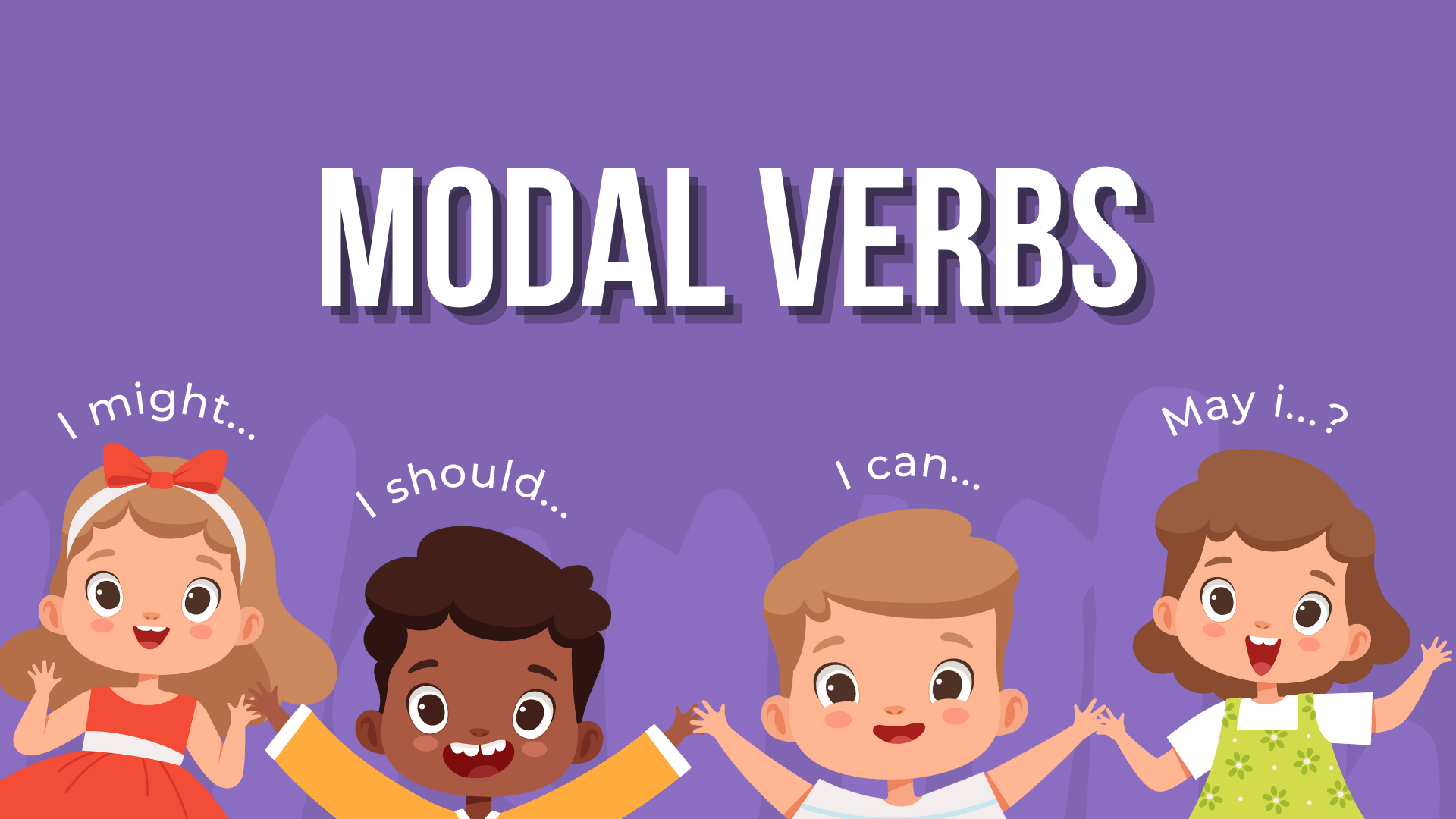
Modals

In today's lesson, we will learn what models are and their usage. The mode of action indicated by the primary verb is expressed by modals, which are called auxiliary verbs or he


lping verbs. Through this article let's learn more about these helping verbs along with examples and practice questions.


A modal verb is a unique kind of verb. In a sentence, modal verbs modify or influence other verbs. They can be used to demonstrate potential, denote skill, demonstrate responsibility, or grant authorization. Compared to "regular" verbs, modal verbs behave differently.

Can, could, may, might, would, and should are some examples of modal verbs.
When compared to "regular" verbs, modal verbs behave differently,
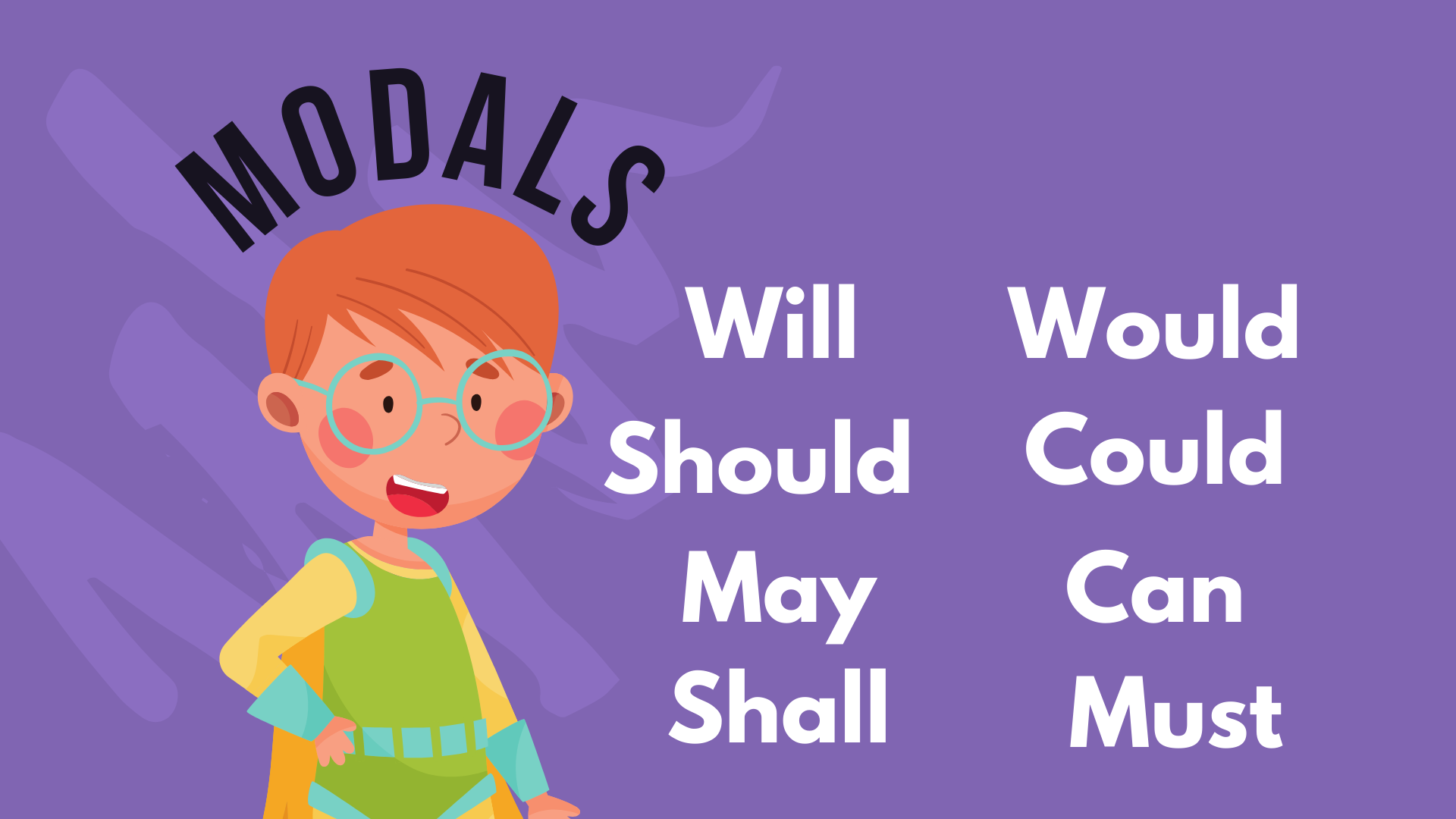
Some of them are:
  • Will
  • Would
  • Should
  • Could
  • May
  • Can
  • Shall
  • Must
  • Might

Although the ones mentioned above are the most typical, there are other modal verbs. While certain modal verbs, like got to, need to, and have to, are more informal, others, like shall and ought to, are archaic and hardly used. Some use highly specific, seldom expressions, such as "I dare say," to explain their situations. Like a modal verb, the word used to, as in "I used to be an English student, too," also has certain properties.

When do you apply modal verbs?
  • Likelihood
  • Possibility
  • Ability
  • Asking Permission
  • Request
  • Suggestion/Advice
  • Command
  • Obligation or Necessity
  • Habit

Likelihood
We don't know for sure, but some things appear possible. The modal verbs should and must be used in certain situations to indicate likelihood without certainty.

Possibility
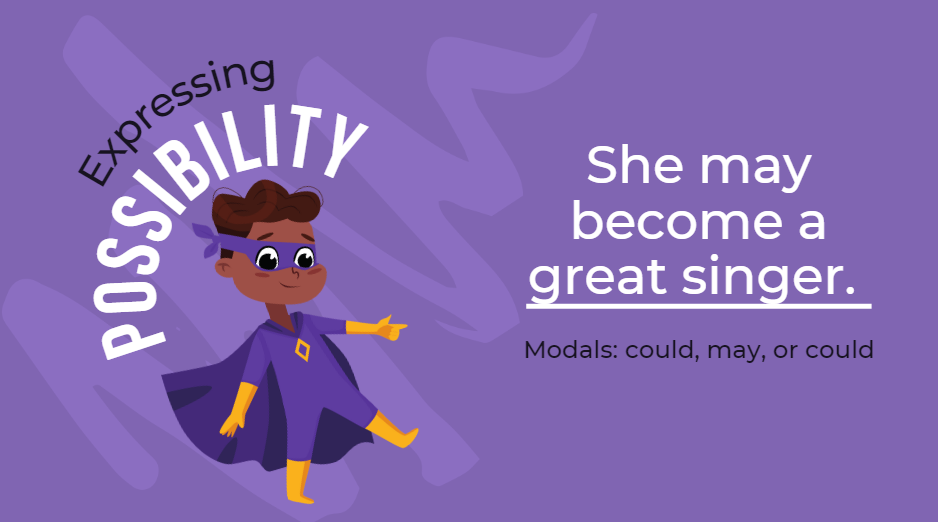
Use the modal verbs could, may, or could when something is conceivable but uncertain.

Example: It might rain today.
She may become a great singer.

Ability
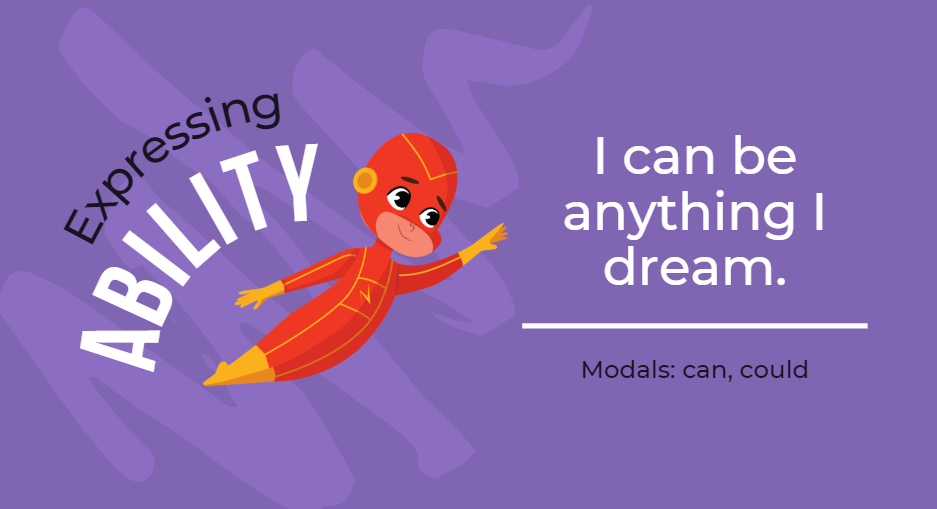
The modal verb can indicate whether or not the subject is able to carry out an activity or display a skill. The negative form, cannot or can't, similarly indicates that the subject is unable to perform an action.

Example: She can speak many languages.
You can lead a battalion.
Required
1

List down the modal verbs used to express possibility.

Required
1

Modal verbs used to express ability are:

Required
1

Compose a sentence using one of the modal verbs mentioned above.

Asking Permission
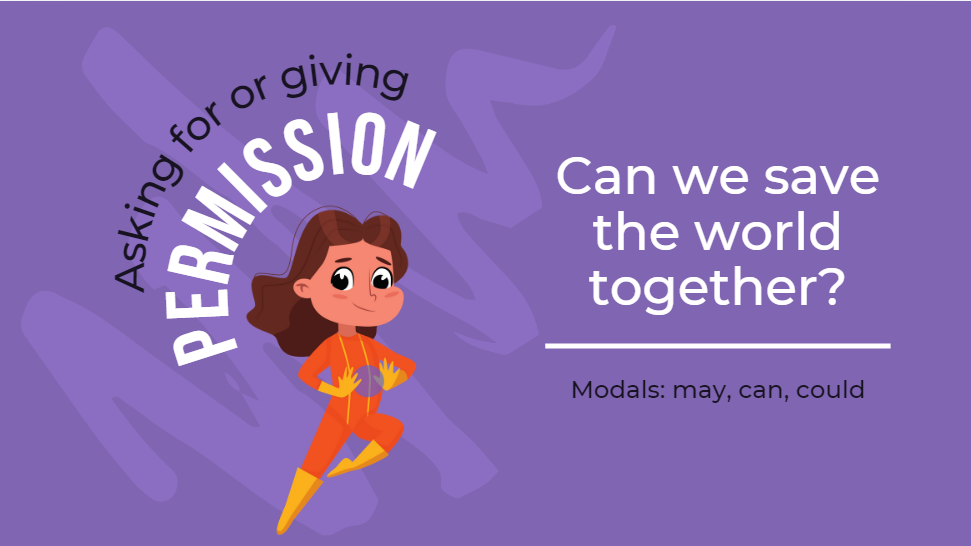
Use the words "can," "may," or "could" at the beginning of your query if you wish to request permission. Traditionally, may is preferred for permission. (However, when discussing possibility or authorization in modern use, may and can are also completely valid possibilities.
Example: May I leave?
Could I play too?

Request
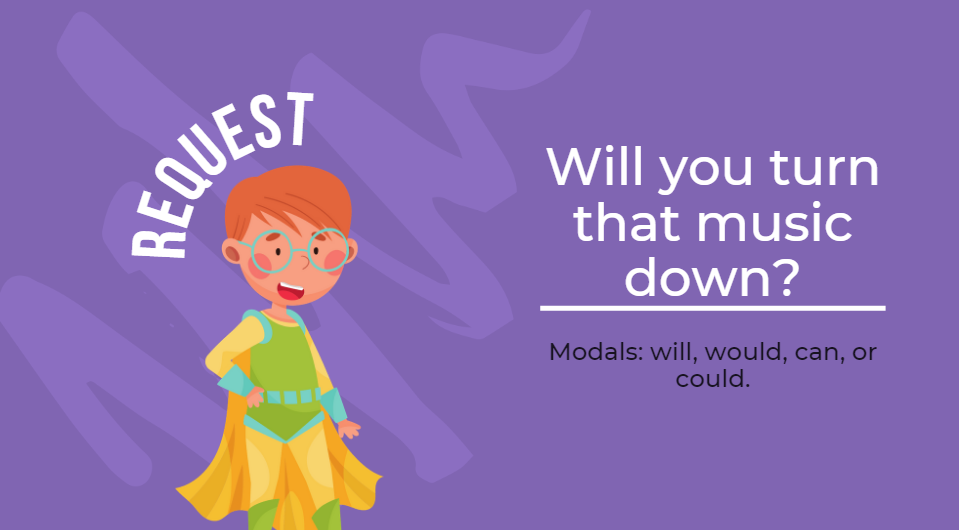
In a similar spirit, if you want to request anything from another person, begin your request with either will, would, can, or could.
Example: Would you get that box?
Will you turn that music down?


Suggestion/Advice
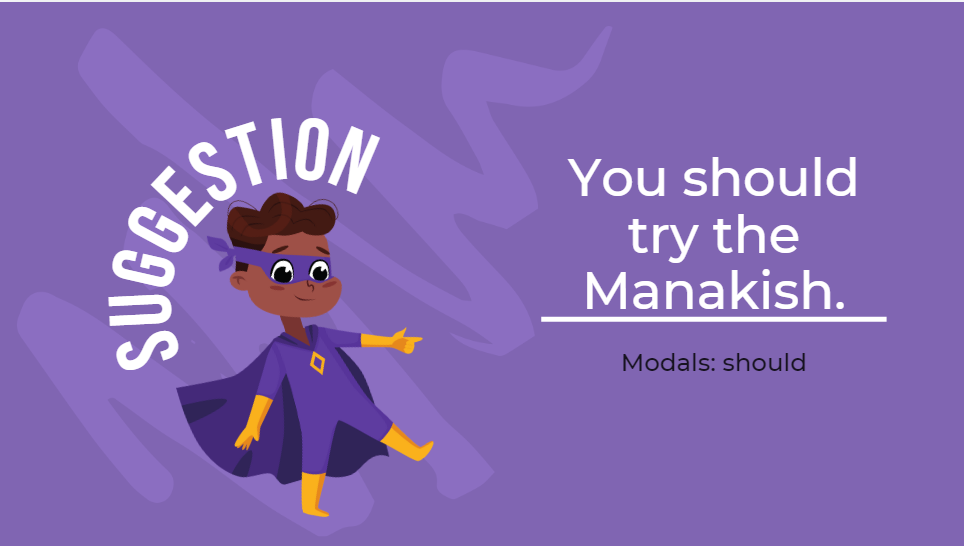
What if you only want to urge someone to do something? You can use the modal word should if you're offering suggestions or advice without telling someone what to do.
Example: You should try the Manakish.
That girl should wear less perfume.
Required
1

What are the modal verbs used for asking or giving permission?

Required
1

What are the modal verbs used for requesting?

Required
1

What are the modal verbs used for giving suggestion?

Required
1

Compose one sentence using one of the modal verbs used for requesting, suggesting, or giving permission.

Command
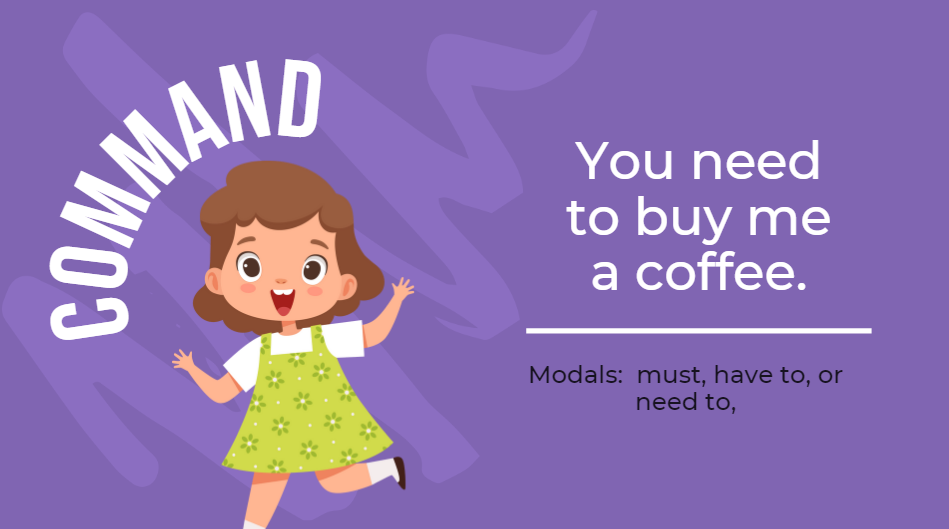
Use the modal verbs must, have to, or need to, on the other hand, if you want to command someone.
Example: You need to come home.


Obligation or necessity
An essential activity, such as an obligation, responsibility, or requirement, can be expressed with a modal verb. The negative form conveys that an activity is not required. Use the same modal verbs must, have to, or need to as you would with instructions.
Example: We have to wait for her to open this.


How to use Modal Verbs
Thankfully, it's not too difficult to use modal verbs in sentences. Just keep in mind these guidelines for simple present-tense sentences:
  • Modal verbs are usually placed before the primary verb (except for questions).
  • Use the main verb's infinitive form without the preposition "to" when the verb is modal.
  • The infinitive form of the primary verb is still used in questions, although the order is slightly different: Modal verb+Subject+Main verb.
Required
1

What are the modal verbs used for giving a command?

Required
1

Modal verbs for obligation/necessity

10. You _____ finish your homework before playing video games.

a) can b) should c) might

11. We _____ go to the park tomorrow if it doesn't rain.

a) must b) could c) would

12. Sarah _____ drive a car when she turns 18.

a) will b) can c) must

13. You _____ speak quietly in the library.

a) must b) could c) may

14. He _____ help his friend with the project if he has time.

a) might b) will c) should

15. They _____ arrive late to the party because of traffic.
a) can b) might c) must
Required
1

Give the correct answer

Required
1

Give the correct answer

Required
1

Give the correct answer

Required
1

Give the correct answer

Required
1

Give the correct answer

Required
1

Give the correct answer

Required
5
Draggable itemCorresponding Item
Showing ability
You must wear a helmet while riding a bike.
Expressing obligation
May I borrow your pen?
Asking permission
She might come to the party later.
Giving advice
We can play soccer after school.
Expressing possibility
You should drink more water every day.