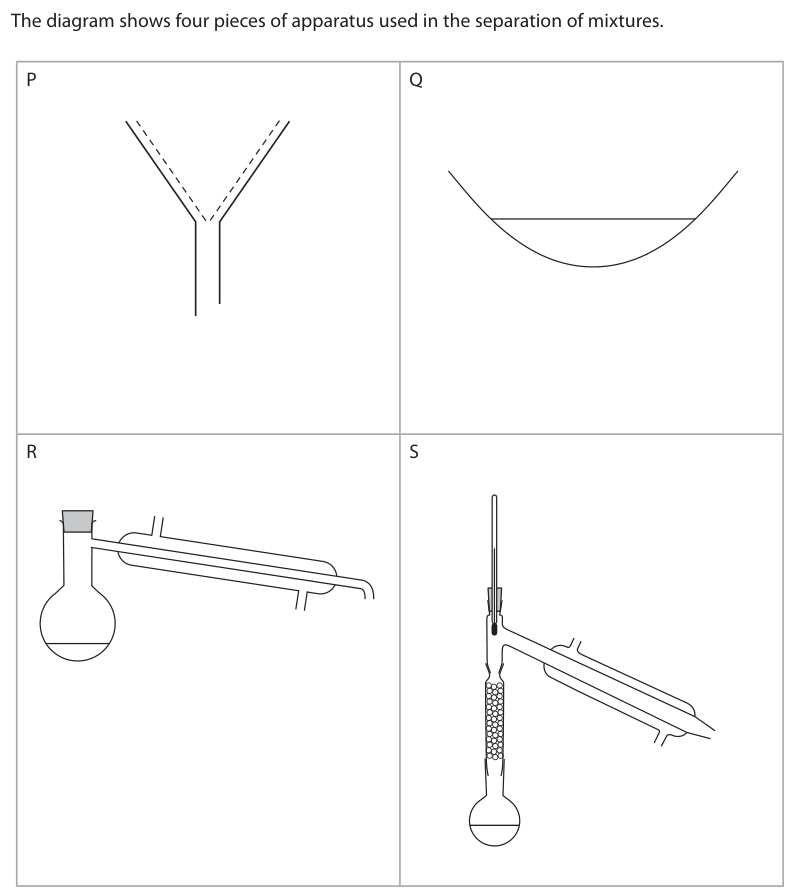
Match the separation technique to the diagram.
No notes needed.
Mmuae Afoforo a Wobɛpaw:
crystallisation
filtration
simple distillation
fractional distillation
https://www.focuselearning.co.uk/s/27wzak56mghd Simulation
https://www.focuselearning.co.uk/s/27wzak56mghd Simulation
Match the separation technique to the diagram.
No notes needed.
Which method of separation should be used to obtain sand from a mixture containing salt, sand, and water?
No notes needed.
Which method of separation should be used to obtain pure water from a mixture containing salt, sand, and water?
No notes needed.
Which method of separation should be used to obtain copper(II) sulfate from a mixture containing copper(II) sulfate and water?
No notes needed.
https://docs.google.com/document/d/1lj4RPwF4heTc6Swwzy-FYentSEcY4LqLWZ3qmZrygZU/edit?usp=sharing
Complete then copy into your book. With the title Method.
Place base of the paper in the
Make sure the solvent level is below
leave until solvent is close to the top of the paper.
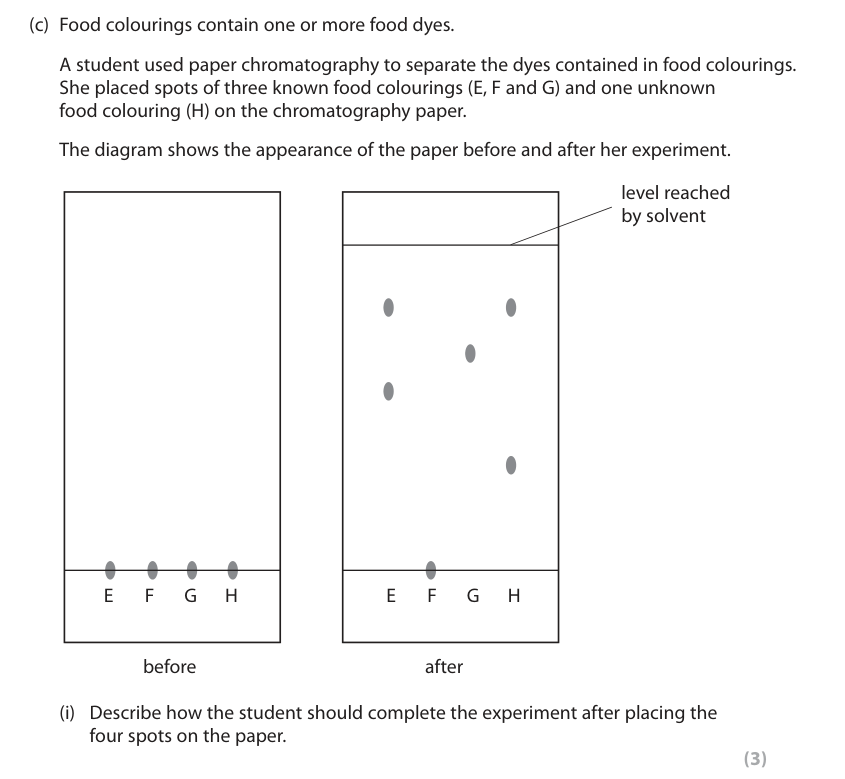
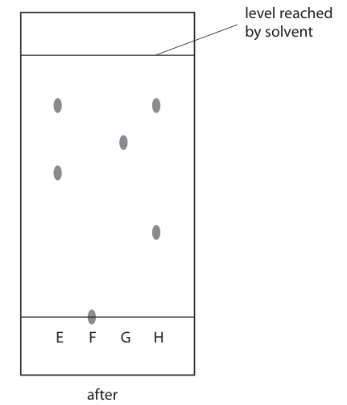
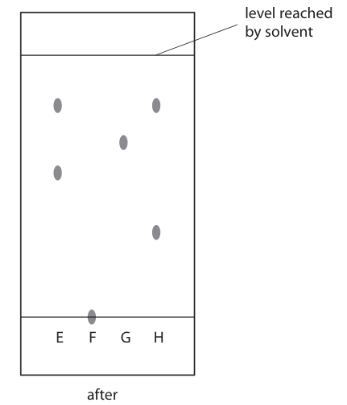
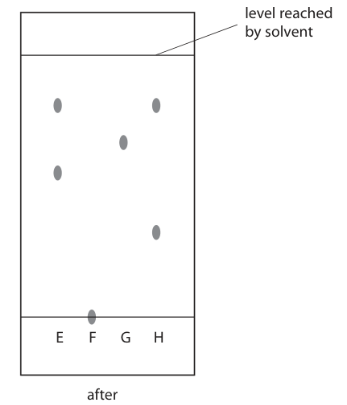
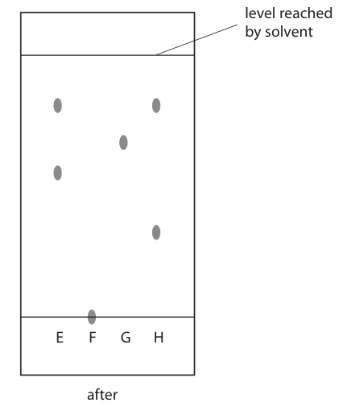
(i) Describe how the student should complete the experiment after placing the four spots on the paper.
Measure the distance from the pencil line to the solvent line with a .
Measure the distance from the pencil line to the drop with a
Suggest why food colouring F did not move during the experiment.
I will need to look at your answers before you get a mark for this.
How many food dyes are there in food colouring E?
How many known food dyes are there in food colouring H?
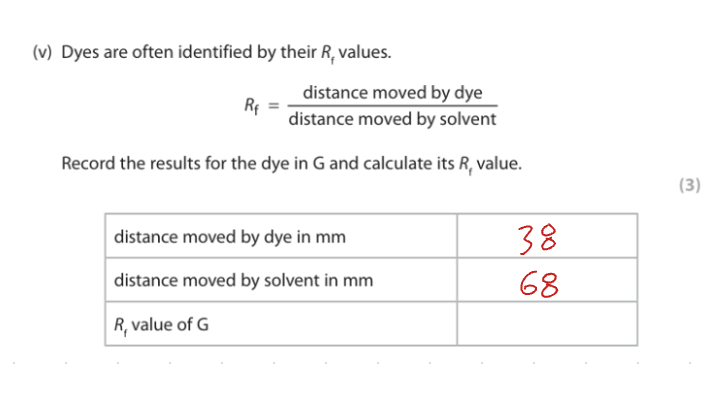
Record the results for the dye in G and calculate its Rf value. Give your answer to 2 decimal places.
Calculate the Rf values (give your answers to 2 d.p.
Make a quick sketch of the chromatogram
Copy the calculation into your book
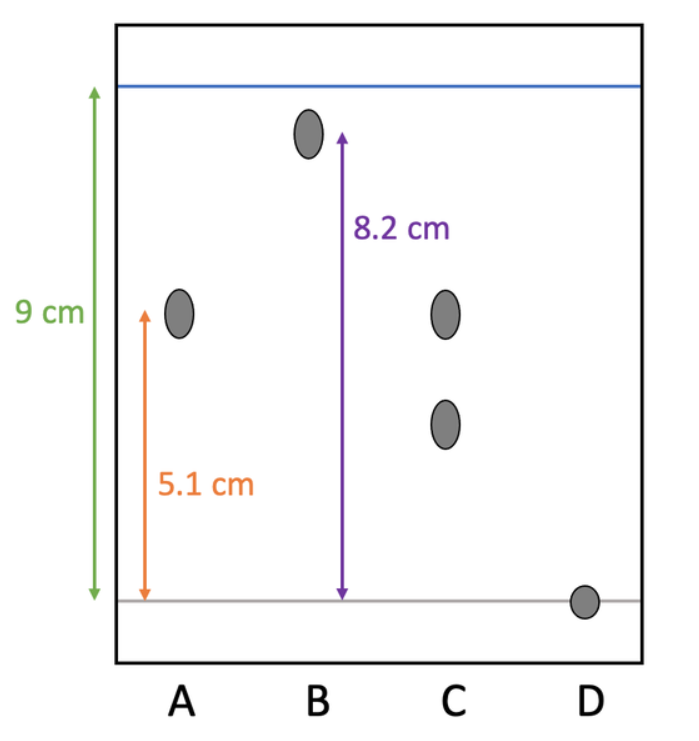
Rf value for A =
Rf value for B =
B is
D is
To make a chromatogram of D a different solvent such as ethanol or propanone could be used.
Copy the notes into your book
Complete the question no notes needed
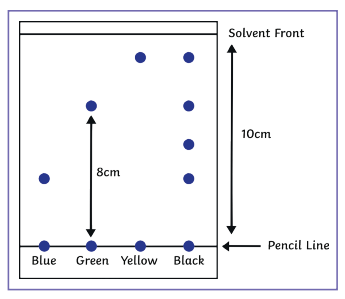
Blue is
Green is
Yellow is
Black is a
The Rf value of green is
Tick the colour(s) that include a dye that is not safe
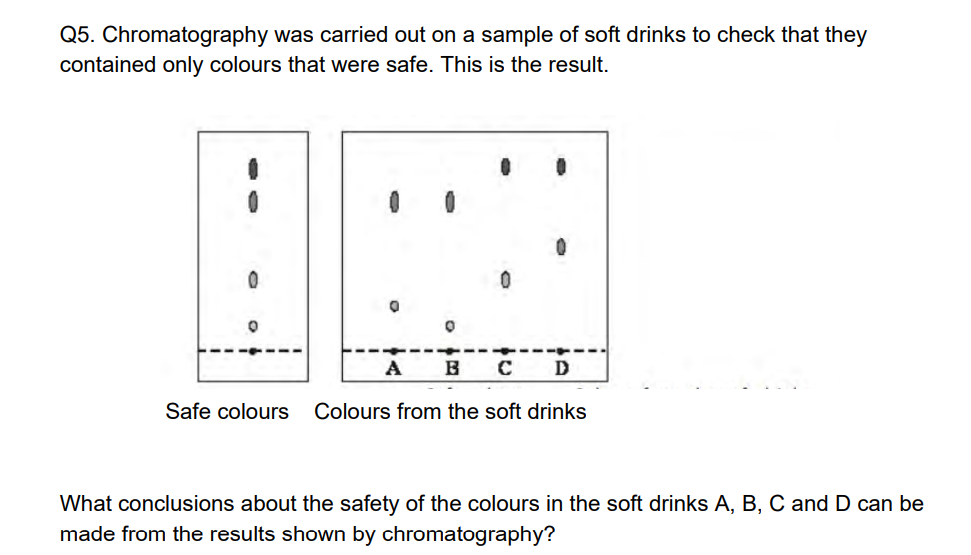
Identify the unsafe dyes
Explain how the different dyes in X are separated by paper chromatography.
The soluble the dye is in the moving solvent
and the the dye is attracted to the chromatography
The the dye moves in the same time.