The periodic table
The periodic table
This is a from to ensure that you do not miss any specification points 1.13-1.20
This is a from to ensure that you do not miss any specification points 1.13-1.20
What did Mendeleev leave in his periodic table?
What did Mendeleev make with his periodic table?
In the modern periodic table the elements are in order of increasing
In the periodic table the elements are arranged in order of increasing atomic number, in rows called ________________
in the periodic table elements with similar properties are placed in the same vertical columns called ____________
Non-metals are found on the _________ hand side of the periodic table
Match each element to the correct electronic configuration
2,6 | 2,7 | 2,8 | 2,8,1 | |
|---|---|---|---|---|
fluorine | ||||
neon | ||||
oxygen | ||||
sodium |
The number of occupied shells is equal to the
The number electrons in the outer shell of an element is equal to the
The periodic table
The periodic table
The periodic table
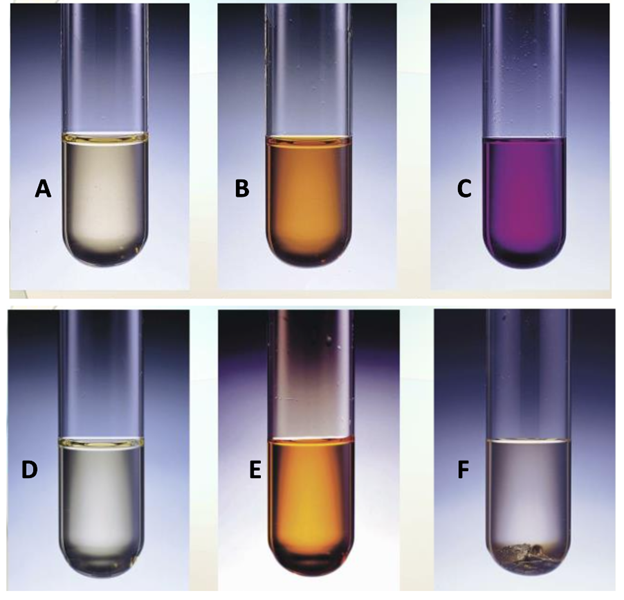
Br₂ organic layer | Br₂ water layer | Cl₂ organic layer | Cl₂ water layer | I₂ organic layer | I₂ water layer | |
|---|---|---|---|---|---|---|
1 | ||||||
2 | ||||||
3 | ||||||
4 | ||||||
5 | ||||||
6 |
Match the statement to the alkali metal. Some statements apply to more than one metal. Focus simulation alkali metals.
K | Li | Na | |
|---|---|---|---|
Hardest to cut | |||
floated on water | |||
did not melt | |||
Melted (formed a ball) | |||
Easiest to cut | |||
Formed a lilac flame | |||
Reacted fastest | |||
Reacted slowest |
Which letter shows iodine in cyclohexane?
I₂ | Cl₂ | Br₂ | |
|---|---|---|---|
Dark grey | |||
Gas at room temperature | |||
Liquid at room temperature | |||
Pale green | |||
Red - brown | |||
Solid at room temperature |
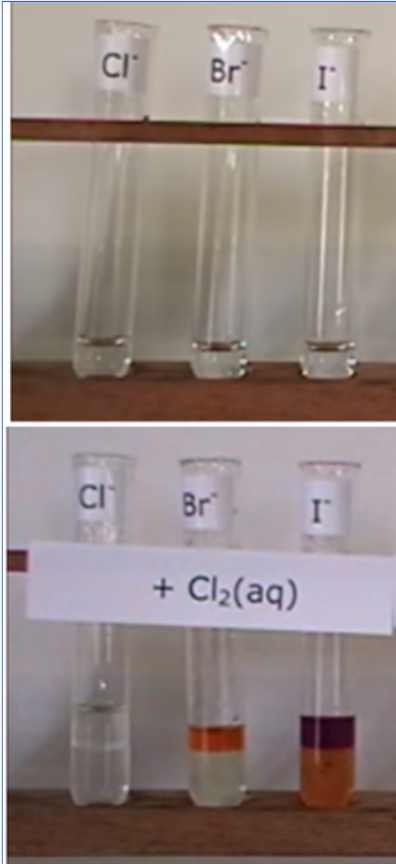
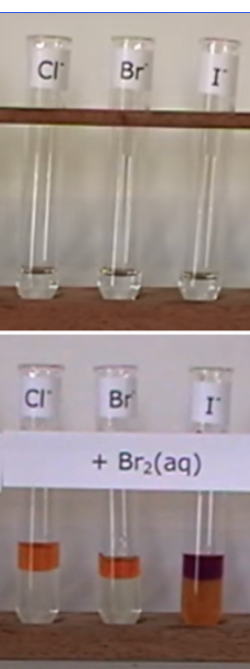
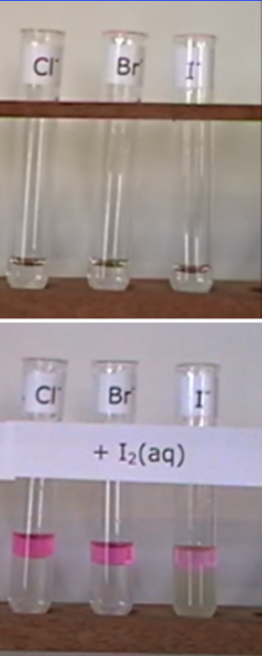
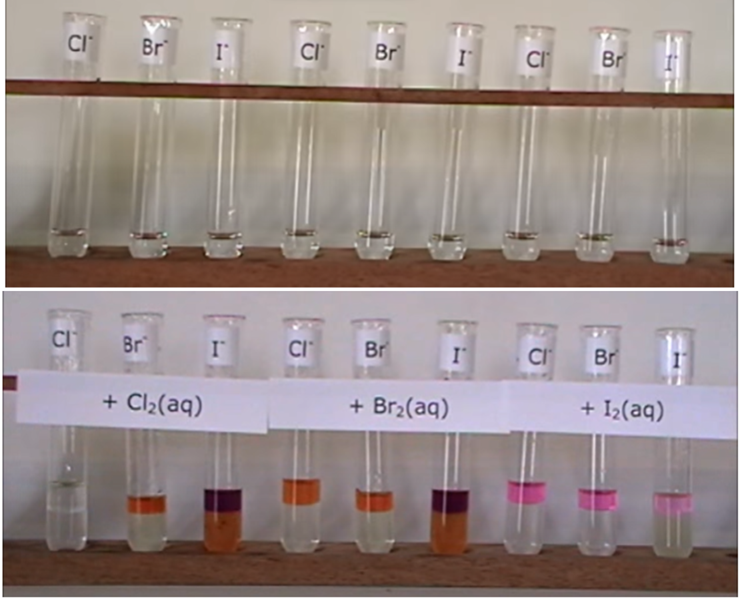
Use the results of the displacement reactions to place the halogens in order of reactivity from most reactive to least reactive. Note 1. the halide ions would have to be added as a salt such as KCl, KBr and KI rather than the individual ions Note 2. The potassium halide solutions are all colourless. Note 3. The final colour of the sample depends upon the halogen present only.
Most reactive | Least reactive | |
|---|---|---|
Chlorine | ||
Bromine | ||
Iodine |
Halogens
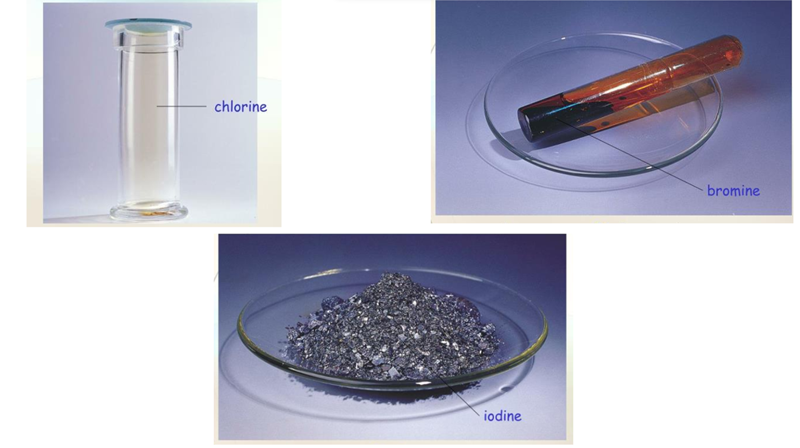
Pale green | Red - brown | Dark grey | Gas | Purple | |
|---|---|---|---|---|---|
What colour is chlorine? | |||||
What colour is bromine? | |||||
What colour is solid iodine ? | |||||
What colour are iodine vapours |
Halogens
Starch | Colourless | Liquid | Solid | |
|---|---|---|---|---|
What can be used to test for iodine? | ||||
What colour (if any) is sodium chloride | ||||
What is the state of bromine at room temperature? | ||||
What is the state of iodine at room temperature? | ||||
What colour (if any) is sodium bromide | ||||
What colour (if any) is sodium iodide |
Sodium and potassium react with cold water to give similar products.
The electronic configuration of sodium is 2.8.1. The electronic configuration of potassium is 2.8.8.1. Explain the similarities and differences in the way sodium and potassium react with cold water by considering their reactions and their electronic configurations.
similarities
• both in the group (alkali metals)
• in a similar way
• Both have electron in their outer shell
• both produce and fizz (when reacted with
water)
• both produce /alkaline solution (when
reacted with water)
differences
• potassium reactive
• potassium has a flame
• potassium outer electron from nucleus
• potassium has shells
• potassium has attraction of outer electron by nucleus
• potassium outer electron more easily
Chlorine + sodium chloride → so solution stays
Chlorine + sodium bromide →+ so solution turns
Chlorine + sodium iodide →+ so solution turns (would be in organic solvent)
Bromine + sodium chloride → so solution stays
Bromine + sodium bromide →+ so solution stays
Bromine + sodium iodide →+ so solution turns (would be in organic solvent)
Iodine + sodium chloride → so solution stays (would be
in organic solvent)
Iodine + sodium bromide →so solution stays
(would be in organic solvent)
Iodine + sodium iodide →so solution stays (would be in organic solvent)
Match the number to the description for the halogens is water or petroleum ether (organic layer) Focus simulation halogens
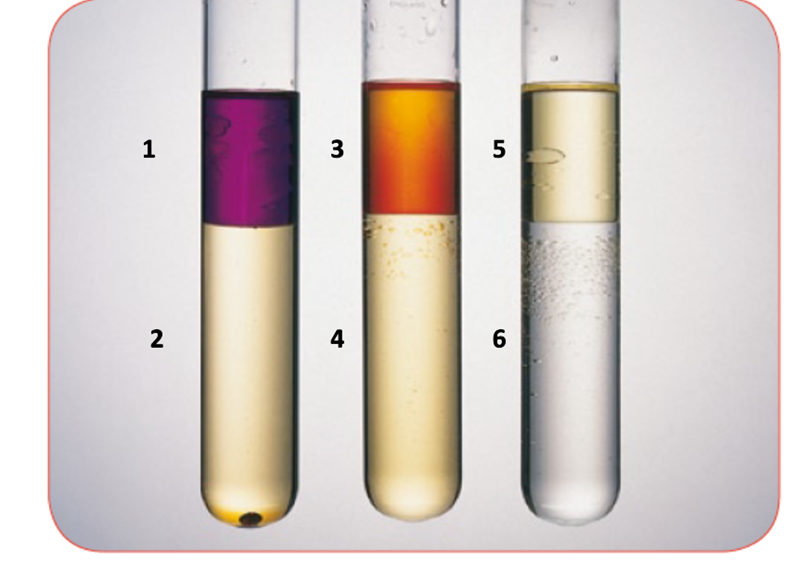
Use the diagrams to answer the questions