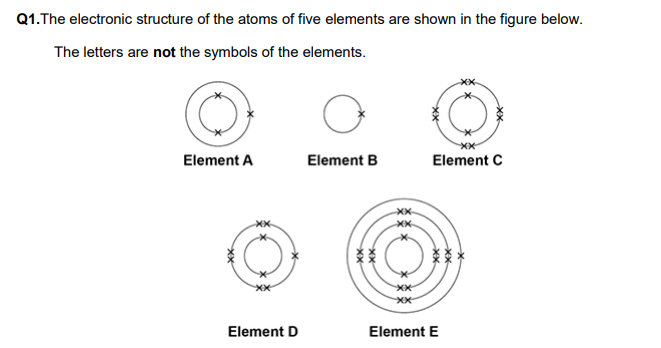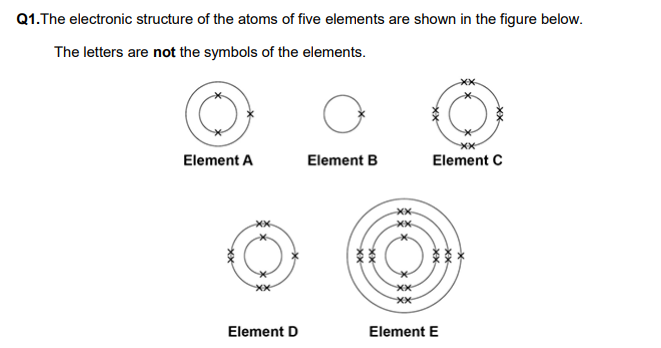
a) Which element exists as single atoms?
b) Which element is hydrogen?
c) Which element is a halogen?
d) Elements A,B and E are in group ?
e) Which element is in period 1?
Mmuae Afoforo a Wobɛpaw:
1
A
B
C
D
a) Which element exists as single atoms?
b) Which element is hydrogen?
c) Which element is a halogen?
d) Elements A,B and E are in group ?
e) Which element is in period 1?
f) What period are elements A, C and D in?
g) What period is element E in?
h) Which element is the most reactive alkali metal? (of the alkali metals present)
i) Which element is the least reactive alkali metal?
j) What do the crosses represent?
k) What do the circles represent?
Example:
a) Give the electronic configuration of Element A
b) Give the electronic configuration of Element B
c) Give the electronic configuration of Element C
d) Give the electronic configuration of Element D
e) Give the electronic configuration of Ele ment E
Periodic table Group 1
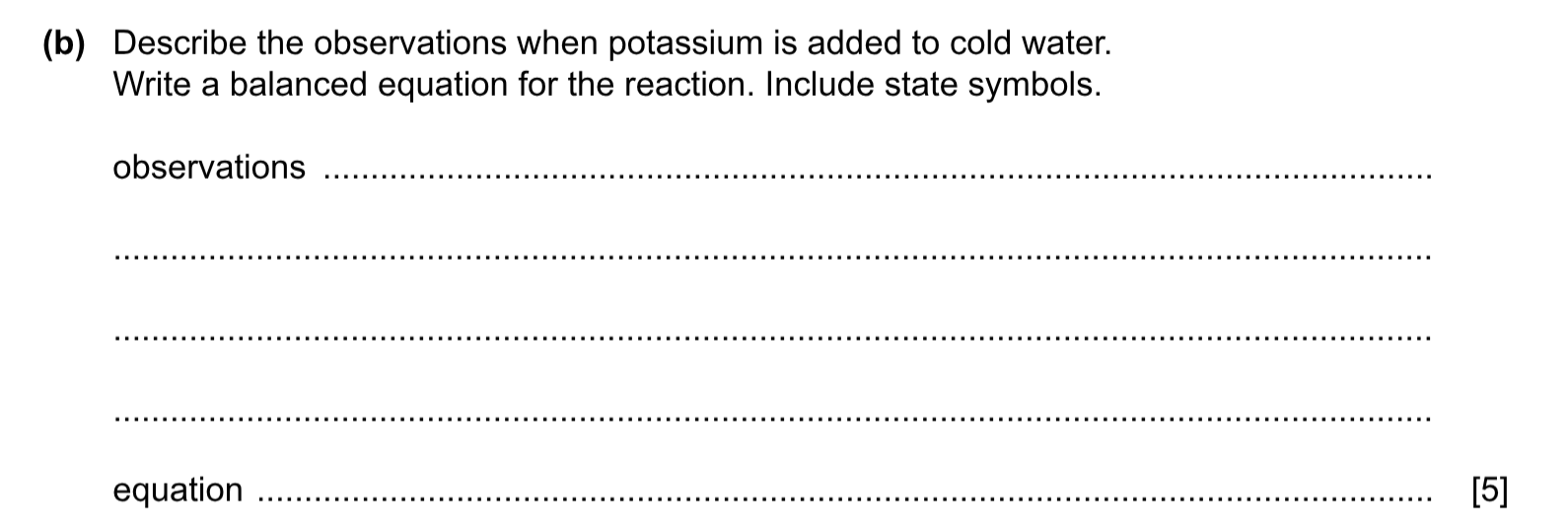
Potassium: moves / floats / dissolves /
bubbles / / fizzes
flame
/ forms a spherical shape
K(s) + H2O(l) → KOH(aq)+ H2 (g)
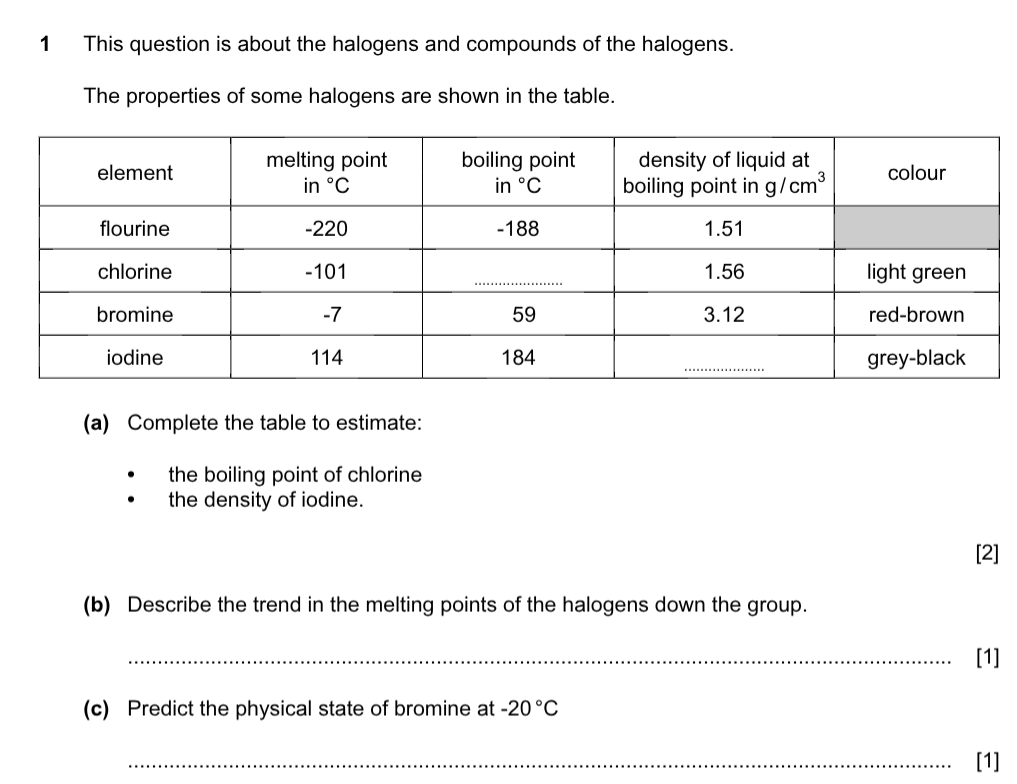
Periodic table Halogen properties
Periodic table
Displacement reactions of halogens.
1, Bromine water + potassium chloride solution
between bromine and potassium (reaction mixture remains an orange colour) because chlorine is reactive than bromine
2. Bromine water + potassium iodide
with potassium as
iodine reactive than bromine
Periodic table reactivity of group 1 metals.
Note some words can be used more than once or not all.
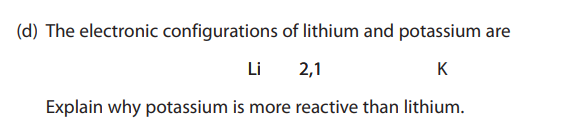
Potassium has electron shells so its outer electron is from the nucleus than lithium's outer electron. Therefore, the attraction between the nucleus and the outer electron is in potassium so the outer electron is lost easily in potassium. This means that potassium is reactive than lithium.
Periodic table reactivity of halogens - explanation.
Going down the group the outer electrons become from the nucleus so the nucleus has attraction for the outer electrons so an electron is gained easily