Kristallnacht
star
star
star
star
star
Last updated almost 2 years ago
4 Nsɛmmisa
Hyɛ no nsow a efi ɔkyerɛwfo no hɔ:
Facing History and Ourselves: Examining Holocaust and Human Behavior
25
25
25
25
Facing History and Ourselves: Examining Holocaust and Human Behavior
You will learn about what happened on November 9 and 10, 1938, by watching two videos. In the first video, historians discuss the causes, events, and aftermath of this event. In the other video, a survivor whose family was targeted on Kristallnacht describes her experiences.
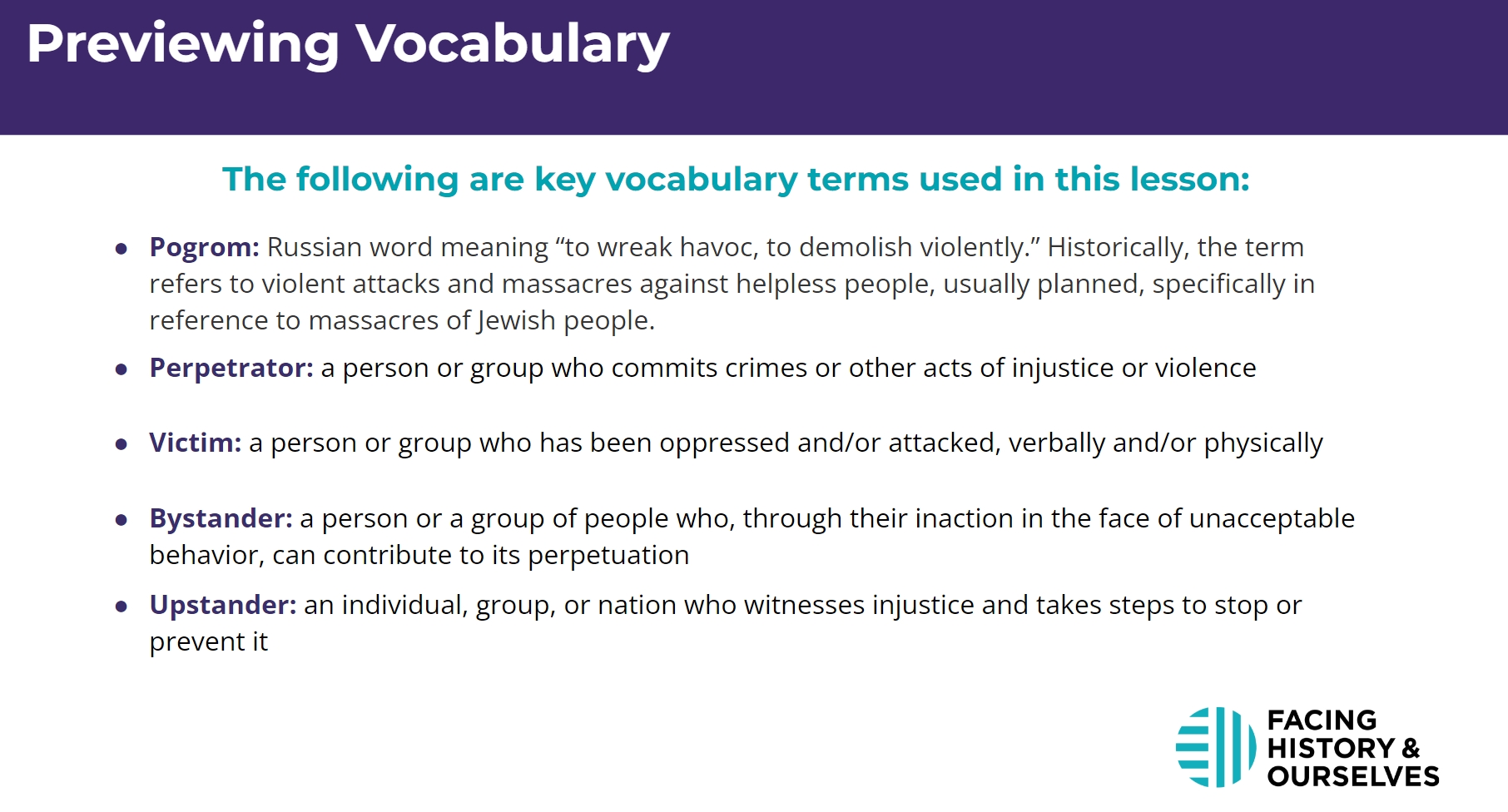
First, read the definition of pogrom that was inspired by the United States Holocaust Memorial Museum:
Pogrom: an organized massacre of helpless people; specifically, a massacre of Jews; Russian word meaning “to wreak havoc, to demolish violently.” Historically, the term refers to violent attacks and massacres against helpless people, usually planned, specifically in reference to massacres of Jewish people.
In this video, scholars discuss the events of Kristallnacht (“The Night of Broken Glass”), a series of violent attacks against Jews in Germany, Austria, and part of Czechoslovakia in November 1938. As you watch the film, record notes that help you answer the first two questions in this lesson. Then respond to the third question after you have finished viewing the film.
What did Jews experience during and immediately after Kristallnacht
What do you imagine other Germans would have seen and experienced that night and in the following days?
To what extent was Kristallnacht similar to what had come before? How was Kristallnacht different?
What did Jews experience during and immediately after Kristallnacht
What do you imagine other Germans would have seen and experienced that night and in the following days?
To what extent was Kristallnacht similar to what had come before? How was Kristallnacht different?
While watching Elsbeth Lewin’s testimony, write down a phrase or sentence that resonates with you.
After watching Elsbeth’s testimony, write a word or a short phrase that describes how you felt while listening to her story.
What can you learn about Kristallnacht from the personal testimony of Elsbeth Lewin that you could not learn from other sources, such as readings or videos, that focus on the historical aspects of the event?