Log in
Sign up for FREE
arrow_back
Library

Revolutions Test

star
star
star
star
star
Last updated 4 months ago
31 questions
Required
2
Required
2
Required
2
Required
2
Required
2
Required
2
Required
2
Required
2
Required
2
Required
2
Required
2
Required
2
Required
2
Required
2
Required
2
Required
2
Required
2
Required
2
Required
2
Required
2
Required
2
Required
2
Required
2
Required
2
Required
2
Required
2
Required
2
Required
2
Required
2
Required
2
Required
20
Question 1
1.

Question 2
2.

Question 3
3.

Question 4
4.

Question 5
5.

Question 6
6.

Question 7
7.

Question 8
8.

Question 9
9.

Question 10
10.

Question 11
11.

Question 12
12.

Question 13
13.

Question 14
14.

Question 15
15.

Question 16
16.

Question 17
17.

Question 18
18.

Question 19
19.

Question 20
20.

Question 21
21.

Question 22
22.

Question 23
23.

Question 24
24.

Question 25
25.

Question 26
26.

Question 27
27.

Question 28
28.

Question 29
29.

Question 30
30.

Question 31
31.

Choose ONE (1) of the prompts below to respond to:

1. Did the French Revolution embody the ideals of the Enlightenment? Pick a side and argue your position.

2. Fully explain why the French both start and end the Revolution with a monarchy.

Which of the following is the concept that government power derives from an agreement between the ruled and the rulers?
absolutism
social contract
laissez faire
separation of powers
“We hold these truths to be self-evident, that all men are created equal, that they are endowed by their Creator with certain inalienable rights, that among these are life, liberty, and the pursuit of happiness. . . .”
- The Declaration of Independence

Which Enlightenment thinker most directly influenced the idea expressed in this passage?
John Locke
Thomas Hobbes
Baron de Montesquieu
Jean-Jacques Rosseau
Louis XIV's authority to rule was based on which of the following ideas?
separation of powers
limited monarchy
popular sovereignty
divine right
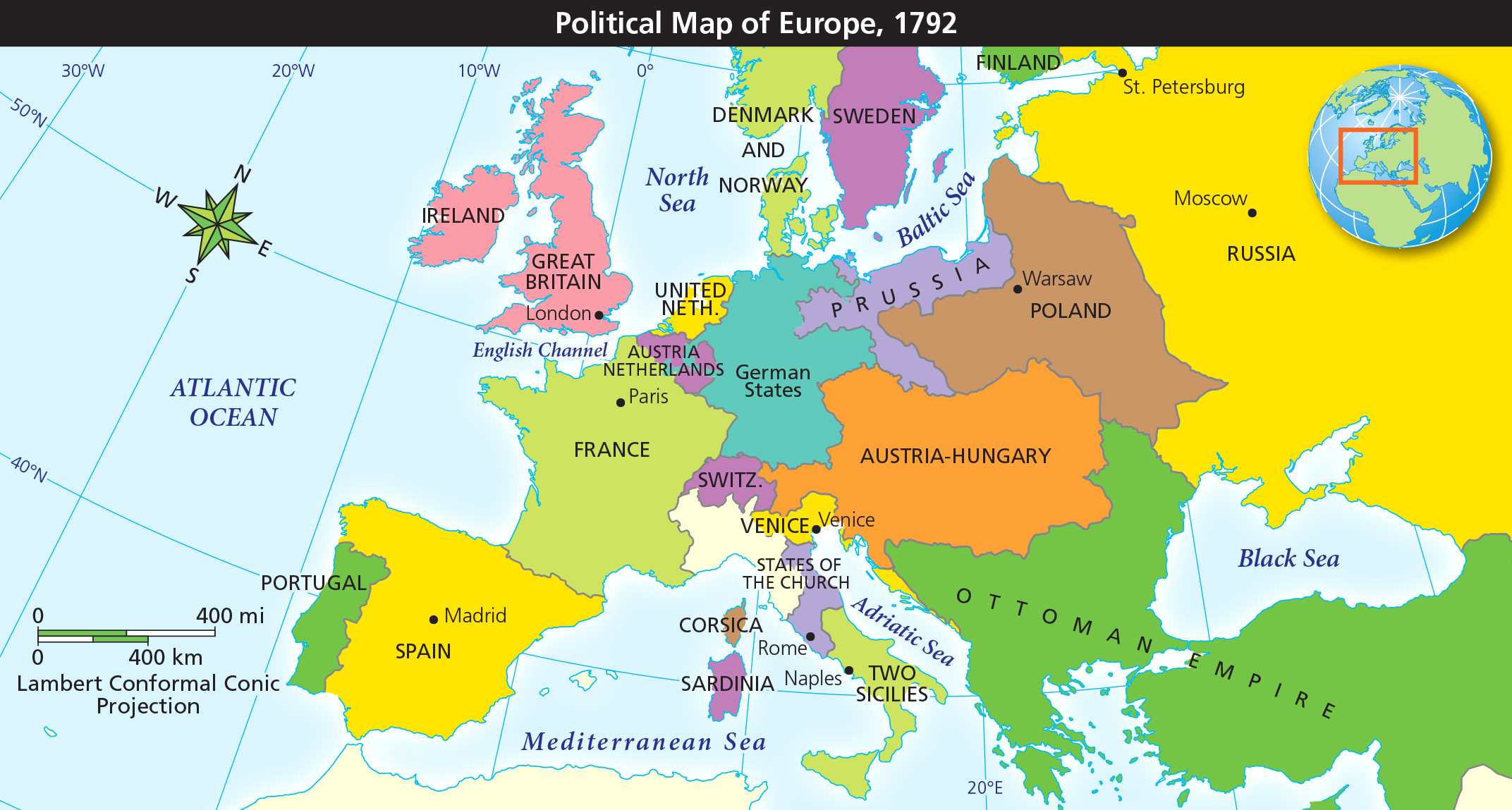
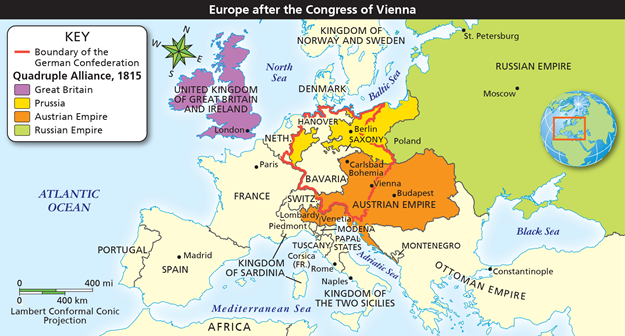
Based on the map, what did the Congress of Vienna do to restore peace and order in Europe?
It redrew the map to enlarge some countries
It created a new order by promoting European alliances
It changed the northern boundary of France
It clarified trade routes between major European cities
The Enlightenment idea that all human beings have a set of inalienable rights is known as...
natural rights
divine right
separation of powers
the social contract
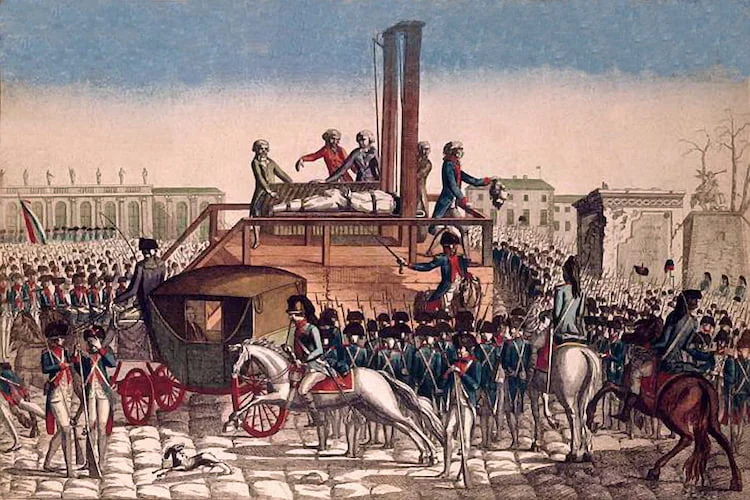
The event depicted in the image below marked the start of which phase of the French Revolution?
The Bourbon Restoration
The Consulate
The Reign of Terror
The Directory
“Man is born free, and everywhere he is in chains.”
- The Social Contract, Jean Jacques Rousseau (1762)

Based on this quote, which form of government did Rousseau most likely support?
an absolute monarchy
a popularly elected government
an enlightened despotism
an oligarchy
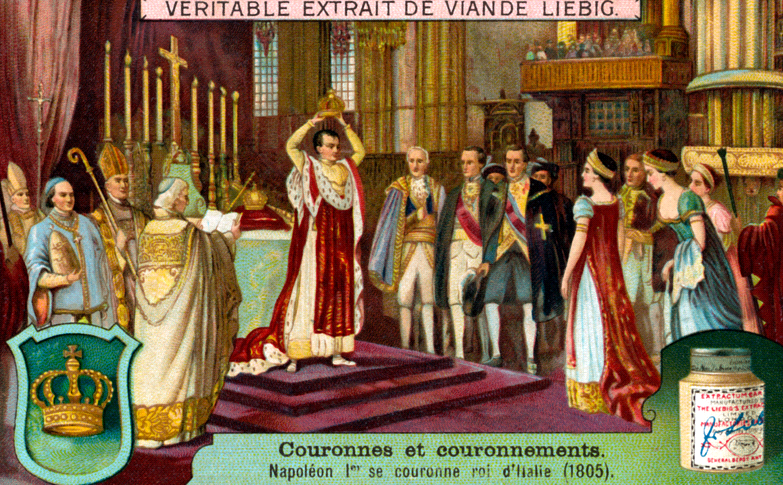
What is significant about the event depicted in the image below?

Napoleon is rejecting the notion of absolute monarchy
Napoleon is relinquishing authority to the Catholic Church
Napoleon is asserting that he is the source of his own authority
Napoleon is acknowledging that his power comes from the people of France
What development do historians generally identify as being the turning point of the American Revolution?
Benedict Arnold's betrayal of the Continental Army
France helping the Patriots at the Battle of Saratoga
Cornwallis' surrender at the Battle of Yorktown
Napoleon invading Russia
Which of the following statements would philosopher John Locke have agreed with concerning the role of government in society?
The primary role of government is to generate a profit.
There should be no government at all.
The primary role of government is to protect the natural rights of citizens.
The primary role of government is to create order and protect citizens from themselves.
Which staement best describes the root conflict between Britain and the American colonists during the late 1700s?
The colonists refused to pay any taxes of any kind.
The colonists felt they should only pay taxes to their colonial governments.
Parliament felt the colonists held too much voting power in the House of Commons.
The king would not allow the colonists to expand beyond the Appalachian Mountains.
“Terror is only justice prompt, severe and inflexible; it is then an emanation of virtue; it is less a distinct principle than a natural consequence of the general principle of democracy, applied to the most pressing wants of the country.”
— Maximilien Robespierre, 1794

The viewpoint expressed in the quote was most directly put into action through the use of the...
Napoleonic Code
guillotine
Constitution of 1795
repeating rifle
Which class in Pre-Revolutionary France carried almost all of the tax burden?
First Estate
Second Estate
Third Estate
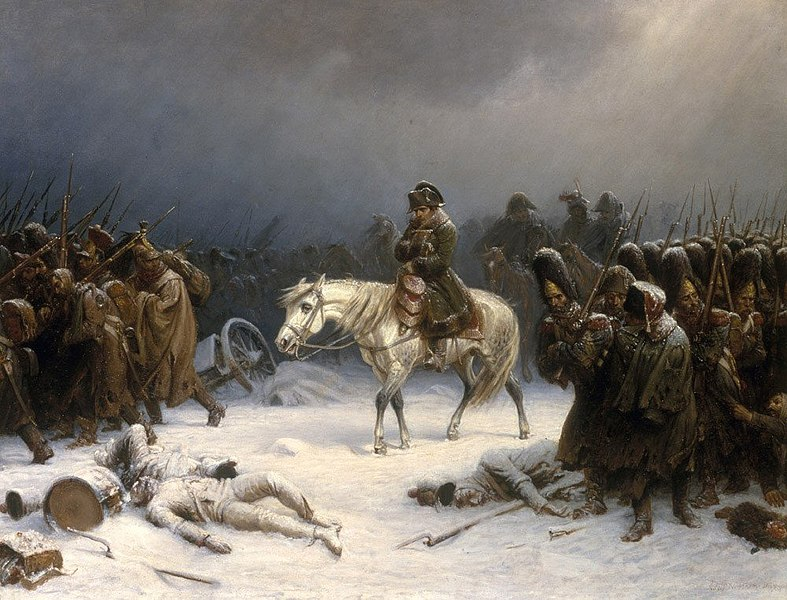
The painting below, originally created by Adolph Northen, is entitled Napoleon's Retreat from Moscow.

Based on this image, what can be concluded about Napoleon's military campaign in Russia?

His invasion was successful and saw a quick Russian surrender.
The Russians repelled the French at the border, preventing them from ever invading.
The invasion slowed and left the French trapped in the harsh Russian winter.
Napoleon was forced to use diplomacy instead of military power.
Which of these answer choices is a cause of the French Revolution?
France’s royal treasury was in debt because it could not collect enough tax money from the Second Estate.
The First Estate and Third Estate could not agree about how to reform the economy.
There was a wide gap between the privileges of the lowest class that paid most of the taxes and the wealthy bourgeoisie who paid few taxes.
Land was unequally distributed among peasants, nobility, and the Church, which set off the “Flour War.”
What is one way that the Declaration of the Rights of Man was similar to the Declaration of Independence?
It abolished the monarchy and set up a republic.
It stated that the function of government was to protect individual rights.
It was based on the idea that all people have equal political rights.
It was supported by women.
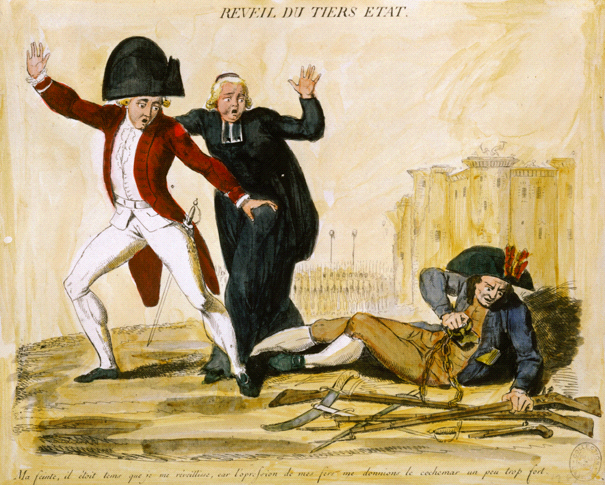
Which statement most accurately interprets this portrayal of the First, Second, and Third Estates of France?

The middle class is the force holding society together.
The privileged fear the anger of the underprivileged.
The monarchy fears the anger of the church.
The nobility is the force holding society together.
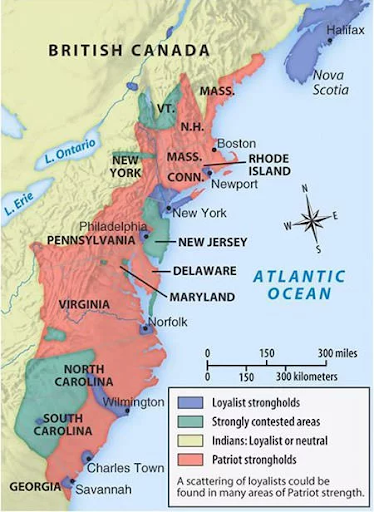
Using the map below, what conclusion can you draw about support for the American Revolution among the colonies?

A large number of colonists were not supportive of the Revolution.
Indian tribes were known supporters of the American revolutionaries.
The western frontier was a large region of Loyalists.
Large cities were sources of support for the Patriots.
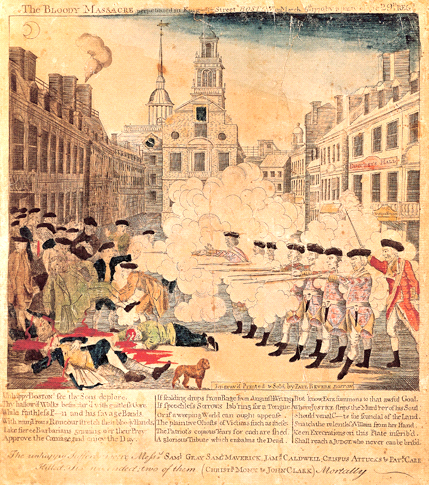
What is most likely the reason this engraving of the Boston Massacre by Paul Revere inflamed public opinion against the British?

It shows the colonists as unarmed victims of the attack.
It shows that the colonists knowingly provoked the British soldiers.
It shows that the colonists were outnumbered.
It shows the colonists firing on the soldiers.
Why did Jacobins in the French Assembly condemn the king to death?
Pro-monarchy rebellions had broken out in the countryside.
Some believed the king was guilty of tyranny against France.
The king had successfully escaped and lived in Austria earlier that year.
The September Massacres had led to the deaths of important Third Estate leaders.
“Manufacturing and commercial monopolies owe their origin not to a tendency [naturally found in a] capitalist economy but to governmental interventionist policy directed against free trade and laissez-faire.”
— Ludwig Von Mises, Austrian economist

This quote by a modern economist reflects the ideas of which of the following Enlightenment thinkers?
John Locke
Adam Smith
Jean-Jacques Rousseau
Denis Diderot
“Adam Smith greatly admired the physiocrats. In his influential work The Wealth of Nations, he argued that the free market, the natural forces of supply and demand, should be allowed to operate and regulate business. Smith favored a free enterprise system in which commerce and business compete for profit with little or no government interference.”

The policy of laissez faire that the physiocrats and Adam Smith promoted was a reaction against which earlier economic system?
natural law
bartering
social contract
mercantilism
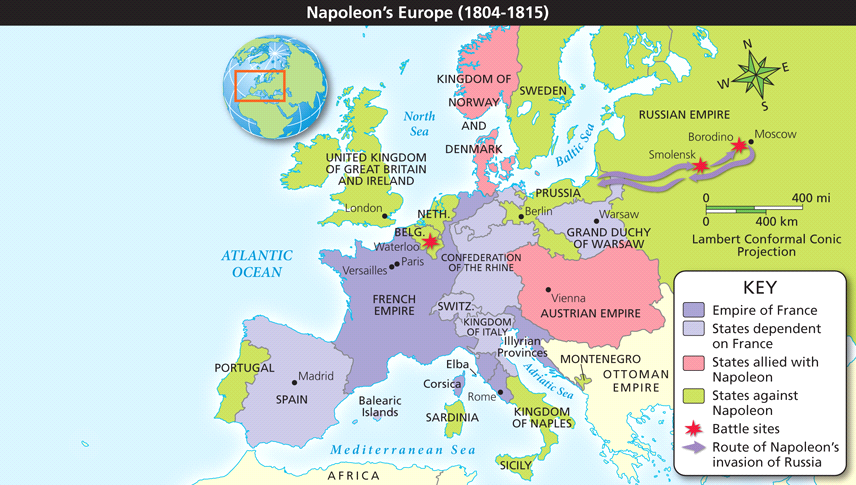
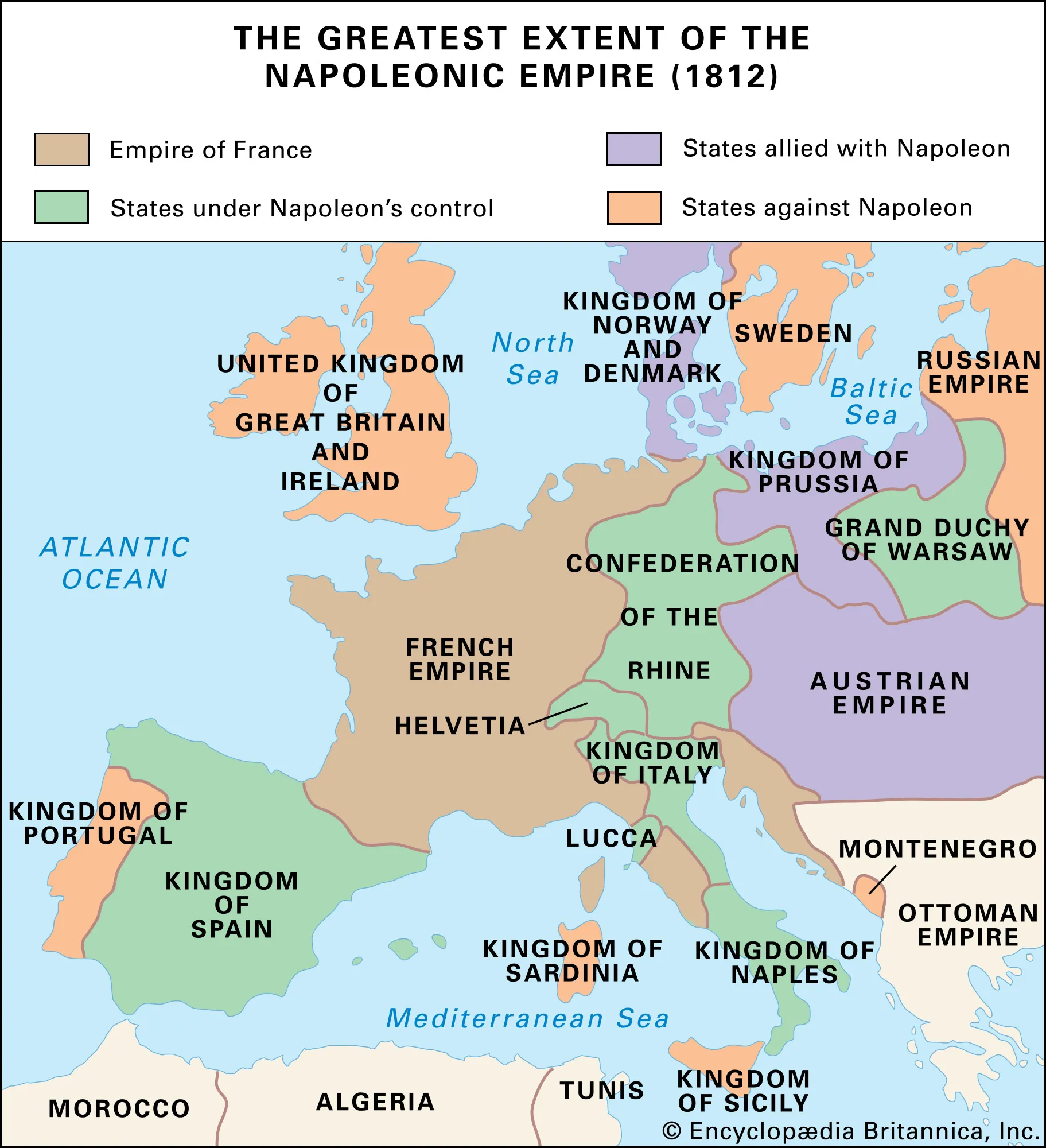
Which development is best illustrated by this map?

By 1812, the French Empire had been dismantled by its enemies.
By 1812, most of France's neighbors had allied against them.
By 1812, France controlled most of continental Europe.
By 1812, Napoleon had successfully conquered Great Britain.
Which of the following did NOT happen in countries conquered by Napoleon?
The power of nobility and aristocracy was curbed.
Constitutional limits were placed on monarchs.
A uniform code of laws was adopted.
The absolute power of monarchs was expanded.
Based on the map, why would the rulers of European countries be fearful of events in France during the French Revolution?

French radicals were allied with the United States, and the Directory prevented emigrés from leaving.
France bordered many European nations, which feared that radical ideas would spread and threaten other governments.
French radicals used the Committee of Public Safety to spread propaganda, and Robespierre headed the Directory.
French radicals executed supporters of the revolution, and the Directory declared war on Prussia and Spain.
Enlightened despots embraced the ideas of the Enlightenment while holding onto absolute power. Which answer choice best exemplifies something one of these despots would have done while ruling?
Allowed a free press and abolished serfdom
Terrorized and oppressed religious minorities
Founded overseas colonies
Expanded the power of the nobility
The colonial tax that the British Parliament placed on goods like the one shown below led directly to...
protests in the colonies
The French and Indian War
Oliver Cromwell's creation of the Commonwealth of England
widespread colonial support for Parliamentary tax law
The empire shown on the map below would have likely grown even larger if it had not been for the failure of...

the Reign of Terror
the Congress of Vienna
the Continental System
the American Revolution
Which of the following most accurately describes the cause of French financial woes in 1789?
Paying war reparations from the Thirty Years' War.
Continued spending on wars in North America.
A trade war with Spain.
Aggressive colonial expansion into the African interior.
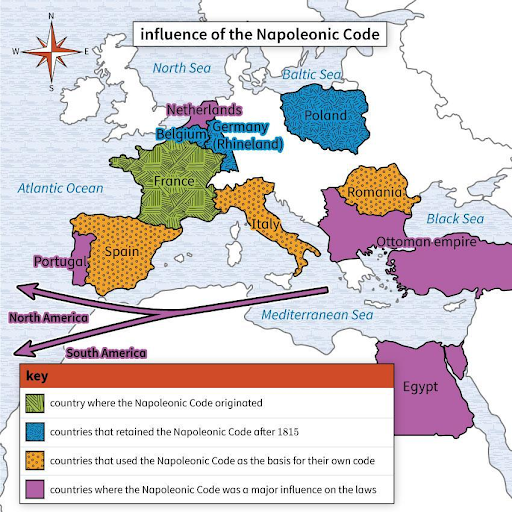
Based on the map below, which of the following describes a lasting impact of the Napoleonic Wars?
European borders would never change again.
Other European countries kept or adopted French-styled legal systems.
Rulers started trying to emulate Napoleon's empire and conquer Europe.
Poland became a permanent fixture of the world map.