Log in
Sign up for FREE
arrow_back
Library

6.2 Thermal Unit Test 2024 (Flores)

star
star
star
star
star
Last updated over 1 year ago
20 questions
Required
0
Required
1
Required
1
Required
7
Required
1
Required
2
Required
1
Required
1
Required
1
Required
1
Required
1
Required
1
Required
1
Required
1
Required
1
Required
1
Required
0
Required
1
Required
1
Required
1
Question 1
1.

Question 2
2.

Question 3
3.

Question 4
4.

Question 5
5.

Question 6
6.

Question 7
7.

Question 8
8.

Question 9
9.

Question 10
10.

Question 11
11.

Question 12
12.

Question 13
13.

Question 14
14.

Question 15
15.

Question 16
16.

Question 17
17.

Question 18
18.

Question 19
19.

Question 20
20.

BONUS: The condensation when a cup has HOT water inside would be located
only inside the cup above the hot water line.
wherever the hot water is.
on the outside of the cup on the bottom where the water is.
only on the lid of the cup.
A room temperature glass of water needs to be cooled. A student adds ice cubes to the glass. Choose which statement best describes the process that is occurring.
The water will cool because the cold of the ice cube will transfer into the warm water.
The water will transfer heat to the ice cube therefore melting the ice.
The water will absorb the cold thermal energy from the ice cubes.
Neither the temperature of the water nor the ice cubes will change.
Joe left a metal spoon and cereal bowl outside. After several minutes, the spoon was hot to the touch. Which statement best describes the heat transfer that took place?
The spoon was heated by radiation from the sun; therefore, his hand felt warm because of conduction.
The spoon was heated by conduction from the sun; therefore, his hand felt warm because of radiation.
The spoon was heated by convection from the sun; therefore, his hand felt warm because of conduction.
The spoon was heated by radiation from the sun; therefore, his hand felt warm because of convection.
Sort these scenarios into the correct category: (conduction, convection, radiation)
standing in the sun on a day with no breeze
making popcorn with an air popper
sitting on a metal chair that has been in the sun on a hot day
A boy sits near a fireplace. He is 10 feet away but still feels warm.
the transfer of energy in fluids (liquids or gases) like boiling water or a hot air balloon.
energy that is transferred with "direct contact"
Using a microwave to make popcorn
conduction
convection
radiation
In which direction will the thermal energy flow between these objects?
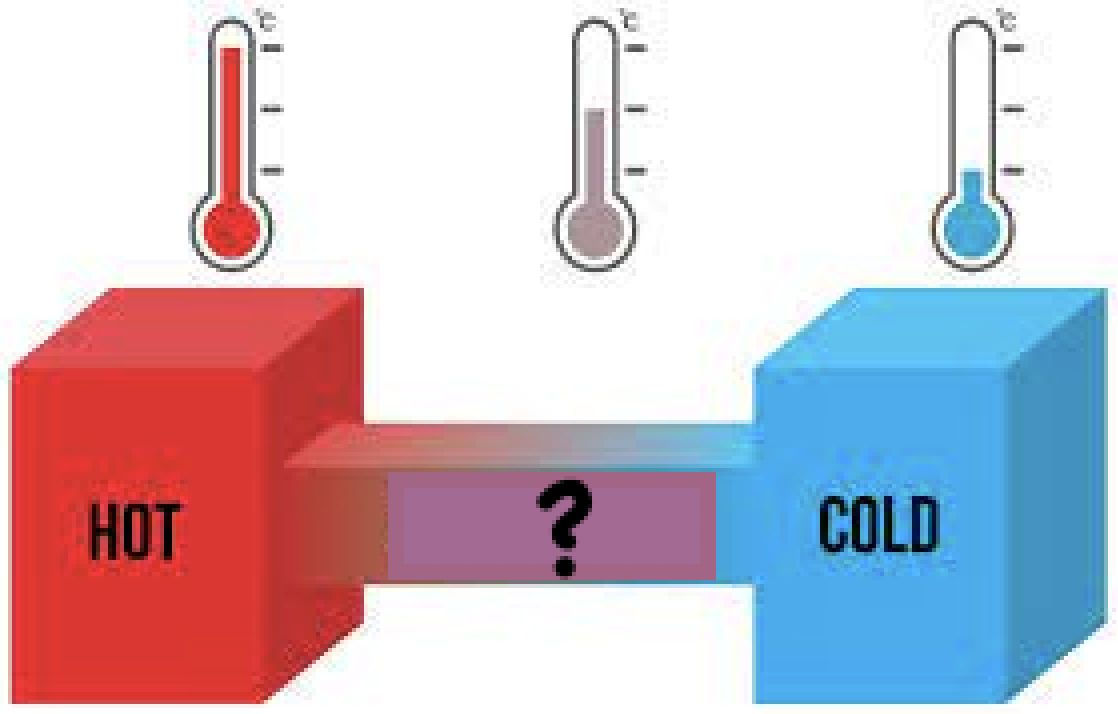
from the colder object to the hotter object
from the hotter object to the colder object
Their temperatures will stay the same.
They energy will go both directions.
Which of the following cup features made the fancy cup perform better than the regular cup in keeping beverages cold? CHECK ALL THAT APPLY!
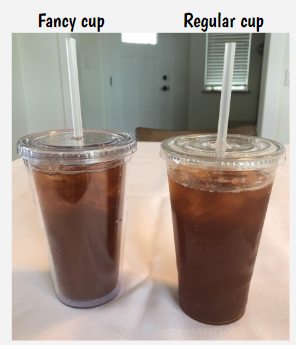
sealed lid
thick material
condensation
air pockets between layers
ice cubes
Sample A is sweet tea. Sample B could be
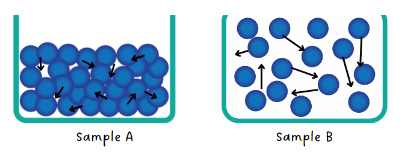
salt
syrup
a pencil
helium
We did a lab with food coloring and water that was cold, room temperature and hot. Which cup has particles that are moving the fastest?
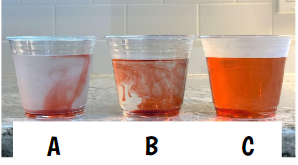
Cup A
Cup B
Cup C
Compare a cup in light and a cup with no light. If all other factors are the same, the cup in the light will...
get warmer.
get colder.
stay the same temperature.
be more expensive.
When designing a house to stay cool in the summer, which of the following would be LEAST helpful?
double layered windows
thick curtains
black exterior walls
insulation in the walls and attic
In a solid, how do particles move?
They move freely in all directions.
They vibrate back and forth in place.
They stay completely still.
They jump from one position to another.
What is likely to happen when a fast-moving particle collides with a slower-moving particle?
Both particles will slow down.
The fast-moving particle will slow down, and the slower particle will speed up.
Both particles will speed up to the same speed because kinetic energy is movement.
There will be no change in their speeds.
How does color affect the temperature of an object?
Light colors absorb more light and thus get warmer.
Dark colors absorb more light and thus get warmer.
Color does not affect temperature.
Temperature is only affected if the light is reflected.
How does the motion of particles in a liquid compare to the motion of particles in a gas?
Particles in a liquid move faster than in a gas.
Particles in a gas are more tightly packed than in a liquid.
Particles in a liquid do not move.
Particles in a liquid are more tightly packed but can still move freely.
Which of the following best describes how energy transfers between two objects?
Energy moves from the cooler object to the warmer one.
Energy moves from the warmer object to the cooler one.
Energy moves equally between both objects.
Energy does not transfer between objects at all.
During the butter demonstration, what caused the butter begin to melt?
The particles in the butter lost energy and slowed down due to the ice.
The particles in the butter gained energy due to the candle.
The particles in the butter balanced out in the middle of the foil.
The butter melted due to room temperature being higher than the butter.
Which of the following best explains why the water inside the cup warms up?
Energy transfers from the room to the cup wall to the water.
Energy remains trapped inside the water if there is a tight lid.
Cold escapes from the water due to the cup being an open system.
Water particles generate their own heat within a closed system.
Which of the following claims can be supported by the data in the image?
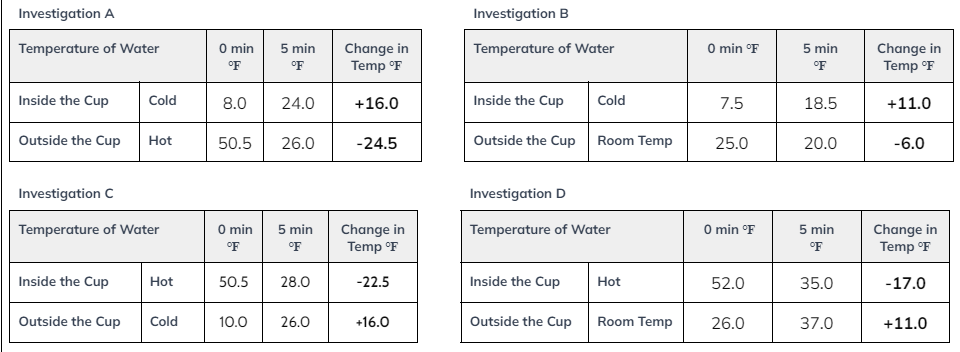
More energy is transferred between two liquids when there is a greater temperature difference between them.
Liquids transfer energy but solids do not.
More energy is transferred between two objects when they have similar starting temperatures.
It is important to follow lab safety rules when handling hot water.
It is a lovely Texas summer day. What would be different in a house with many windows vs a house with no windows (assume there is no air conditioning system in either house)?
It would be hotter in a house with many windows.
It would be colder in a house with many windows.
There would be no difference in the temperatures because it is always hot in Texas.
Look at this graph. The types of cookies are the _______________.
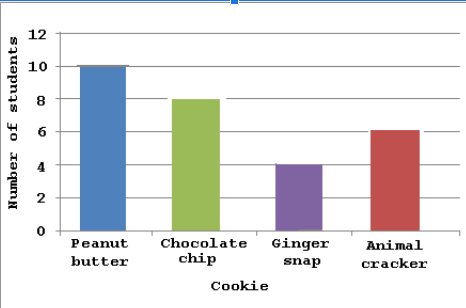
independent variable
dependent variable