Category 1
Drag the correct subatomic particle name to correctly label the key.
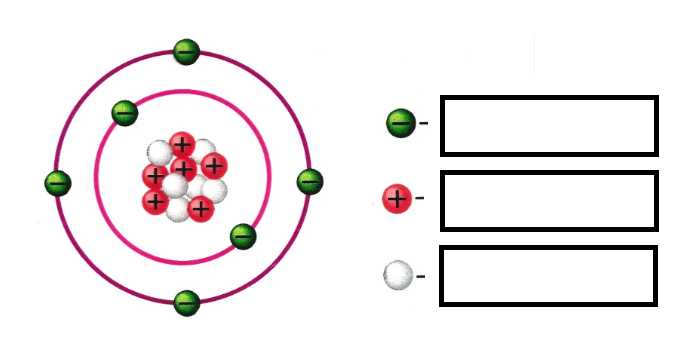
Mmuae Afoforo a Wobɛpaw:
Electron
Proton
Neutron
Answer at least 1 question from each category. To demonstrate mastery of content, a total of 10 points is required. You may be asked to complete additional tasks (or questions) if less than 10 points are earned.
Category 1
Drag the correct subatomic particle name to correctly label the key.
Category 1
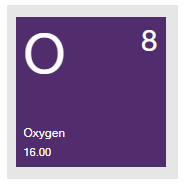
Explain to a friend how you would calculate the number of neutrons in oxygen based on the information in the picture.
Your answer should include:
* the number of neutrons, and
* an explanation of how you calculate the number of neutrons.
Category 1
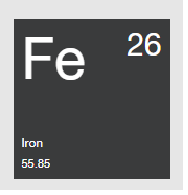
Which of these shows the correct number of protons?
Category 1
Which statements correctly describe isotopes? You may select as many answers as you think are true.
Use the drawing tool to draw the molecules in the following chemical equation.
Equation: 2H₂O₂ → 2H₂O + O₂
Be sure to:
* Include the correct number of each molecule and atom.
* The correct location of each molecule on each side of the equation.
Category 2
Select all of the properties of lithium that are physical properties.
Which statement best describes the difference between a physical change and a chemical change?
Category 2
Which state of matter can be compressed? Why?
A correct response includes:
* the state of matter that can be compressed, and
* an explanation of why this is possible.