Log in
Sign up for FREE
arrow_back
Library

8K EOT Quiz - Transfer of energy (11/12/2024)

star
star
star
star
star
Last updated 7 months ago
27 questions
1
1
1
1
1
1
1
1
1
1
1
1
1
1
1
1
1
1
1
Question 1
1.

Question 2
2.

Question 3
3.

Question 4
4.

Question 5
5.

Question 6
6.

Question 7
7.

Question 8
8.

Question 9
9.

Question 10
10.

Question 11
11.

Question 12
12.

Question 13
13.

Question 14
14.

Question 15
15.

Question 16
16.

Question 17
17.

Question 18
18.

Question 19
19.

1
Question 20
20.

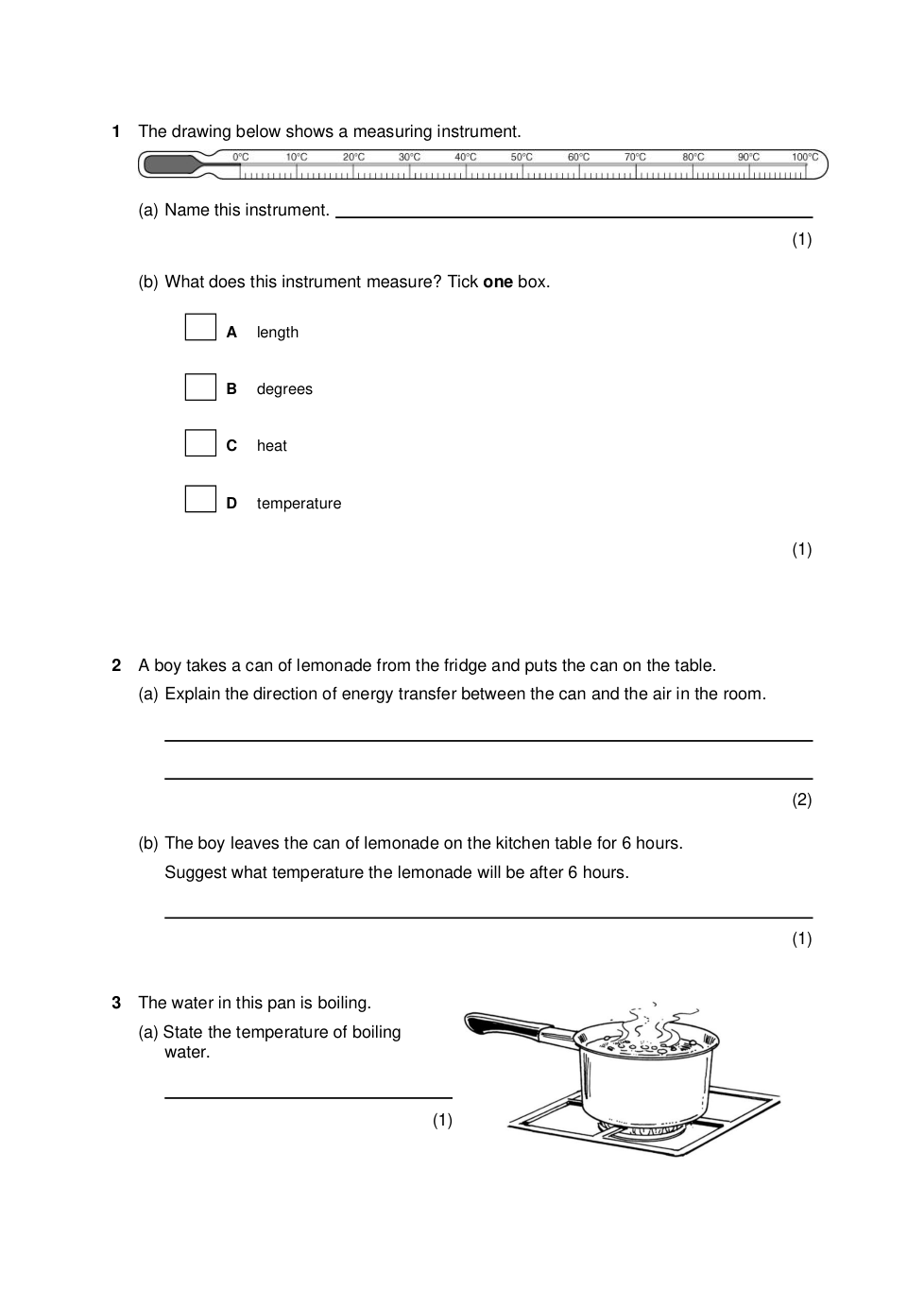
The drawing below shows a measuring instrument.
(a) Name this instrument.

1
2
1
1
1
Question 25
25.

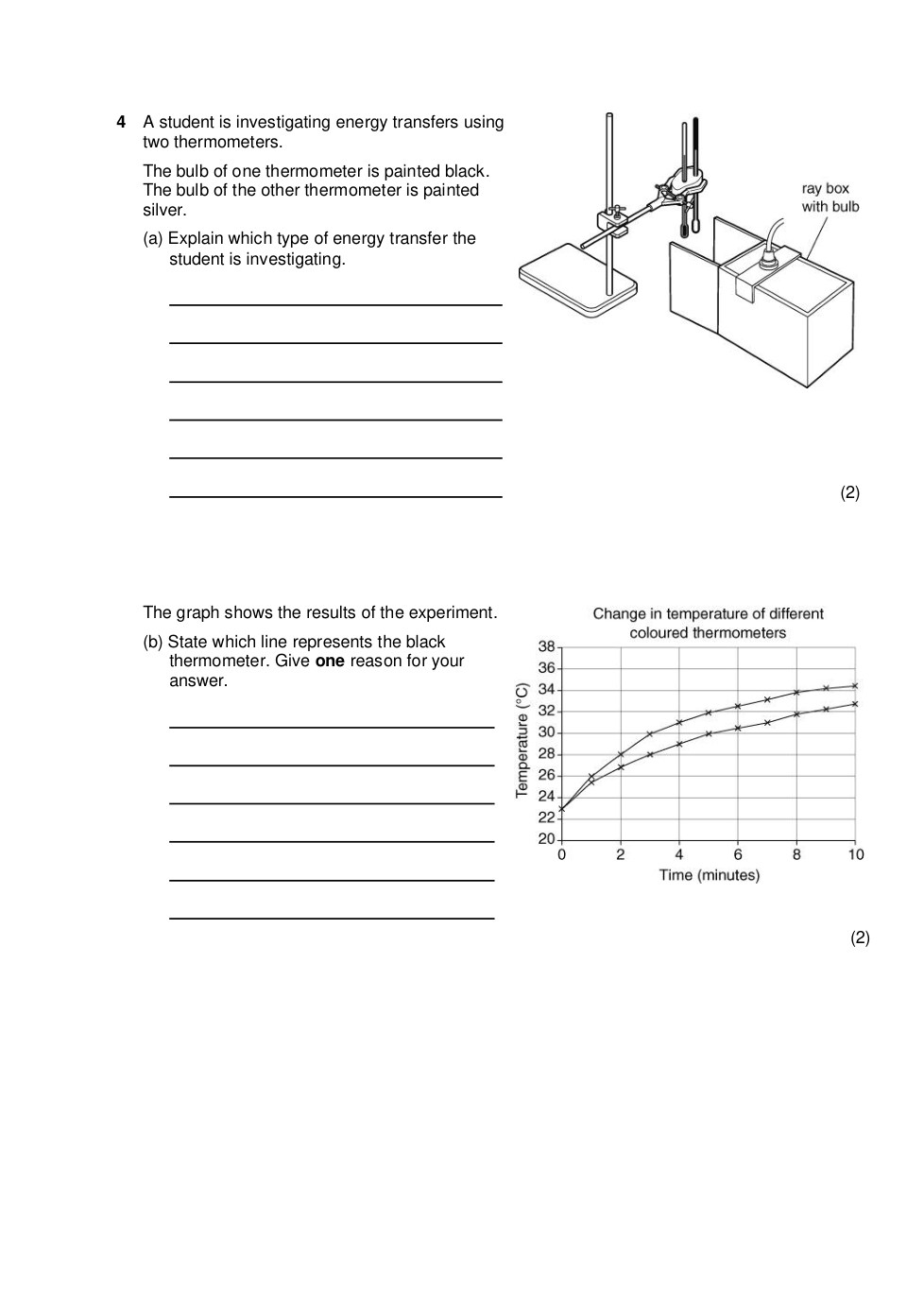
A student is investigating energy transfers using two thermometers. The bulb of one thermometer is painted black. The bulb of the other thermometer is painted silver. Explain which type of energy transfer the student is investigating.

2
1
Which list of materials shows only insulating materials?
wool, feathers, copper
feathers, wood, carpets
iron, copper, steel
plastic, aluminium foil, wood
Which statement is the best explanation for why many insulating materials contain trapped air?
trapping the air stops energy being transferred by convection
air is a poor conductor
trapped air makes the material lighter
gases are poor conductors and they cannot transfer energy by convection if they cannot move
The surface of which material would reflect infrared radiation the best?
white and dull
black and shiny
white and shiny
grey and dull
Which statement is correct?
dark colours are good emitters and absorbers of radiation
dark colours are good emitters and poor absorbers of radiation
dark colours are poor emitters but good absorbers of radiation
light colours are good emitters and absorbers of radiation
What are the units for measuring power?
joules
watts
volts
kilowatt-hours
How can you find the power of an appliance?
see how hot it gets when switched on
see what voltage it needs
look for the efficiency label
look for the power rating on the label
Which kinds of appliances transfer the most energy?
heaters and cookers
lights
TVs and radios
computers
The efficiency of an appliance is calculated by:
comparing the useful and wasted energies
measuring how much energy is transferred
comparing the useful energy transferred to the total energy supplied
comparing the wasted energy transferred to the total energy supplied
Which of these is NOT a way of trying to reduce energy bills?
increasing the insulation in your home
using more efficient appliances
using appliances with high power ratings
using solar power to heat water
What does 'payback time' mean?
The time it takes to pay off finance on a new appliance
How long a new appliance will last without needing repairs
The time it takes to save enough money on energy bills to pay for a change
The time it takes a new appliance to reduce your energy bills
Freezer A costs £200 and freezer B costs £150. Someone buying freezer A would save £20 per year on energy bills. What is the payback time if someone buys freezer A instead of B?
0.4 years
0.6 years
1.6 years
2.5 years
What are the units for measuring energy?
newtons
degrees Celsius
joules
degrees Fahrenheit
If you leave a cup of hot tea standing in the kitchen for a whole day, what will happen?
No energy will be transferred.
It will gain energy from the air in the kitchen.
Energy will be transferred from the tea to the air until the tea is the same temperature as the air.
Energy will be transferred from the tea to the air in the kitchen, so the tea will end up colder than the air in the kitchen.
The amount of thermal energy in an object depends on three things. Which of these things does it **not** depend on?
its mass
its colour
its temperature
the material it is made from
Which statement about evaporation is **not** true?
When some of a liquid evaporates, the liquid left is warmer than before.
Evaporation can happen at any temperature at which the substance is a liquid.
When some of a liquid evaporates, it is the particles moving the fastest that escape and form a gas.
Sweating cools us down when the sweat evaporates.
Infrared radiation can travel through:
transparent objects only.
opaque objects only.
empty space only.
empty space and transparent materials.
When one end of a piece of metal is heated:
the particles vibrate less and so the particles get closer together.
the particles vibrate more and the vibrations are passed from particle to particle.
the energy does not move through the metal.
the particles get bigger.
Solids are better heat conductors than liquids or gases because:
the particles are closer together in gases.
the particles are closer together in liquids.
the particles are closer together in solids.
the particles in a solid cannot move.
Why does the cold air near the ice lolly move downwards?
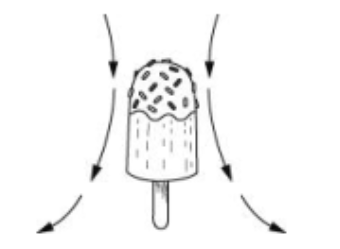
It is colder and denser than the air further away from it.
It is warmer and denser than the air further away from it.
It is colder and less dense than the air further away from it.
It is warmer and less dense than the air further away from it.
Question 21
21.

Question 22
22.

A boy takes a can of lemonade from the fridge and puts the can on the table.
(a) Explain the direction of energy transfer between the can and the air in the room.

Question 23
23.

The boy leaves the can of lemonade on the kitchen table for 6 hours. Suggest what temperature the lemonade will be after 6 hours.

Question 24
24.

The water in this pan is boiling. (a) State the temperature of boiling water.
Question 26
26.

The graph shows the results of the experiment. State which line represents the black thermometer. Give one reason for your answer.

Question 27
27.

What does this instrument measure?
length
degrees
heat
temperature
In which state of matter does convection occur?
All states of matter
Liquids and gases
Just in gases
Just in solids