Copy and paste the sentence starter and fill it in.
Which heats up faster land or ocean and how do you know. Use evidence from the video to explain.
Sentence Starter: The video shows us that ________ heats up faster than _________. The reason why we know this is that from the graph we can see that _________ increases to a temperature of______, while the other only reaches a temperature of _______ (which is lower).
1
Trim End | 01:40
Question 1 | 00:13
Question 2 | 00:23
Question 3 | 00:26
Question 4 | 00:33
Question 5 | 00:40
Question 6 | 00:47
Question 7 | 01:01
Question 8 | 01:15
Question 9 | 01:24
00:00/00:00
Question 1
00:13
Question 2
00:23
Question 3
00:26
Question 4
00:33
Question 5
00:40
Question 6
00:47
Question 7
01:01
Question 8
01:15
Question 9
01:24
Albedo
Albedo is the fraction of incident radiation that is reflected by a surface. Different materials reflect different amounts of the incoming light and thus have different albedo values, which range from 0 (0 percent reflected) to 1 (100 percent reflected).

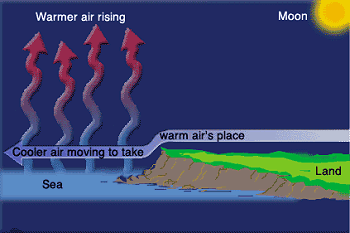
Why does land heat faster than water?
This is because land has a smaller “heat capacity” than water, which means it needs less heat to raise its temperature. The chart below shows how the Earth's land surface (yellow line) has warmed more rapidly than the ocean (dark blue) over the observational record.
6
Question 10
10.
A) Which object below would have an albedo score of 0.__________
B) __________ is a measure of the reflective characteristics of the Earth's surface.
C) Which has a lower albedo, an asphalt parking lot or a snow-covered field? __________
D) Rank the following from low albedo to high albedo. (1) Ocean(2) Sand(3) Ice(4) Asphalt __________
E) What heats faster, land or water? __________
F) Why does land heat up and cool down faster than water? __________
Trim Start | 00:17
Trim End | 01:25
Question 12 | 00:49
Question 13 | 01:23
00:00/00:00
Question 12
00:49
Question 13
01:23
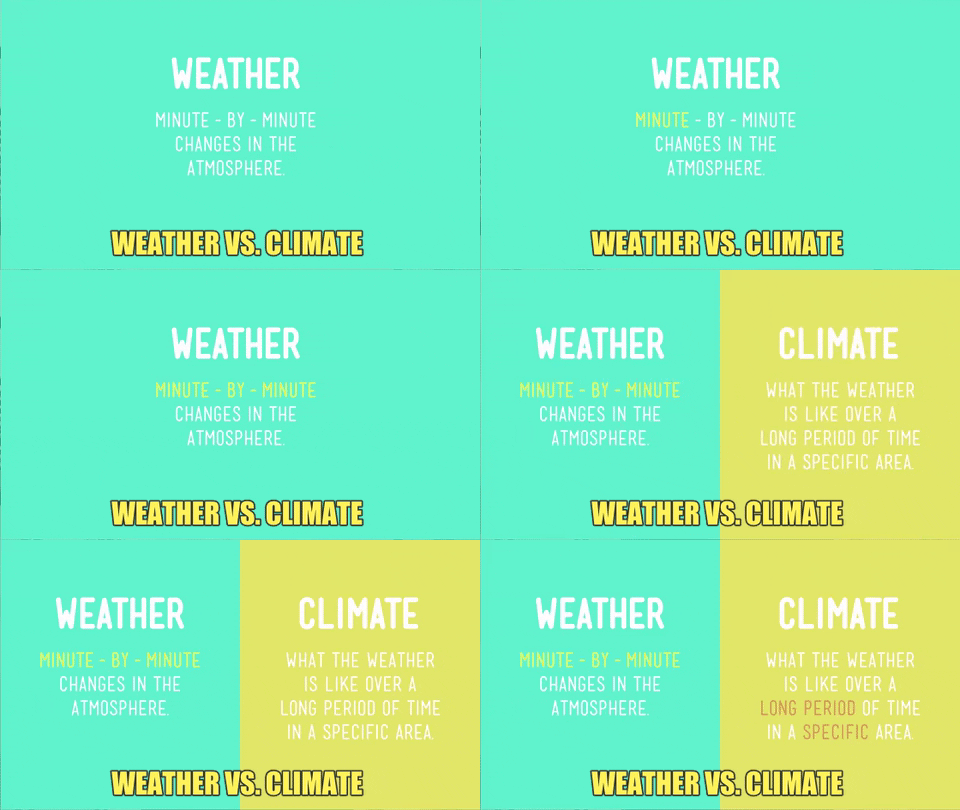
Weather vs. Climate
Weather refers to short term atmospheric conditions while climate is the weather of a specific region averaged over a long period of time. Climate change refers to long-term changes.
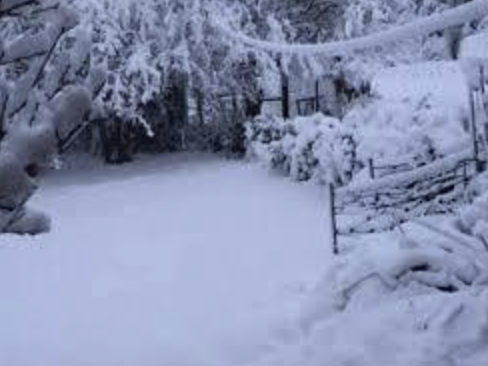
So, for example, it may be 75° degrees and sunny or it could be 20° degrees with heavy snow. That's the weather. Climate is the average of that weather. For example, you can expect snow in the Northeast in January or for it to be hot and humid in the Southeast in July.