AKS 32a - Charter of 1732
star
star
star
star
star
Last updated 2 months ago
37 questions
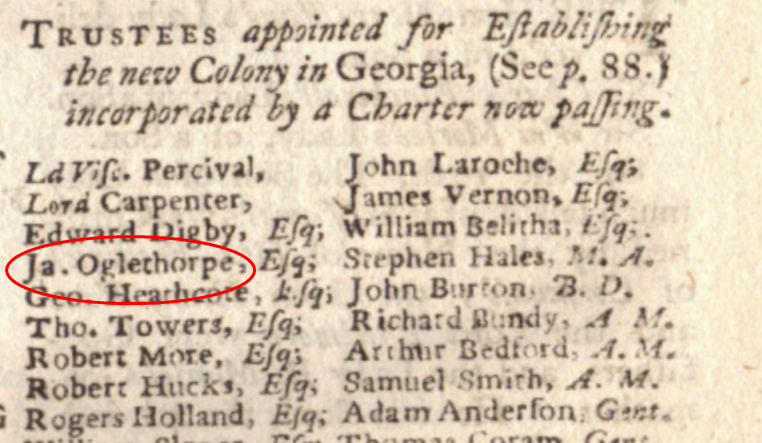
Confrontations over debatable land continued into the 1700s. Although England had abandoned Fort King George, it recognized the need to colonize the area in order to protect the Carolinas. Meanwhile, a young member of Parliament named James Oglethorpe and other reformers were seeking ways to keep England’s working poor from ending up in prison (for owing money). These two strains, combined with the economic motives of the day, led King George II to award 21 men, including Oglethorpe, a charter to settle lands between the Savannah and Altamaha Rivers. A charter is a document granting permission to create a colony (or company) and defining its rights and privileges.
Required
1
Who awarded the charter to James Oglethorpe and others in 1732?
Required
1
Why did James Oglethorpe and his associates want to establish a colony in America?
Required
1
What is a 'charter' in the context of this passage?
Required
1
Where were the lands designated for English colonization by the charter of 1732 located?
Primary Source Documents
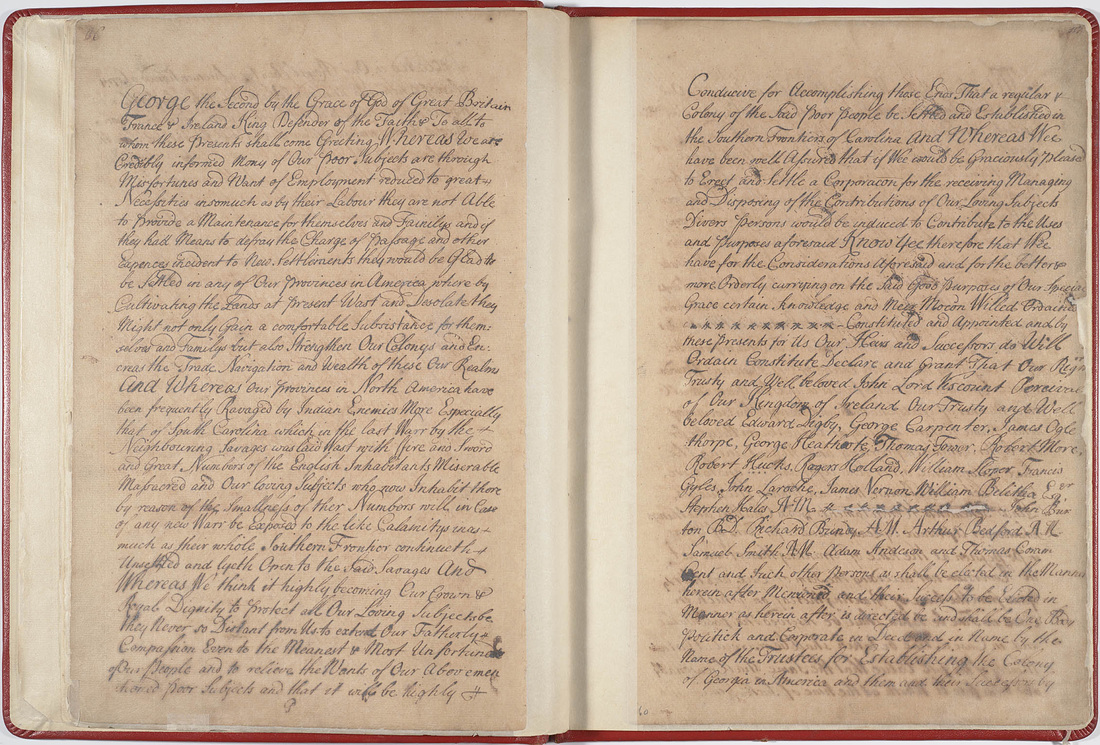
Pictured above is the copy of the Charter of 1732 located in the Georgia Archives. This important legal document, issued by the British government, specified the colony’s boundaries, its form of government, the powers of its officials, and the rights of its settlers.
You can read (you do not have to) the text by clicking here or the following link: https://avalon.law.yale.edu/18th_century/ga01.asp
Required
1
What did the Charter of 1732 from the British government specify for the colony?
Required
1
Where is the copy of the Charter of 1732 located?
Required
1
What form of document was the Charter of 1732?
Required
1
Who issued the Charter of 1732?
Founding the Colony - 3 Reasons
The story of Georgia’s colonization is unique because of the ideas and ideals of the group of men known as the Trustees. A trustee is a person who is given responsibility for acting on behalf of the needs and interests of an organization. Many of the powers granted in Georgia's charter were like the powers granted in other colonial charters, but the Trustees made rules that set Georgia apart from other colonies. They had three exceptional reasons for seeking a charter in the first place.
For Philanthropy
Many people in England could not find a way to support their families, and the prisons were crowded with people who could not find jobs or whose business had failed. James Oglethorpe had led prison reforms that helped to release large numbers of prisoners, but still no jobs were to be found. He wanted to help the "deserving poor, "who were not criminals but were living in poverty due to misfortune. The Trustees felt that hard-working poor people would succeed if given the chance. They wanted to give them a new start by offering jobs, food, protection, and other necessities to start a new life. In return, the settlers would follow the Trustees’ rules. The desire to promote the welfare of others by donations of time, money, or property is called philanthropy. A colony would be a good place to conduct this social experiment. Common belief about Georgia is that it was a colony for debtors (people who owe money), but there is little evidence to support this view. Colonists were selected from hundreds of the poor and unemployed because they were deserving of aid and showed the potential to be good colonists.
For Economics
Another reason the charter gave for founding the colony was economics (the system by which goods and services are produced, sold, and purchased).The Trustees hoped that England’s dependent poor would soon be able to support themselves on small farms, strengthen the colonies, and increase trade. Having never traveled to America, they studied maps and determined that the latitude and climate of Georgia would be suitable for vineyards, which would allow them to make wine; mulberry trees, to feed silkworms that produce silk; and olive trees for olive oil. The colonists would ship these raw materials to England, where they would be turned into finished products and sold for profit. Besides silk and wine, Georgia’s forests could supply lumber and naval stores (products used in shipbuilding).
For Defense
Finally, England wanted Georgia for defense (military protection). King George II’s southernmost colony, South Carolina, was doing well, and the Spanish had noticed. The king wanted to establish a barrier of protection from the Spanish and French. The Georgia Colony could be that buffer. Indeed, Georgia would have to fight off attacks from the Spanish in Florida, the French to the west, and the Indians to the south and west.
So, to review...according to its charter, Georgia had three purposes:
- Philanthropy: (also known as CHARITY). To help relieve poverty and unemployment in Britain. Georgia was seen as a home for the “worthy poor”—particularly those crowding the streets of London.
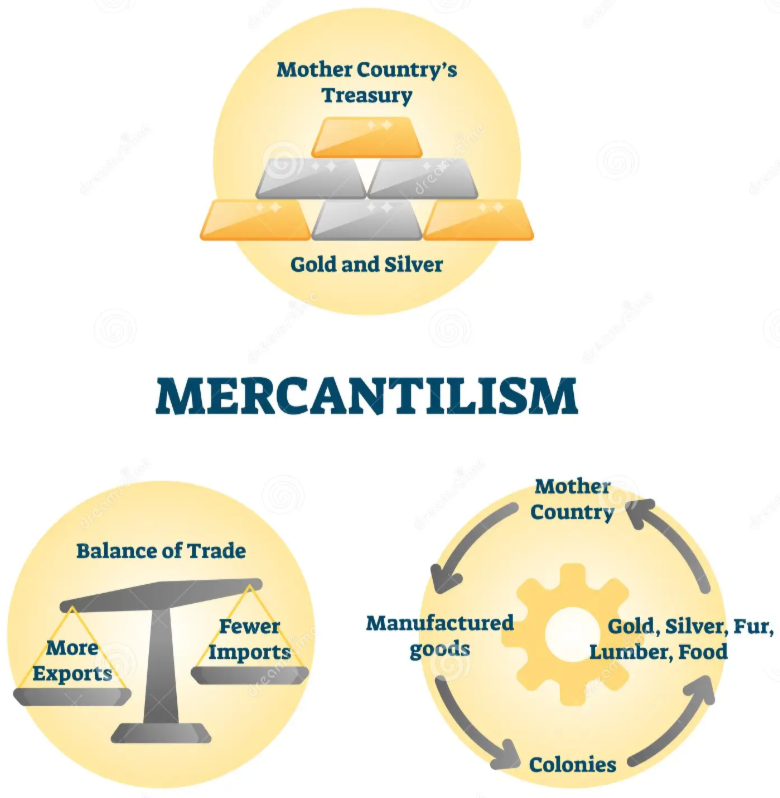
- Economics: To increase Britain’s trade and wealth. Georgia would fit neatly into the mercantile system, providing needed agricultural products while serving as a valuable market for British goods.
- Defense: To provide South Carolina with a buffer against Indian attacks. Although the charter did not refer to the threat of Spanish or French forces, its backers clearly saw Georgia as a buffer against that threat.
Required
1
Who are the 'Trustees' in the context of the Georgia Charter?
Required
1
What is Philanthropy as explained in the Georgia Charter?
Required
1
Which of these were the Trustees hoping to produce in Georgia to strengthen the economy?
Required
1
Why was Georgia needed for 'Defense' according to the Georgia Charter?
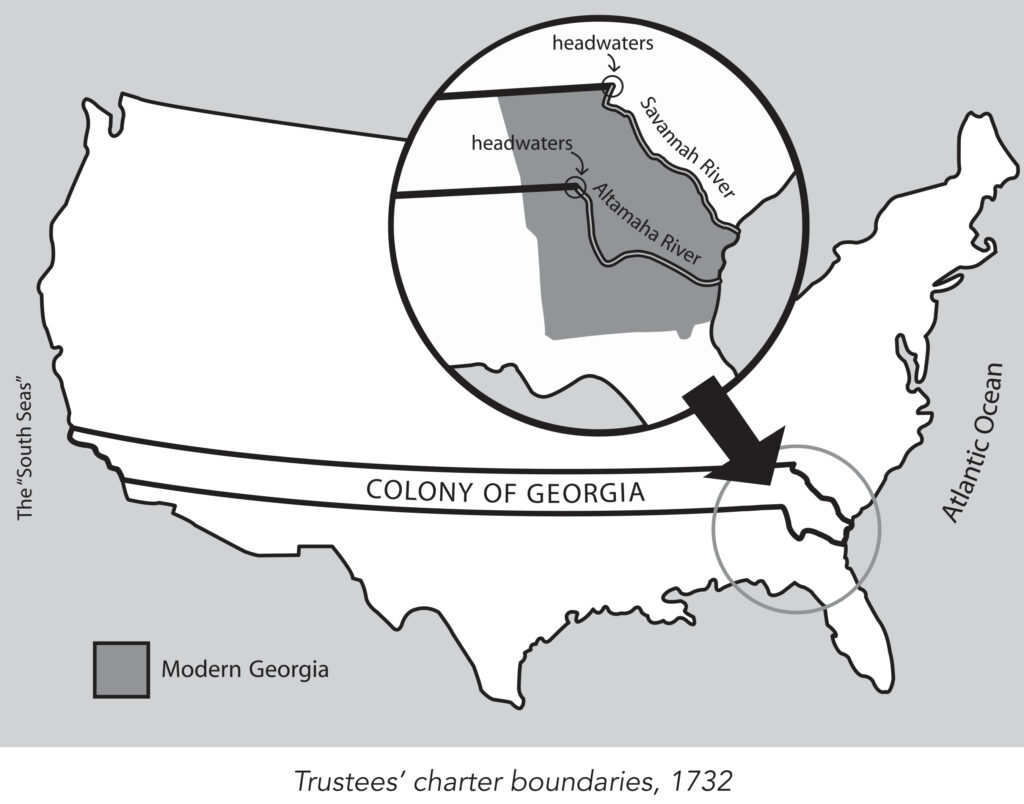
Georgia's boundaries according the Charter of 1732 included all lands north to the Savannah River and south to the Altamaha River. Western boundaries would extend from the headwaters of those two rivers westward to the "south seas" (known today as the Pacific Ocean).
Required
1
Which of the following does the Charter of 1732 describe?
Required
1
What served as the boundaries of Georgia to the north and south according to the Charter of 1732?
Required
1
What location served as Georgia's western boundary according to the Charter of 1732?
The Trustees’ Rules
In 1732, the Trustees learned that the king had granted them a colony between the Savannah and Altamaha Rivers for a period of 21 years. The charter gave them the power to elect their own council, enact laws, grant lands, make peace, raise an army, collect taxes, and oversee trade. The charter excluded Roman Catholics from the colony. This was not just because the king was a Protestant; Catholics were also denied because of the fear that they might act as spies for the Spanish at St. Augustine, Florida.
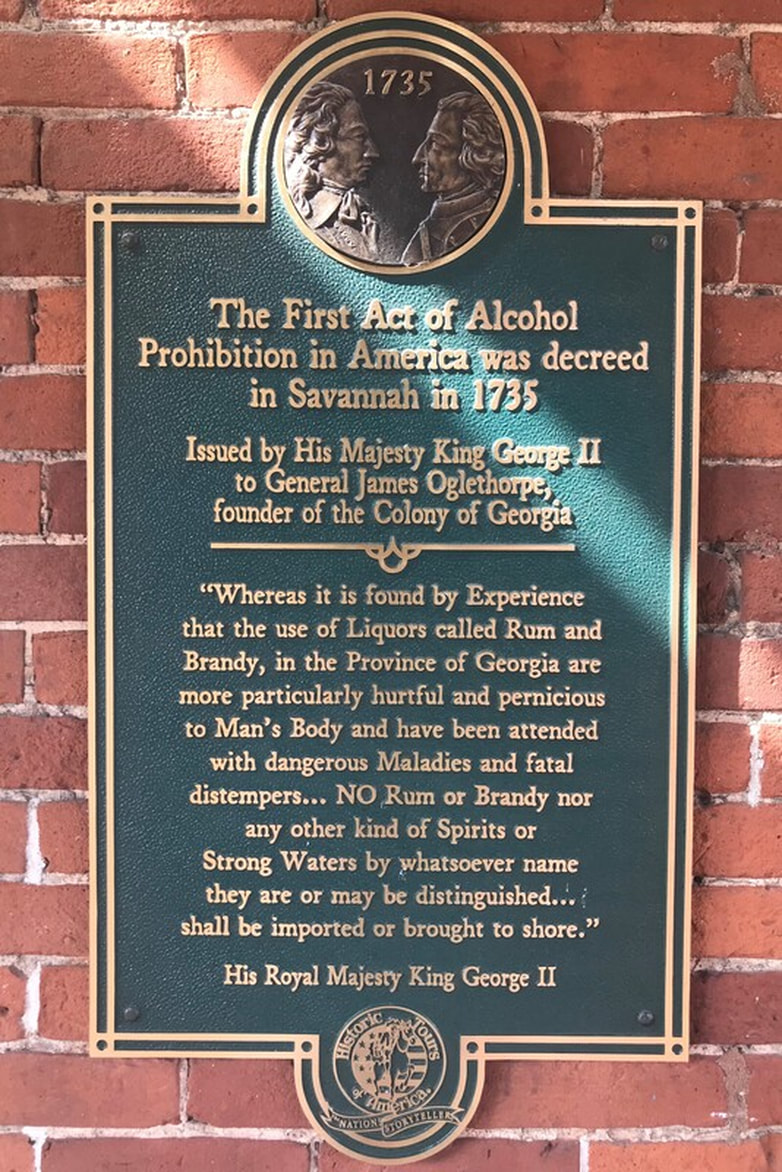
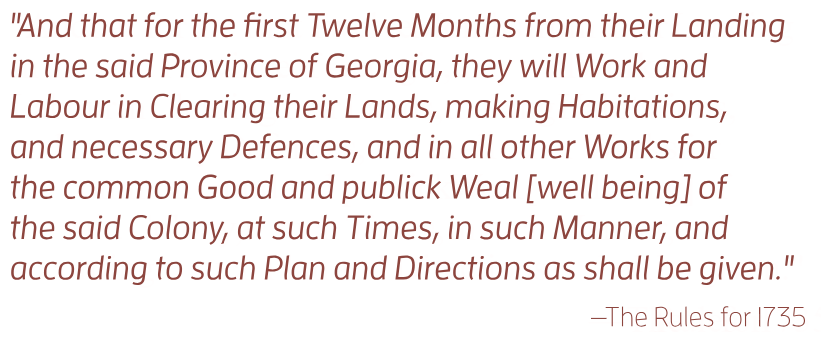
A few years later, the Trustees developed the Rules for 1735. Together with the charter, these laws set the tone for the colony. They excluded lawyers and Jews, though some Jews had already arrived and were allowed to stay. Oglethorpe saw the benefits of allowing Jewish settlers to come, and soon his request was approved. Other laws regulated trade with the Indians and forbade the use of rum. The Trustees believed that without “spirituous liquors, ”people would work harder and the colony would grow faster. Women were not allowed to inherit property, and there was one more important rule.
No Slavery Allowed
The Trustees were adamant that there would be no slavery in the colony. This policy may have had more to do with their social and economic plans than with humane principles against owning other human beings. Although enslaved Africans from South Carolina were hired to clear land and cut down trees, the Trustees envisioned a colony of small farmers who would be self-sufficient in working their family farms. They wanted people to make a comfortable living rather than earn great wealth, so there was no need for large plantations. They wanted to avoid creating a society like they saw in South Carolina, where plantations created a large division between the rich and poor. They also reasoned that the crops they hoped Georgia colonists would produce (grapes, mulberry trees, and olives) did not require the use of slave labor.
Another reason the Trustees opposed slavery was because the Spanish, south of the new colony, had promised freedom to any enslaved person who would help them fight the British. Escaped slaves in nearby Florida posed a threat because they increased the Spanish fighting forces. If the Trustees allowed slavery, they might in fact be helping the Spanish.
The ban on slavery made Georgia unique among the colonies. Georgia was not only the first British colony in America to ban slavery; it was the only one to do so before 1776. For 16 years, slavery was not permitted in the colony.
Provisions, Expectations
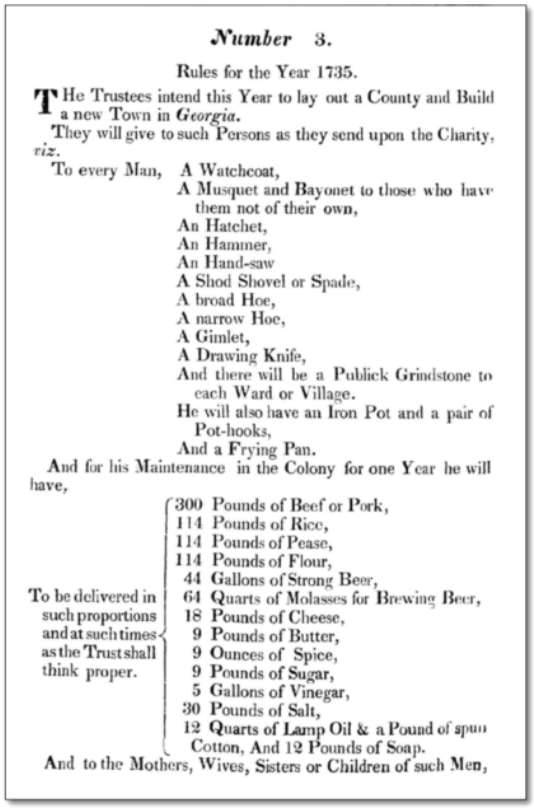
The rules outlined the provisions the Trustees made for the colonists and the requirements they had for them. To help those traveling “on charity” (who were too poor to pay for their passage), they provided a place to live until their ship sailed. When these colonists arrived, they would receive clothing, bedding, weapons, seeds, and tools for one year. They would be given 50 acres of land, which would be rent-free for 10 years. The colonists would not own the land, so they could not sell it or buy more. Each farm would have its owner in residence (living there), providing able-bodied men to defend the colony.
In return, the colonists were required to build houses on their plots of land and plant vineyards, olive trees, and mulberry trees. They had to help construct forts and public buildings, be prepared to defend the colony, and stay for at least three years. All men were required to do military duty.
Who Makes the Laws?
Every other British colony had a representative assembly—a group of people elected to make laws or decisions for the whole colony. Ever since the Pilgrims had written the Mayflower Compact in 1620, the idea of self- government had taken hold in America. A group of free people had agreed to live together under laws they would make for themselves. This meant they did not have to wait for the king or rich lords, thousands of miles away, to make decisions for them. Colonial assemblies became the people’s way of having a say. In Georgia, however, the Trustees made the laws for the colony. Overtime, they have been criticized for not trusting the colonists to govern themselves.
Selecting Settlers
As applications to settle in the new colony poured in, the Trustees began interviewing potential colonists. They wanted people who were healthy, sober, and able to work. No one who had a criminal background or had deserted his family was selected. Those who were not the “starving unemployed poor” and could purchase their passage were known as freeholders. Among those selected were a surgeon, an apothecary (who prepared and sold medicines), a chaplain(religious leader), carpenters, bricklayers, mechanics,
farmers, men skilled in using weapons, and women and children. Because of their journals, we know that several of the early colonists could read and write—skills that were uncommon in the days before public school.
Required
1
Who held the power to make laws in the colony of Georgia in 1732?
Required
1
What was a significant rule of the Trustees for the colony of Georgia?
Required
1
Why were Roman Catholics excluded from the new colony according to the Charter of 1732?
Required
1
Who were the Freeholders in the context of the Georgia colony?
In addition to the Charter of 1732 giving specifics to what the colony would look like and how it would be run, it also spelled out the rules that colonists were expected to follow.
Some of these rules, although good in intent, caused much discontent among the colonists.
Some of these rules included:
1. No slavery.
2. No hard alcohol such as rum,
3. Land must be inherited by a male heir (descendant).
The Trustees had to follow certain rules as well to prevent the potential for impropriety on their part as leaders of the colony. These rules included:
1. Trustees could not own land in the colony.
2. Trustees could not receive a salary from the colony.
3. Trustees could not hold public office in the colony.
Required
1
What was one restriction placed on the colonists according to the Charter of 1732?
Required
1
What was one rule that Trustees had to follow as per the Charter of 1732?
Required
1
What was the rules for inheriting land in the colony?
Required
1
What was a rule that caused discontent among colonists?
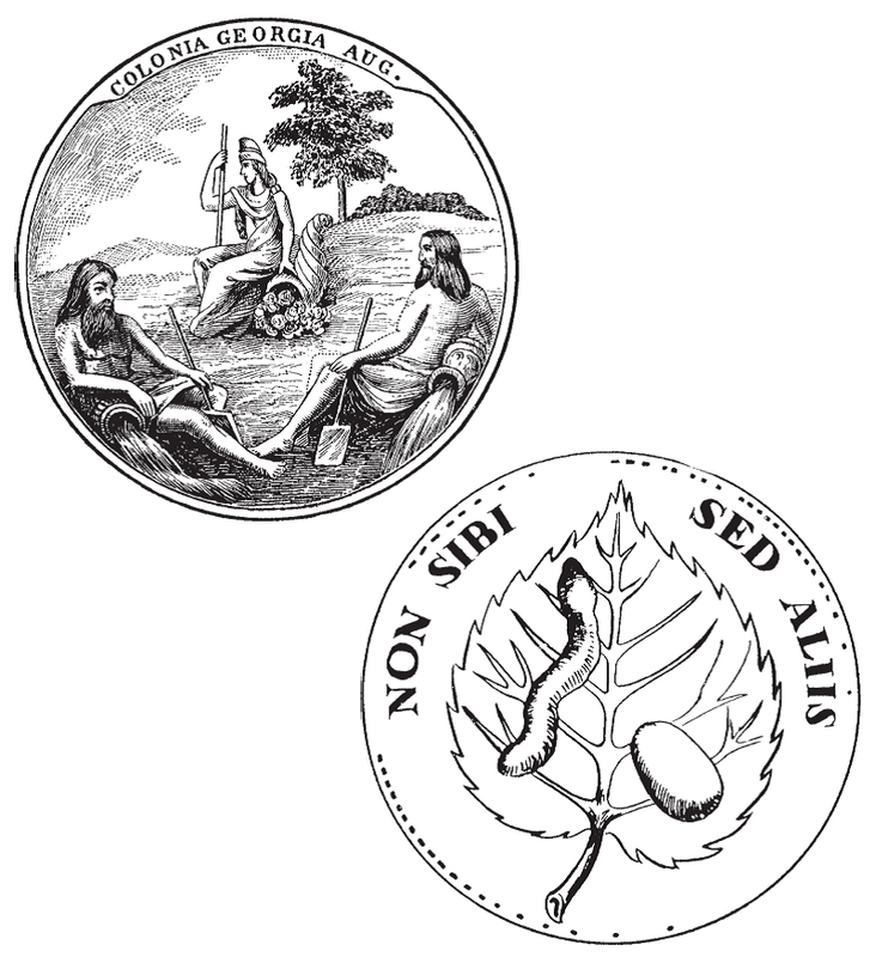
Trustee Seal for the Colony of Georgia:
OBVERSE SIDE (top): Used for legislative acts, deeds, commissions granted by the Trustees.
- The phrase across the top "COLONIA GEORGIA AUG." is Latin for "May the Georgia colony prosper." The "aug." is an abbreviation for augeat, a word meaning to prosper, increase, or advance.
- The two urns from which water is flowing represents the Altamaha and Savannah rivers, the northern and southern boundaries of the colony.
- The two men with shovels possibly represent agriculture and the fact that every man was to work their own land.
- Behind them is a woman in a liberty cap on her head. She symbolizes the spirit of the colony. The use of the liberty cap traces back to ancient times when liberated slaves were given this type of cap as proof of their freedom.
- The woman's left hand rests on a cornucopia, or horn of plenty, with food pouring out, representing Georgia's prosperity.
REVERSE SIDE (bottom): Used for grants, orders, and certificates of the Trustees.
- Shows a silkworm and cocoon on a mulberry leaf, the food of silkworms. This is symbolic of the Trustees' desire to manufacture goods in the new colony for the mercantile system.
- The phrase "NON SIBI, SED ALLIS" is Latin for "Not for themselves, but others." This was the Trustees' motto which signified their charitable work-- they were not allowed to own land or profit in any way from their colony.
Required
1
What does the Latin phrase 'COLONIA GEORGIA AUG.' on the OBVERSE SIDE mean?
Required
1
What do the two urns with flowing water on the OBVERSE SIDE symbolize?
Required
1
What does the phrase 'NON SIBI, SED ALLIS' on the REVERSE SIDE represent?
Required
1
Why is there a silkworm and cocoon on a mulberry leaf on the REVERSE SIDE?
Setting Sail
James Oglethorpe was the only Trustee who actually came to Georgia. Entrusted to organize and oversee all aspects of settling the colony, he accompanied the first group of colonists. The plan was to land at Charles Town, South Carolina, and make their way to Georgia from there.
Since Georgia was settled later than the other colonies, the Trustees were able to learn from earlier settlers' mistakes and hardships. They knew that settlements had failed due to sickness, famine, enemies, and desertion, so they tried to make sure Georgia avoided these problems from the start. In November 1732, Oglethorpe and 114 settlers, including 35 families, set sail on the Anne. The ship was not crowded, and it was cleaned on a regular basis. During the voyage, men were instructed in building, planting, and military drills. Each man was considered a soldier as well as a planter. Oglethorpe’s leadership gave the colonists confidence and inspired respect. Two children already suffering from starvation were the only fatalities.
Required
1
Who was entrusted to organize and oversee settling in Georgia?
Required
1
What were the settlers instructed in during the voyage?
Required
1
Why was Georgia able to avoid some problems that earlier colonies faced?
Required
1
What was the role of each man in the new Georgia colony?
Required
1
Why do you think Oglethorpe was chosen to lead the colony? What kind of experience did he have that would make him a good leader for the Georgia colony?
Required
1
What types of issues did Oglethorpe take interest in while working in the British government?
Mercantilism
One of the driving forces behind the competition for colonies was the belief in mercantilism. According to this economic theory, colonies existed to bring profit to the mother country. They did this by supplying raw materials that the mother country lacked, such as furs, timber, and minerals. Manufacturers in Europe would turn these raw materials into finished products, such as clothing, tools, silverware, and furniture. Then, merchants would sell those products back to the colonies for profit. Often this system meant the colonists exploited the natural resources in the colonies. A nation that embraced mercantilism would become self-sufficient; it would not need to rely on outside countries for raw materials or finished products. All trade would stay within the empire, between the mother country and her colonies. An empire could then use its wealth to build a powerful army and navy to conquer its rivals and protect its colonies.
Required
1
What was the purpose of colonies according to the theory of mercantilism?
Required
1
How did the colonies contribute to the mercantilism system?
Required
1
According to mercantilism, what would a self-sufficient nation not need to rely on?
Required
1
What could an empire do with its wealth gained through mercantilism?