Log in
Sign up for FREE
arrow_back
Library
Chapter 13 Promoting Safety and Preventing Injuries
By Robert Butts
star
star
star
star
star
Share
share
Last updated 8 days ago
99 questions
Add this activity
Required
10
Required
10
Required
10
zoom_in
zoom_in
zoom_in
10
Question 1
1.
How can you protect yourself at home, in the community, and online?
zoom_in
zoom_in
zoom_in
zoom_in
10
10
10
10
zoom_in
10
10
10
10
zoom_in
10
10
10
10
zoom_in
10
10
10
10
zoom_in
zoom_in
10
10
10
10
zoom_in
zoom_in
10
10
10
10
zoom_in
10
10
10
10
zoom_in
zoom_in
10
10
10
10
zoom_in
zoom_in
zoom_in
zoom_in
zoom_in
zoom_in
Required
10
Required
10
Required
10
Required
10
zoom_in
Required
10
Required
10
Required
10
Required
10
zoom_in
Required
10
Required
10
Required
10
Required
10
zoom_in
zoom_in
Required
10
Required
10
Required
10
Required
10
zoom_in
Required
10
Required
10
Required
10
Required
10
zoom_in
Required
10
Required
10
Required
10
Required
10
zoom_in
zoom_in
zoom_in
Required
10
Required
10
Required
10
Required
10
zoom_in
Required
10
Required
10
Required
10
Required
10
zoom_in
zoom_in
Question 66
66.
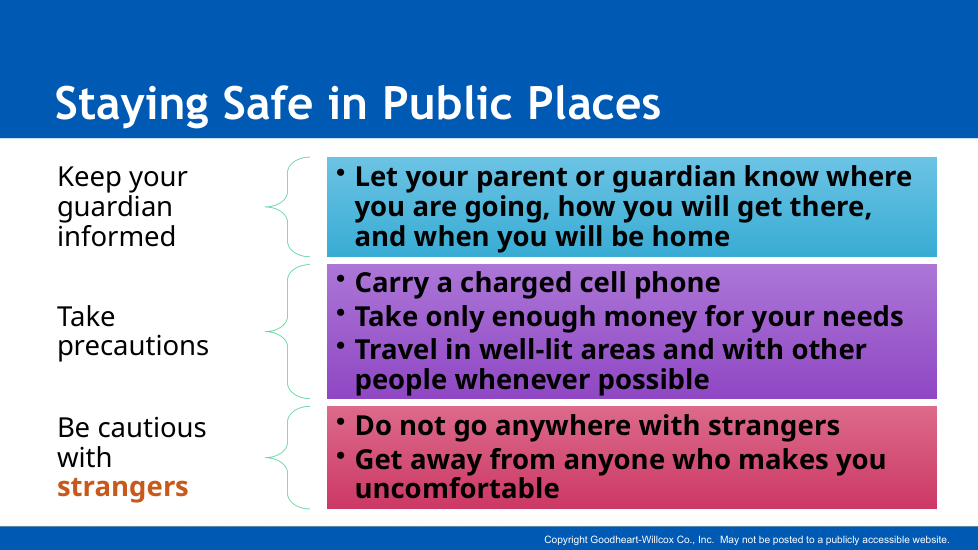
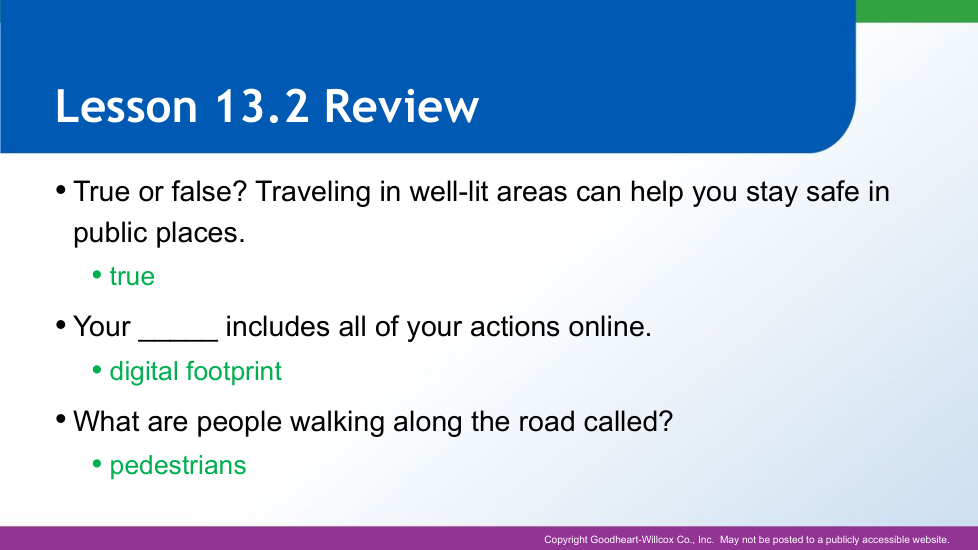
•True or false? Traveling in well-lit areas can help you stay safe in public places.
True
False
Question 67
67.
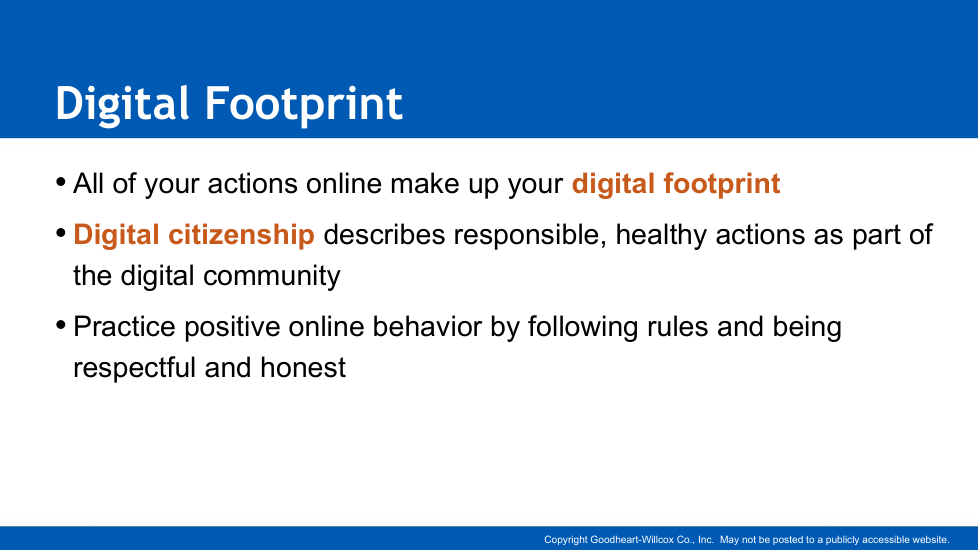
Your _______ includes all of your actions online.
Question 68
68.
What are people walking along the road called?
zoom_in
zoom_in
zoom_in
zoom_in
Required
10
Required
10
Required
10
Required
10
zoom_in
Required
10
Required
10
Required
10
Required
10
zoom_in
Required
10
Required
10
Required
10
Required
10
zoom_in
zoom_in
zoom_in
Required
10
Required
10
Required
10
Required
10
zoom_in
Required
10
Required
10
Required
10
Required
10
zoom_in
Required
10
Required
10
Required
10
zoom_in
Required
10
Required
10
Required
10
Required
10
zoom_in
zoom_in
zoom_in
Required
10
Required
10
Required
10
Required
10
zoom_in
zoom_in
zoom_in
Question 2
2.
What are safety practices that can prevent something bad from happening?
precautions
measures
actions
prevention
Question 3
3.
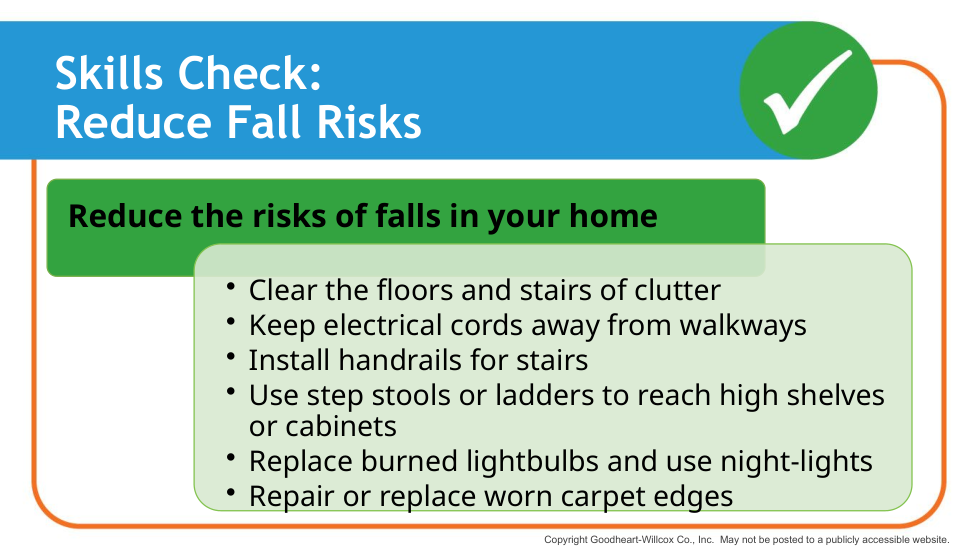
What can families do to prevent falling, poisoning, and fires?
ignore dangers
increase risks
avoid living safely
take precautions
Question 4
4.
How can families protect against emergencies in the home?
neglect hazards
invite accidents
ignore safety
take precautions
Question 5
5.
What term refers to measures that prevent dangerous situations?
negligence
risks
precautions
warnings
Question 6
6.
Which safety measure is recommended to prevent tripping hazards?
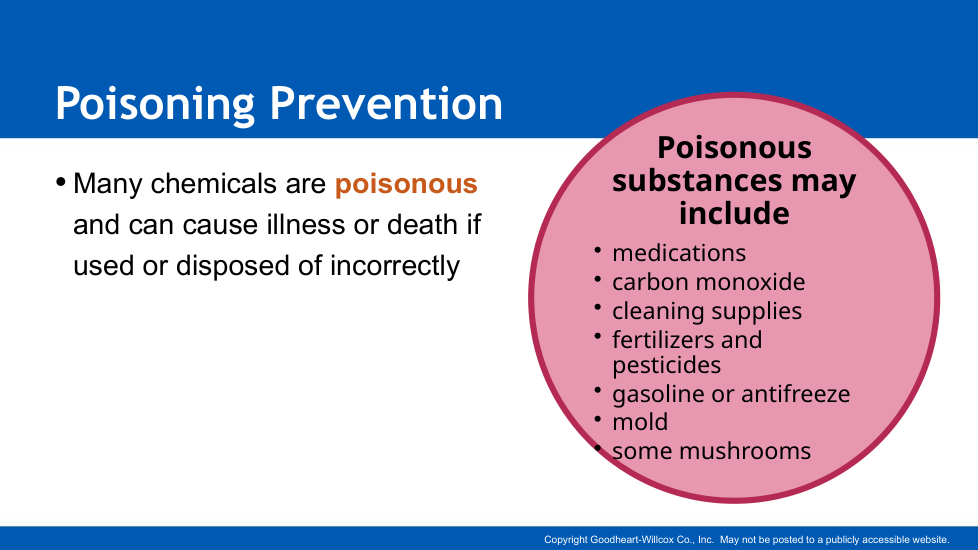
Always leaving items on the floor
Clearing floors and stairs of clutter
Using more night-lights
Ignoring worn carpet edges
Question 7
7.
What is a safe way to reach high shelves?
Jumping to reach
Having cluttered walkways
Stacking objects unsafely
Using step stools or ladders
Question 8
8.
How can one improve stair safety?
Avoiding night-lights
Installing handrails for stairs
Placing items on the stairs
Removing the handrails
Question 9
9.
Which is a recommended action for preventing falls at night?
Replacing burned lightbulbs and using night-lights
Using extension cords
Keeping all lights off
Installing slippery carpet
Question 10
10.
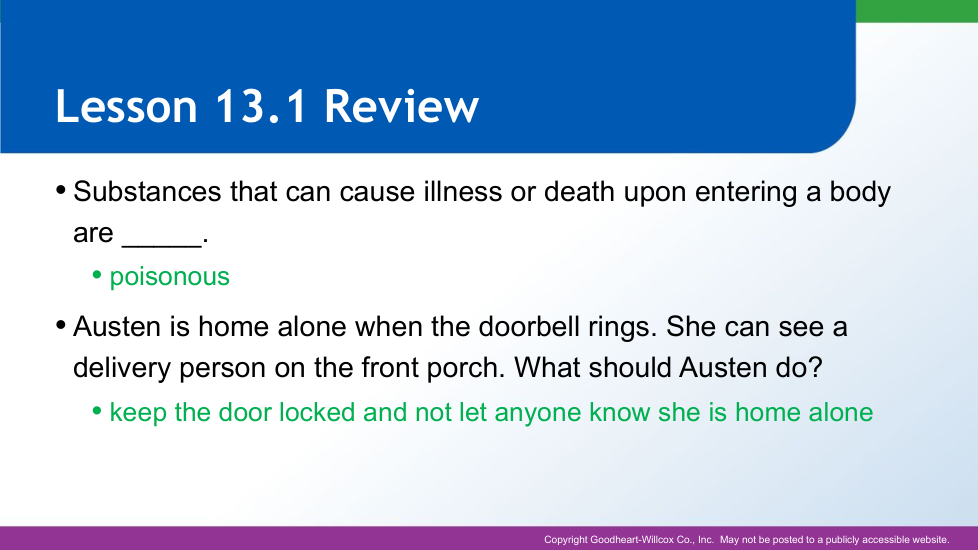
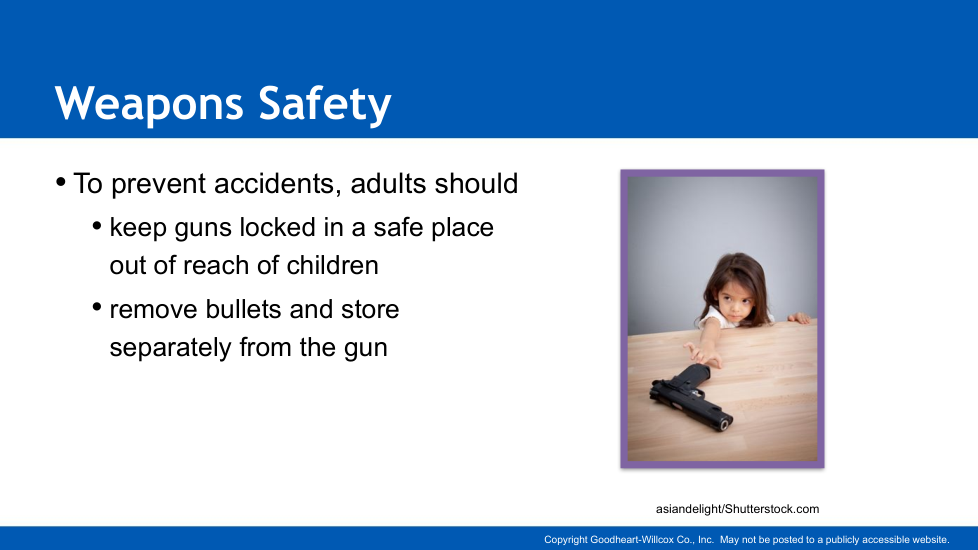
Which of the following can be considered poisonous substances?
Fruit juices
Water
Blank paper
Cleaning supplies
Question 11
11.
What type of chemicals can cause illness or death?
Cotton clothing
Fresh fruits
Sunlight
Pesticides
Question 12
12.
Which of the following is a potential poisonous chemical?
Sunscreen
Flowers
Wind
Antifreeze
Question 13
13.
What kind of substances may include poisonous elements?
Love letters
Medications
Christmas lights
Teddy bears
Question 14
14.
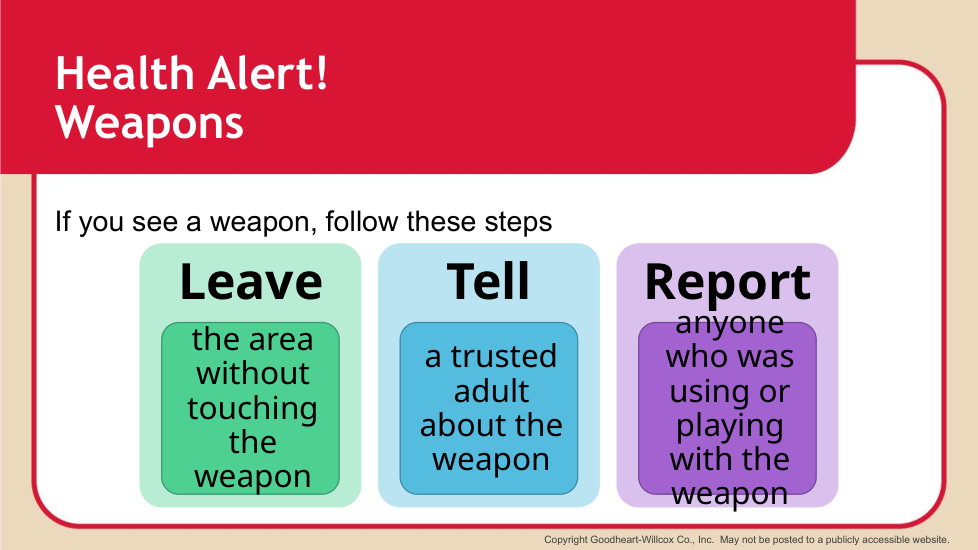
Where is a safe place to keep guns to prevent accidents?
On a high shelf
A safe in the house
Under the bed
In a backpack
Question 15
15.
What should you do before storing a gun?
Clean the gun
Load the gun
Lock the gun
Remove bullets
Question 16
16.
How far should guns be kept out of reach of children?
Out of arm's reach
At eye level
Within easy reach
At shoulder level
Question 17
17.
Why is storing bullets separately important for safety?
Protects bullets
Keeps bullets fresh
Saves space
Prevents accidental firing
Question 18
18.
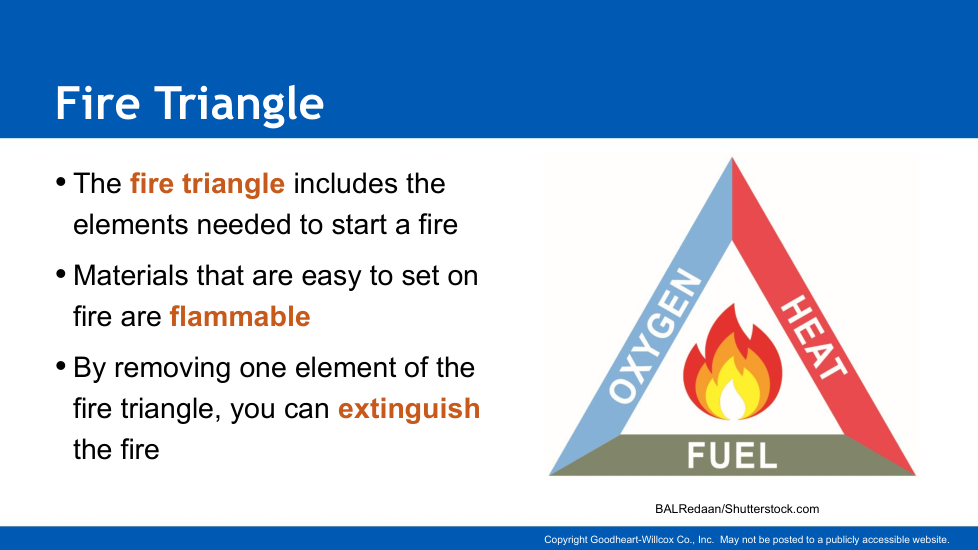
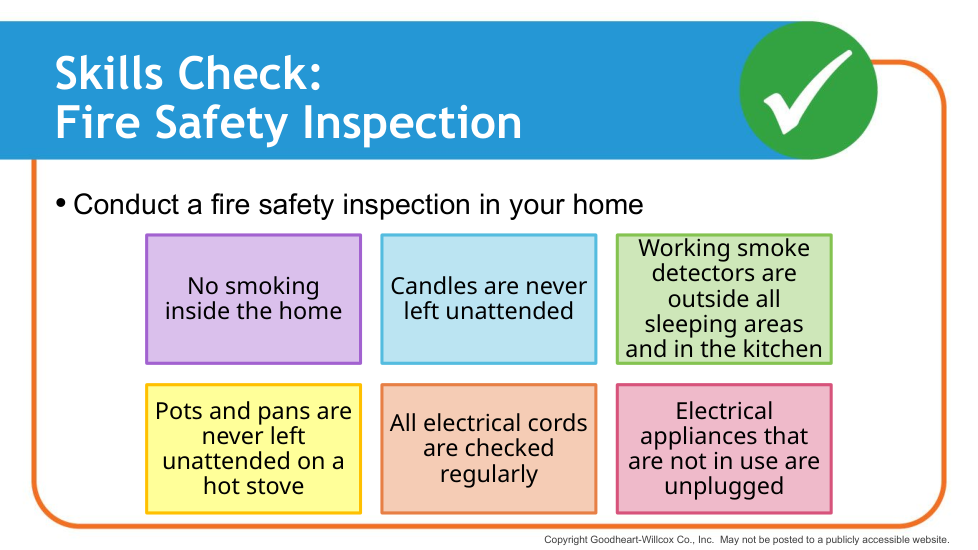
Which element is part of the fire triangle?
Hydrogen
Nitrogen
Oxygen
Carbon dioxide
Question 19
19.
What materials are prone to catching fire easily?
Transparent
Waterproof
Flammable
Elastic
Question 20
20.
How can a fire be extinguished by removing an element?
Heating
Covering
Lighting
Spreading
Question 21
21.
Which element can be taken away to stop a fire?
Fuel
Heat
Smoke
Light
Question 22
22.
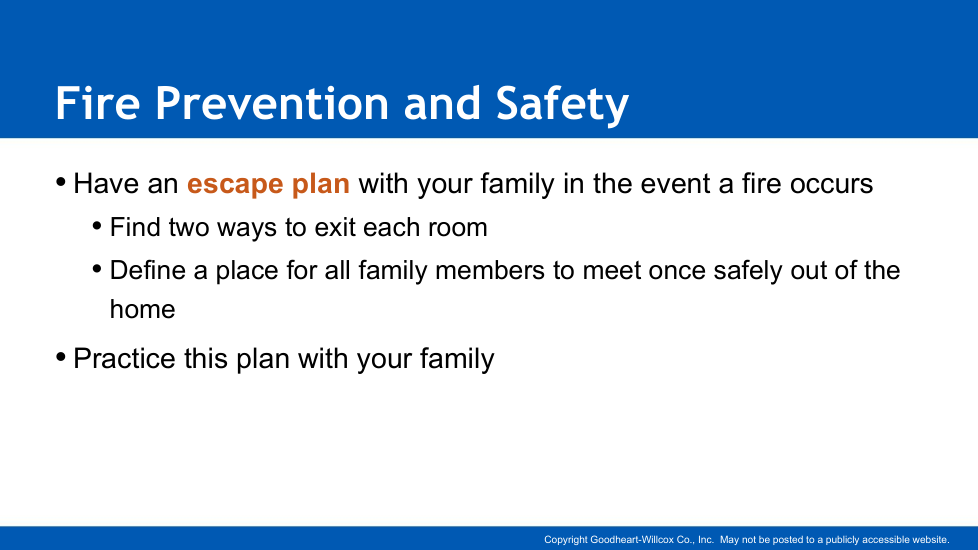
What is an important aspect of having an escape plan?
Remembering to leave valuables behind
Creating a plan only for the children
Using any door to exit
Knowing two ways out of each room
Question 23
23.
Where should all family members meet after safely exiting?
In front of the garage doors
Designated meeting place outside the home
At the nearest neighbor's house
In a random location down the street
Question 24
24.
Why should you practice the fire escape plan with your family?
Just to pass the time
To create more panic
To ensure everyone knows what to do
To impress the neighbors
Question 25
25.
How many ways should you find to exit each room?
Only one
Five
Three
Two
Question 26
26.
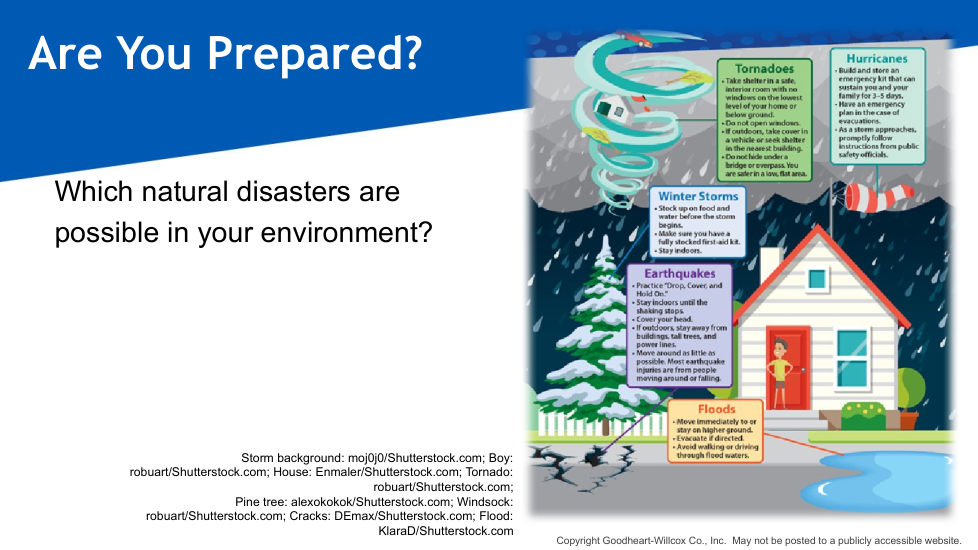
Why is having emergency preparedness important for families' safety?
To test bravery
To stay safe during unexpected events
To increase insurance costs
To cause panic
Question 27
27.
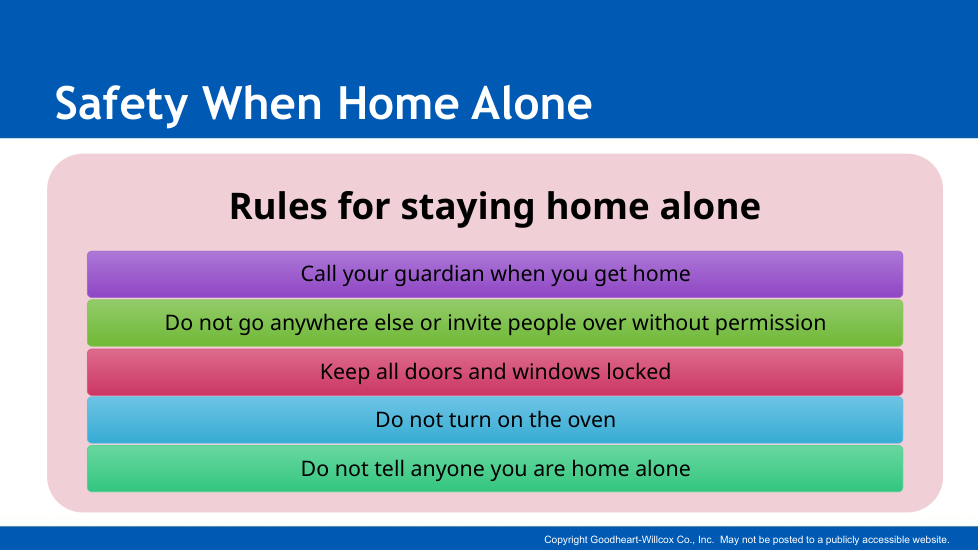
What are examples of emergencies families may experience?
Sports events, movie nights, picnics
Natural disasters like earthquakes
Celebrations, vacations, daily routines
Shopping trips, family gatherings
Question 28
28.
Besides natural disasters, what are other possible emergencies?
Circus shows and parades
Power failure and landslides
Sports events and concerts
Birthday parties and weddings
Question 29
29.
What types of emergencies are included in the examples provided?
Flower gardens and bakeries
Camping trips and picnics
Snowstorms and rainbows
Wildfires and terrorism
Question 30
30.
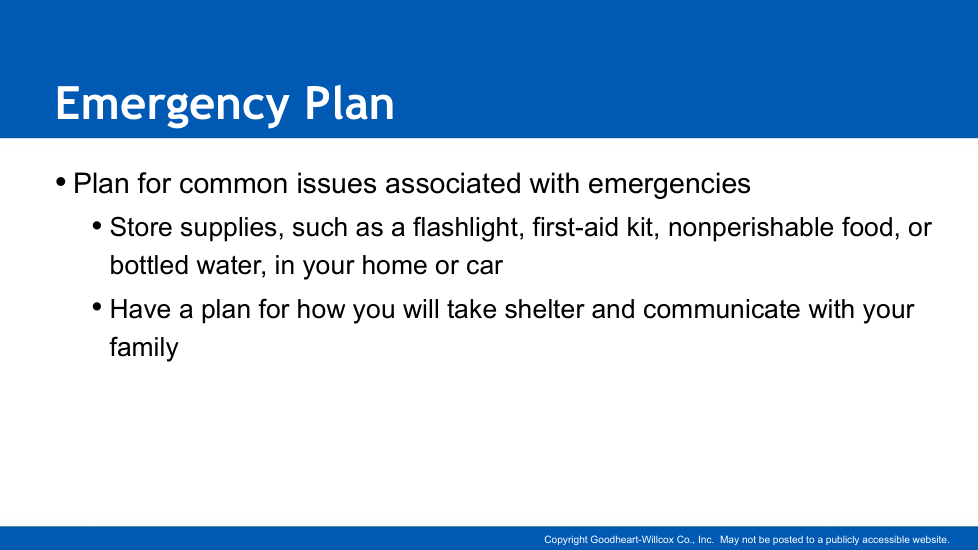
What should you store in your home or car for emergencies?
Electronics, plants, perishable food, electronics
Flashlight, first-aid kit, food, water
Tools, candles, pets, dirty laundry
Blankets, books, toys, clothes
Question 31
31.
Why is it important to have a plan for taking shelter?
To save money on rent
To get more exercise
Stay safe during emergencies
To redecorate your home
Question 32
32.
What is a common issue associated with emergencies?
Communication breakdown
Unlimited resources
Too much communication
Not enough sleep
Question 33
33.
What should you do to communicate with your family during emergencies?
Send a carrier pigeon
Yell loudly
Have a communication plan
Ignore them completely
Question 34
34.
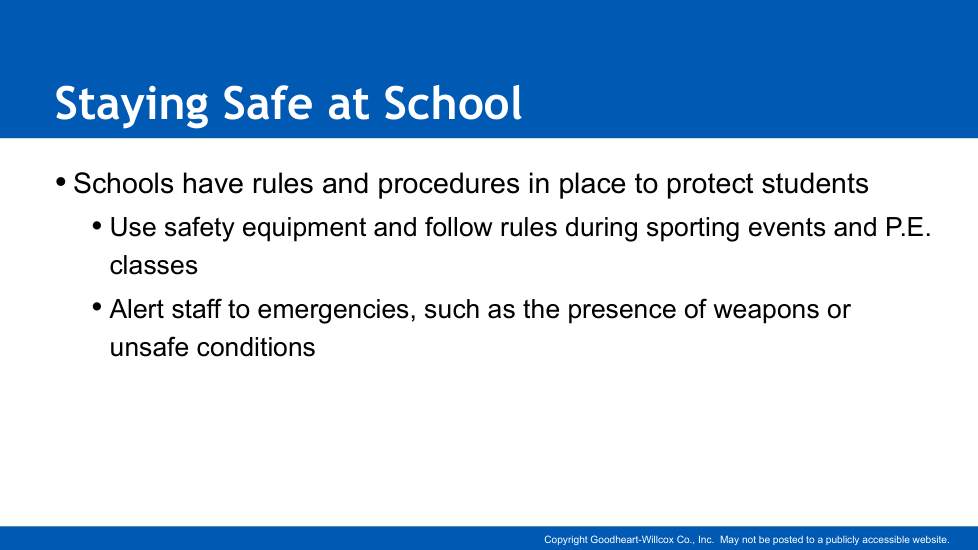
What should students do to protect themselves in sports?
Not wear protective gear
Use safety equipment
Ignore rules
Play recklessly
Question 35
35.
How can students help prevent injuries during P.E. classes?
Follow rules
Compete unsafely
Skip warm-up
Disobey teacher
Question 36
36.
Why is it important to alert staff to emergencies?
To ensure safety
Solve problems alone
Avoid responsibility
Cause panic
Question 37
37.
Why should students report the presence of weapons at school?
Use the weapon
Get attention
To protect others
Avoid punishment
Question 38
38.
Why is it important to carry a charged cell phone?
To chat with friends
To take selfies
To play games
To call for help if needed
Question 39
39.
What should you do if someone makes you uncomfortable?
Ignore your feelings
Start a conversation
Get away from them
Stay with them
Question 40
40.
What information should you share with your parent or guardian?
Your friend's phone number
What you'll eat
Where you are going and when you'll be home
Your favorite color
Question 41
41.
Why is it safer to travel with other people?
To show off
To take photos together
To chat with them
Safety in numbers
Question 42
42.
What does digital citizenship refer to?
Sharing passwords
Responsible online actions
Playing video games
Posting mean comments
Question 43
43.
How can you promote positive online behavior?
Ignoring others
Being respectful and honest
Creating fake accounts
Spreading rumors
Question 44
44.
What is a digital footprint made up of?
Only school work
Offline activities
Watching TV shows
All online actions
Question 45
45.
Why is it important to follow online rules?
Promote safety and prevent injuries
Avoid homework
Show off to friends
Get more likes
Question 46
46.
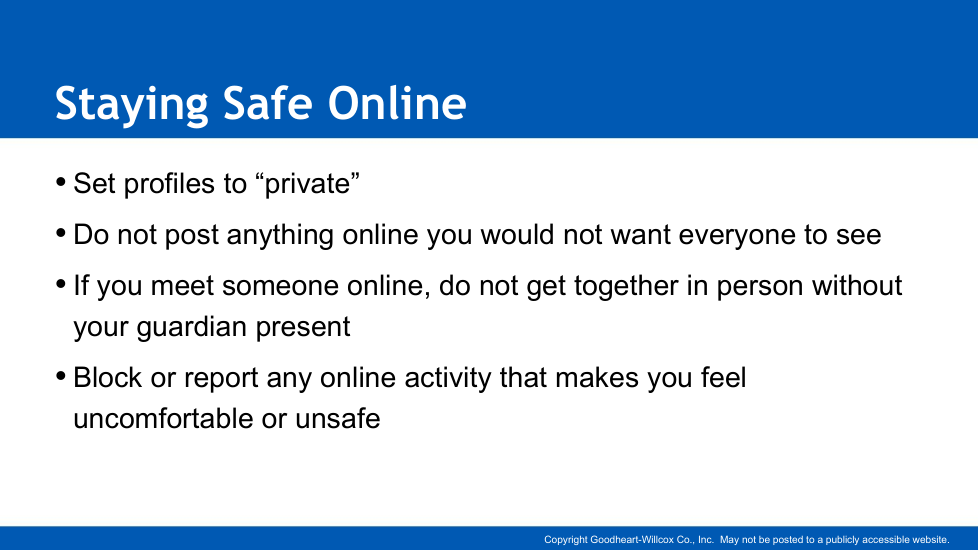
What should you do if you feel uncomfortable with online activity?
Share personal info
Engage more
Block or report the activity
Ignore it
Question 47
47.
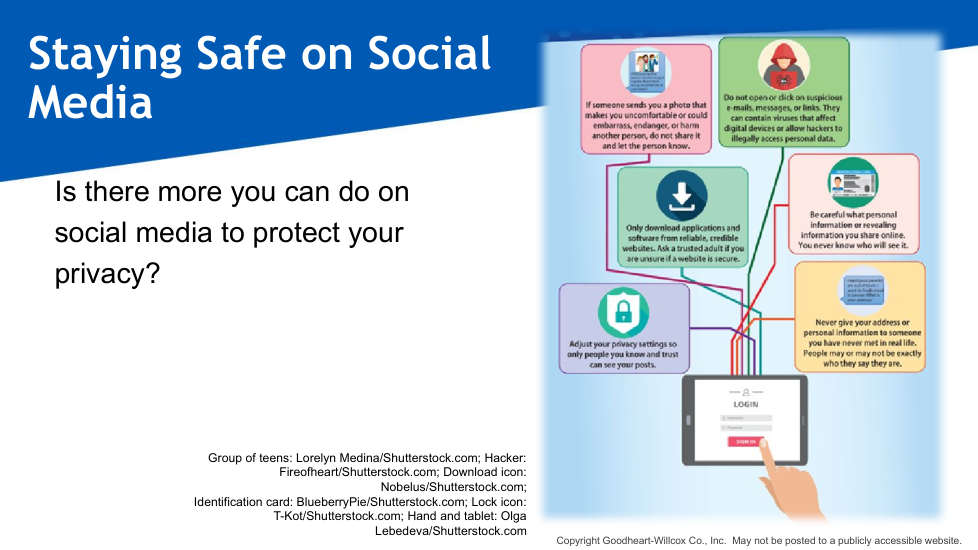
What is the importance of setting social media profiles to private?
Sharing more
Attracting attention
Protecting your privacy
Gaining followers
Question 48
48.
When meeting someone from online, what should you ensure?
Going to a party
Meeting alone
Having a pet
Guardian's presence
Question 49
49.
What is the key principle when deciding what to share online?
Be mysterious
Tell secrets
Share everything
Only share what's safe
Question 50
50.
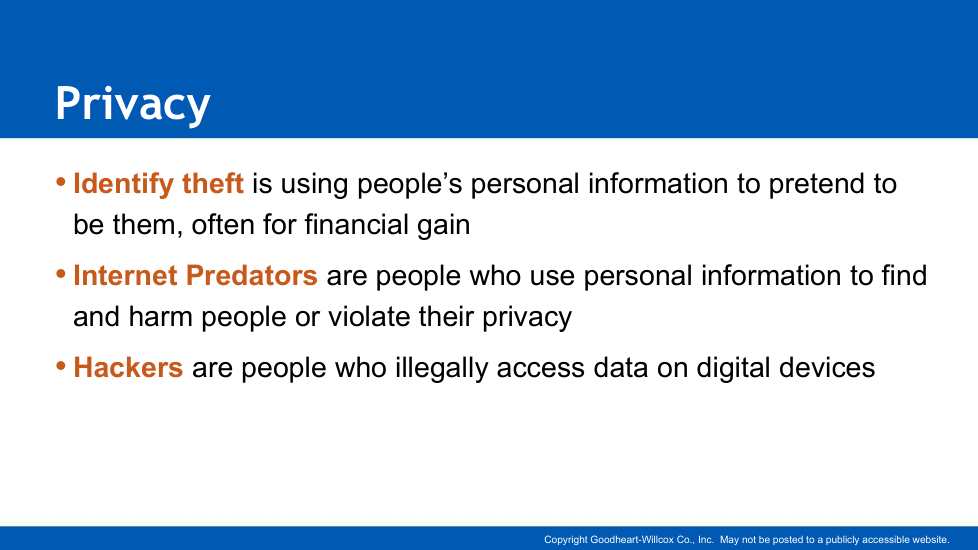
What is the definition of identity theft?
Checking social media profiles
Using personal information to pretend to be someone else
Sharing passwords with family
Sending emails to friends
Question 51
51.
Who are Internet Predators?
Online shopping enthusiasts
Social media influencers
People who harm others using personal data
Data encryption experts
Question 52
52.
What do hackers do?
Illegally access data on digital devices
Teach cybersecurity courses
Repair electronic devices
Create software for businesses
Question 53
53.
How can we prevent identity theft?
Use same password for all accounts
Protect personal information and use secure passwords
Keep personal information public
Share information online freely
Question 54
54.
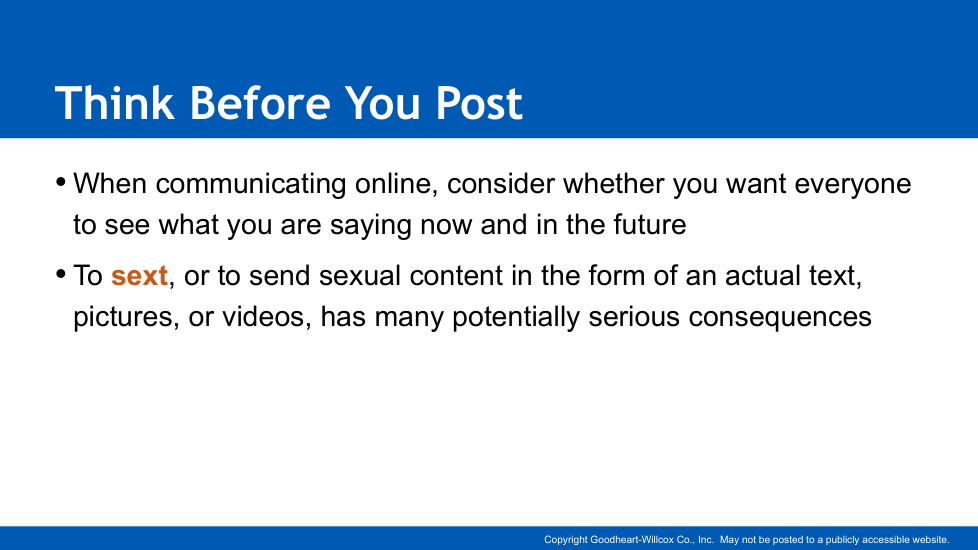
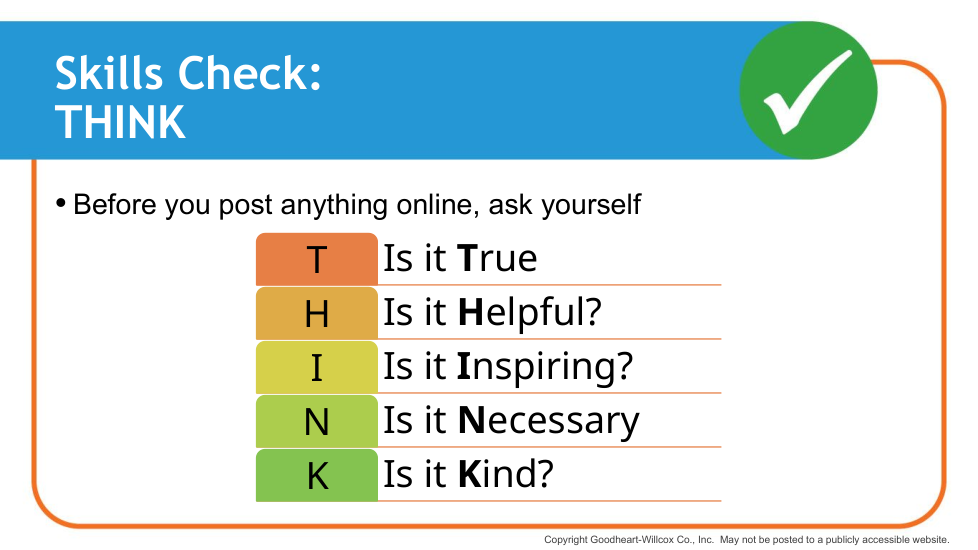
Why is it important to think before posting online?
To share personal information
To gain more followers
To consider if it's appropriate for everyone to see.
To increase likes
Question 55
55.
What are some potential consequences of sexting?
Enhanced self-esteem
Legal issues, emotional harm, social consequences.
Improved relationships
Increased popularity
Question 56
56.
How can you protect your privacy online?
Sharing passwords with friends
Replying to unknown messages
Posting personal details publicly
By setting strict privacy settings on social media accounts.
Question 57
57.
Why should you report any online bullying?
To stop the harmful behavior and seek help.
To gain popularity
To retaliate on your own
To keep it a secret
Question 58
58.
What should you do to stay safe while biking?
Ride with no shoes
Wear a helmet
Ignore traffic lights
Bike close to traffic
Question 59
59.
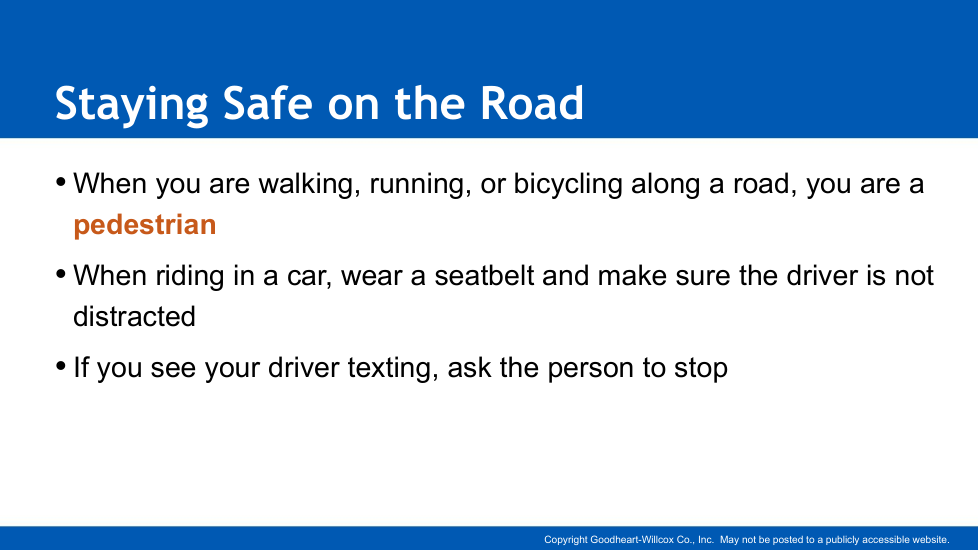
Why is it important to wear a seatbelt in a car?
To hear music better
To play with it
To stay safe in case of a crash
To look cool
Question 60
60.
What should you do if the driver is texting?
Take a selfie
Join them in texting
Ask them to stop
Scream and cover eyes
Question 61
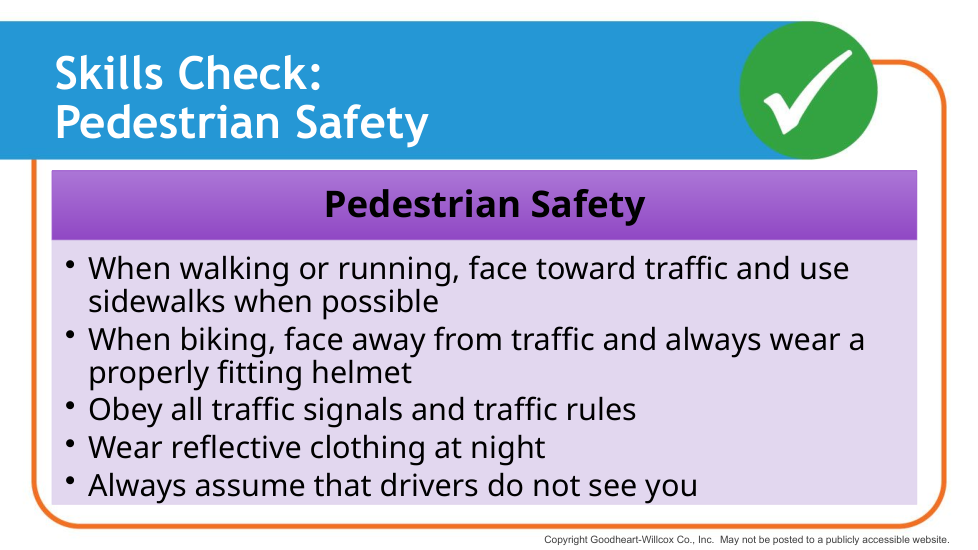
61.
When are you considered a pedestrian?
In a parked car
On a bike lane
In a stationary bus
Walking on a road
Question 62
62.
When walking or running, which direction should you face?
Backwards
Away from traffic
Toward traffic
Sideways
Question 63
63.
What should you wear when biking for safety?
Properly fitting helmet
Hat
Headphones
Sunglasses
Question 64
64.
What should you do at night for visibility?
Wear reflective clothing
Wear all black
No need for reflective gear
Use dark colors
Question 65
65.
What should you always assume about drivers?
They don't see you
They see you clearly
They are looking out for you
They are your friends
Question 69
69.
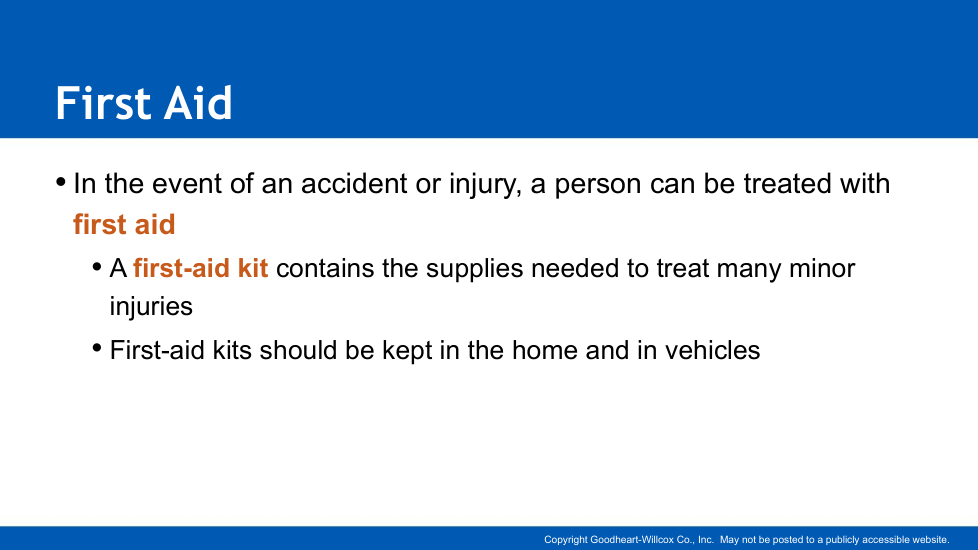
Why is it important to have a first-aid kit?
To play with
To make crafts
To treat minor injuries
To impress friends
Question 70
70.
Where should a first-aid kit be kept?
In the garden
Home and vehicles
At school
In the fridge
Question 71
71.
What is the purpose of first aid in an emergency?
Call a friend
Take a break
Ignore the situation
Provide immediate care
Question 72
72.
When should you use the supplies in a first-aid kit?
During accidents
At a party
At bedtime
While watching TV
Question 73
73.
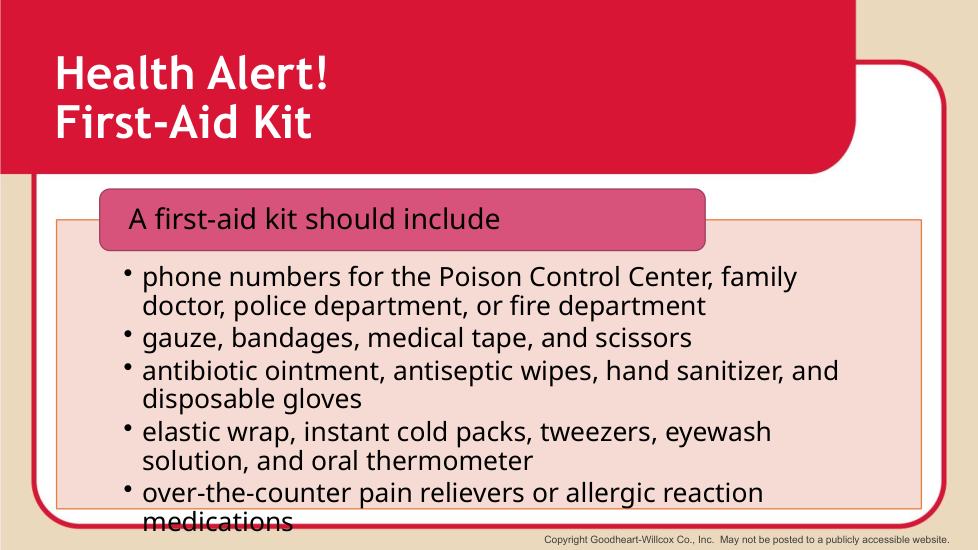
What should be included in a first-aid kit for emergencies?
antibiotic ointment and hand sanitizer
phone numbers for emergency services
elastic wrap and tweezers
gauze, bandages, medical tape, and scissors
Question 74
74.
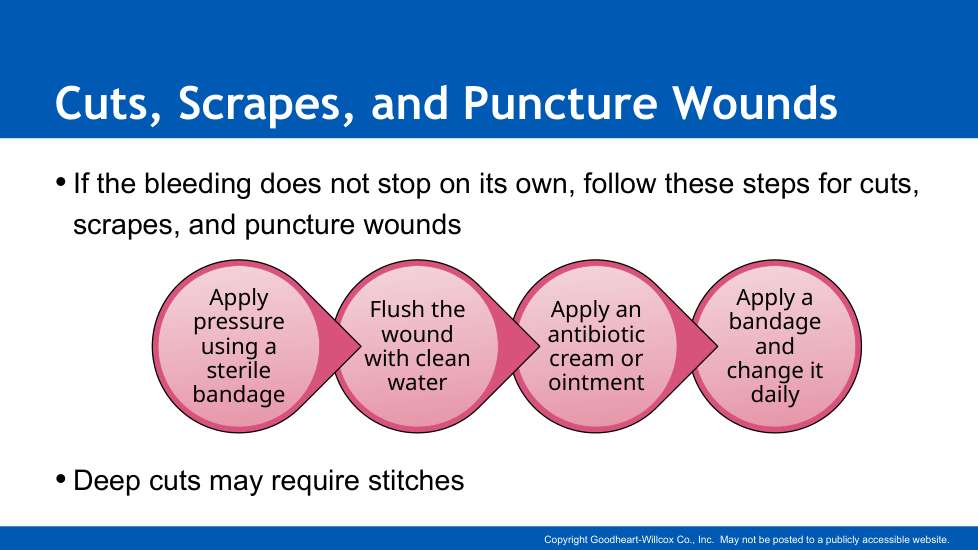
Which items are essential in a first-aid kit for cuts?
antibiotic ointment, antiseptic wipes, disposable gloves
hand sanitizer and oral thermometer
elastic wrap and cold packs
gauze and medical tape
Question 75
75.
Which supplies are important for treating minor burns?
hand sanitizer and pain relievers
soothing lotion, gauze, and bandages
antibiotic ointment and tweezers
cold packs and oral thermometer
Question 76
76.
What items belong in a first-aid kit for strains or sprains?
antibiotic ointment and gauze
hand sanitizer and scissors
pain relievers and eyewash solution
elastic wrap, instant cold packs, and tweezers
Question 77
77.
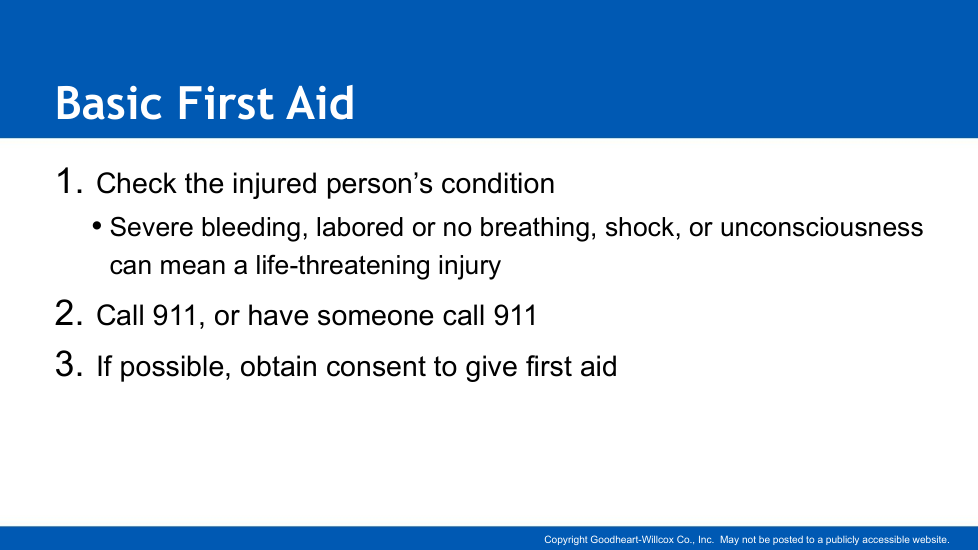
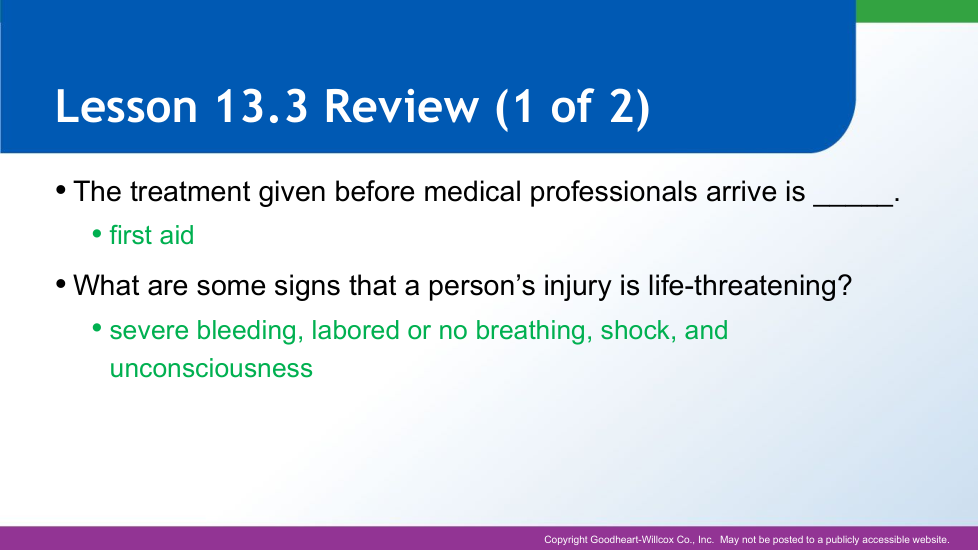
What are signs of a life-threatening injury?
Severe bleeding, labored breathing, shock, unconsciousness
Minor cuts, mild coughing, dizziness, superficial wounds
Question 78
78.
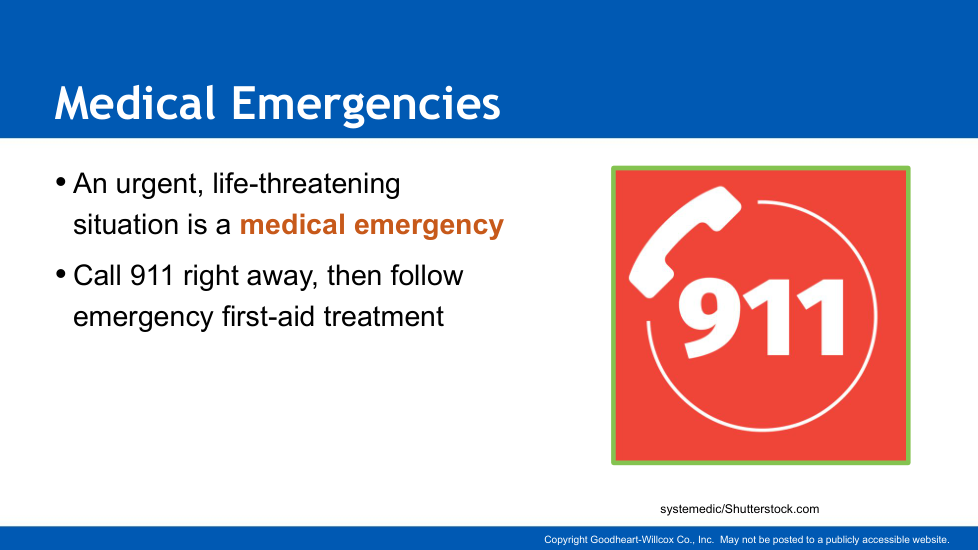
When should you call 911 for help?
Severe bleeding or unconsciousness
Mild headache, small cut, mild cough, minor bruise
Question 79
79.
What should you do before giving first aid?
Apply pressure directly, start CPR immediately, elevate the injury
Obtain consent if possible
Question 80
80.
Why is checking the injured person's condition important?
To assess for minor injuries, To clean the wound immediately
To determine if it's life-threatening
Question 81
81.
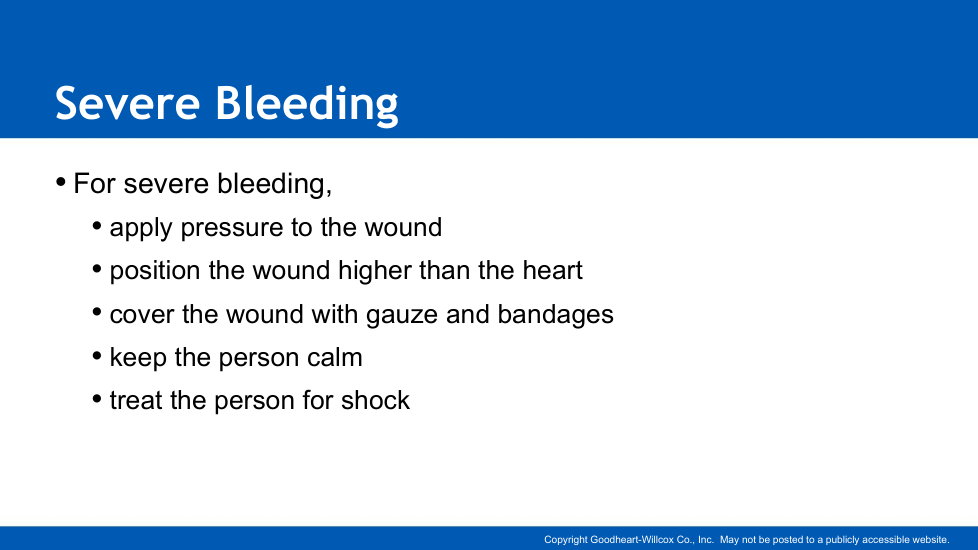
What should be done for severe bleeding?
Keep person calm
Position wound higher than heart
Cover wound with gauze
Apply pressure to the wound
Question 82
82.
How should severe bleeding be treated?
Treat for shock
Apply ice to the wound
Call for help immediately
Position body flat
Question 83
83.
What is a key step for severe bleeding?
Cover the wound with gauze and bandages
Keep the person standing
Ignore the bleeding
Apply heat to the area
Question 84
84.
What helps in case of severe bleeding?
Elevate the wound higher than heart
Keeping the person calm
Apply heat to the wound
Ask the person to move around
Question 85
85.
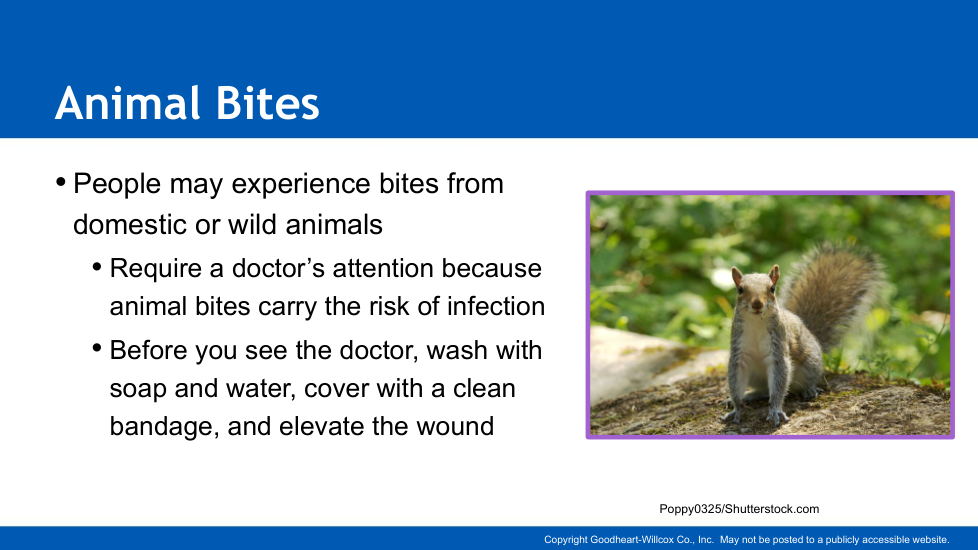
What is the recommended action before seeking medical attention for animal bites?
Apply ice
Wash with soap and water
Leave it uncovered
Scrub vigorously
Question 86
86.
Why is it important to elevate the wound after an animal bite?
Prevent infection
Reduce swelling
Speed up healing
Make it bleed more
Question 87
87.
Domestic and wild animal bites may lead to what risk?
Skin discoloration
Improved health
Reduced swelling
Infection
Question 88
88.
What is suggested after washing and bandaging an animal bite?
Leave it open to air
Cover with a clean bandage
Apply makeup on it
Expose to sunlight
Question 89
89.
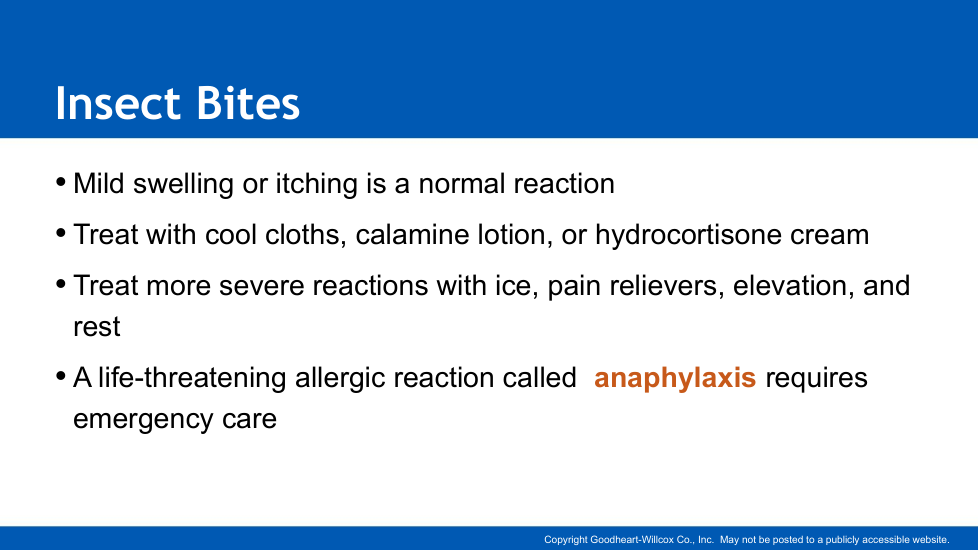
How should more severe reactions be treated?
Running
Elevation
Stretching
Massage
Question 90
90.
What is the recommended treatment for anaphylaxis?
Exercising
Emergency care
Self-medication
Sleeping
Question 91
91.
Which is NOT a recommended treatment for mild swelling or itching?
Hot water
Cool cloths
Calamine lotion
Hydrocortisone cream
Question 92
92.
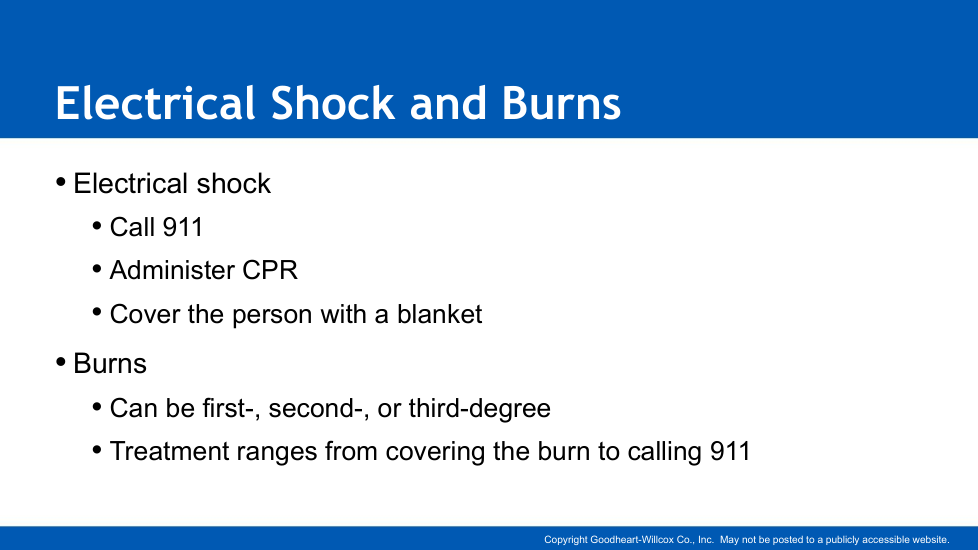
What is the appropriate first step for someone experiencing electrical shock?
Administer CPR
Apply ice
Call 911
Check temperature
Question 93
93.
For burns, what determines the severity of the injury?
Temperature of environment
Depth of burn
Time of day
Color of skin
Question 94
94.
How should burns be treated?
Expose to sunlight
Rub vigorously
Apply vinegar
Cover the burn
Question 95
95.
What should be done if a person has a severe burn?
Apply makeup
Call 911
Drink cold water
Take a nap
Question 96
96.
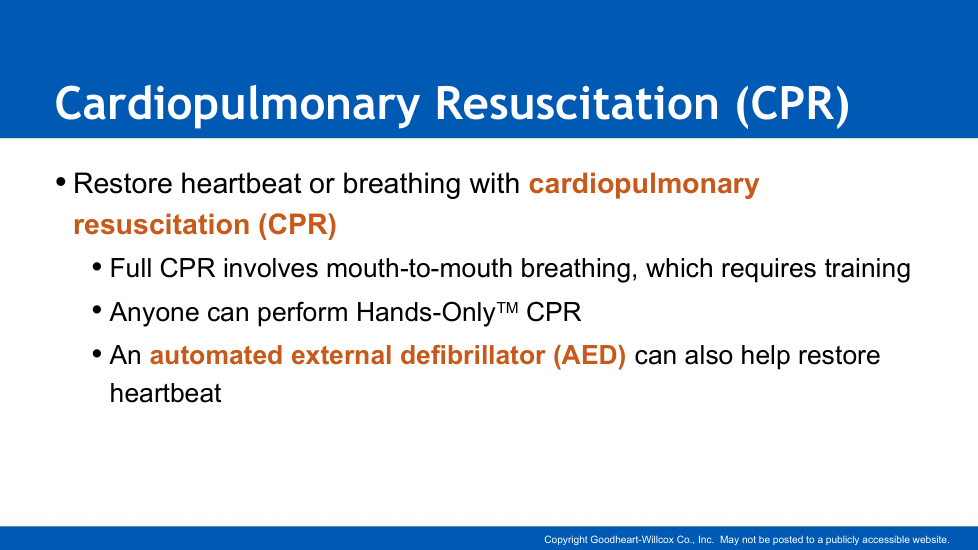
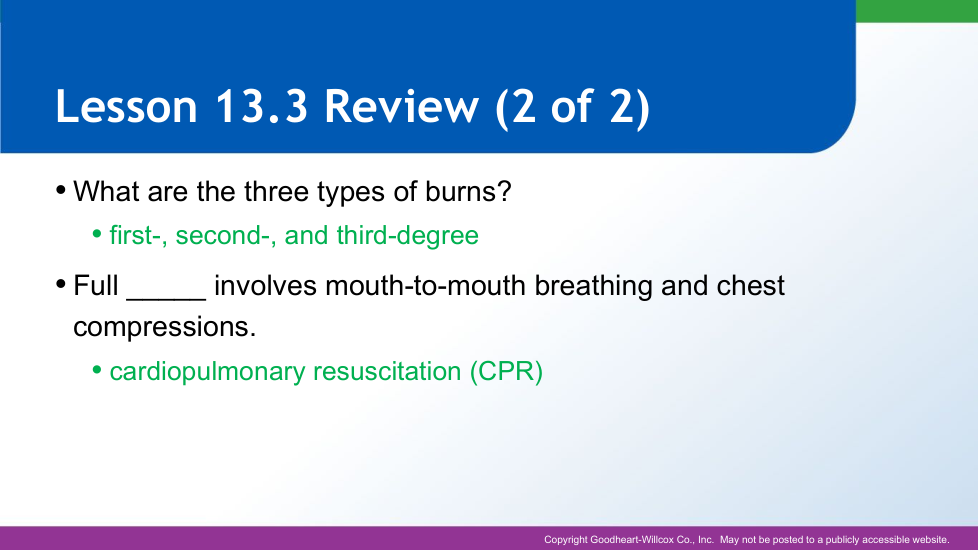
What does full CPR involve?
Administering medications
Chest compressions only
Use of bandages and splints
Mouth-to-mouth breathing and chest compressions
Question 97
97.
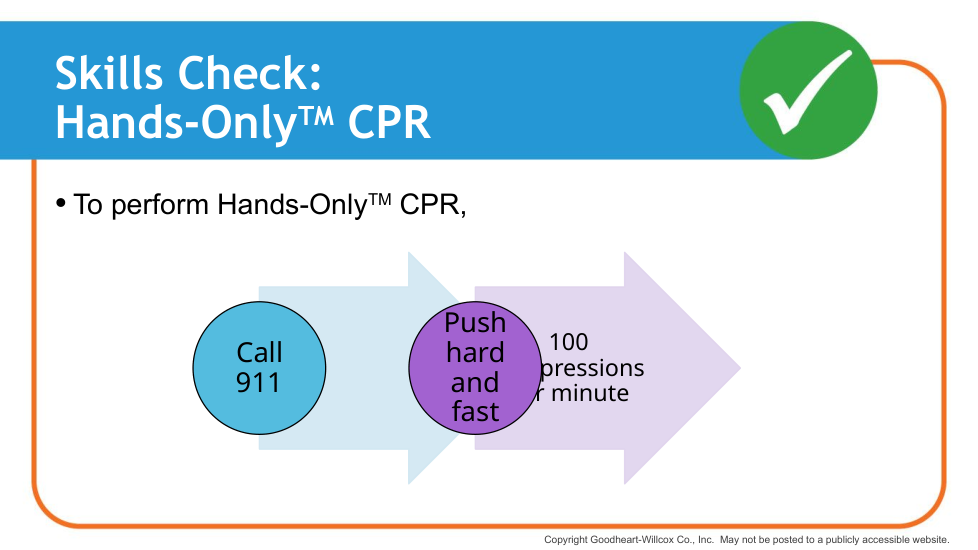
Who can perform Hands-OnlyTM CPR?
Adults over 50 years old
Children under 12 years old
Only trained medical professionals
Anyone
Question 98
98.
How can an AED help in emergencies?
Providing pain relief
Treating broken bones
Restoring heartbeat
Stopping minor bleeding
Question 99
99.
What is the purpose of CPR?
Treat headaches
Improve vision
Restore heartbeat or breathing
Prevent dehydration