Log in
Sign up for FREE
arrow_back
Library

Mesopotamia Quiz 2025

star
star
star
star
star
Last updated 8 months ago
29 questions
Required
1
Required
1
Required
1
Required
1
Required
1
Required
1
Required
1
Required
1
Required
1
Required
1
Required
1
Required
1
Required
1
Required
1
Required
1
Required
1
Required
1
Required
1
Required
1
Required
1
Required
1
Required
1
Required
1
Required
1
Required
1
Required
1
Required
1
Required
1
Required
7
Question 1
1.

Question 2
2.

Question 3
3.

Question 4
4.

Question 5
5.

Question 6
6.

Question 7
7.

Question 8
8.

Question 9
9.

Question 10
10.

Question 11
11.

Question 12
12.

Question 13
13.

Question 14
14.

Question 15
15.

Question 16
16.

Question 17
17.

Question 18
18.

Question 19
19.

Question 20
20.

Question 21
21.

Question 22
22.

Question 23
23.

Question 24
24.

Question 25
25.

Question 26
26.

Question 27
27.

Question 28
28.

Question 29
29.
Drag and drop the labels into the correct spot on the picture below.
Other Answer Choices:
River
Canals/channels
Village
Farm/Crops
Levee
Dam
Shaduf
Mesopotamia was in an area also known as:
The Fertile Valley
The Fertile Crescent
The Fertile Lands
None of the above
Where did people in Mesopotamia get their fresh water?
Mediterranean Sea and the Nile River
Persian Gulf and the Red Sea
Tigris and Euphrates Rivers
Rain
Which present-day country makes up most of Mesopotamia?
Israel
Iraq
Egypt
Iran
The name for the fine soil deposited by rivers is:
Dirt
Silt
Fertilizer
Topsoil
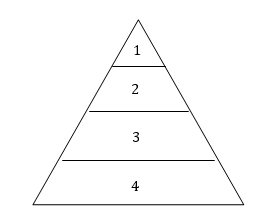
Which best describes the people in section 1 of the social class pyramid above?
kings and royals
priests and government officials
scribes, farmers, artisans, merchants
slaves
Which best describes the people in section 3 of the social class pyramid above?
slaves
kings and royals
priests and government officials
scribes, farmers, artisans, merchants
The religion of the Ancient Mesopotamians was polytheistic. This means:
They believed in many gods
They believed in two gods
They believed in one god
They did not believe in any gods
Hammurabi's Code is:
A list of important events
A decoration for the king
A set of laws
A secret code to communicate
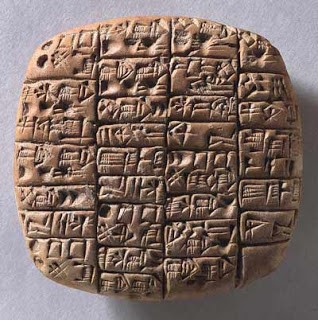
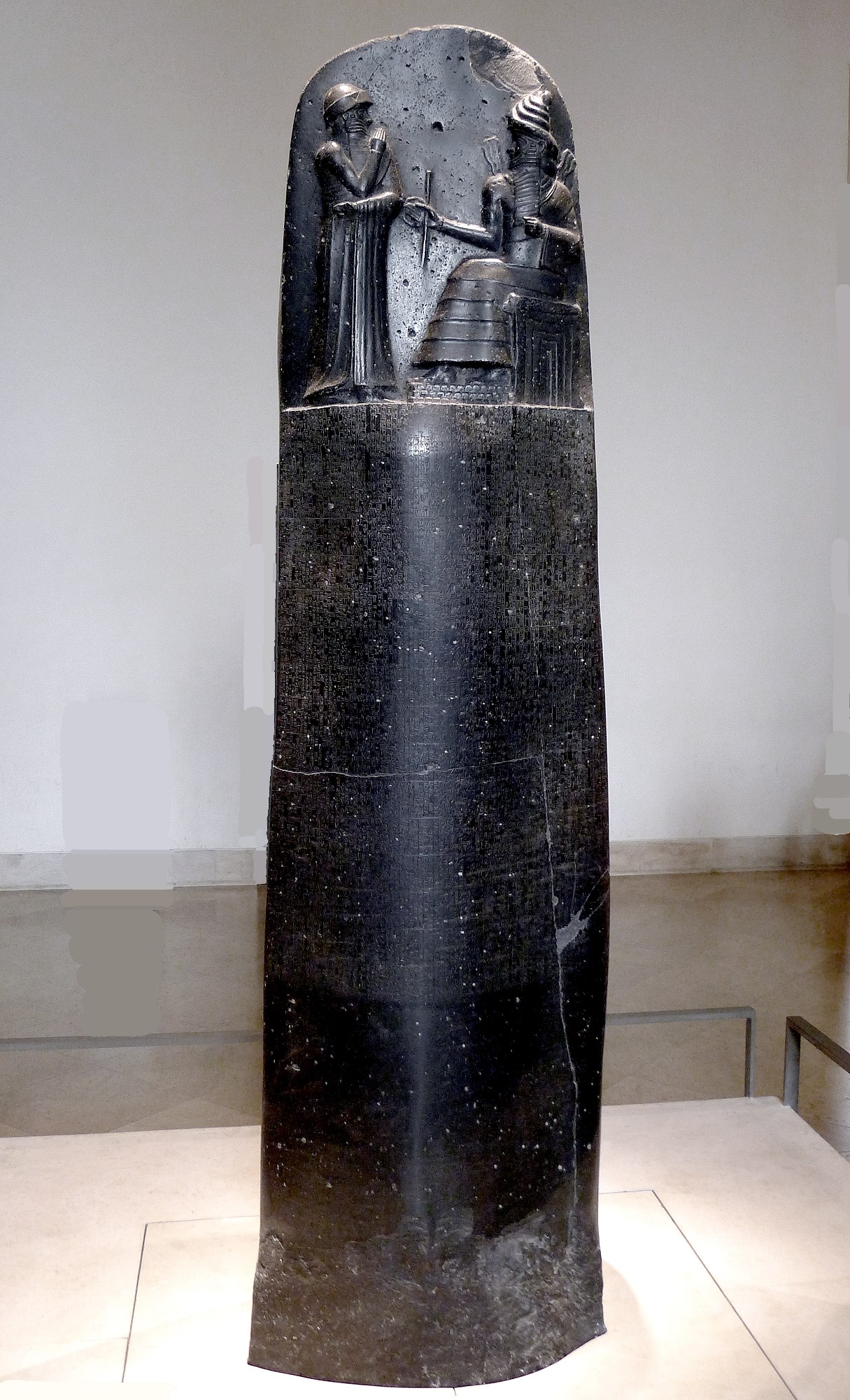
What is this artifact called?
Standard of Ur
Cuneiform tablet
Shaduf
Hammurabi's Code
Ziggurat
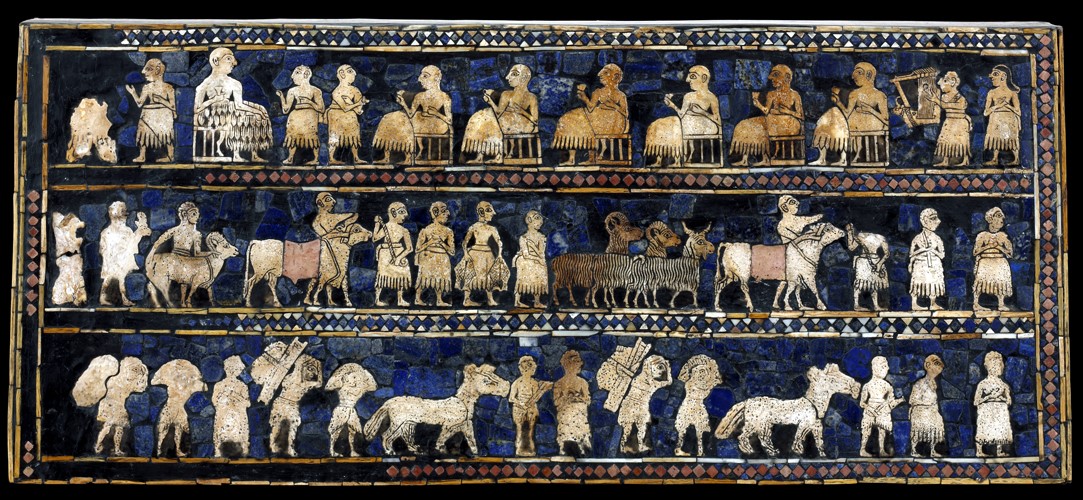
What is this artifact called?
Shaduf
Hammurabi's Code
Cuneiform tablet
Standard of Ur
Ziggurat
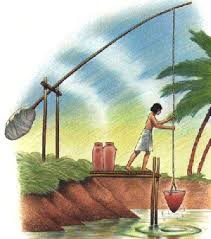
What is this called?
Shaduf
Ziggurat
Standard of Ur
Cuneiform tablet
Hammurabi's Code
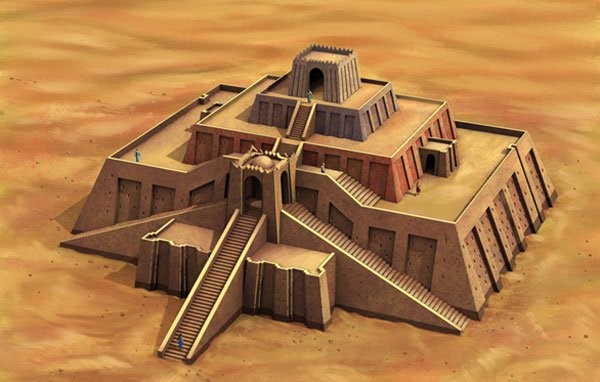
What is this called?
Cuneiform tablet
Hammurabi's Code
Ziggurat
Shaduf
Standard of Ur
What is this artifact called?
Shaduf
Hammurabi's Code
Standard of Ur
Cuneiform tablet
Ziggurat
The word "Mesopotamia" means:
middle of the fertile crescent
land in the middle of the desert
land north of the sea
land between the rivers
How do you get water to crops?
ziggurat
cuneiform
irrigation
polytheism
Exchanging goats for chickens is an example of:
Token economy
Barter economy
Surplus
Merchant
Using coins to buy bread is an example of:
Surplus
Token economy
Barter economy
Merchant
A person whose job is to trade and exchange items is a:
Surplus
Scribe
Merchant
Artisan
A person whose job is to read and write things down is a:
Surplus
Merchant
Artisan
Scribe
When you have more of something than you need, it is called a:
Ziggurat
Surplus
Merchant
Scribe
All of these were Hammurabi's laws EXCEPT:
if a doctor kills their patient, the doctor's hands will be chopped off
if you flood someone else's field, you have to pay for the damage
if you drive your oxen cart too fast, your ears will be chopped off
robbers will be punished by death
True or False: Mesopotamian gods were nature-based.
True
False
What did the Mesopotamians use to build their houses?
Metal
Wood
Stone
Mud Bricks
All of the following are problems that the ancient Mesopotamians faced EXCEPT:
No stones or forests for building materials
Unpredictable flooding
Easy to invade
No fresh water
Mesopotamian writing is called:
Cuneiform
Cursive
Calligraphy
Hieroglyphics
Where was Hammurabi from?
Sumer
Egypt
Babylon
Ur
How many laws were in Hammurabi's Code?
282
10
208
500
The Standard of Ur, Hammurabi's Code, and a Cuneiform Tablet are all examples of:
primary sources
irrigation systems
archaeologists
secondary sources