__________ antibodies, hormones, clotting factors; nutrients and minerals throughout the body.
1 point
1
Question 2
2.
A _____ bloodstain pattern is a lateral transfer of wet blood caused by bloody hair being dragged across the floor.
1 point
1
Question 3
3.
_____ evidence is collected in clean, unused plastic sealed containers at the crime scene.
1 point
1
Question 4
4.
Void patterns found in the middle of bloodstain could indicate _____.
1 point
1
Question 5
5.
Blood molecules are attracted to each other and tends to stick together as it falls, called __________.
1 point
1
Question 6
6.
If blood clumps when mixed with anti A and anti-Rh antibodies, the person has ____________________.
1 point
1
Question 7
7.
Satellites occur when a droplet of blood strikes a surface, _____.
1 point
1
Question 8
8.
A blood analyst is called to a crime scene. The victim is draped over a couch with one arm hanging over the edge of a cushion. Based on the expired blood on the cushions and the 90-degree angle of the droplets on the floor beneath the hand, the blood pattern analyst interprets that the victim _____.
1 point
1
Question 9
9.
Type AB blood contains (select 2):
1 point
1
Question 10
10.
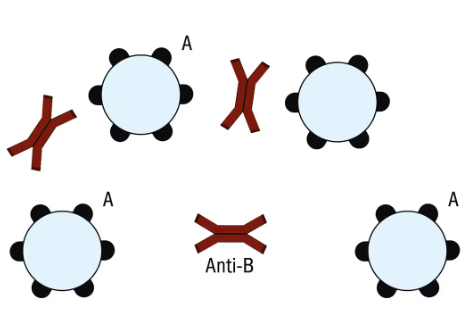
A lab technician combines a sample of type A blood with Anti-B antiserum (serum contains B antibodies). Briefly (1 sentence) explain what will happen.
1 point
1
Question 11
11.
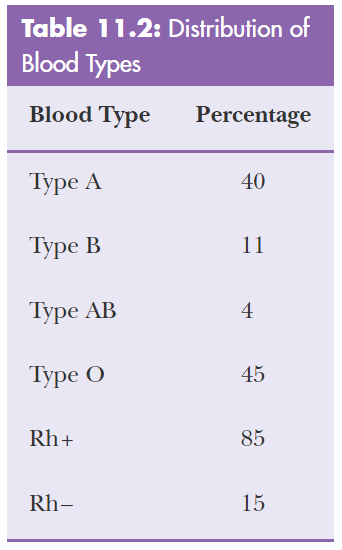
Calculate the joint probability of having AB- blood type: _______%
The population of the Unites States is ~360,000,000 people. Approximately how many citizens would have this rare blood type?
_______ citizens (round to the nearest whole number)
1 point
1
Question 12
12.
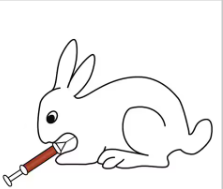
A forensic veterinarian may be asked to identify a specific animal’s blood. How would this be done? Name and describe the test (2-3 sentences).
1 point
1
Question 13
13.
Calculate the angle of impact of the bloodstains in the "show your work section."
Round all answers to the nearest degree.
A) _______°
B) _______ °
C) _______ °
D) _______ °
E) _______ °
F) _______ °
1 point
1
Question 14
14.
a) Among this group of people, which blood type(s) is most likely to be expressed? Which blood type is least likely to be expressed? Explain your answers.
b) Examine Punnett square 1 (farthest left). If this couple had a child, which blood type would they most likely have?
c) Which punnett square is least likely to have B blood type (left, right or middle)?