Log in
Sign up for FREE
arrow_back
Library

Weather Forecasting

star
star
star
star
star
Last updated over 1 year ago
15 questions
Note from the author:
This is a lesson about how to read a weather map for middle schoolers. There are images, paragraphs to read, and a video. This is based on NOAA's SciJinks page for kids.
Read the information provided for the different images and use it to help you answer the questions.
Required
5
Required
3
Meteorologists (scientists who study weather) at the National Weather Service use information from ground stations and weather satellites to make these maps. Words like “rain” and “snow” are pretty obvious, but what exactly do the symbols on a weather map tell you about the weather?
1
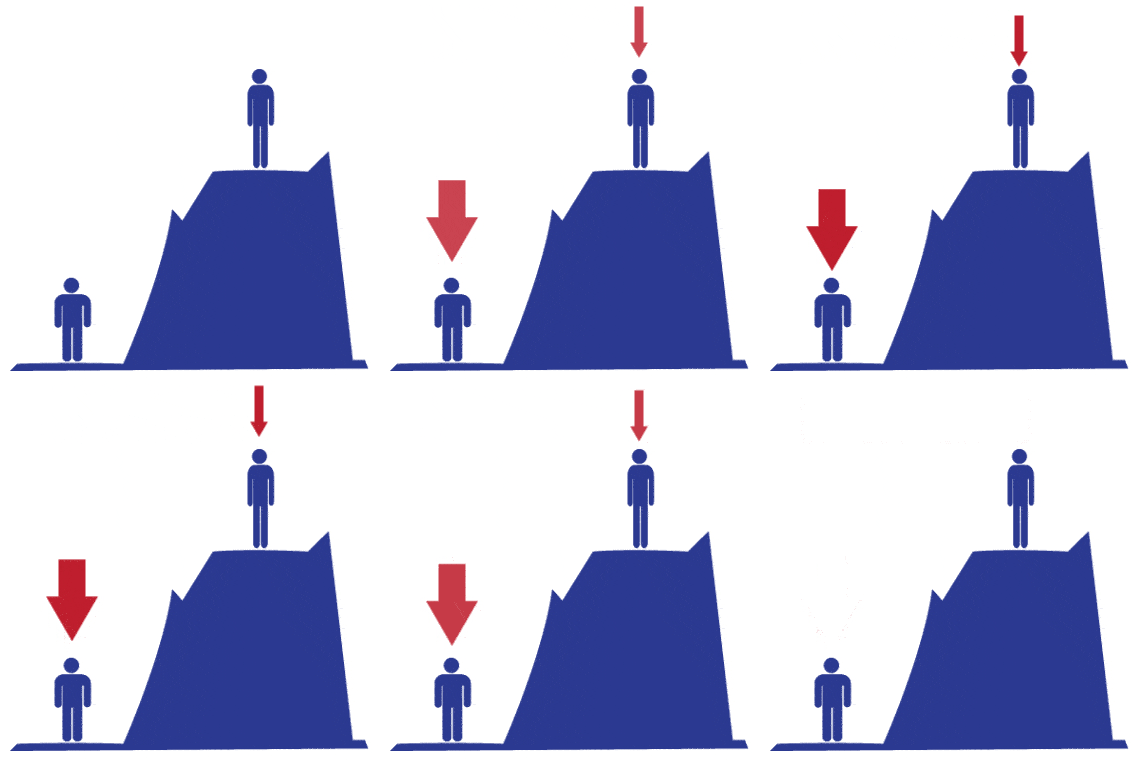
Earth’s atmosphere is a jacket of gases that surrounds the planet. Although it seems like these gases could easily float away into space, gravity is constantly pulling the atmosphere toward Earth’s surface. The force with which our atmosphere pushes down on a specific location on Earth is called atmospheric pressure. The closer you are to the center of the Earth the more Atmospheric pressure you feel
1
Question 2
2.

Where would you feel the least amount of air pressure?

A high pressure system is a dense air mass that is usually cooler and drier than the surrounding air. A low pressure system is a less dense air mass that is usually wetter and warmer than the surrounding air.
In general, areas that experience high atmospheric pressure also experience fair weather. Low pressure systems can cause the formation of clouds and storms. Air usually flows from areas of high pressure to areas of low pressure.
1
Trim End | 00:08
Text, Question 4 | 00:00
00:00/00:00
Text, Question 4
00:00
keyboard_arrow_down
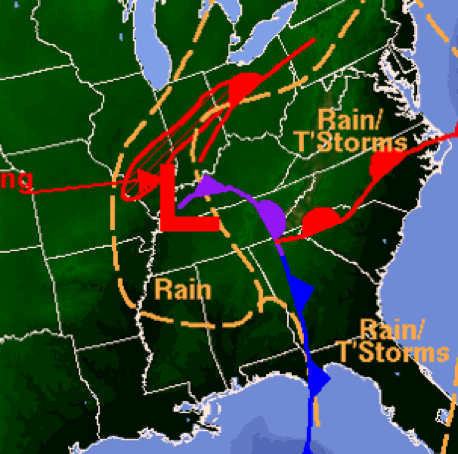
From high above Earth, satellites such as GOES-16 keep an eye on the weather brought by low pressure systems. The red “L” on the map above indicates a low pressure system in the Tennessee Valley region. In the video to the left from GOES-16, you can see what that same low pressure system looks like from a weather satellite.
1
1
1
1
1
Trim End | 03:49
Question 9 | 00:39
Question 10 | 01:06
Question 11 | 02:13
Question 12 | 02:46
Question 13 | 03:44
00:00/00:00
Question 9
00:39
keyboard_arrow_down
Required
1
Question 10
01:06
keyboard_arrow_down
Required
1
Question 11
02:13
keyboard_arrow_down
Required
1
Question 12
02:46
keyboard_arrow_down
1
Question 13
03:44
keyboard_arrow_down
1
Question 14
14.

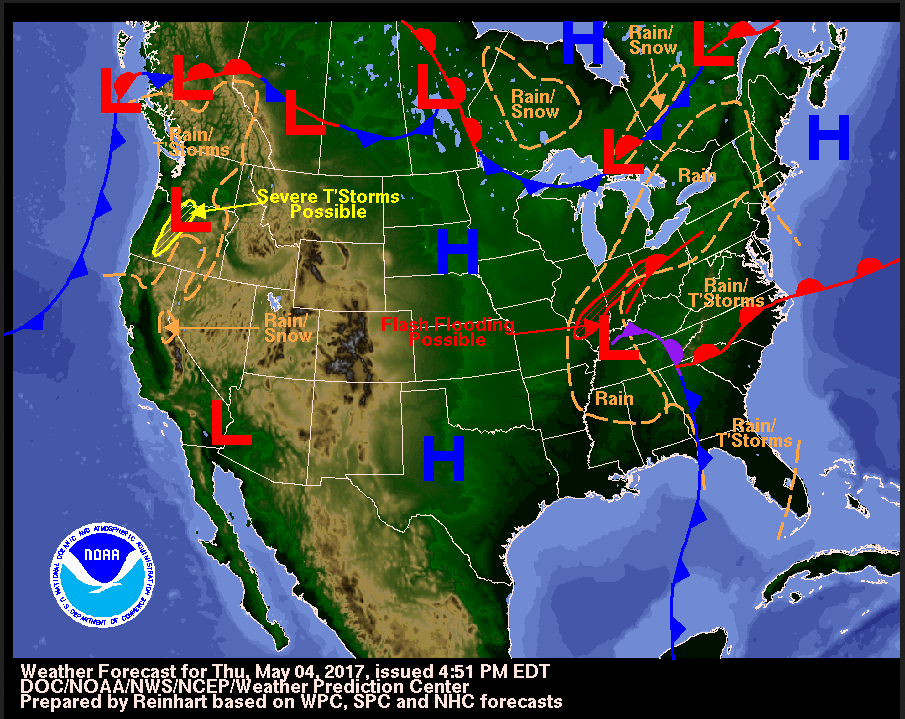
Use the tools to circle 5 areas that will be warm on the map.

Question 15
15.

Use the tools to circle all the cold fronts on the map

Question 1
1.

What is a meteorologist?

Question 3
3.

If our city is in a High pressure system then it would feel like...

Question 4
4.

How do meteorologists keep an "eye" on low pressure systems?

Question 5
5.

How do warm fronts usually move

Question 6
6.

What kind of weather would you see with a cold front?

Question 7
7.

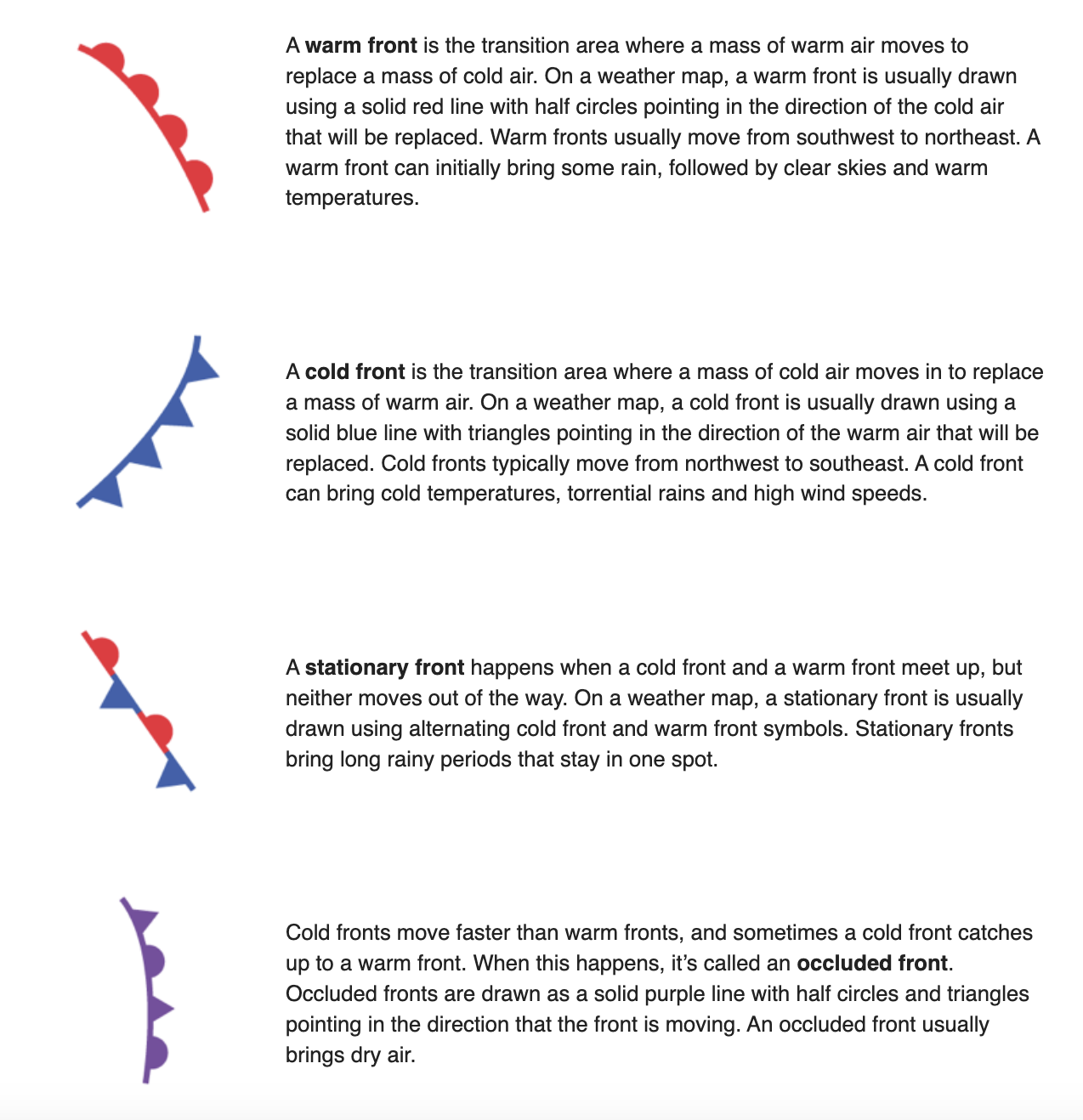
Which symbol is for a stationary front.

Question 8
8.

Which symbol is for an Occluded front.

Question 9
9.

The arrows on the cold front show the direction...

Question 10
10.

Which of these is the symbol for a warm front?

Question 11
11.

Why do you get storms where the two air masses meet?

Question 12
12.

Why do high pressure systems lead to nice weather?

Question 13
13.

So on Thursday; what kind of system is sitting over Raleigh?