Instrumental analysis
star
star
star
star
star
Last updated over 1 year ago
6 Nsɛmmisa
1
1
1
1
1
Which two elements would be hard to differentiate using flame tests alone?
Which two elements would be hard to differentiate using flame tests alone?
1
Which two elements would be hard to differentiate using flame tests alone?
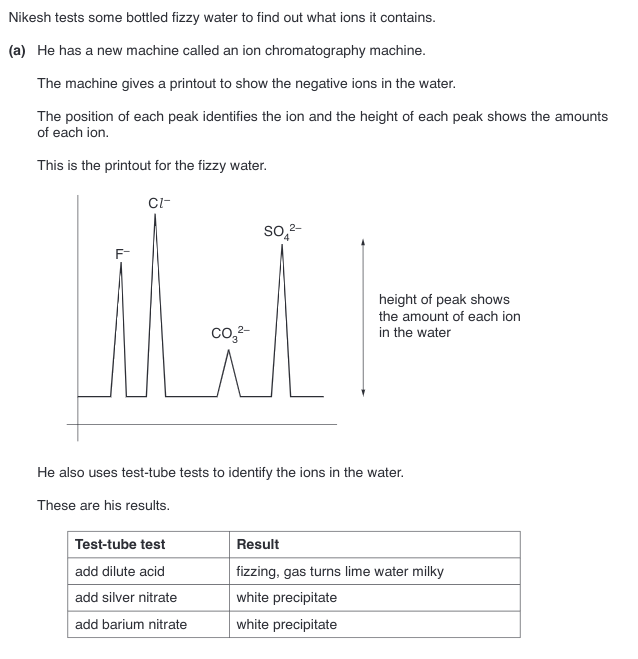
the presence of ions.
the relative abundances of ion from (least) to (most)
Adding acid shows carbonate ions by and the gas turns lime water )
Adding silver nitrate shows chloride ions by precipitate of
Adding barium nitrate shows sulfate ions by white precipitate of
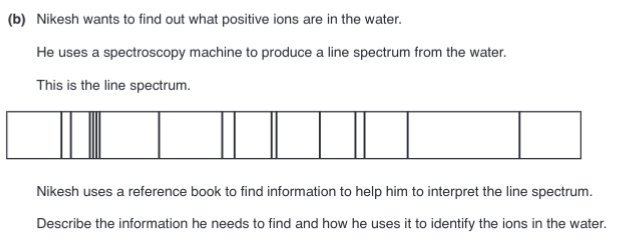
match the positions of lines (wavelengths) on the line spectrum to the known of lines for individual ions given in the reference book
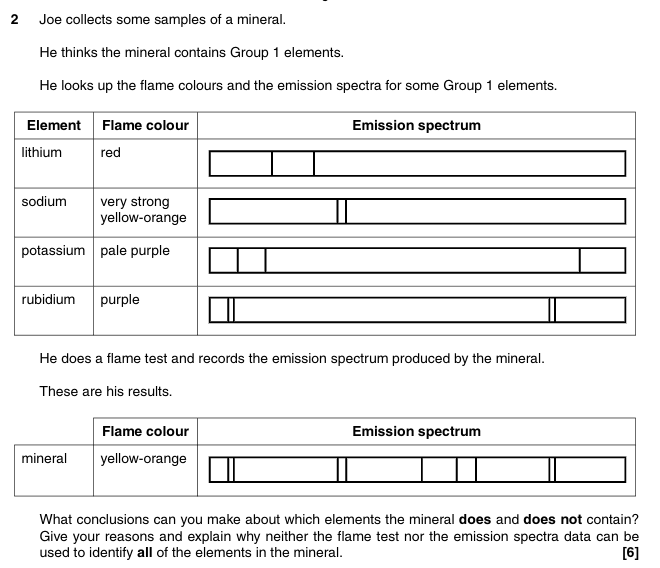
What conclusions can you make about which elements the mineral does and does not contain? Give your reasons
sodium
rubidium
unidentified ion
potassium
lithium
Does contain / spectra match for
Does not contain / spectra do not match for
explain why neither the flame test nor the emission spectra data can be used to identify all of the elements in the mineral.
Unknown elements
Flame test: other elements ‘ ’ by strong colour
Spectrum: Some lines indicate unknown element
Need spectra of other elements to identify
Why can magnesium not be identified with a flame test