Endothermic and exothermic reactions

Last updated 12 months ago
6 questions
9

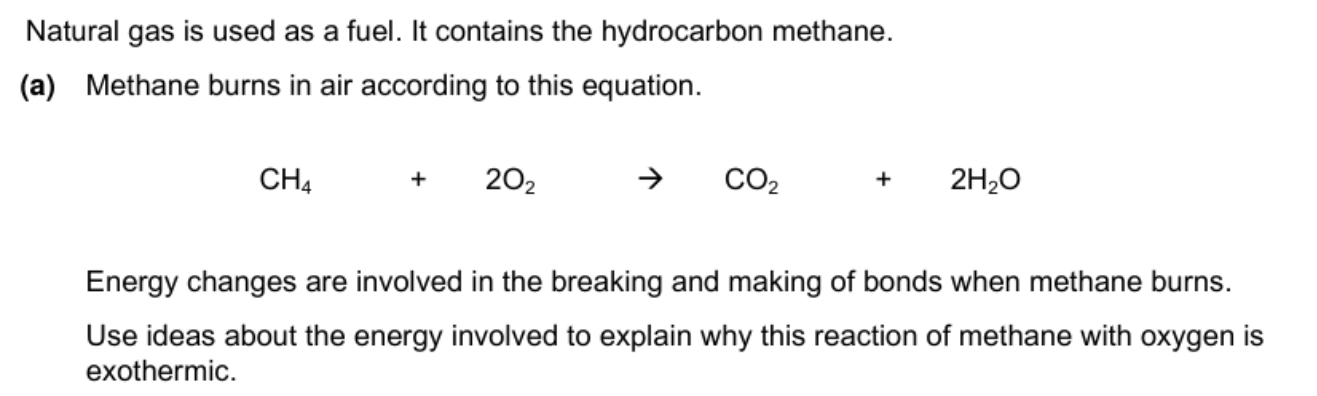
In an _______________ reaction energy is released to the surroundings as heat.
Bonds are broken in the ______________ and new bonds formed in the _____________ Breaking bonds, _____________ , energy and forming bonds ______________ , energy
The energy change for a reaction = (total energy taken in to __________ bonds in the reactants) - (total energy released when new bonds _________ in the products).
As the energy, given out, (when ____________ the bonds) is greater than the energy, taken in, (when _____________ the bonds) the reaction is exothermic
Other Answer Choices:
form
takes in
reactants
breaking
break
products
exothermic
forming
gives out

7


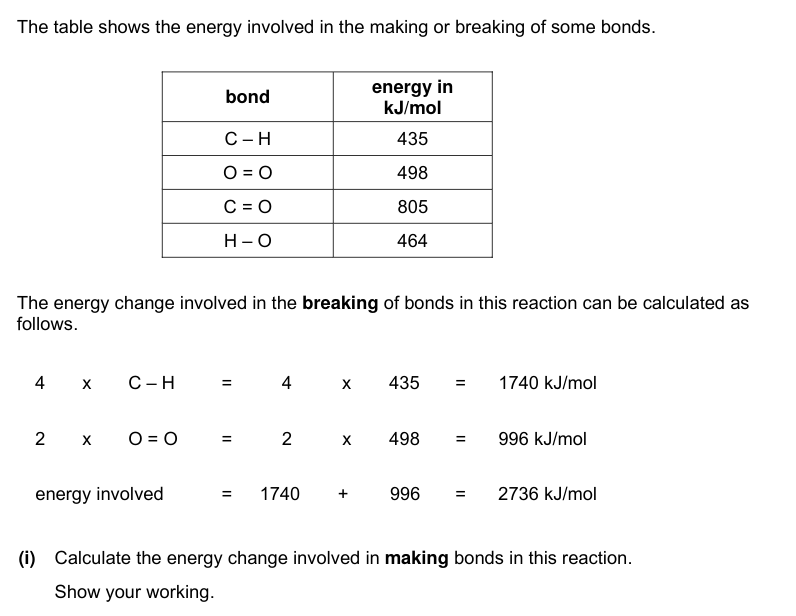
2 x C=O = 2 x _______ = _______ kJ/mol
4 x 0-H = 4 x _______ = _______ (1)
Total = _______ (kJ/mol)


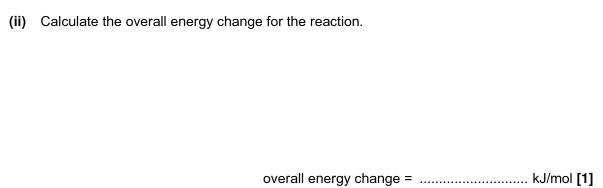
Energy change = energy to break bonds - energy to make bonds.

Energy change = 2736 - _______
Energy change = - _______ kJ/mol
5
Other Answer Choices:
4H + 2 O (atoms)
H2 +O2 (reactants)
Activation energy
2H2O (products)
Energy change
1

Which statement describes the activation energy?

4
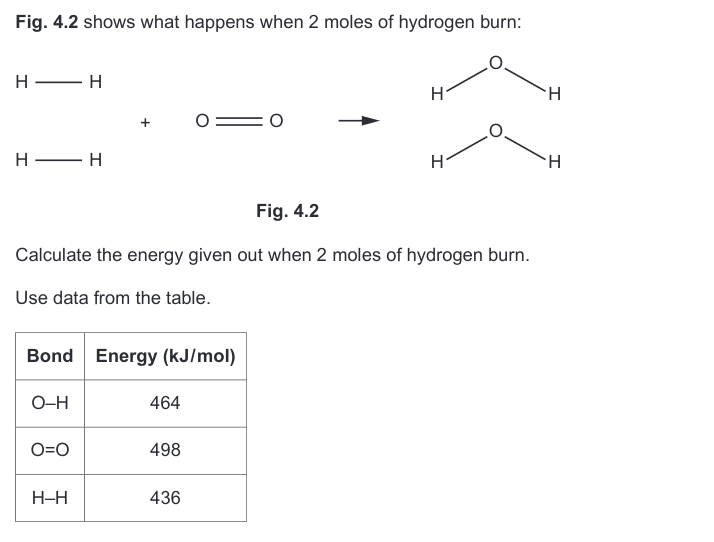
Bonds broken = 2x H-H + 1x O=O
Energy to break bonds in ractants = _______ kJ/mol

Bonds formed = _______ O-H
Energy to make bonds in product = _______

Energy change = energy taken to break bonds in reactants - energy released when bonds form in products = _______ (hint include the sign)
1
Other Answer Choices:
Activation energy
Energy change needed to break bonds in reactants
Energy given out when new bonds form in products