1
F.IF.1
The domain of the equation below is defined as {-4, -2, 0, 2, 4}.
What is the range?
(hint: plug in x-values to find y-values)
The range of the equation below is defined as {-4, -2, 0, 2, 4}.
What is the domain?
(hint: plug in y-values to find x-values)


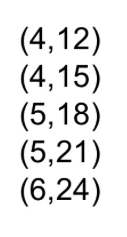
Match the given representations on the left with the correct category on the right.
Drag and drop each into the correct box by moving the blue arrows.
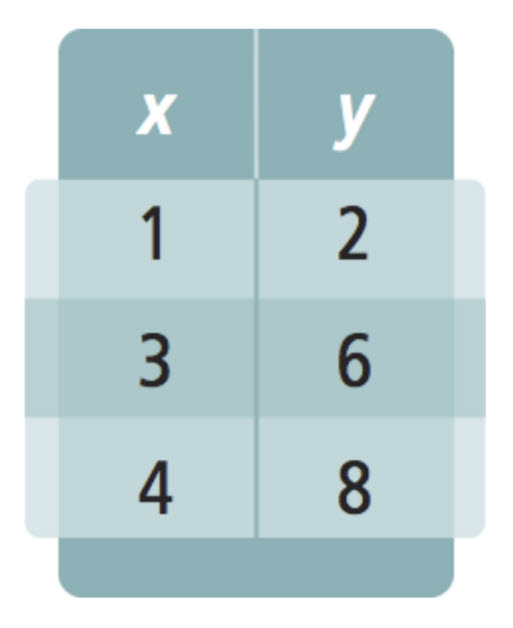
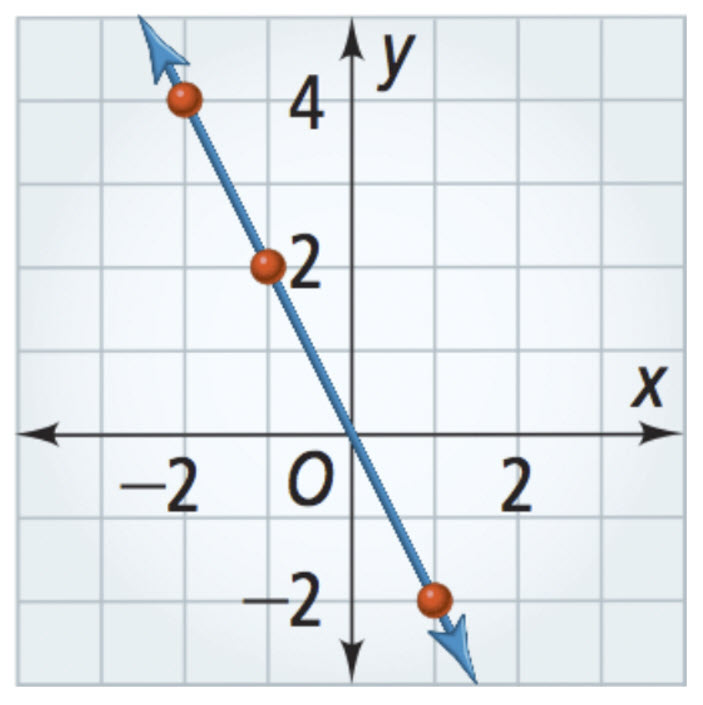
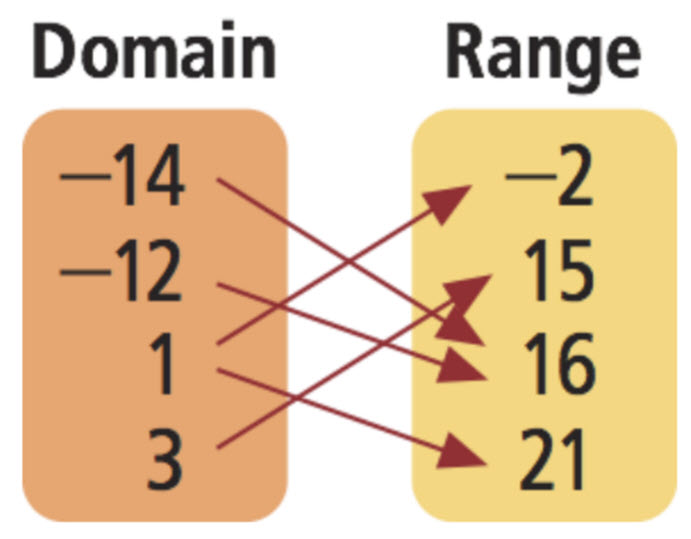
Ordered Pairs
Mapping Diagram
Table of Values
Graph
Using the vertical-line test, which graph(s) represent functions?
Select all that apply.
The domain of the equation below is defined as {-4, -2, 0, 2, 4}.
What is the range?
The range of the equation below is defined as {-4, -2, 0, 2, 4}.
What is the domain?
Classify each item on the left based on whether it describes the domain or range of a function.
Drag and drop each into the correct box by moving the blue arrows.
The output values of a function
The independent variable of a function
The input values of a function
The x-values of a function
The dependent variable of a function
The y-values of a function
Represented on the vertical axis of a coordinate plane
Represented on the horizontal axis of a coordinate plane
Domain
Range
State the domain and range of this relation:
{ (-3, 2) , (4, 1) , (0, 3) , (5, -2) , (2, 7) }
Consider this relation:
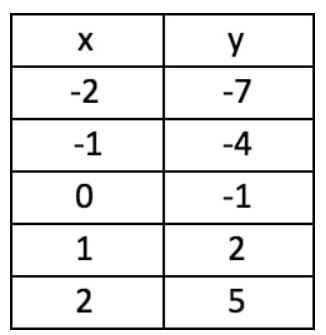
State the domain of the relation.
Consider the relation:
{ (-2, -3) , (-1, 4) , (0, 5) , (1, 6) }
Identify the range of the relation.

Is the relation in the graph a function?
Is this relation a function?
Identify the domain and range of the relation.
Place each value only once.
-1
1
-2
2
4
-4
7
-7
Domain
Range
Is this relation a function?
Is this relation a function?
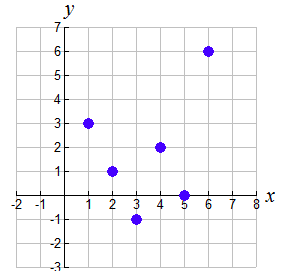
Is this relation a function?
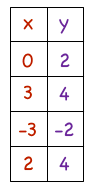
Is this relation a function?

Is this relation a function?
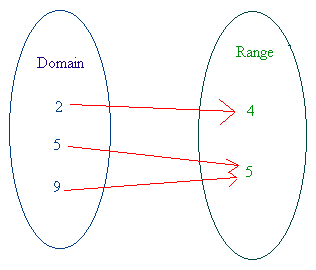
Is this relation a function?

Is this relation a function?
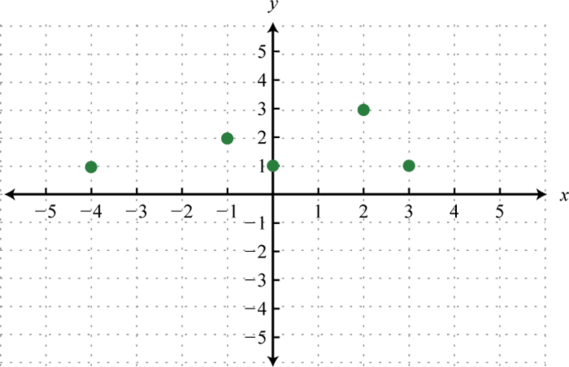
Is this relation a function?
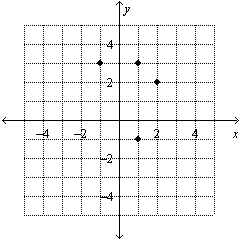
Select all relations that represent a function.
A)
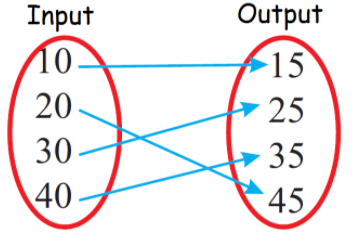
B)
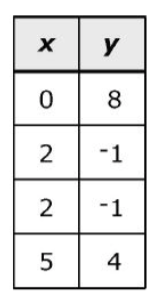
C)