ATP: The Unit of Cellular Energy

Last updated 7 months ago
4 questions
Energy exists in many forms, including light energy, mechanical energy, thermal energy, and chemical energy. In living organisms, chemical energy is stored in biological molecules and can be converted to mechanical energy when muscles contract. Adenosine triphosphate (ATP) is the most important biological molecule that provides chemical energy.
ATP Structure
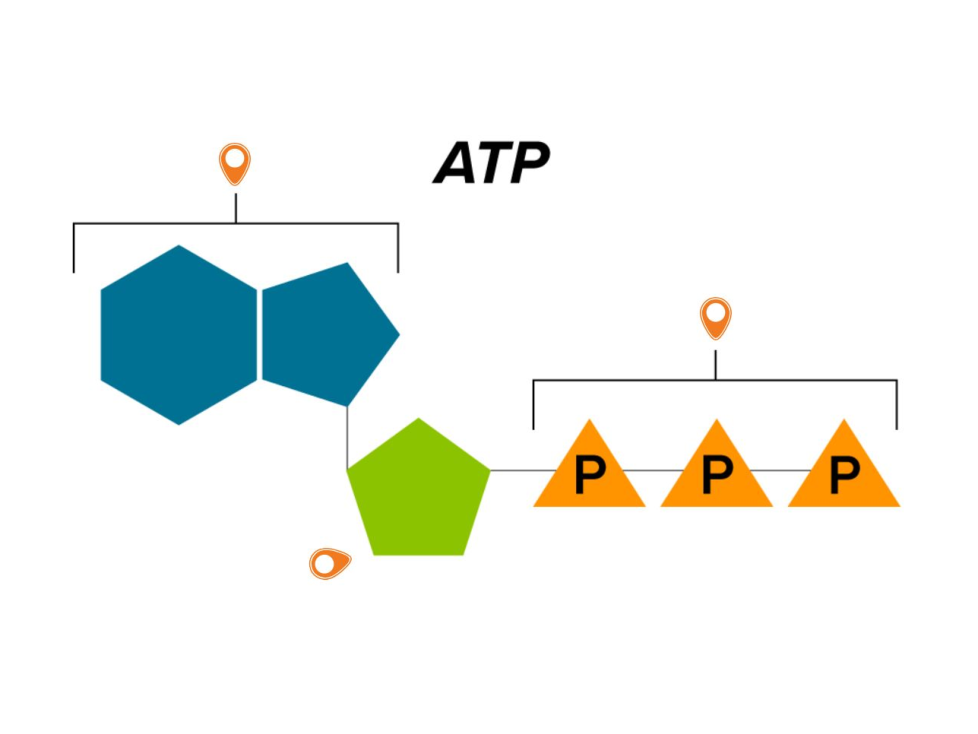
ATP is a multipurpose storehouse of chemical energy that can be used by cells in a variety of reactions. Although other carrier molecules transport energy within cells. ATP is the most abundant energy-carrier molecule in cells and is found in all types of organisms. ATP is a nucleotide made of an adenine base, a ribose sugar, and a triphosphate group.
3
Label the parts of ATP.
Other Answer Choices:
Ribose sugar
Adenine base
Triphosphate groups
1

A phosphate group and energy are released when a bond breaks between two phosphate groups in ATP.

1

When a phosphate group is removed from ATP, what is the remaining molecule called?

3

Which of the following are parts of the structure of ATP? Select all that apply.