Alternate Pathways
star
star
star
star
star
Last updated over 1 year ago
5 Nsɛmmisa
3
1
1
3
3
Photosynthesis: Alternative Pathways
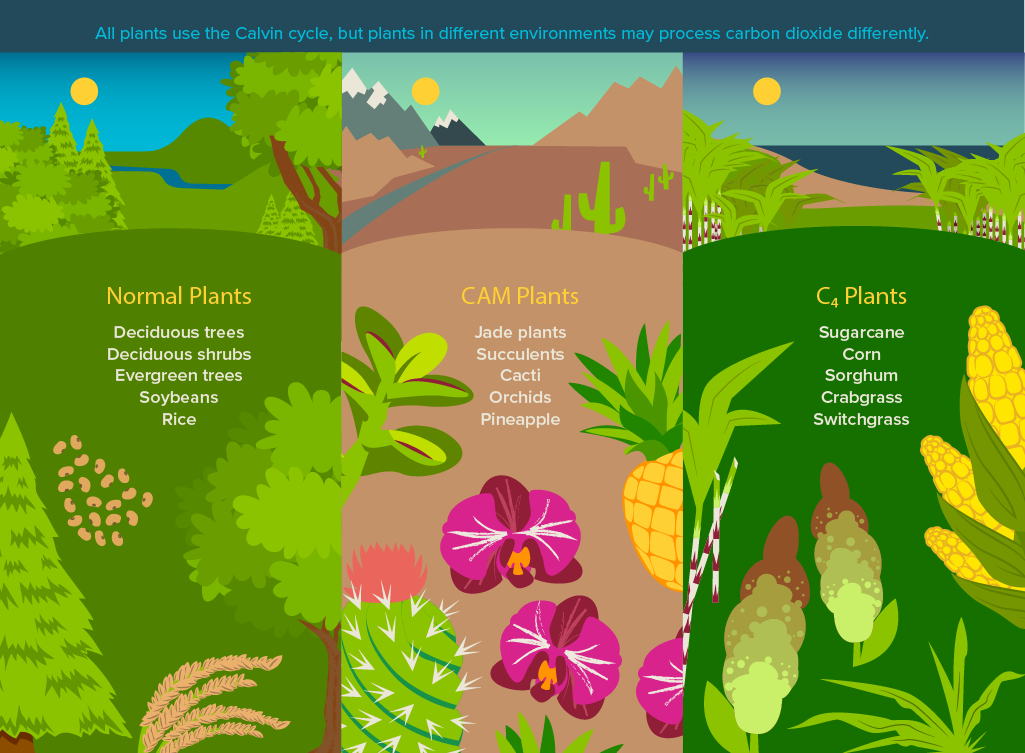
The environment in which an organism lives can impact the organism's ability to carry out photosynthesis. Environments in which the amount of water or carbon dioxide available is insufficient can decrease the ability of a photosynthetic organism to convert light energy into chemical energy. For example, plants in hot, dry environments are subject to excessive water loss that can lead to decreased photosynthesis. Many plants in extreme climates have alternative photosynthesis pathways to maximize energy conversion.
C4 Plants
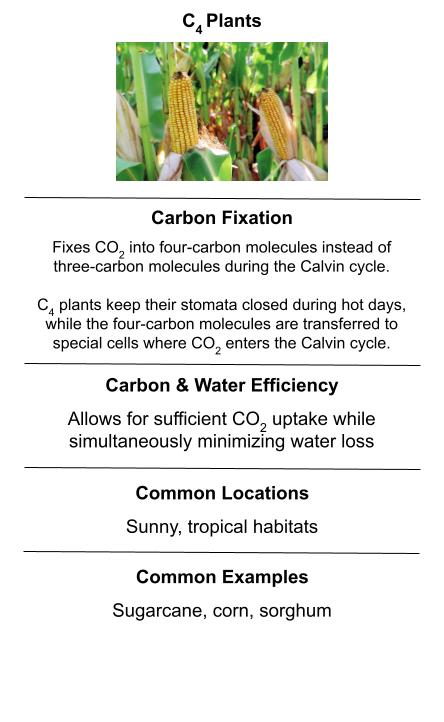
One adaptive pathway that helps plants maintain photosynthesis while minimizing water loss is called the C4 pathway. The C4 pathway occurs in plants such as sugarcane and corn. These plants are called C4 plants because they fix carbon dioxide into four-carbon compounds instead of three-carbon molecules during the Calvin cycle. C4 plants also have significant structural modification in the arrangement of the cells in the leaves. In general, C4 plants keep their stomata (plant cell pores) closed during hot days, while the four-carbon compounds are transferred to special cells where CO2 enters the Calvin Cycle. This allows for sufficient carb dioxide uptake while simultaneously minimizing water loss.
CAM Plants
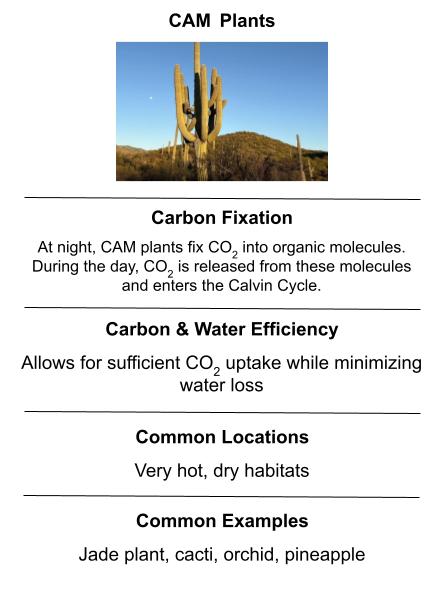
Another adaptive pathway used by some plants to maximize photosynthetic activity is called crassulacean acid metabolism (CAM photosynthesis). The CAM pathway occurs in water-conserving plants that live in deserts, salt marshes, and other environments where access to water is limited. CAM plants, such as cacti, orchids, and pineapple, allow carbon dioxide to enter the leaves only at night, when the atmosphere is cooler and more humid. At night, these plants fix carbon dioxide into organic compounds. During the day, carbon dioxide is released from these compounds and enters the Calvin cycle. This pathway also allows for sufficient carbon dioxide uptake while minimizing water loss.
occurs in sunny, tropical habitats
occurs in very hot, dry habitats
fixes Carbon Dioxide into 4-Carbon molecules
fixes Carbon Dioxide into 3-carbon molecules
fixes Carbon Dioxide into organic compounds; released during the day
allows for Carbon Dioxide uptake while minimizing water loss
sugarcane, corn, sorghum
occurs nearly everywhere
rice, soybeans, evergreens, deciduous trees & shrubs
C4 Pathway
CAM Pathway
Calvin Cycle Pathway (Regular Photosynthesis)
CAM plants fix carbon dioxide into 4-carbon molecules.
Select all the statements that are true about C4 plants.
Select all the statements that are true about CAM plants.