Log in
Sign up for FREE
arrow_back
Library
Chapter 7: Nutrition
By Robert Butts
star
star
star
star
star
Share
share
Last updated 6 months ago
49 questions
Add this activity
zoom_in
zoom_in
zoom_in
10
Question 1
1.
How do the foods you eat affect your overall health?
zoom_in
zoom_in
zoom_in
10
10
10
10
zoom_in
10
10
10
10
zoom_in
10
10
10
10
zoom_in
zoom_in
10
10
10
10
zoom_in
zoom_in
10
10
10
10
zoom_in
10
10
10
10
zoom_in
10
10
10
10
zoom_in
10
10
10
10
zoom_in
zoom_in
10
10
10
10
zoom_in
10
10
10
10
zoom_in
10
10
10
10
zoom_in
10
10
10
10
zoom_in
zoom_in
zoom_in
zoom_in
zoom_in
zoom_in
zoom_in
zoom_in
zoom_in
zoom_in
zoom_in
zoom_in
zoom_in
zoom_in
zoom_in
zoom_in
zoom_in
zoom_in
zoom_in
zoom_in
zoom_in
zoom_in
zoom_in
zoom_in
zoom_in
zoom_in
zoom_in
zoom_in
zoom_in
zoom_in
zoom_in
zoom_in
zoom_in
zoom_in
zoom_in
zoom_in
zoom_in
zoom_in
zoom_in
zoom_in
zoom_in
zoom_in
zoom_in
zoom_in
zoom_in
zoom_in
zoom_in
zoom_in
Question 2
2.
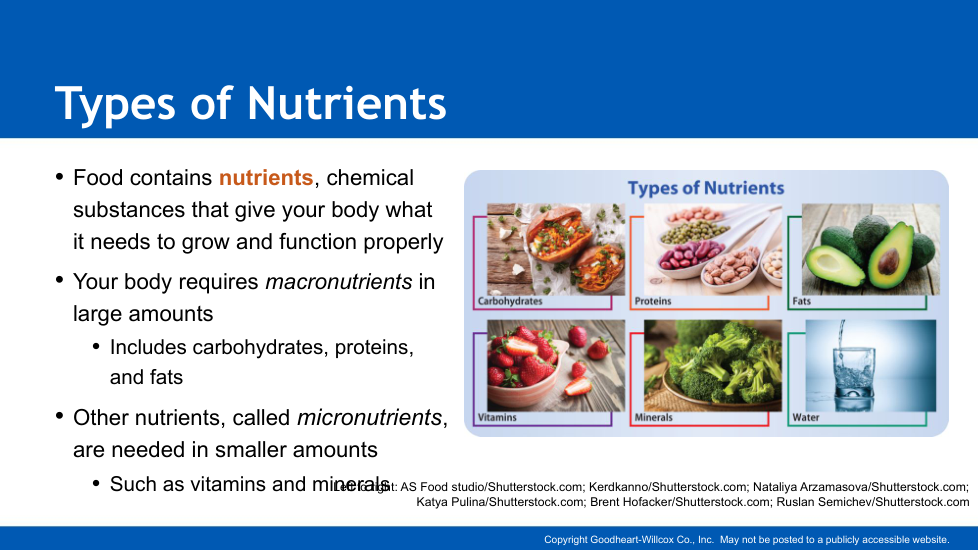
What are macronutrients?
Vitamins and minerals
Water and fiber
Sugar and sodium
Carbohydrates, proteins, and fats
Question 3
3.
Which nutrients are needed in smaller amounts?
Proteins and fats
Water and sodium
Carbohydrates and fiber
Micronutrients like vitamins and minerals
Question 4
4.
What do nutrients in food provide your body with?
Toxic substances
Excessive energy
Empty calories
What it needs to grow and function properly
Question 5
5.
Why are micronutrients important for the body?
Needed in smaller amounts for proper function
Have no effect
Stored in excess by the body
Causes allergies
Question 6
6.
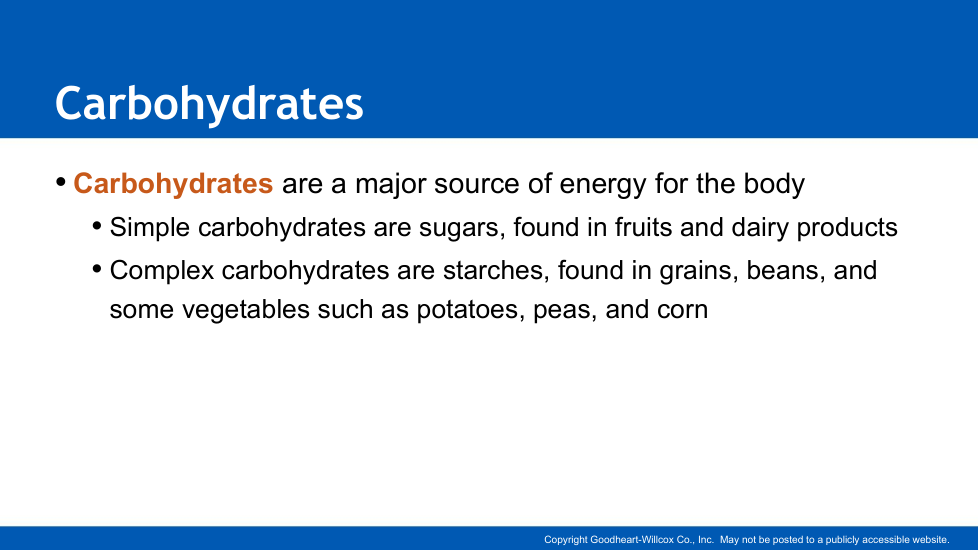
Which food group contains simple carbohydrates mainly?
Meat
Dairy
Vegetables
Fruits
Question 7
7.
Where can complex carbohydrates primarily be found?
Nuts
Fish
Candy
Grains
Question 8
8.
What is a major function of carbohydrates in the body?
Provide energy
Regulate temperature
Improve vision
Build muscle
Question 9
9.
Which type of carbohydrate is starch a part of?
Simple
Complex
Processed
Refined
Question 10
10.
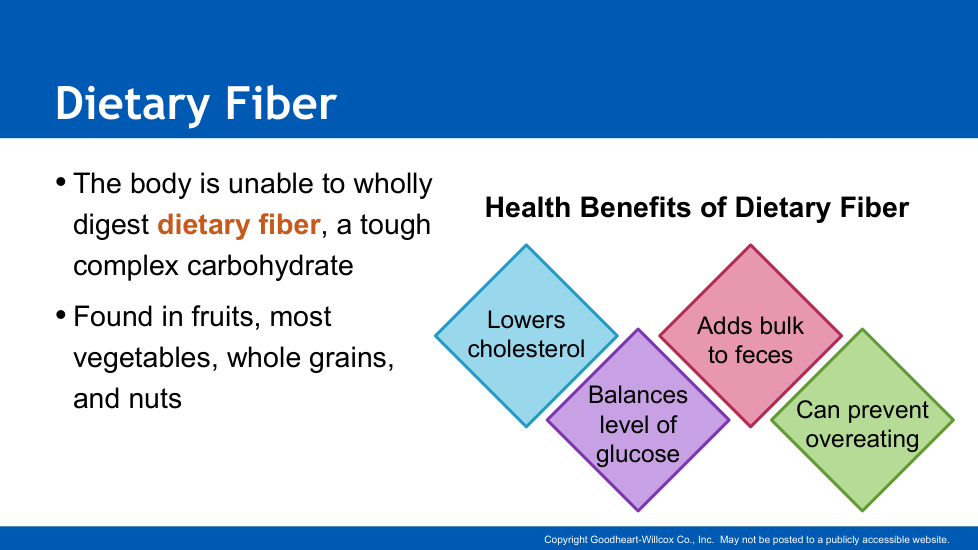
Which foods contain dietary fiber?
Meat, candy, soda, chips
Cookies, ice cream, cake, butter
Fruits, vegetables, whole grains, nuts
Bread, pasta, cheese, milk
Question 11
11.
What type of carbohydrate is dietary fiber?
Sweet
Protein
Complex
Simple
Question 12
12.
Where is dietary fiber mostly found?
Precooked meals
Most foods
Fast food
Dairy products
Question 13
13.
What happens when the body digests dietary fiber?
Unable to fully digest
Makes fat
Fully absorbs
Quickly breaks down
Question 14
14.
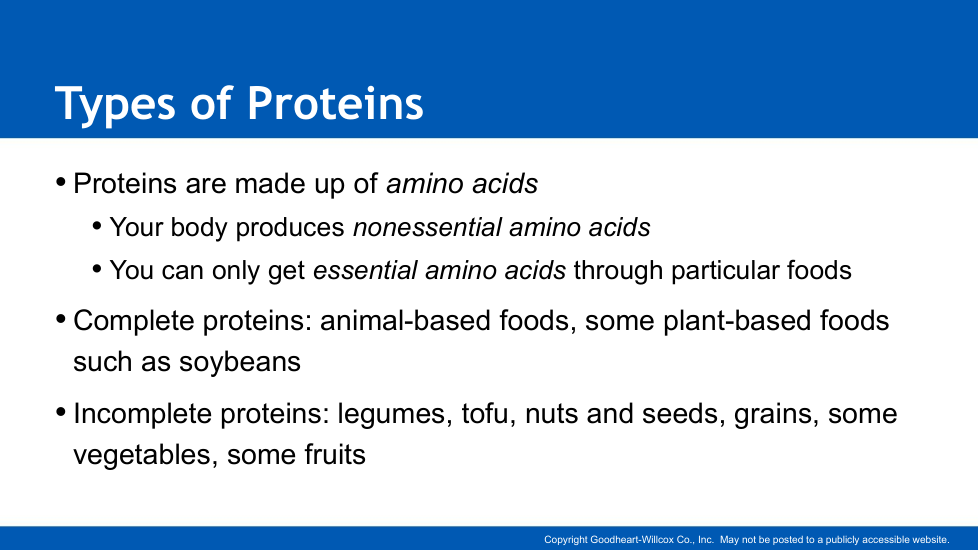
Which type of foods provide complete proteins?
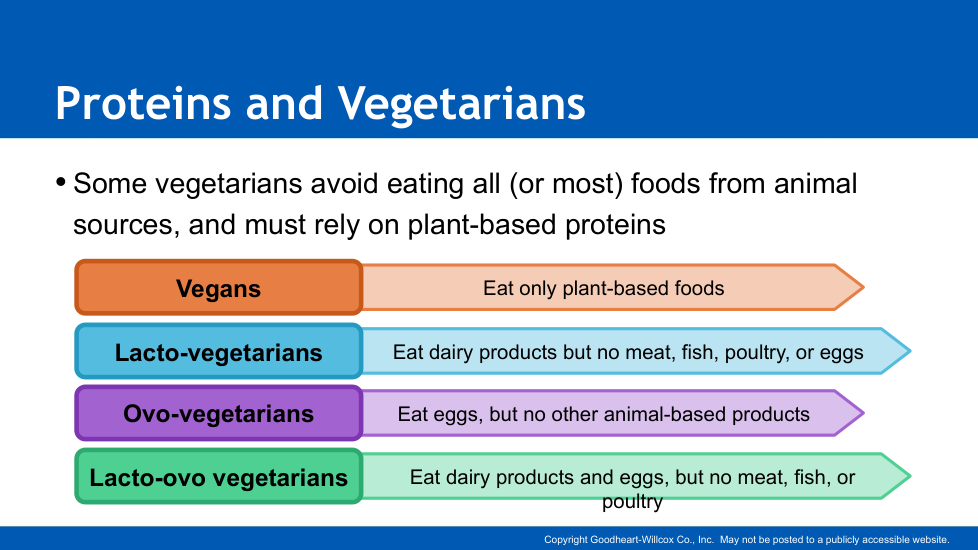
Animal-based foods
Nuts and seeds
Grains
Legumes
Question 15
15.
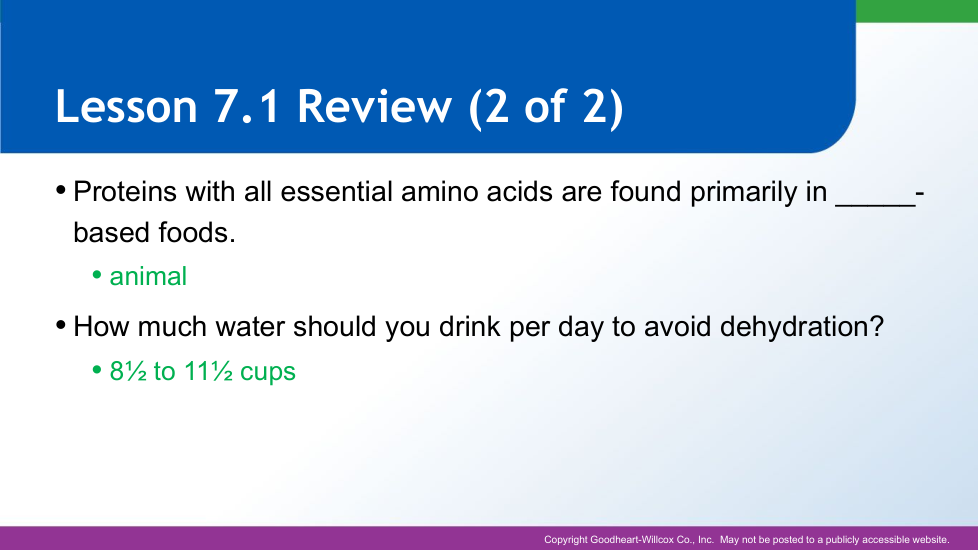
Where can you find essential amino acids?
All foods
Particular foods
Any food
Processed foods
Question 16
16.
What are nonessential amino acids produced by?
Processed foods
Your body
Plants
Supplements
Question 17
17.
What type of foods provide incomplete proteins?
Meat
Fish
Soybeans
Tofu
Question 18
18.
Which function does body fat NOT provide?
Direct control of temperature
Energy supply
Storage of excess calories
Protection for organs
Question 19
19.
What does excess calories get stored as?
Carbohydrates
Body fat
Muscle energy
Proteins
Question 20
20.
What is one important function of body fat?
Energy source
Temperature regulator
Acts as a cushion
External protection
Question 21
21.
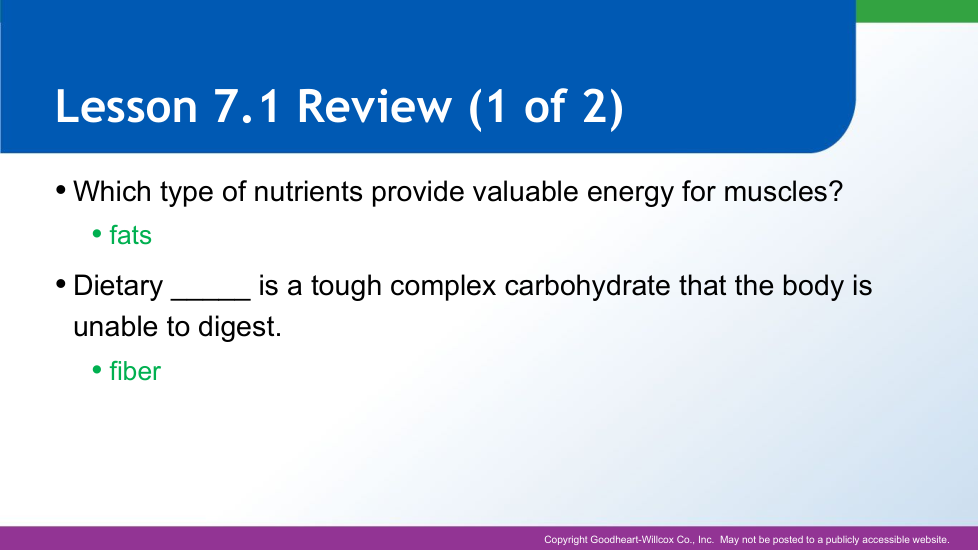
What is a primary source of energy for muscles?
Proteins
Fats
Vitamins
Minerals
Question 22
22.
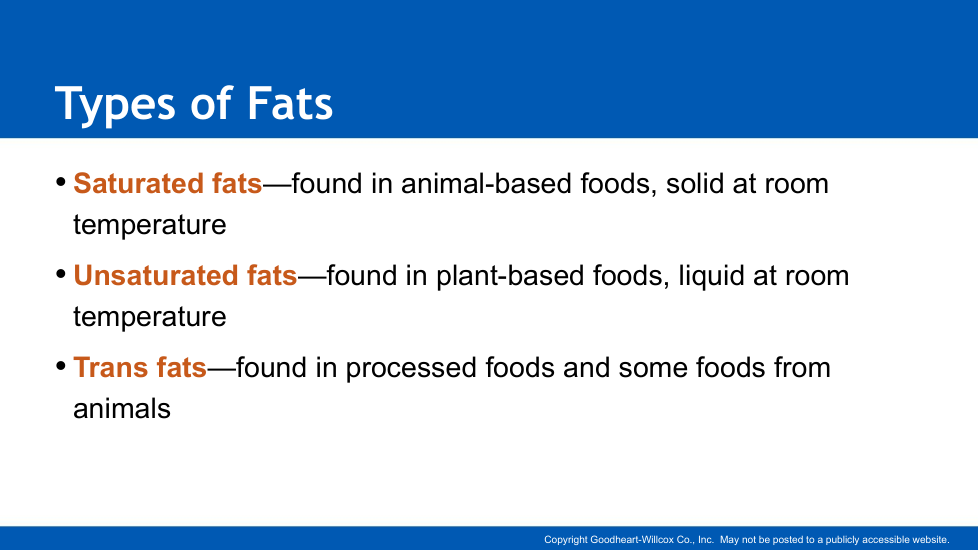
Which type of fat is solid at room temperature?
Trans fats
Unsaturated fats
Monounsaturated fats
Saturated fats
Question 23
23.
Which type of fat is found in plant-based foods?
Unsaturated fats
Trans fats
Polyunsaturated fats
Saturated fats
Question 24
24.
Which type of fat is commonly found in processed foods?
Trans fats
Unsaturated fats
Omega-3 fats
Saturated fats
Question 25
25.
Which type of fat is found in some foods from animals?
Unsaturated fats
Saturated fats
Polyunsaturated fats
Trans fats
Question 26
26.
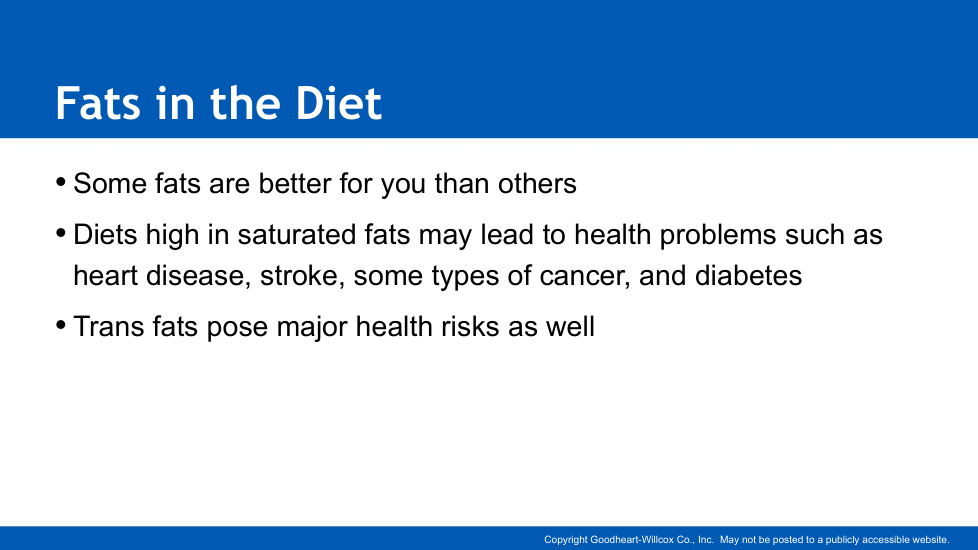
Which type of fats may lead to health problems?
Trans
Monounsaturated
Saturated
Polyunsaturated
Question 27
27.
What health risks are associated with trans fats?
Improved vision
Better sleep
Stronger muscles
Heart disease
Question 28
28.
What can diets high in saturated fats lead to?
Increased intelligence
Immortality
Diabetes
Super strength
Question 29
29.
Why are some fats better for you than others?
Health benefits
Faster aging
Weakened immune system
Reduced energy
Question 30
30.
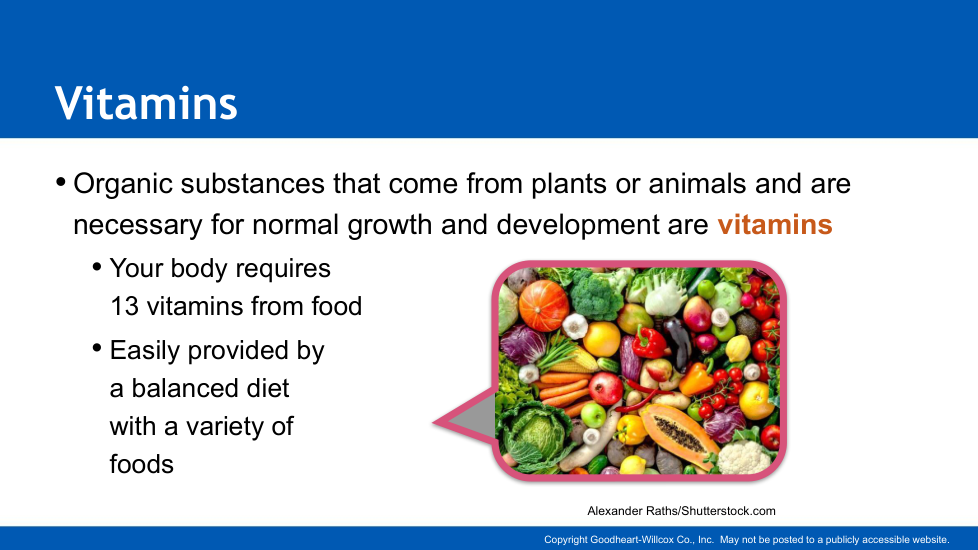
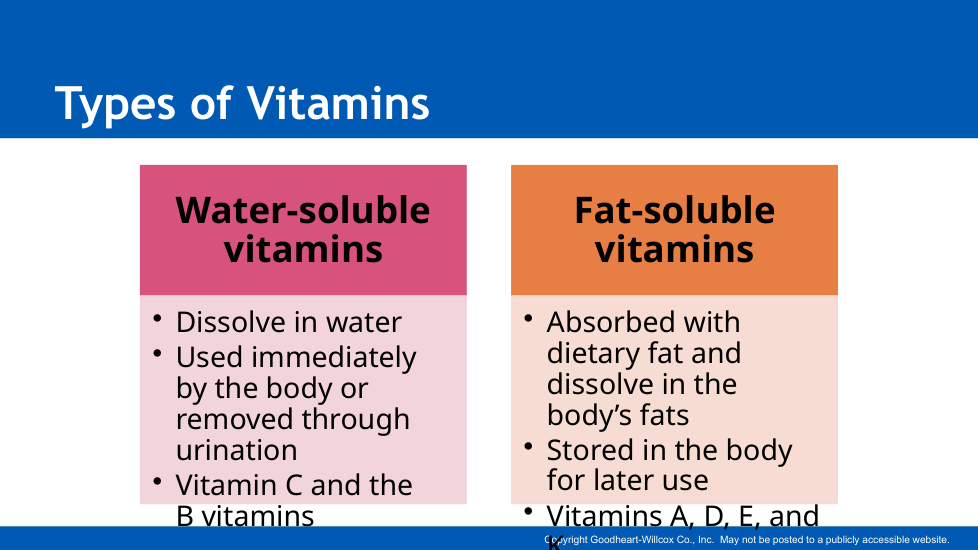
What are organic substances necessary for growth and development?
Carbohydrates
Vitamins
Proteins
Minerals
Question 31
31.
How many vitamins does the body need from food?
13
7
5
10
Question 32
32.
What type of diet easily provides the necessary vitamins?
Balanced diet
High-sugar diet
Deep-fried diet
Fast food diet
Question 33
33.
Where can vitamins be found to meet the body's needs?
Synthetic supplements
Plants and animals
Water and air
Rocks and minerals
Question 34
34.
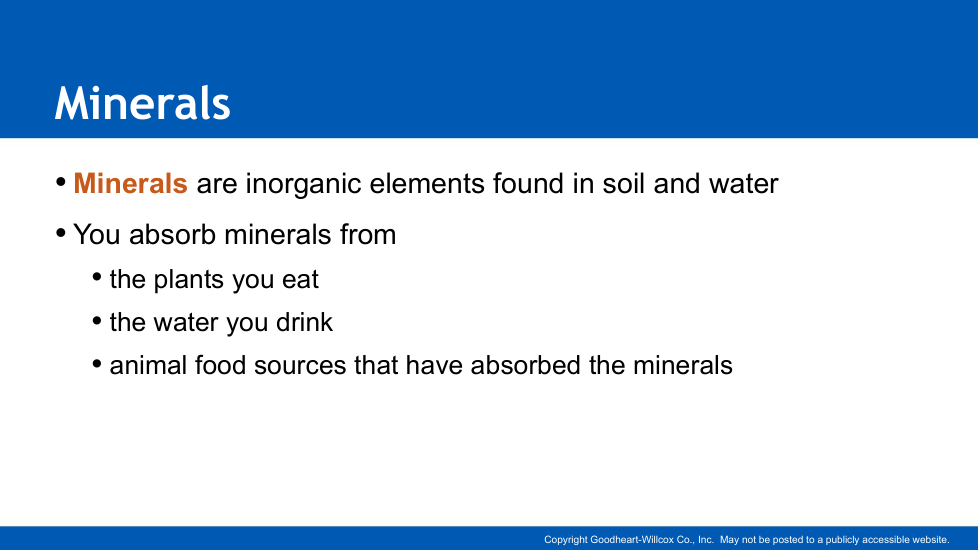
Where do you absorb minerals from?
Air you breathe
Plants you eat
Animal food sources that have absorbed minerals
Processed foods
Question 35
35.
What are minerals?
Proteins
Inorganic elements found in soil and water
Organic compounds
Vitamins
Question 36
36.
Which sources contain minerals for absorption?
Dairy products
Sugary drinks
Water you drink
Alcohol
Question 37
37.
How are minerals obtained from the environment?
Inhaling minerals
Direct absorption through skin
Drinking mineral-rich water
Plants absorb from soil and you ingest through them
Question 38
38.
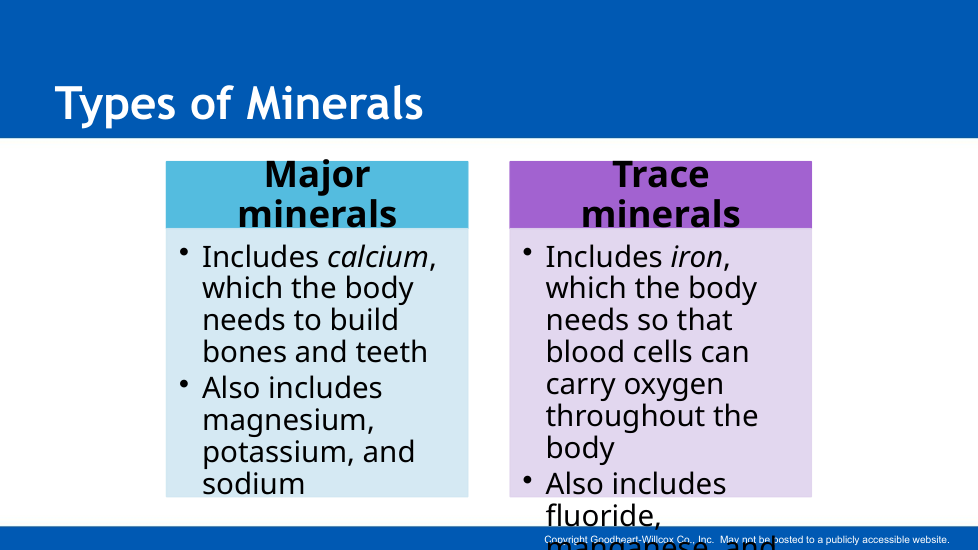
Which mineral is needed for building bones and teeth?
Zinc
Calcium
Fluoride
Iron
Question 39
39.
Which mineral helps blood cells carry oxygen throughout the body?
Sodium
Magnesium
Potassium
Iron
Question 40
40.
Which mineral is found in salt and helps with nerve function?
Manganese
Sodium
Fluoride
Zinc
Question 41
41.
Which mineral is important for strong muscles and potassium balance?
Magnesium
Iron
Sodium
Calcium
Question 42
42.
Why is water necessary for the body?
It's not essential
It causes dehydration
It's for flavor
It helps the body work properly
Question 43
43.
How does the body lose water daily?
By sleeping
Through urination, sweat, and exhalation
Through tears
Through eating
Question 44
44.
Which activity does not lead to water loss?
Sweating during exercise
Sweating on a hot day
Breathing in oxygen
Urination
Question 45
45.
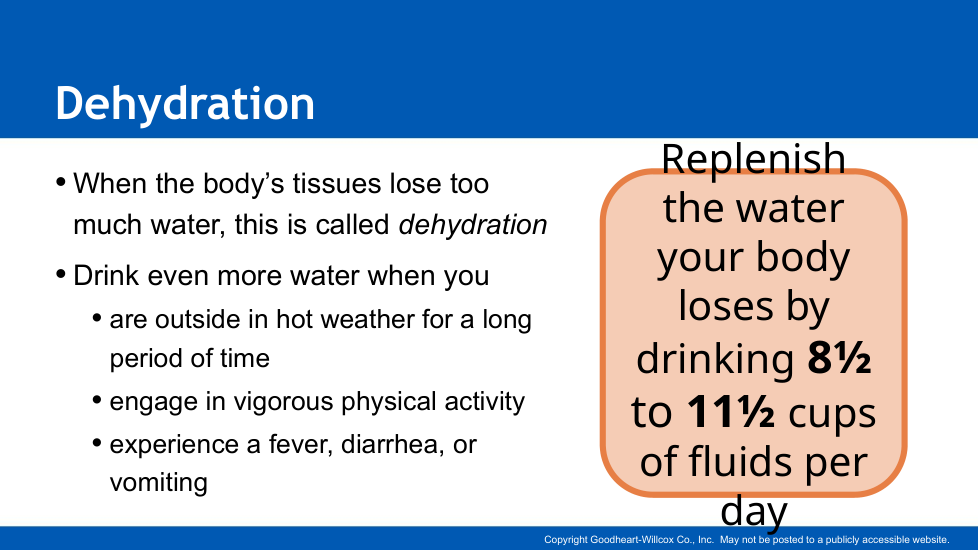
What happens if the body doesn't get enough water?
Dehydration can occur
Stronger muscles
Vitamin overdose
Improved digestion
Question 46
46.
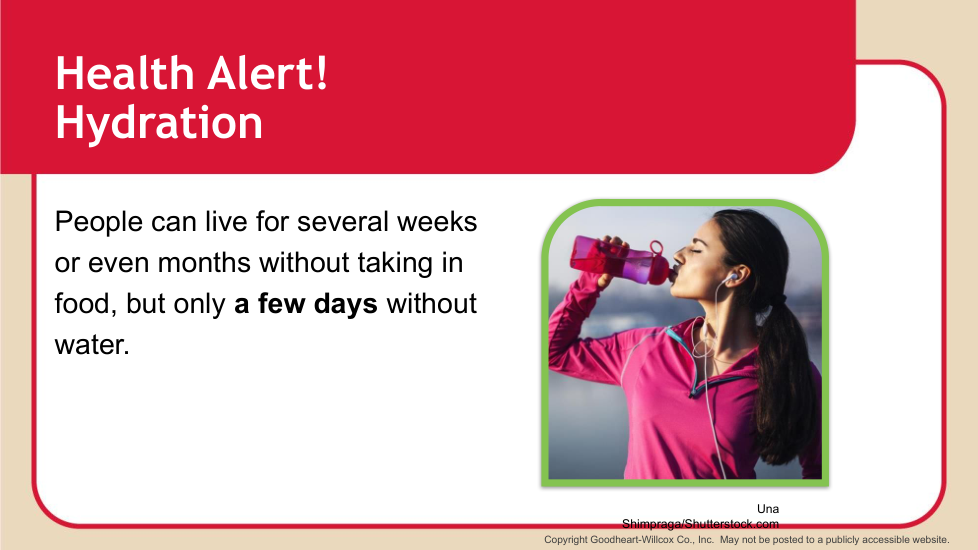
Why is it important to drink more water when outside in hot weather?
To improve concentration
To prevent dehydration
To warm up the body
To lose weight faster
Question 47
47.
When should you drink even more water?
After a big meal
When watching TV
During vigorous physical activity
Before going to bed
Question 48
48.
What can lead to the need for increased water intake?
Eating chocolate
Listening to music
Fever, diarrhea, or vomiting
Sleeping too much
Question 49
49.
What happens if the body loses too much water?
Weight gain
Dehydration occurs
Decreased heart rate
Improved vision