Complete the sentences about natural selection.
Use the words from the list:
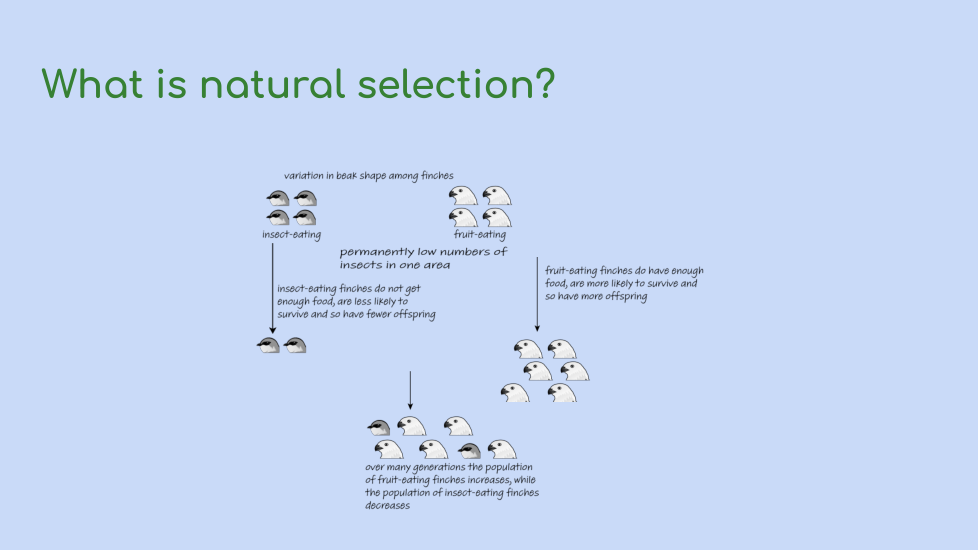
offspring reproduce compete variation
There are differences in the traits of individuals of a species, this is called
Some of these differences give individuals an advantage over each other, this makes them more likely to
They are then more likely to survive,
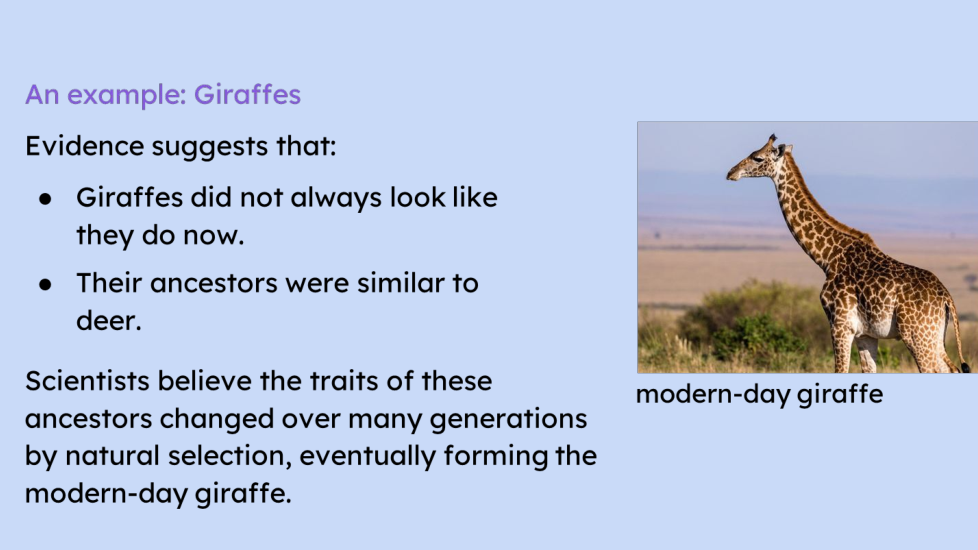
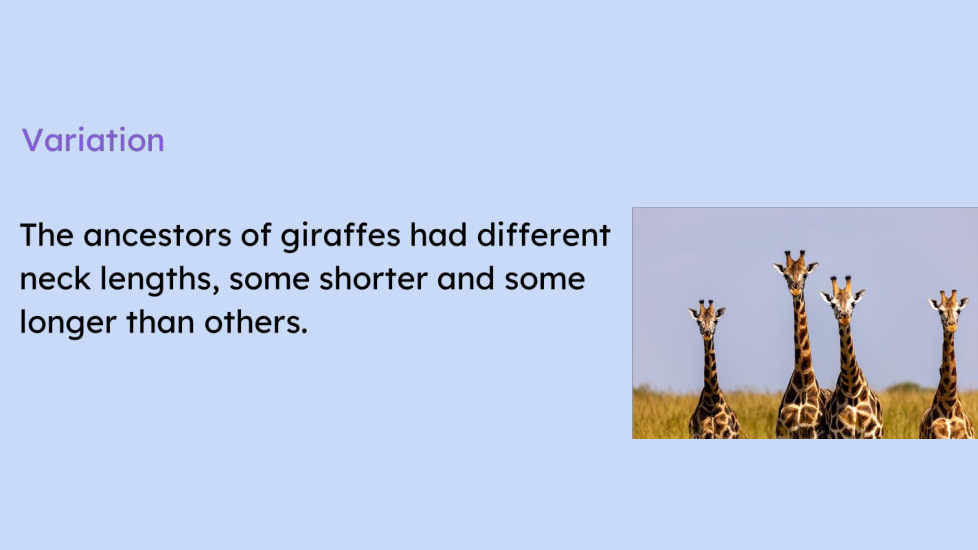
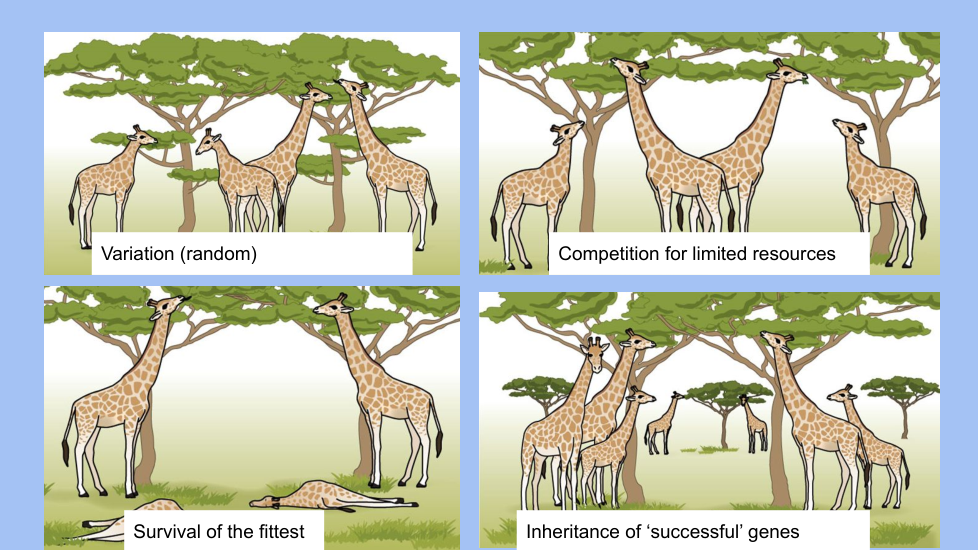
Some giraffes had short necks; others had long necks.
Select the reason why.
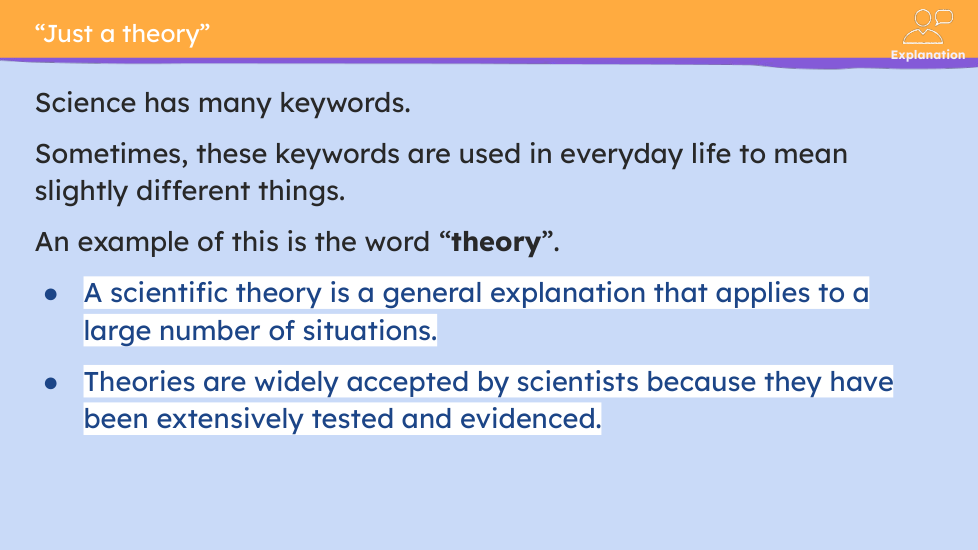
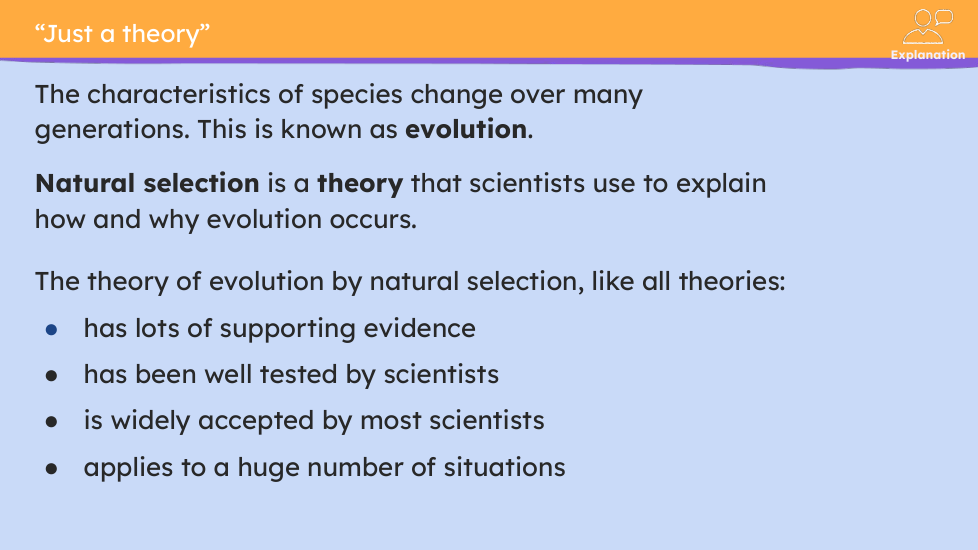
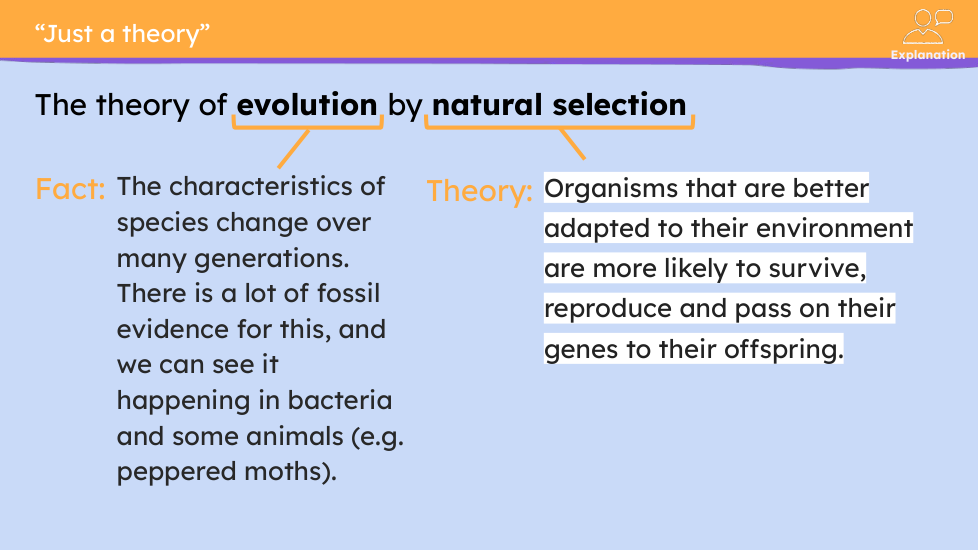
Which of the following are features of a scientific theory?
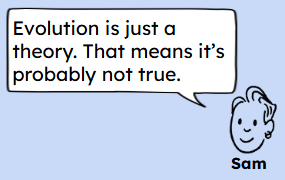
Sam is learning about the theory of evolution by natural selection at school.
Sam says the following:
Is Sam's understanding correct or not?
Explain why
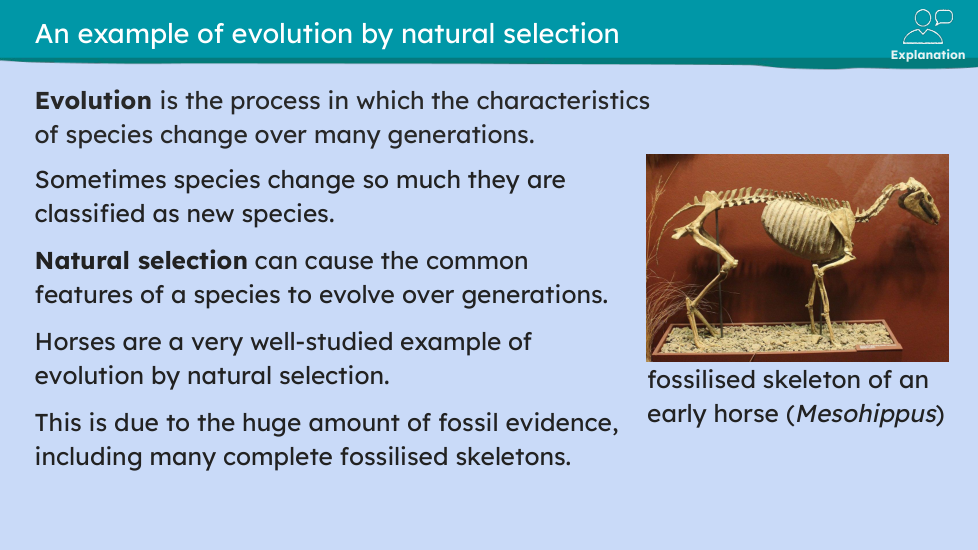
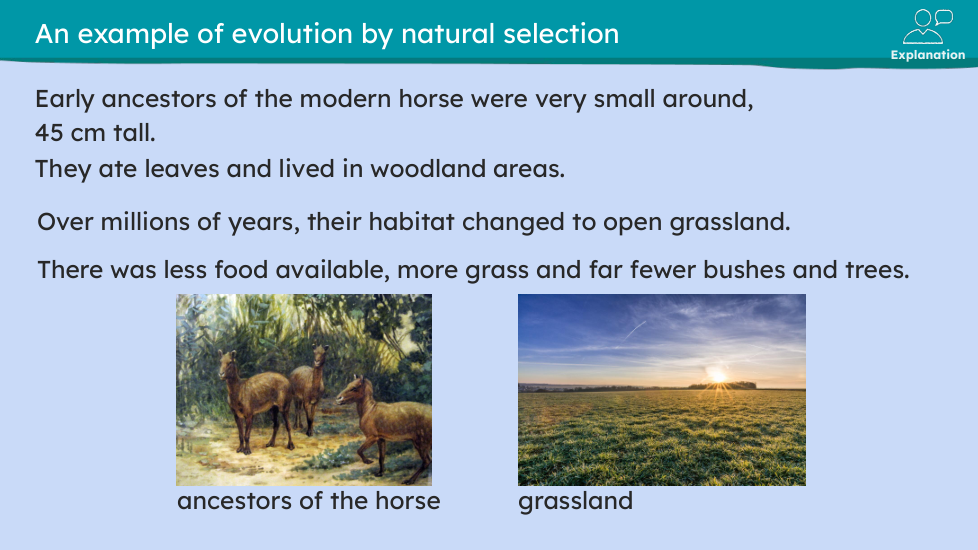
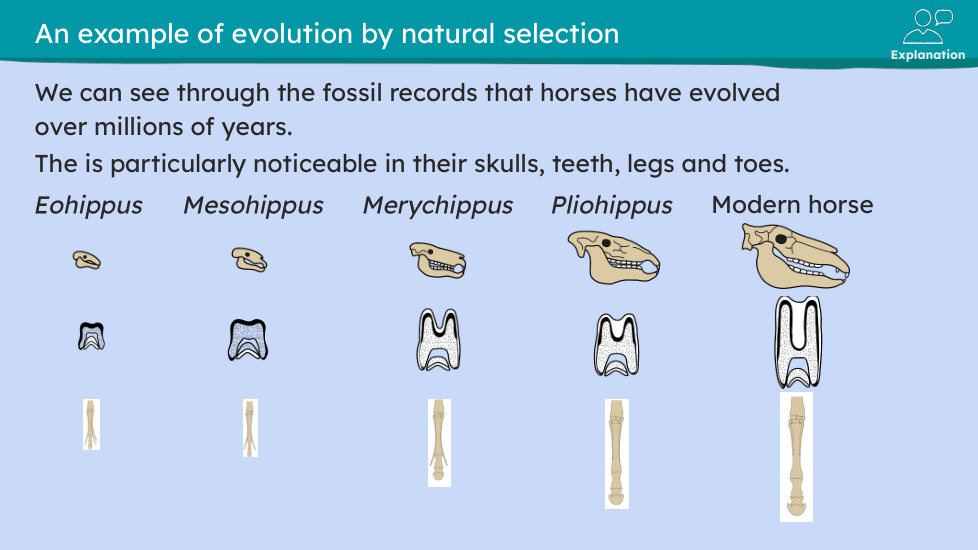
What evidence is there to support the evolution of horses across millions of years?
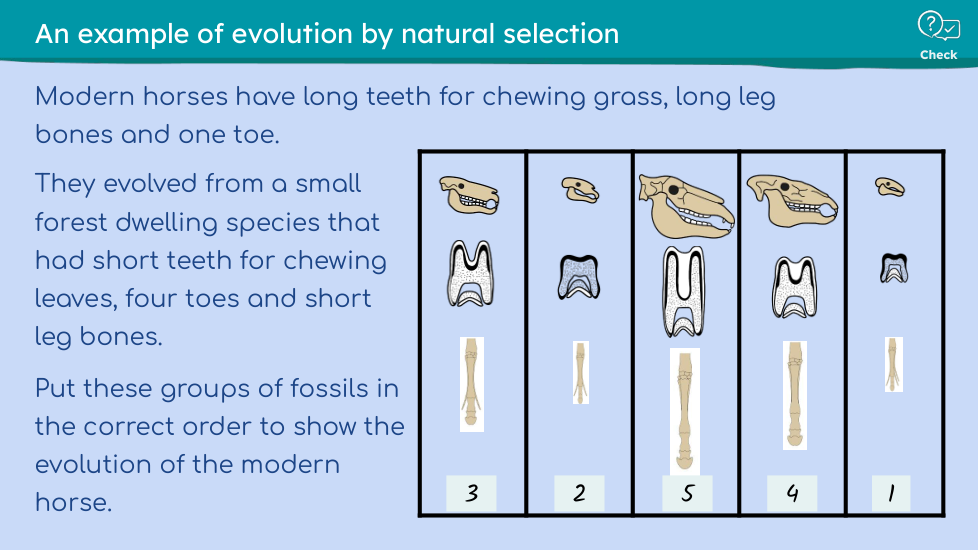
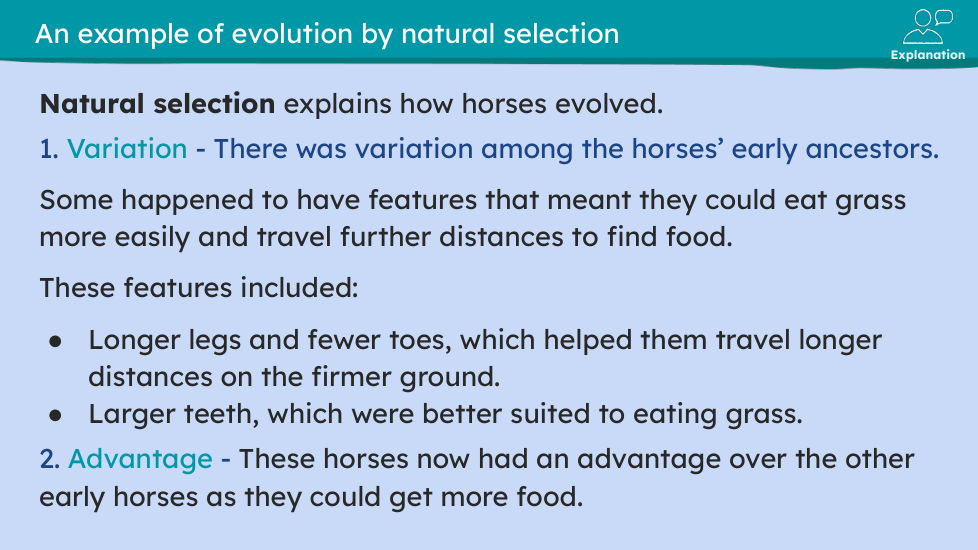
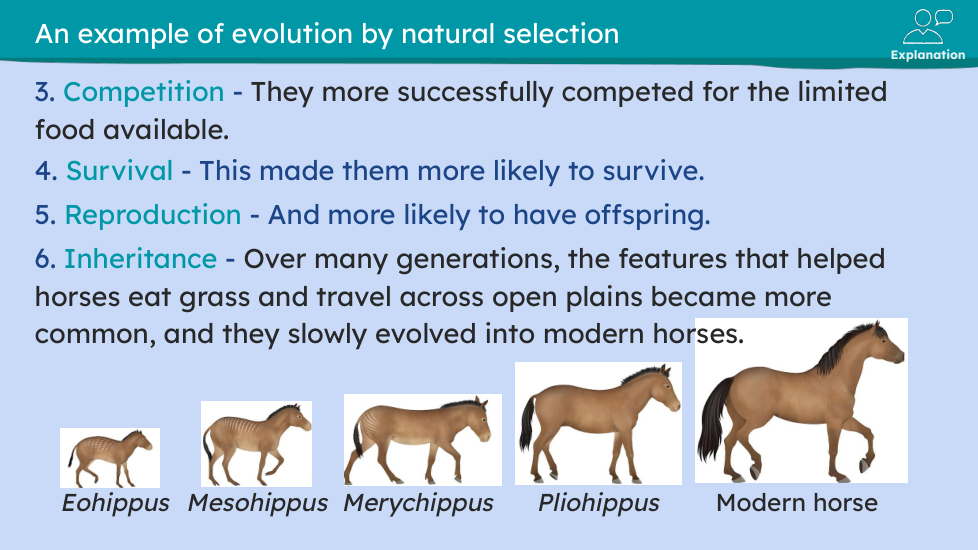
The early horse’s environment changed. This caused the early horse to adapt itself to survive.
Justify your answer:
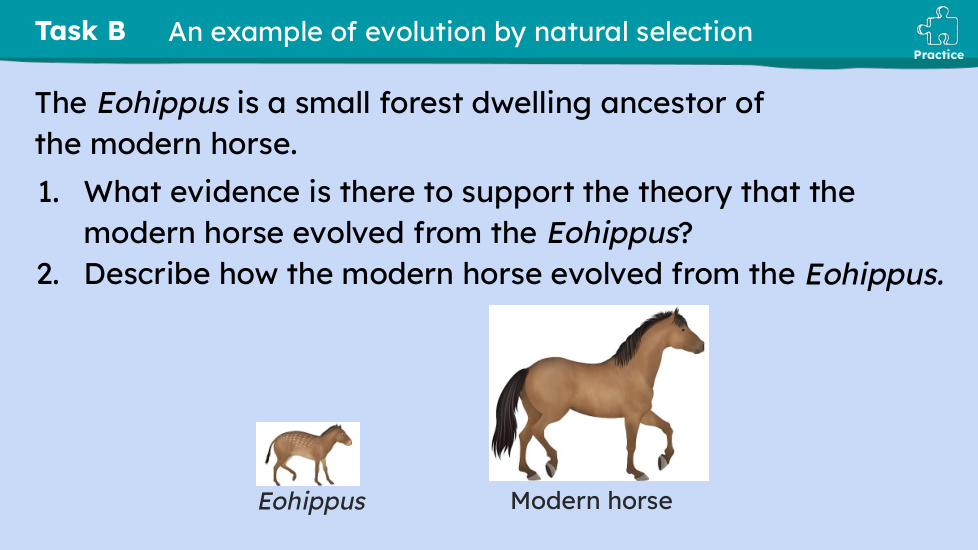
What evidence is there to support the theory that the modern horse evolved from the Eohippus?
Describe how the modern horse evolved from the Eohippus.
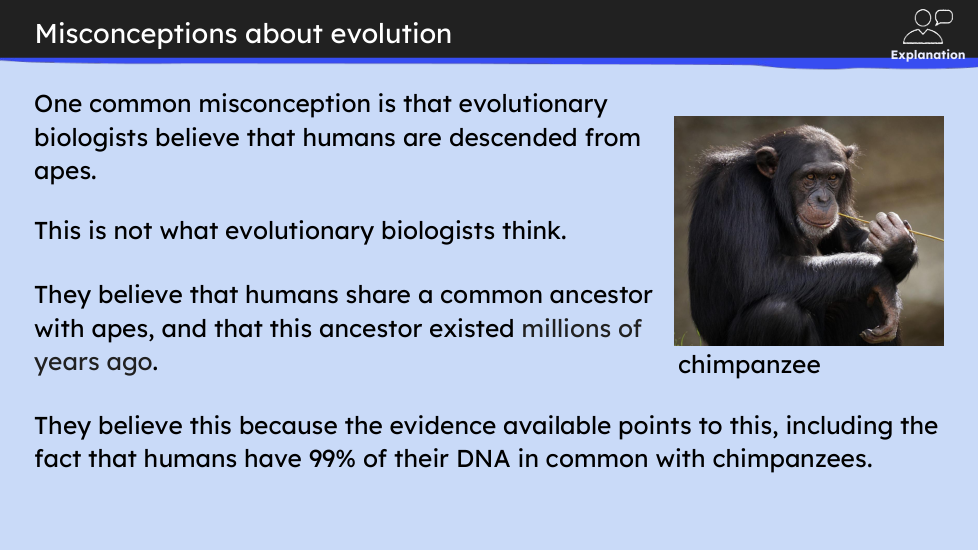
Humans evolved from chimpanzees.
Justify your answer:
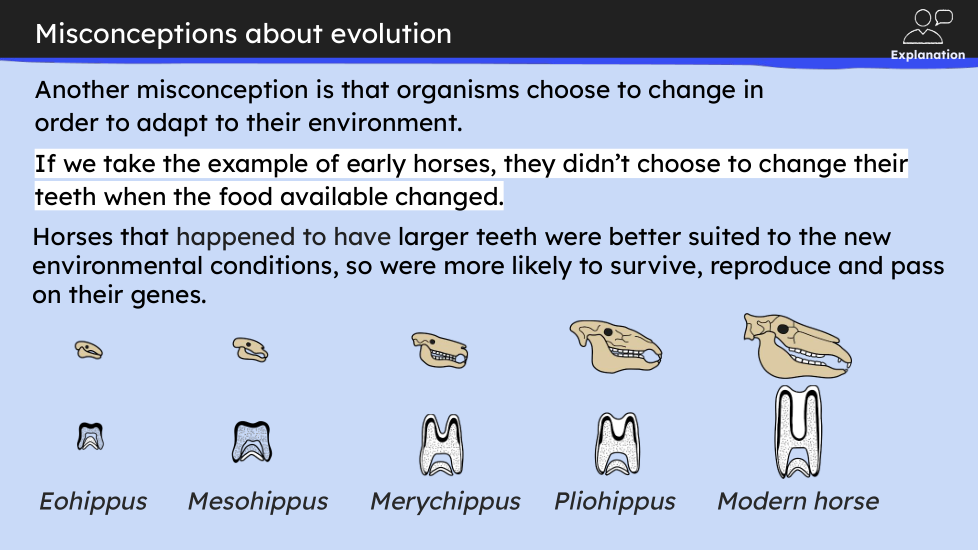
The early horses’ environment changed so …
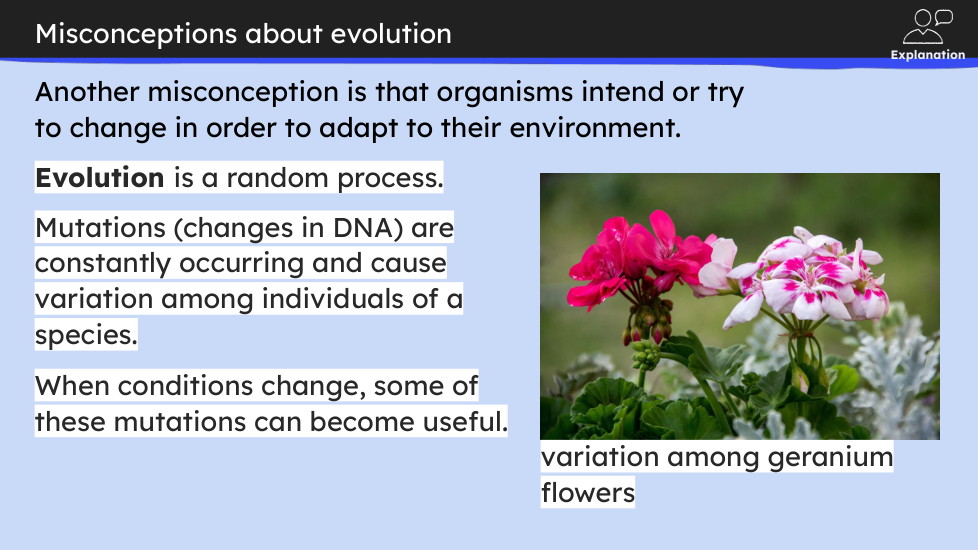
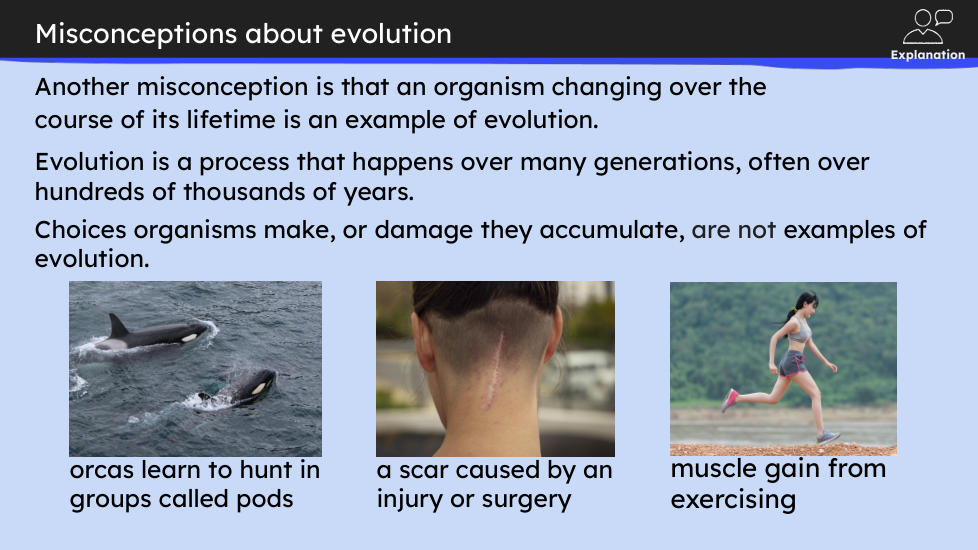
Which of the following statements could be examples of evolution by natural selection?
This article is taken from a news website:
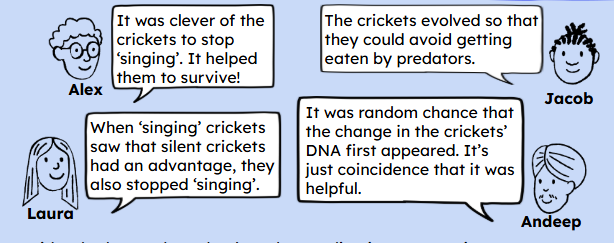
Crickets are insects that make a ‘singing’ noise by rubbing their wings together. The noise can often be heard on warm summer nights.
However, in 2003 scientists on a Hawaiian island found a few crickets that were no longer able to ‘sing’. This was due to a change in the crickets’ DNA, which changed the shape of their wings.
The scientists think that not ‘singing’ helped these few crickets to avoid predators. Perhaps they lived to die of old age – which for a cricket happens after only a few months!
Ten years later most of the crickets on the island were unable to ‘sing’. Silence had fallen!
Decide whether each student’s understanding is correct or incorrect.
Explain your answers.