Year 10 Energy changes

Last updated 5 months ago
31 questions
1

Identify the type of change for the reaction: NaCl(s) + H₂O(l) → NaCl(aq)

a salts dissolving in water b neutralisation reactions c displacement reactions d precipitation reactions

1

Identify the type of change for the reaction: NaOH + HCl → NaCl + H₂O

a salts dissolving in water b neutralisation reactions c displacement reactions d precipitation reactions

1

Identify the type of change for the following reaction: Cl₂ + 2NaBr → 2NaCl + Br₂

a salts dissolving in water

b neutralisation reactions

c displacement reactions

d precipitation reactions

1

Identify the type of change for the following reaction: Fe + CuSO₄ → FeSO₄ + Cu
a salts dissolving in water b neutralisation reactions c displacement reactions d precipitation reactions

1

Identify the type of change for the reaction: AgNO₃(aq) + NaCl(aq) → NaNO₃(aq) + AgCl(s)

Hint - look at the state symbols

1

In an exothermic reaction, heat energy is:_________________ to the surroundings.

1

In an endothermic reaction, heat energy is:________________________ from the surroundings.

1

Bond breaking is:

1

Bond forming is:

1

In an exothermic reaction:

1

In an endothermic reaction:

1
What is the minimum energy needed to break the bonds in the reactants is called _______________energy.
Other Answer Choices:
activation
4

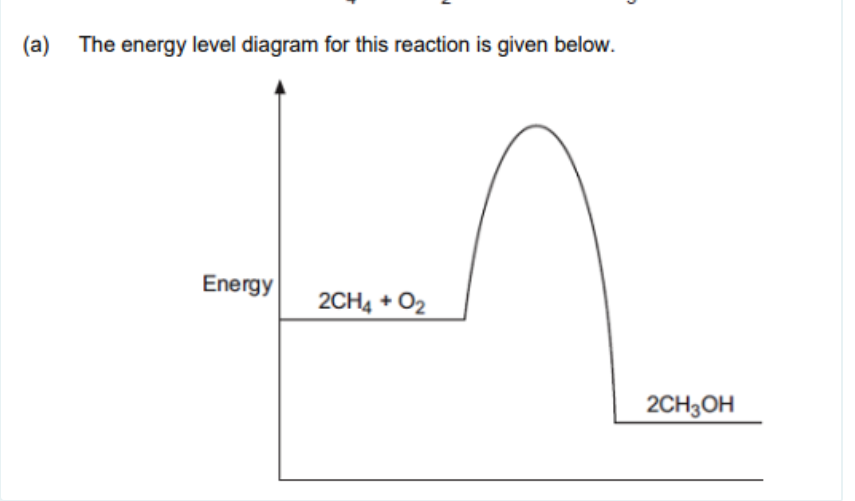
Combustion of methane

This is a reaction profile diagram for an _______________ reaction. (1 Point)
Energy needed to break the bonds in the ______________(the _______________energy)
is less than the energy released when the bonds form in the _____________.
Copy this diagram and explanation into your exercise books.
Other Answer Choices:
reactants
products
exothermic
endothermic
activation
1

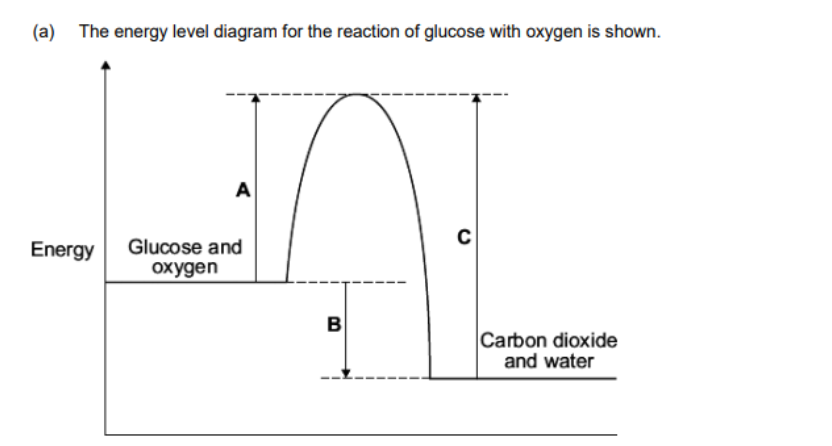
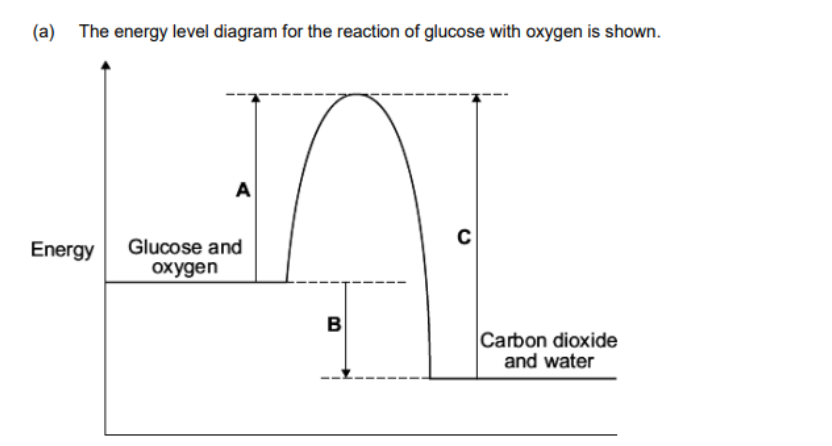
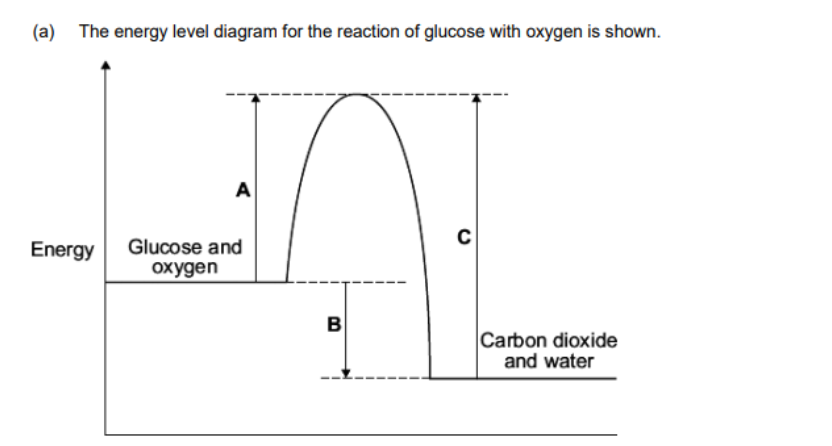
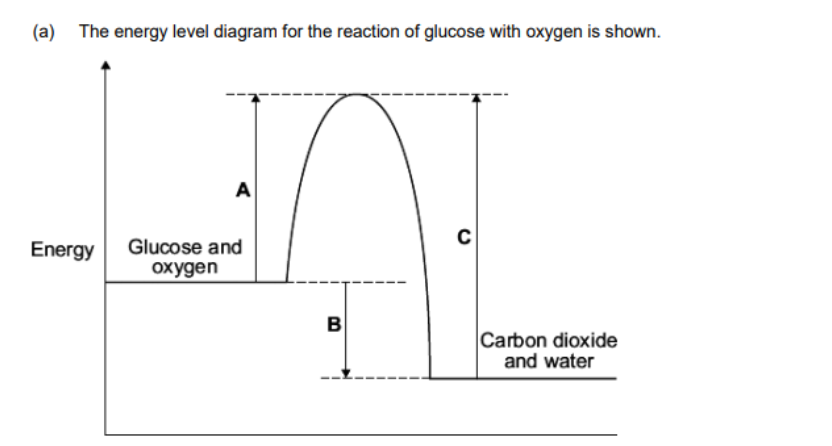
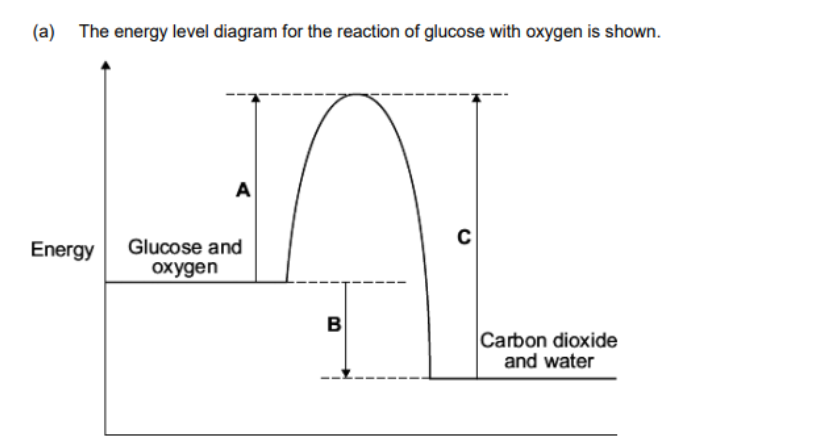
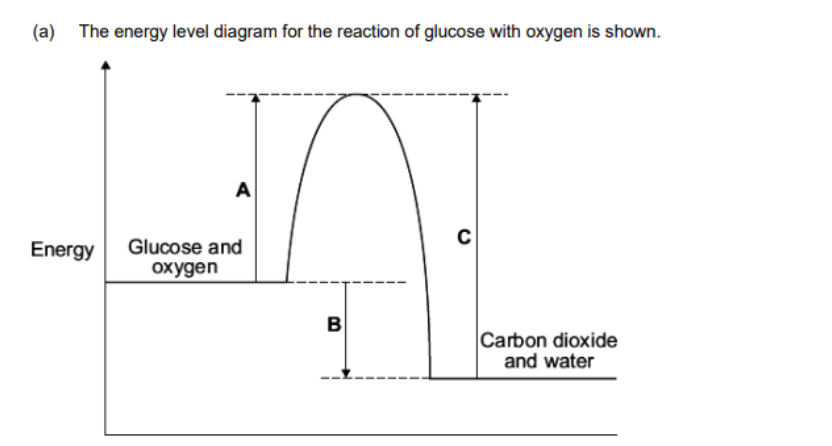
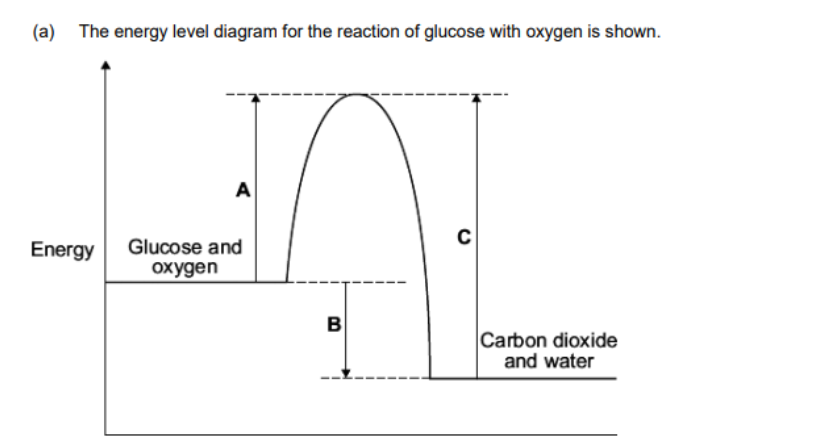
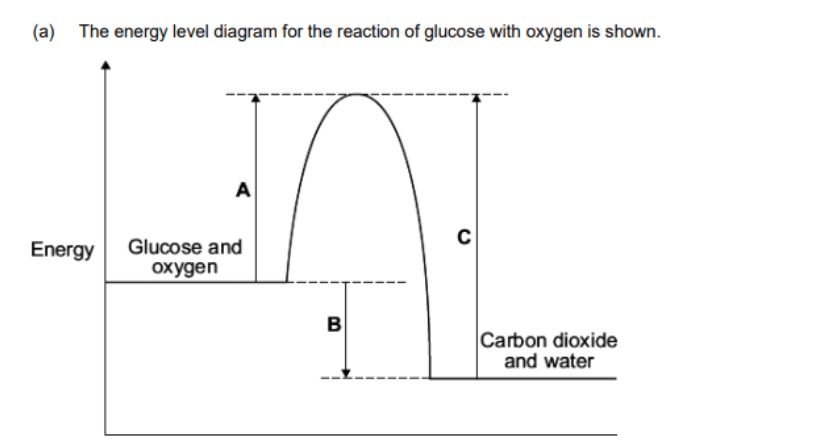
Respiration

This is a reaction profile diagram for an _______________ reaction. (1 Point)
Energy needed to break the bonds in the ______________(the _______________energy)
is less than the energy released when the bonds form in the _____________.

Other Answer Choices:
exothermic
endothermic
products
activation
reactants
1

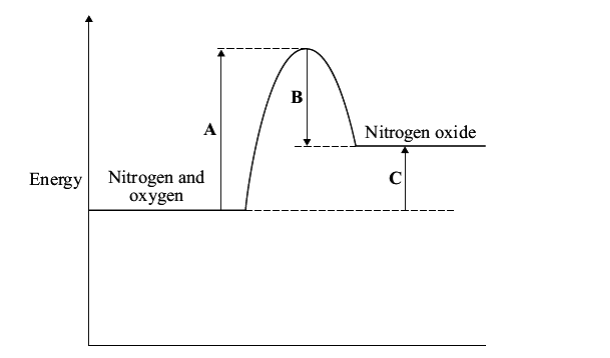
Which letter represents the activation energy? A, B, or C? (1 Point)

1


Which letter represents the overall energy change? (1 Point)

1

Which letter represents the energy change for breaking bonds? A, B, or C? (1 Point)

1

Which letter represents the energy change for making bonds?
Note the arrow should be going downwards but this was a multiple choice question.

1

The energy change is endothermic or exothermic. (1 Point)

1

In this change, would the surroundings get hotter or cooler?
exothermic

1

In this change, the temperature of the surroundings would (1 Point) increase or decrease?

1
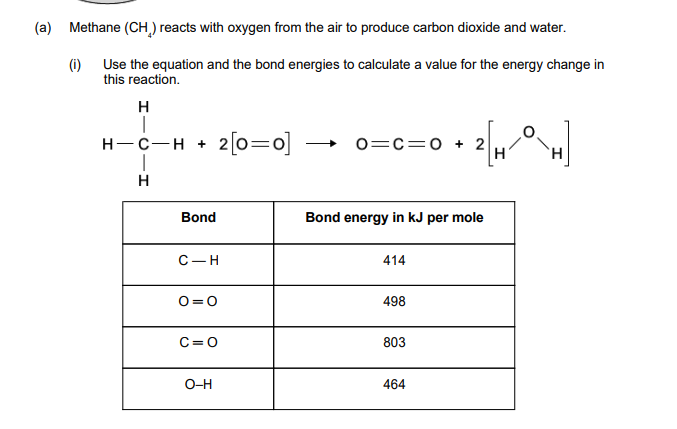
Calculate the energy change.

Total energy taken in to break bonds in the reactants

= 4 x C-H + 2 x O=O
= 4 x 414 + 2 x 498 = 2652_______ kJ / mol
Total energy given out when bonds form in products

= 2x C=O + 4 x O-H
= 2 x 803 + 4 x 464
= _______ kJ/mol
Energy change = energy to break bonds - energy to make bonds
= 2652 - 3462 = sign _______ value _______ kJ/mol.
Note this is an _______ reaction so energy is released to the surroundings and the temperature of the surroundings _______
1
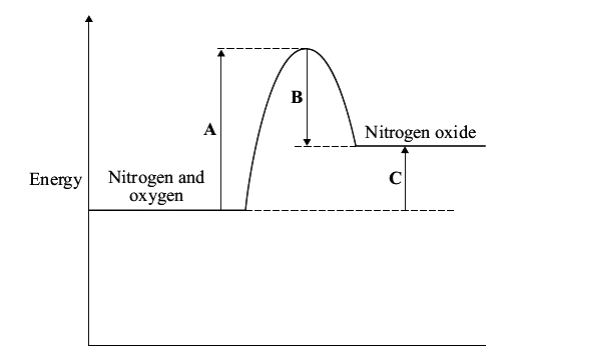
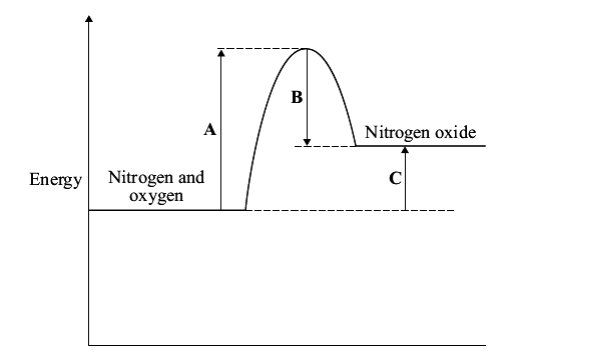
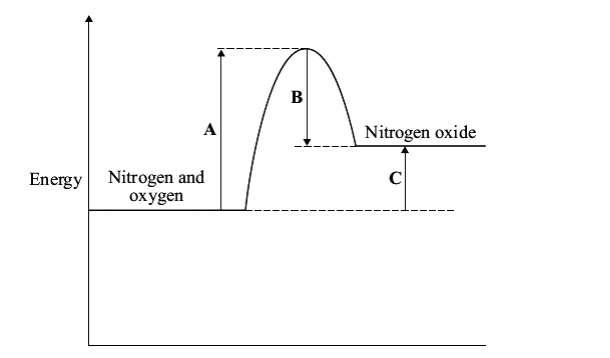
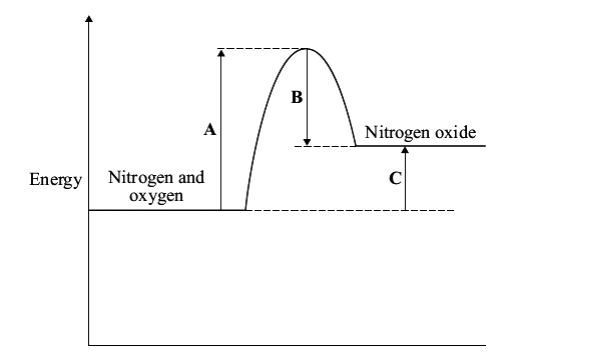
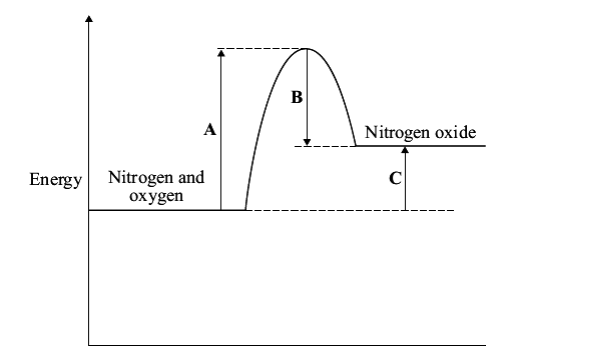
This reaction profile shows an ________________ reaction.
Activation energy = ______
Energy needed to break bonds in reactants = ______
Energy released when new bonds form in the products = ______
Energy change in the reaction = ______
Energy in to break bonds is less than energy released to make bonds so the reaction is ________________.
The reaction takes in energy so the surrounding will lose energy and the temperature will _____________

Other Answer Choices:
A
exothermic
decrease
endothermic
B
B
increase
1

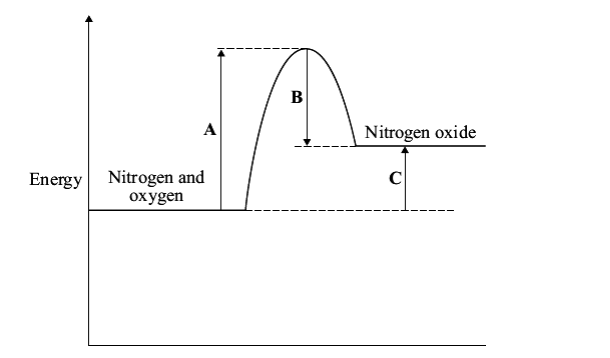
Which letter represents the activation energy?

1

Which letter represents the energy needed to break the bonds in the reactants? A, B, or C? (1 Point)

1

Which letter represents the energy needed to form the bonds in the products? (1 Point)

1

Which letter represents the energy change for the reaction? (1 Point)

1

The temperature of the surroundings will:

1

Please choose the correct statement.

6

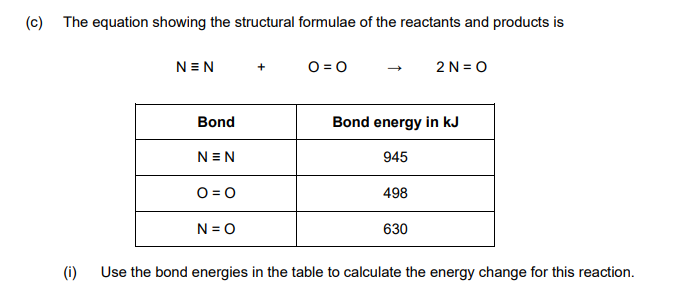
Energy needed to break the bonds in the reactants
= 1 x N=N + 1 x O=O
= 945 + 498
= _______ kJ/mol
Energy given out when bonds form in the products
= 2 x N=O
= 2x 630
= _______ kJ/mol
Energy change = energy needed to break bonds - energy released when bonds form
= 1413 - 1260
= sign _______ value _______
The energy change is positive so the reaction is _______ and the temperature of the surroundings will _______
1

Draggable itemCorresponding Item
Energy change calculation
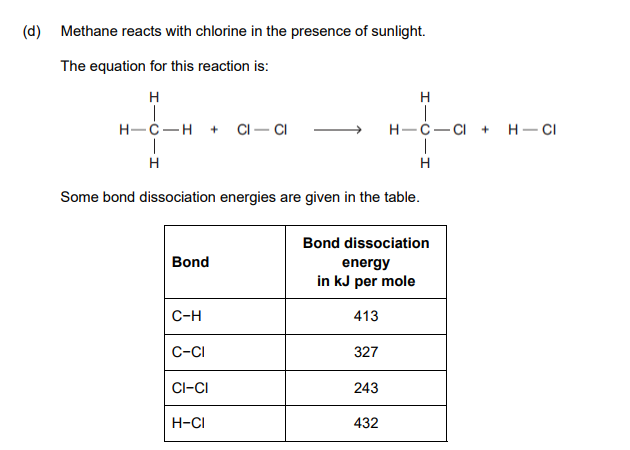
4 x C-H + Cl-Cl
Energy to break bonds
= 4 x 413 + 243
Sum of energy to break bonds
= 1895 kJ / mol
Bonds made =
3 x C-H + 1 x C-Cl + H-Cl
Bond broken =
= 3 x 413 + 327 + 432
Reaction is
= 1998
Energy to make bonds
= bonds broken - bonds made
Energy change value
1895 - 1998
Sum of energy to make bonds
-103 kJ/mol
Energy change formula
exothermic