Air Mass
A large body of air that has a similar temperature and water content or humidity throughout is called an air mass. Air masses have similar temperature and moisture/dryness. When different air masses meet it causes the weather to change.
Fronts
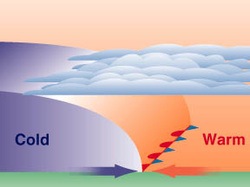
When two different air masses collide a front forms. Typically this is the boundary between cold and warm air masses.
Weather
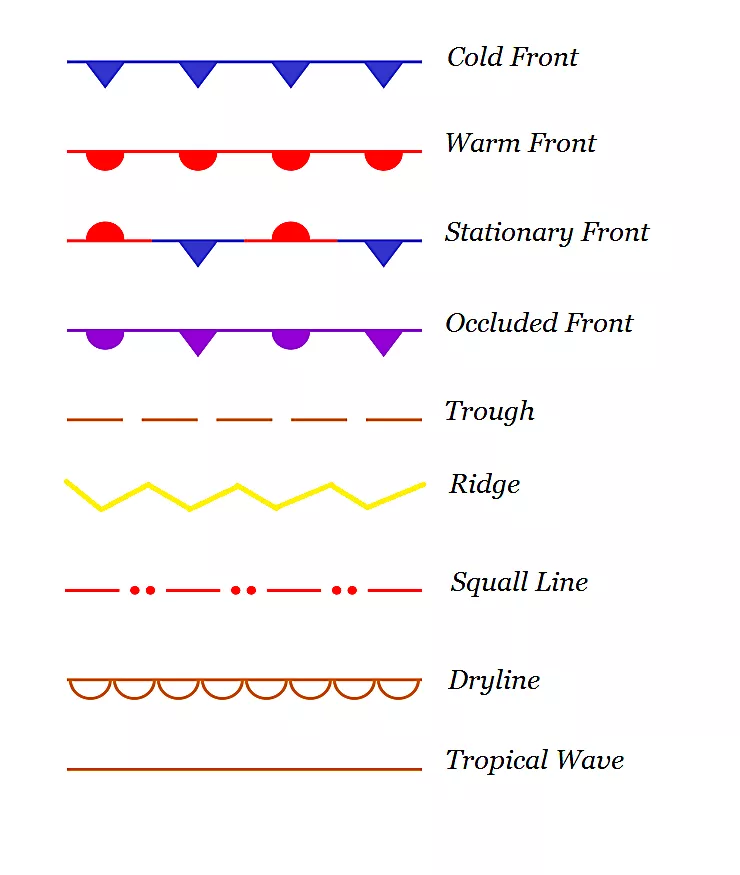
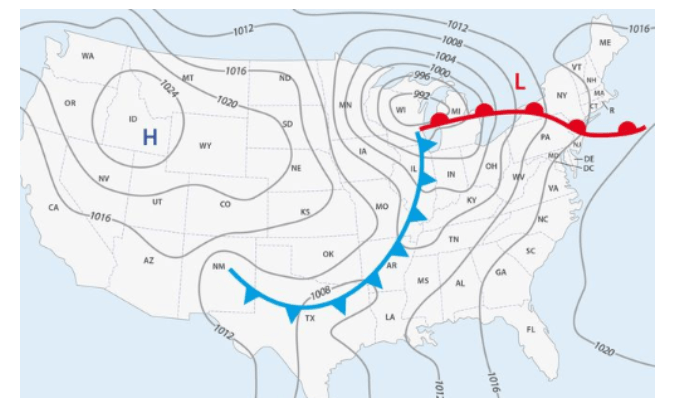
Weather fronts appear as different colored lines that extend outward from the pressure center. They mark the boundary where two opposite air masses meet.
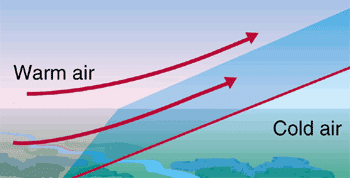
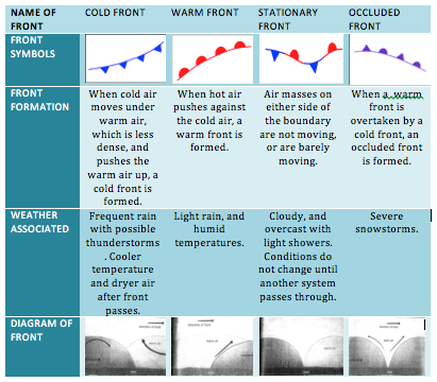
Warm fronts are indicated by curved red lines with red semicircles.
Light rain and humid temperatures
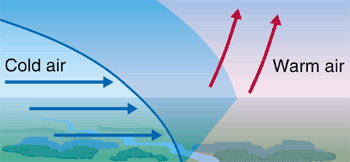
Cold fronts are curved blue lines with blue triangles.
likely to produce thunderstorms
violent storms generally form
Stationary fronts have alternating sections of red curves with semicircles and blue curves with triangles.
Neither air mass that meets is stronger, so it doesn't move
it can stay over one area for a long time
Occluded fronts are curved purple lines with both semicircles and triangles. Weather fronts are found only on surface weather maps.