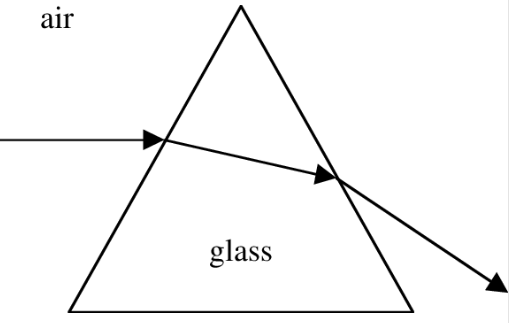
Explain how a prism can split white light into a spectrum of colours.
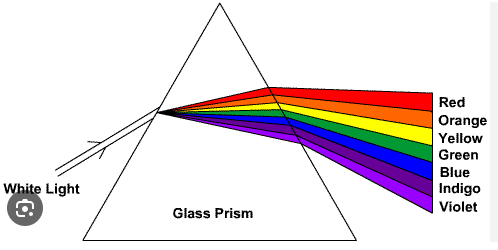
Explain how a prism can split white light into a spectrum of colours.
Explain how the direction of light changes when it passes from air into water. Include an explanation of the concept of refraction.
Describe how light is involved in the process of vision. Include details about how light interacts with the eye.
Explain why objects appear a certain color in daylight but may appear different under artificial lighting. Relate your answer to how light behaves.
Compare and contrast transparent, translucent, and opaque materials, providing an example for each.
Explain why a pencil placed in a glass of water appears bent or broken at the water's surface.
Explain how a prism can split white light into a spectrum of colours.
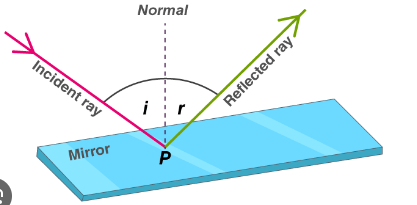
Describe what we can say about the angle of incidence and the angle of reflection
Explain using your knowledge of light why light bends as it enters and leaves the glass prism