Asemmisa {{asɛmmisaAhyɛnsode}}
1.
Edexcel chemistry entropy using system and surroundings
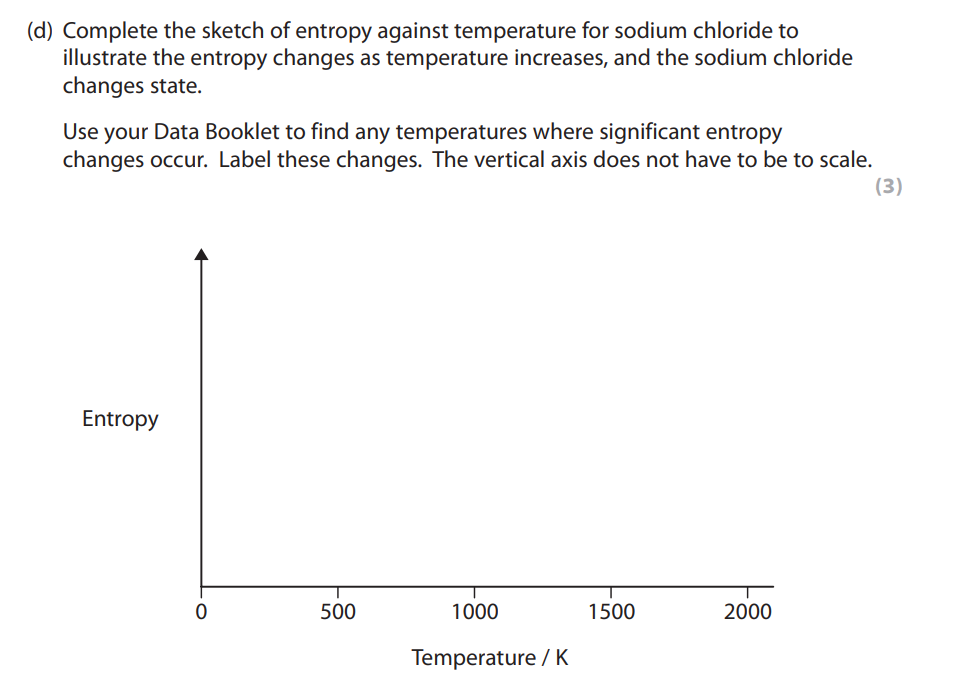
Hint MP = 801oC
Boiling point = 1413oC
Explain why the entropy of the system increases when sodium chloride dissolves in water. (2)
In the solid / lattice, the ions are (1) But in the solution the ions are /more dispersed / more spread out/ more random (so entropy has increased) (1)
(Dissolving results in) an increase in the number of moles of particles and from to / NaCl → Na+ + Cl−
(1) The bonds between the water molecules are disrupted
(High) positive value is expected because:
moles → moles.
(two) → and/or liquid (+ one solid)
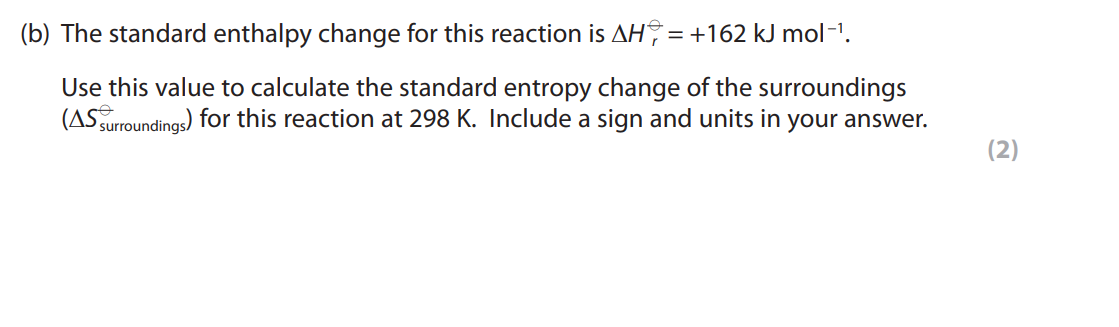
Entropy of the surroundings for an endothermic reaction is (1)
The reaction is feasible with the total entropy being (so entropy of the system has to be a large enough positive value for this to be true).
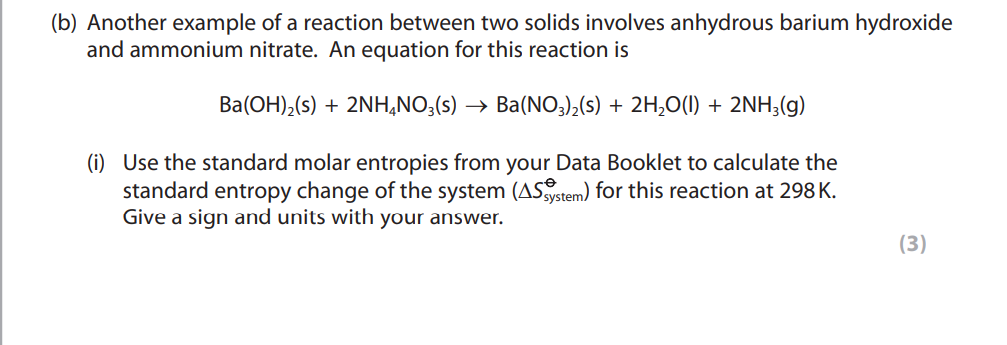
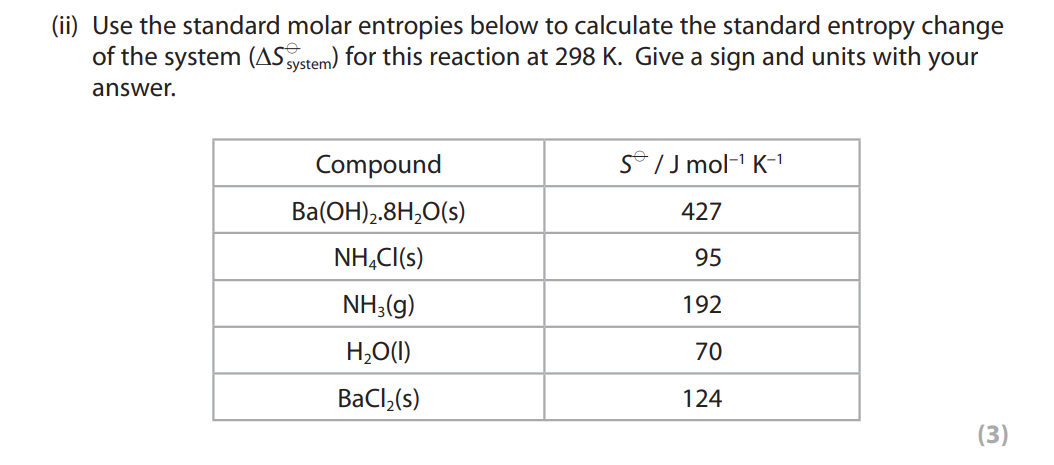
∆Sɵ system = (sign)
sign
value =
sign=
value =
sigh =
value =
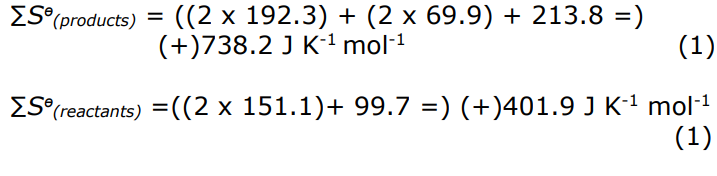
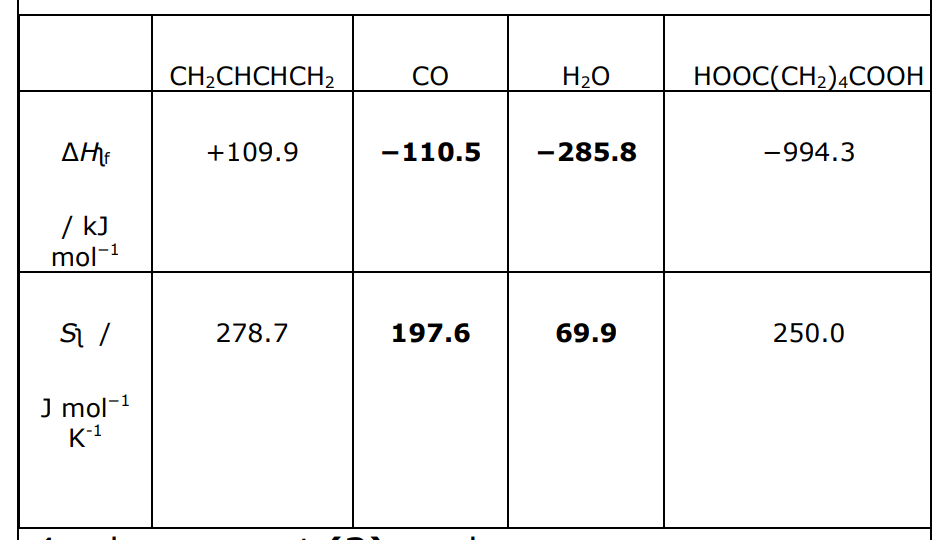
∑Sɵ (products) = +
∑Sɵ (reactants) = +
∆Sɵ system =
(iii) Give two reasons why the positive sign of your answer to (a)(ii) is as you would expect.
more moles of than (3 moles → 13 moles)
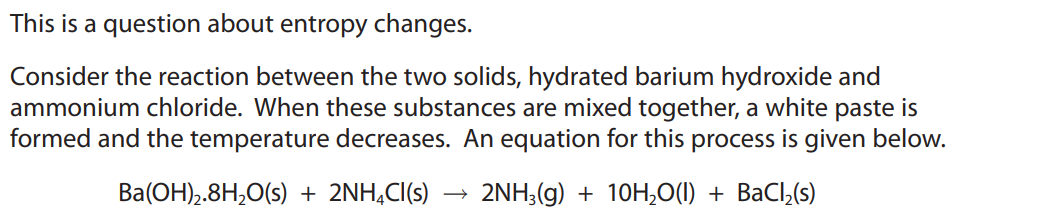
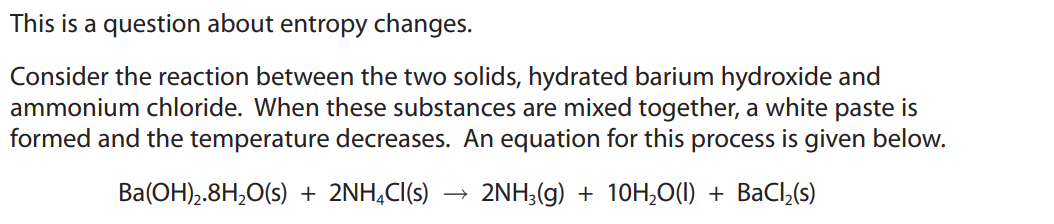
Two solids in the → a gas / a liquid (+ 1 solid) in the
sign
value =
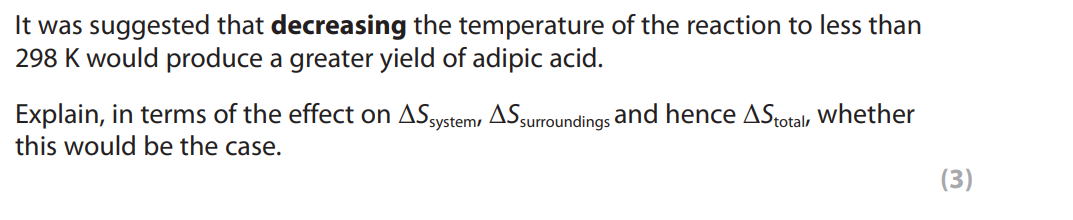
∆Sɵ becomes less negative (smaller in MAGNITUDE (because you are dividing −∆H by a larger T)
∆Sɵ / ∆H are not (significantly) affected by a change in temperature.
∆Sɵ increases
total
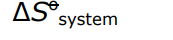
system
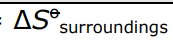
surroundings
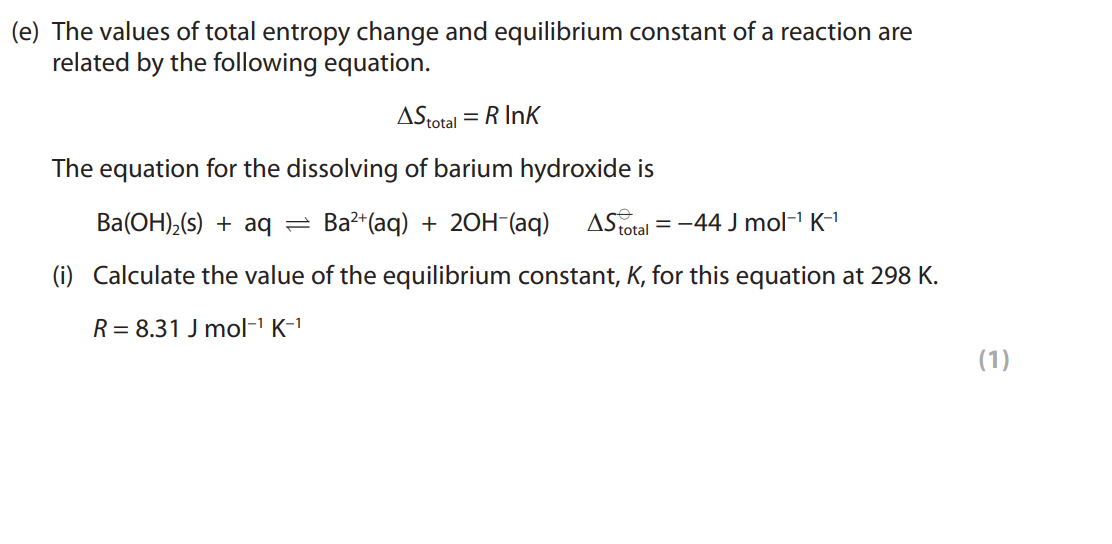
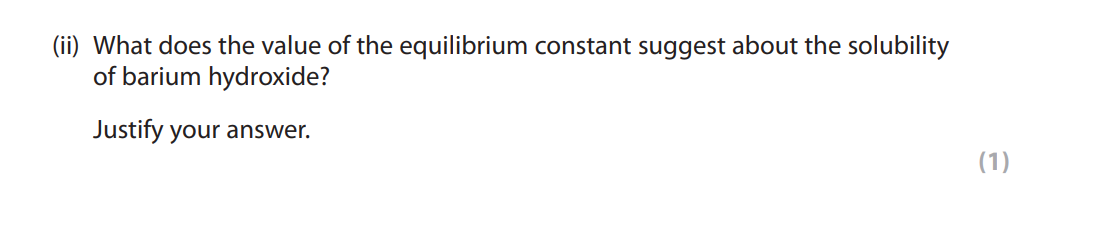
Barium hydroxide will (very) soluble / will be sparingly soluble
and K value suggests that the equilibrium lies to the side / reactants
OR K << 1 so predominant
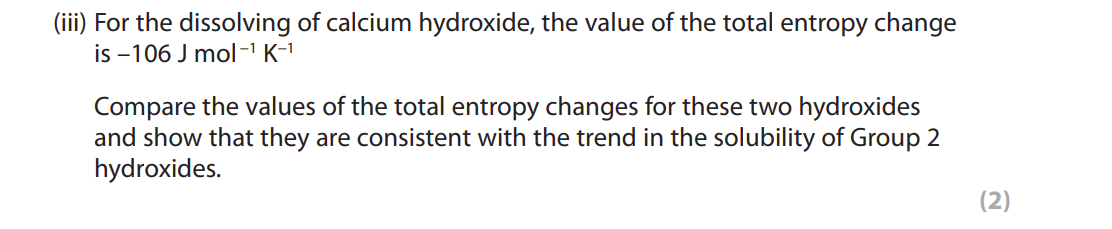
M1: Hydroxides get soluble as you descend Group 2 (1)
M2: ∆Sɵ total gets negative as you go from Ca(OH)2 to Ba(OH)2
and solid react to to form
There are fewer ways of arranging particles in a than a .
mol(es) of reactant forming mole of product.
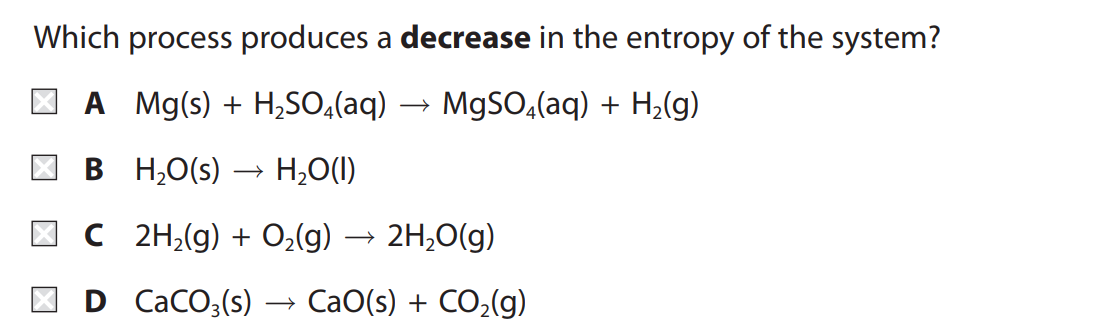
mol(es) of products than reactants
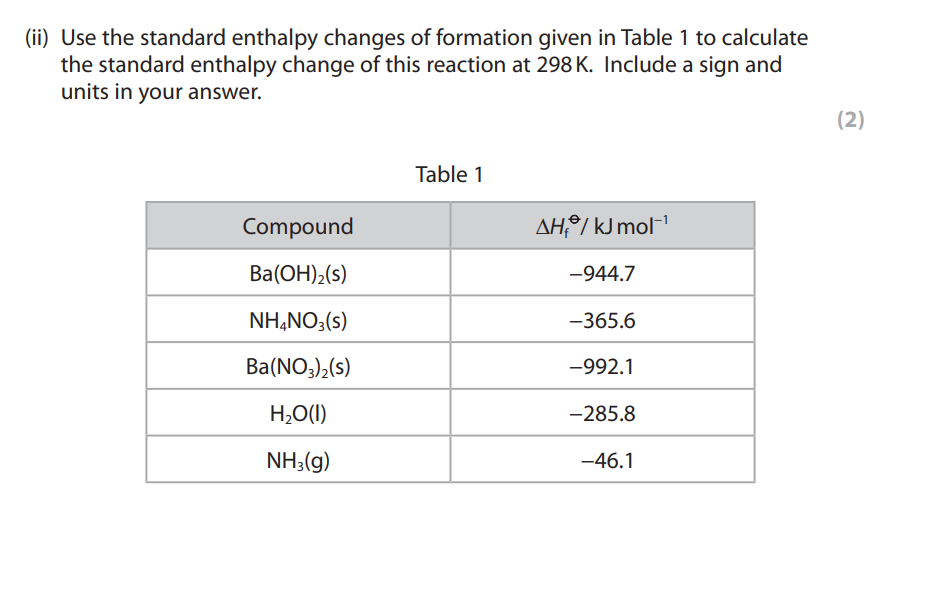
Give the formula to be used
= +
Sign =
value =
value = -
sign
value
sign
value
sign =
value =
Decrease in T: is not (significantly) changed.
or (−∆H/T) is more positive.
makes more positive
∆Ssystem